Caesarova Kašna: Olomouc's Grand Baroque Monument
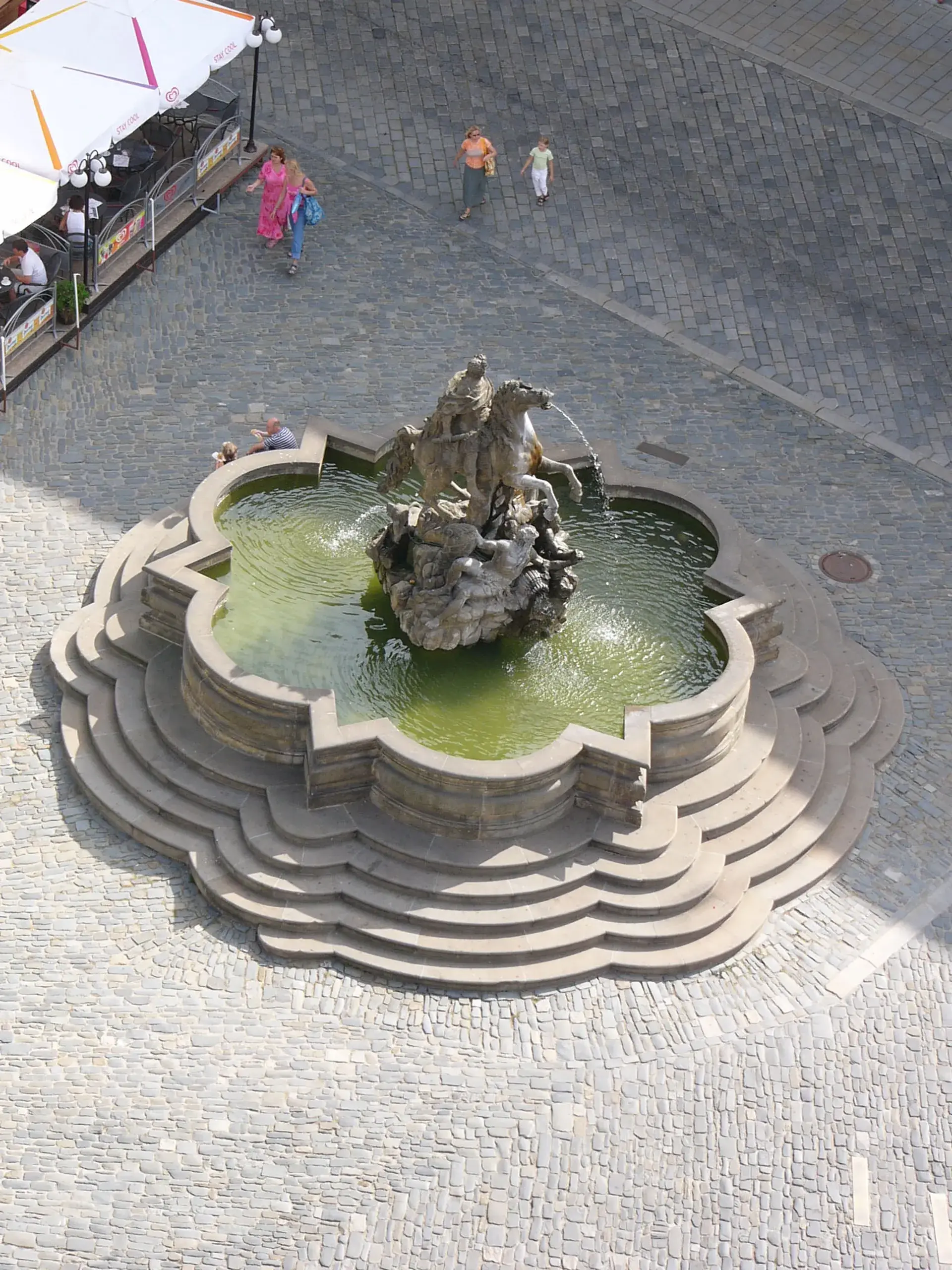
Stand before a monument to the Roman general who founded this city, or rather, the general who locals simply wished had founded it. Located on the bustling Horní náměstí (Upper Square), Caesarova kašna (Caesar’s Fountain) is considered the most artistically elaborate of Olomouc’s six monumental Baroque fountains.
A Monument to a Mythological Founder
The 1725 monument honors a Renaissance-era humanist legend which claimed that Roman general Gaius Julius Caesar founded the city under the name "Iulii Mons." Historically, Caesar never campaigned in the region, nor did he found Olomouc, but the local lore became a powerful symbol of civic identity.
The current Baroque work replaced an earlier, no-longer-extant 1540s Renaissance fountain that was also dedicated to Caesar. Following the catastrophic devastation of the Thirty Years' War, the Olomouc town council commissioned a series of mythological fountains to express the city's rebirth, historic prestige, and imperial loyalty.
Artistry and Baroque Composition
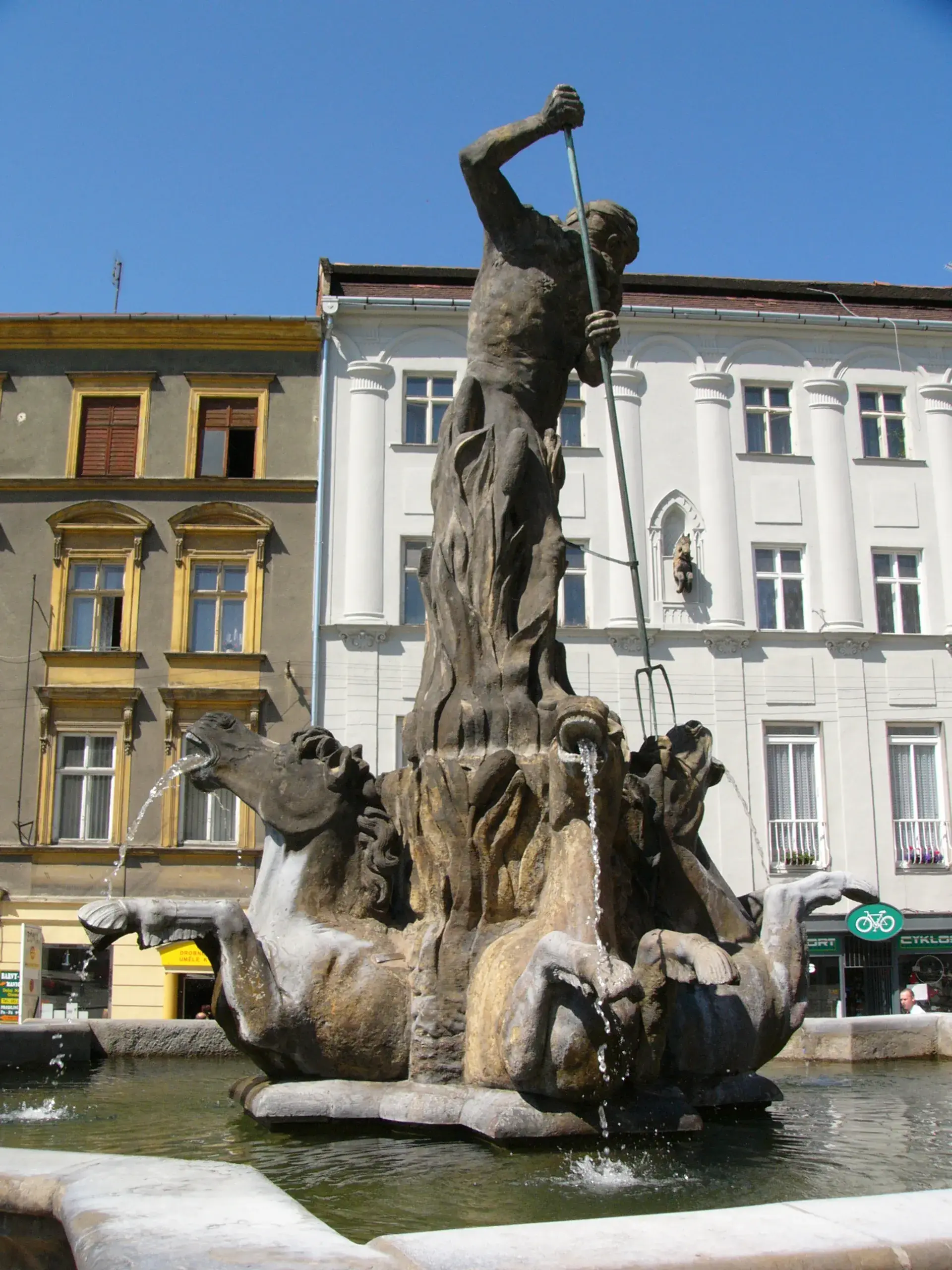
Crafted from Maletín sandstone, the fountain was a collaborative effort between sculptor Jan Jiří Schauberger and master stonemason Václav Render, who designed the poly-lobed stone basin. Schauberger’s equestrian composition draws direct inspiration from Gian Lorenzo Bernini’s equestrian statues, placing the Roman general in classical armor and a laurel wreath.
The central figure of Julius Caesar is depicted riding a rearing horse balanced on an artificial rock pedestal. Intriguingly, Caesar's head and torso are deliberately turned away from the Olomouc Town Hall. Instead, he looks toward St. Michael's Hill, the location where local tradition claimed the mythical Roman legionary camp once stood. During restoration work in 1982, conservators discovered that Caesar’s right hand was a later replacement; originally, the figure held a field marshal's baton rather than a scroll.
Hidden Allegories and Details
Water continuously splashes into the basin from barrels held beneath the arms of two reclining river deities at the foot of the rock pedestal. These figures personify the Morava and Danube rivers. They clasp hands to represent political harmony within the Habsburg empire, holding the provincial coats of arms for Moravia and Lower Austria.
Another easily missed detail is a seated dog sculpted behind the horse’s legs. This small addition serves as an allegory for the city's steadfast loyalty to the monarch. Today, the monument remains a central public landmark, seamlessly integrating historic grandeur with the pedestrian rhythm of Olomouc's historic plazas.
FAQ
Who designed Caesarova kašna?
The fountain was completed in 1725 through the collaboration of sculptor Jan Jiří Schauberger, who created the sculptures, and master stonemason Václav Render, who crafted the stone basin.
Did Julius Caesar really found Olomouc?
No, historically Julius Caesar never campaigned in the region or founded the city. The fountain is based on a Renaissance-era humanist legend that claimed the city was originally named 'Iulii Mons' (Julius's Mount).
What do the river gods on the fountain represent?
The two reclining river deities personify the Morava and Danube rivers. They clasp hands to symbolize political harmony and hold the provincial coats of arms of Moravia and Lower Austria.