Olomouc Astronomical Clock: A Communist Marvel
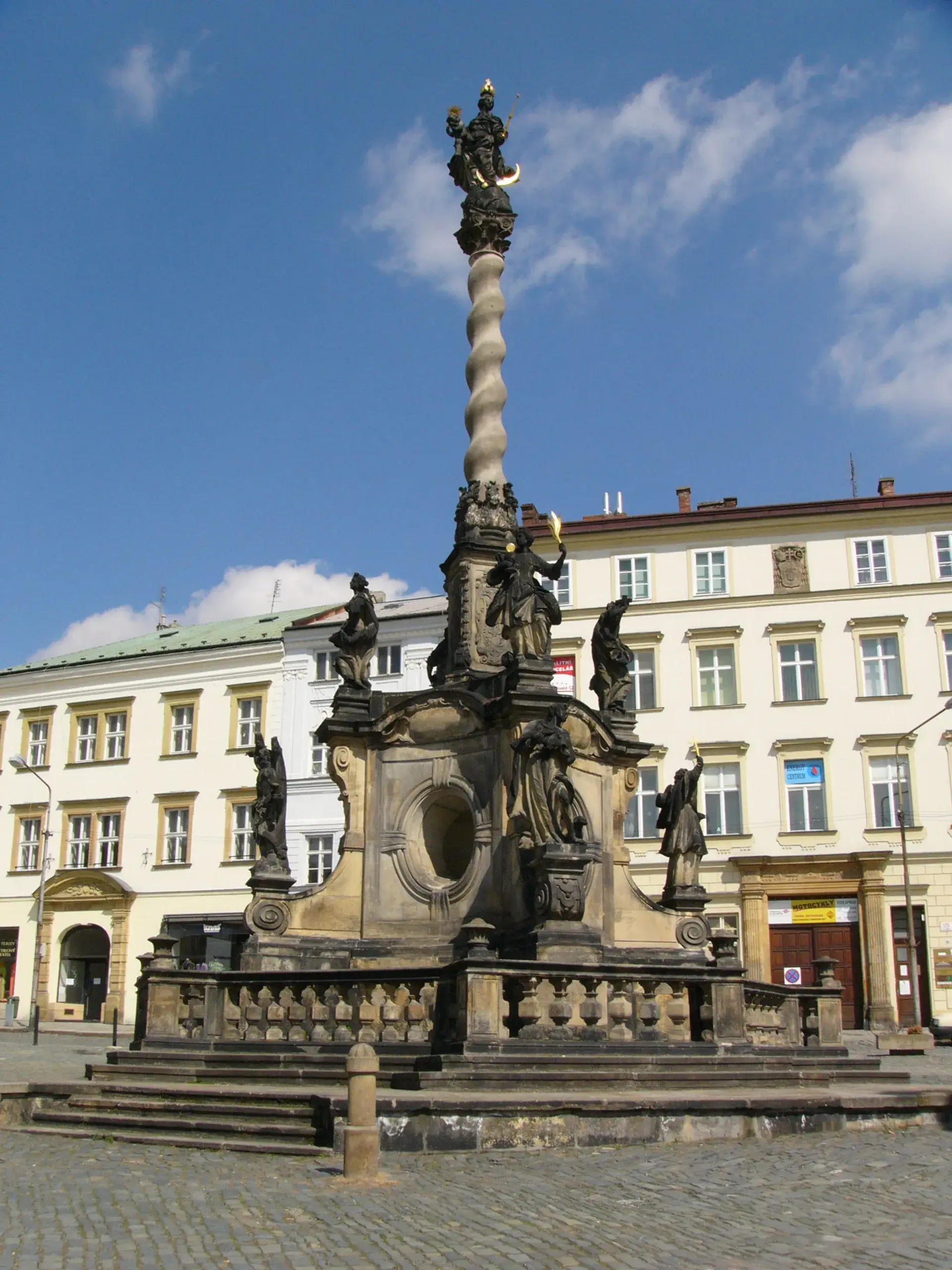
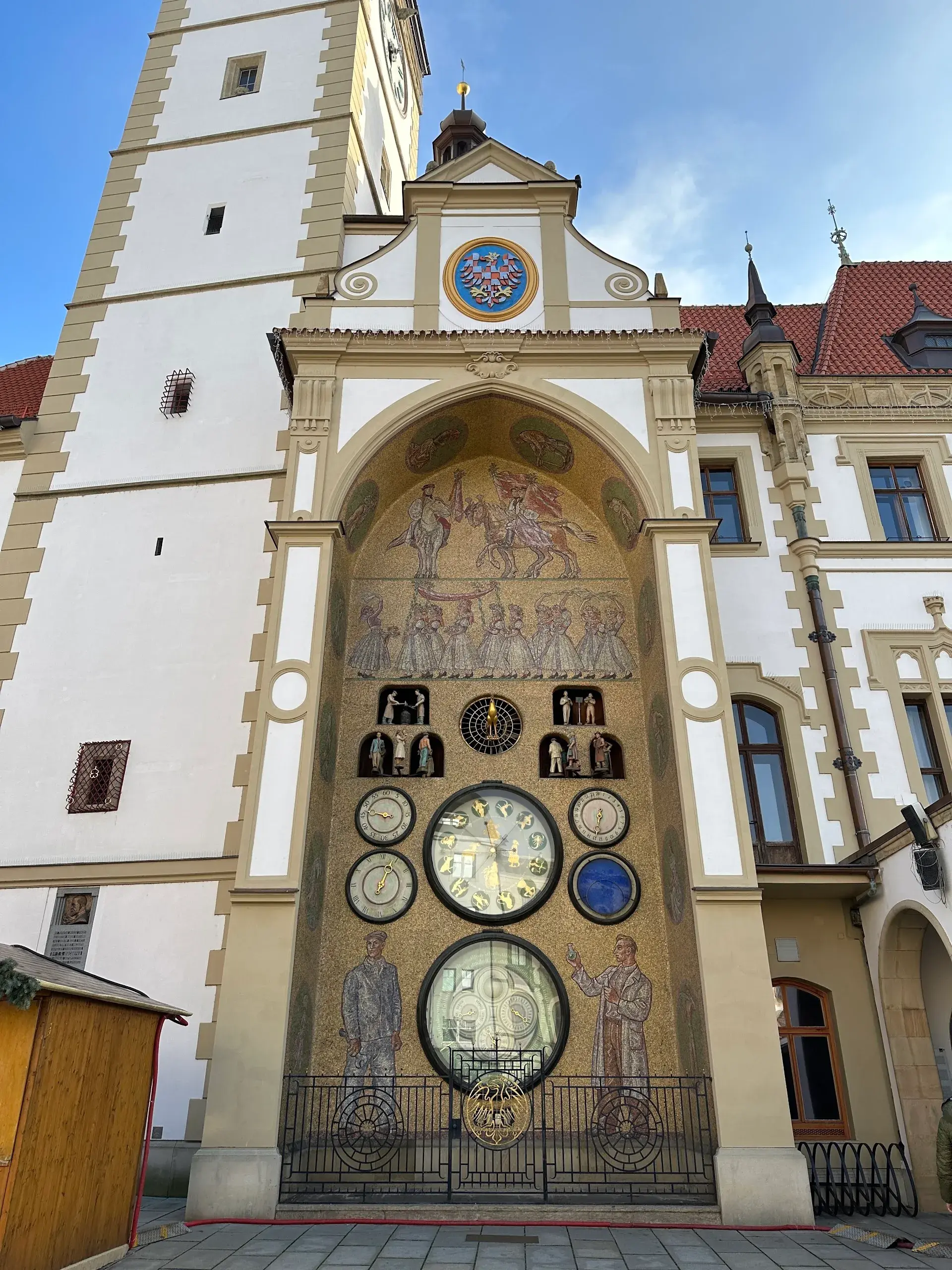
Where else in the world do saints and kings step aside for steelworkers and milkmaids to tell the time? Embedded in a 14-metre pointed-arch recess on the northern façade of the Olomouc Town Hall on Upper Square, the Olomouc Astronomical Clock is a rare historic oddity. Globally unique for its mid-century communist iconography, the landmark sits directly across from the UNESCO-listed Baroque Holy Trinity Column, creating a stark visual contrast between 18th-century Catholic grandeur and 20th-century secular ideology.
A Socialist Realist Redesign
The earliest documented mention of the astronomical clock dates to 1519. For centuries, the timepiece featured traditional figures such as saints, angels, and monarchs, undergoing various Renaissance, Baroque, and Neo-Gothic remodels. In May 1945, retreating Nazi German troops severely damaged the clock with artillery and grenade fire.
Instead of restoring the religious and royal icons, post-war authorities commissioned Moravian artist Karel Svolinský and his wife, Marie Svolinská, to overhaul the monument. Unveiled in 1955, the new Socialist Realist design replaced traditional figures with representatives of the working class. Today, vibrant glass mosaics cover the arch, depicting regional folklore alongside heroic figures like a worker holding a wrench and a chemist with a flask.
Rare Heliocentric Mechanics
Beneath the 1950s exterior lies a complex heliocentric mechanism installed in 1898 by clockmaker Eduard Korfhage, later repaired by master clockmaker Konrad Schuster. As one of the few heliocentric astronomical clocks in the world, it displays planetary positions, a star map, the zodiac, and moon phases.
The calendar display mechanism is highly ambitious, engineered with a four-digit year tracker capable of running up to the year AD 9999. In a surprising compromise of ideologies, the lower calendar dial retains traditional Czech Christian saint name days right alongside the red-letter birthdays of Vladimir Lenin and Klement Gottwald, as well as the 1953 death dates of Gottwald and Josef Stalin.
The Daily Noon Performance
The astronomical clock comes to life once a day for an animated mechanical show precisely at 12:00 noon. The sequence begins with two mechanical blacksmiths striking an anvil. A procession of proletarian figures—including miners, athletes, and agricultural laborers—then rotates past the display windows.
Instead of the sacred hymns played by traditional European clocks, a 16-bell carillon chimes traditional Haná folk songs, such as Daleká, šeroká cesta přes Holomóc. The daily performance concludes with the crowing of a brass cockerel.
Local Legends
Like many historic European timepieces, the Olomouc Astronomical Clock has its own dark folklore. A local tradition claims that the town council deliberately blinded the original medieval clockmaker after the clock was finished, ensuring he could never build a rival timepiece for another city.
FAQ
When does the Olomouc Astronomical Clock perform its show?
The clock operates a daily animated mechanical show once per day, precisely at 12:00 noon. The sequence includes mechanical blacksmiths, a rotating procession of working-class figures, and a brass cockerel.
Why does the Olomouc Astronomical Clock feature workers instead of saints?
After retreating Nazi troops severely damaged the original clock in 1945, post-war authorities chose not to restore its religious figures. Instead, it was redesigned in 1955 in the Socialist Realist style, replacing traditional saints and monarchs with proletarian figures like steelworkers, chemists, and milkmaids.
How old is the Olomouc Astronomical Clock?
The earliest documented mention of the clock dates back to 1519. While the exterior mosaics and figures date to a 1955 communist-era redesign, the underlying heliocentric clockwork mechanism was installed in 1898.
Discover Olomouc like never before
Dive into Olomouc hidden stories and secret spots with Ciceru interactive tours.
Explore tour
Audioguide
Quizzes
Maps
Solo
Couples
Groups & families

© Photo by Martin Bousek via Google Maps · Google Places