Neptune Fountain: Olomouc's Historic Baroque Landmark
To mark its rebirth from the ashes of the Thirty Years' War, Olomouc placed the god of the sea in a landlocked market square. Completed in 1683, the Neptune Fountain is the oldest of the city's six renowned Baroque fountains inspired by classical antiquity. The monument was constructed on the elevated site of the Lower Square (Dolní náměstí), where the Romanesque Chapel of Saint Margaret formerly stood.
Serving as both an essential public water supply and a statement of municipal prestige, this structure initiated a multi-decade program of mythological waterworks. Subsequent fountains dedicated to Hercules, Caesar, Tritons, Mercury, and Jupiter collectively reinforced the self-identity of Olomouc as an ancient Roman outpost of Moravia. Placing the ruler of the oceans in a landlocked Moravian city was a deliberate Baroque allegory connecting local civic power to Roman antiquity.
Master Craftsmanship and Design
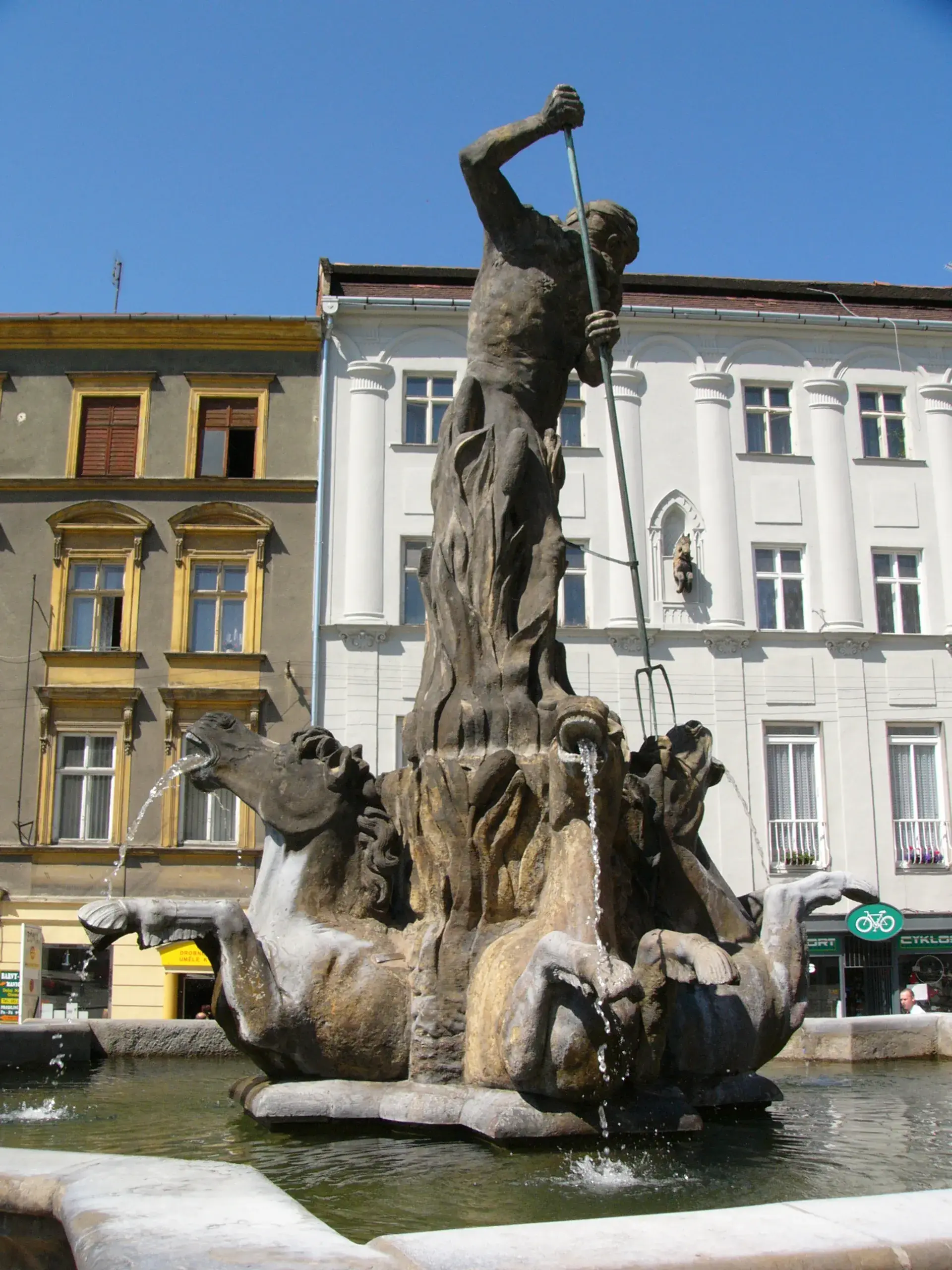
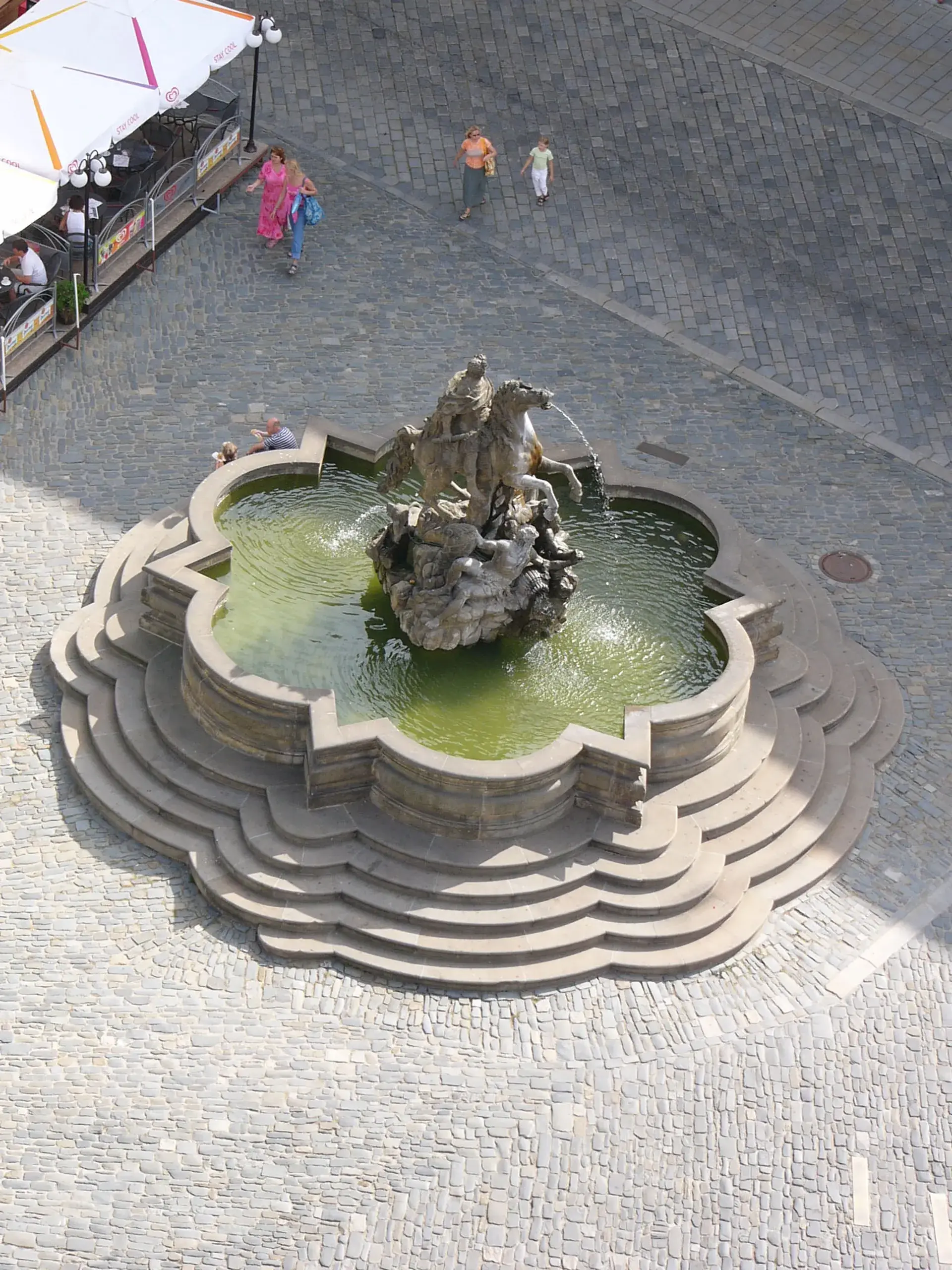
The statuary was crafted by Gdańsk-born sculptor Michael Mandík, while the basin and staircase were built by Olomouc stonemason Václav Schüller. A stone basin, broken into a four-lobed pattern, surrounds a central rock base. Surmounting the rock is a larger-than-life figure of Neptune. Below the sea god, four carved seahorses act as waterspouts. Water streams directly from the mouths of these creatures into the stone basin, creating a steady splash that reverberates across the open cobblestones.
Observers examining the rock beneath Neptune's feet will find a surprising detail left by the sculptor. Michael Mandík chiseled his maker's mark directly into the stone, leaving the inscription "MAN / DIK / FE," which translates to "Mandík made this."
Mythological Symbolism
Every element of the Neptune Fountain carries distinct symbolism. Rather than depicting the sea god in a wrathful strike, Mandík positioned Neptune's trident pointing downward. This gesture symbolizes the pacification of unruly waters and the safeguarding of the inland city. The four seahorses surrounding the base traditionally represent the four cardinal directions, the four classical elements, and the four cardinal virtues of Courage, Justice, Wisdom, and Temperance.
Today, the monument functions as a public landmark and a prominent gathering spot on the pedestrianized Lower Square. As a protected National Cultural Monument, it forms an integral part of the historic pedestrian walking loop that connects the Upper and Lower Squares of Olomouc.
FAQ
When was the Neptune Fountain in Olomouc built?
The fountain was completed in 1683, making it the oldest of Olomouc's six classical antiquity-inspired Baroque fountains.
Who created the Neptune Fountain?
The statuary was sculpted by Gdańsk-born artist Michael Mandík, while the stone basin was constructed by Olomouc stonemason Václav Schüller.
What do the four seahorses on the fountain represent?
The four carved seahorses symbolize the four cardinal directions, the four classical elements, and the four cardinal virtues: Courage, Justice, Wisdom, and Temperance.
Why does Neptune's trident point downward?
The downward-pointing trident symbolizes the pacification of unruly waters and the safeguarding of the inland city, rather than depicting the sea god in a wrathful strike.