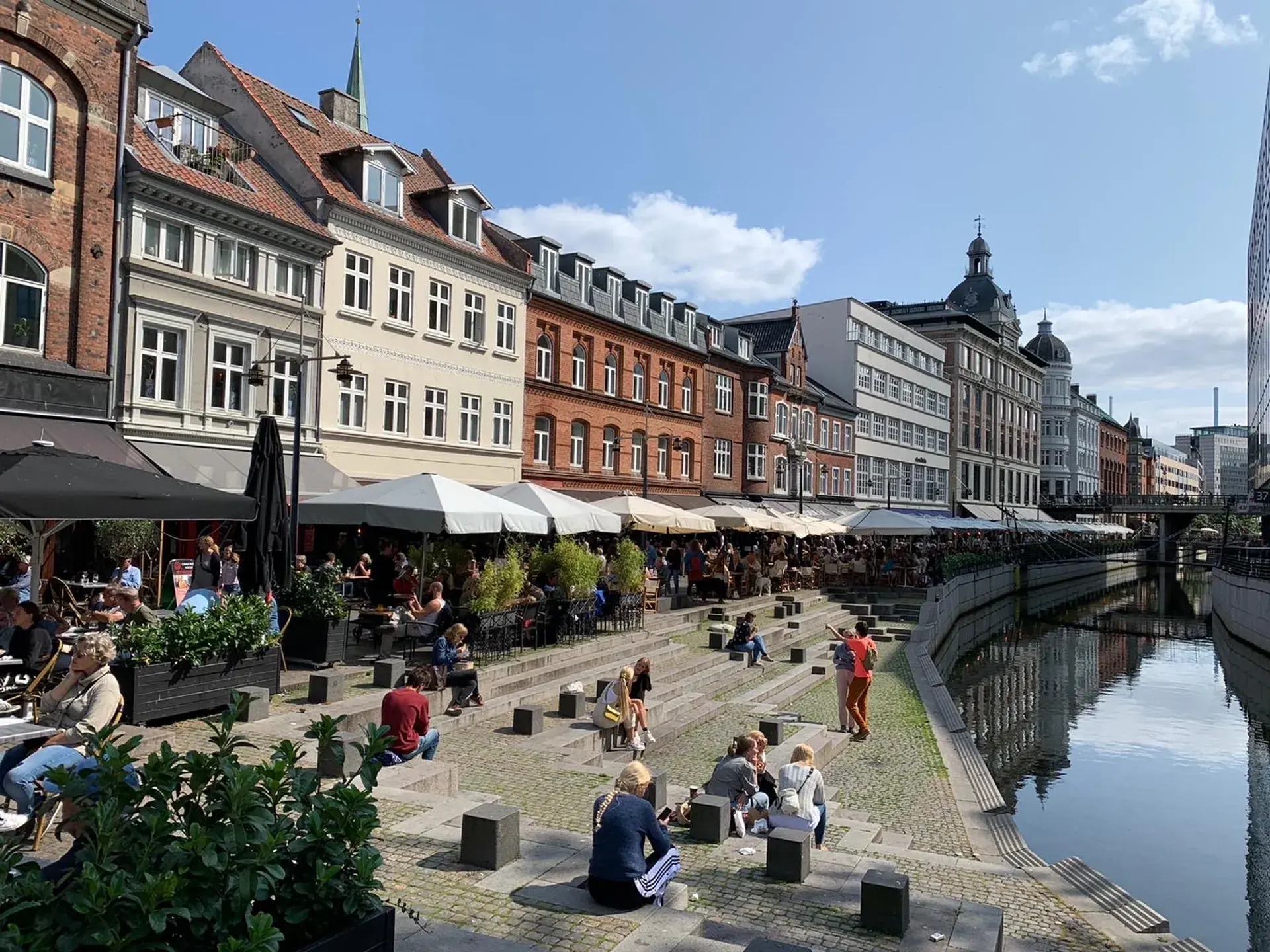
Explore the Latin Quarter in Aarhus
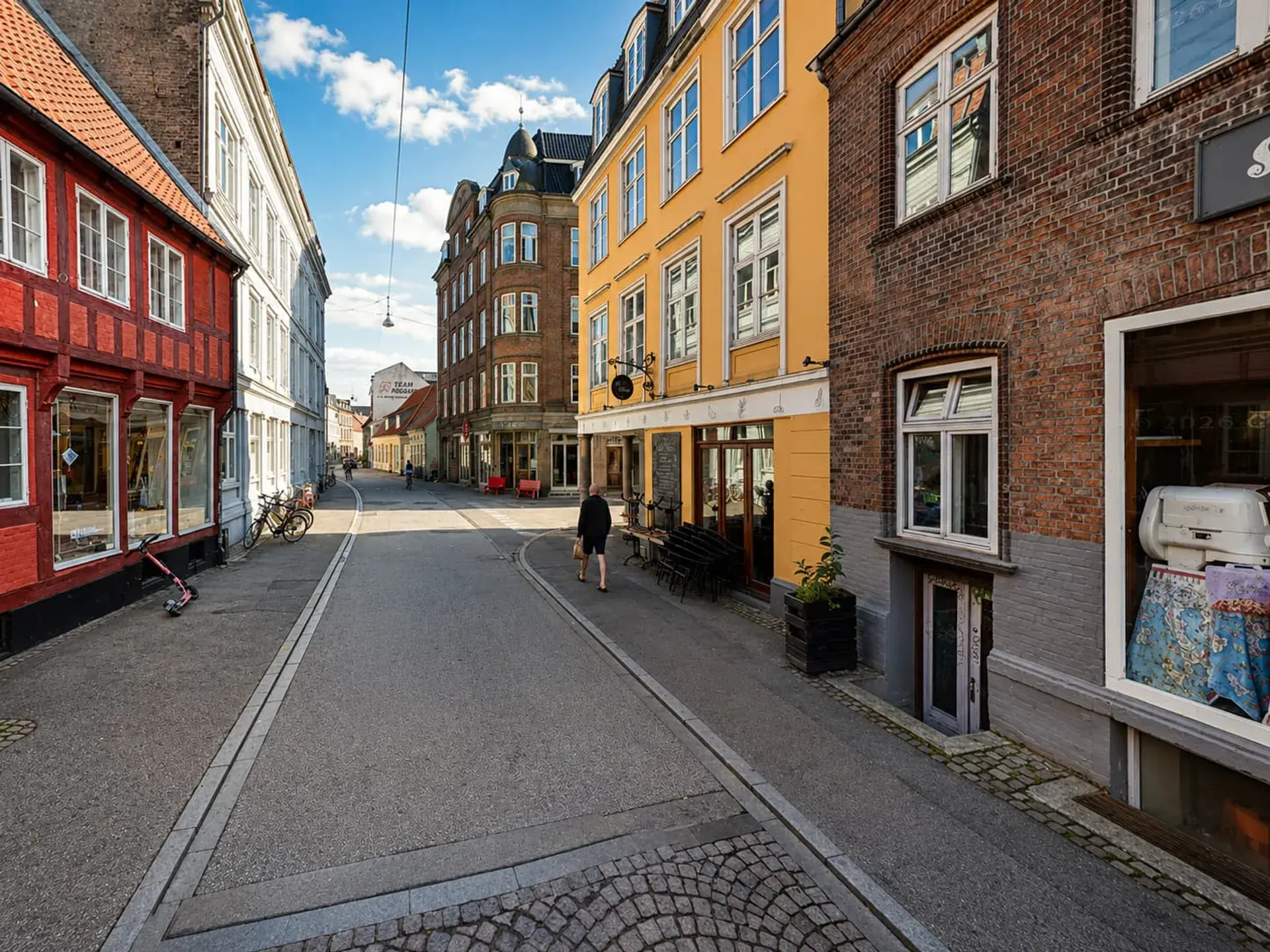
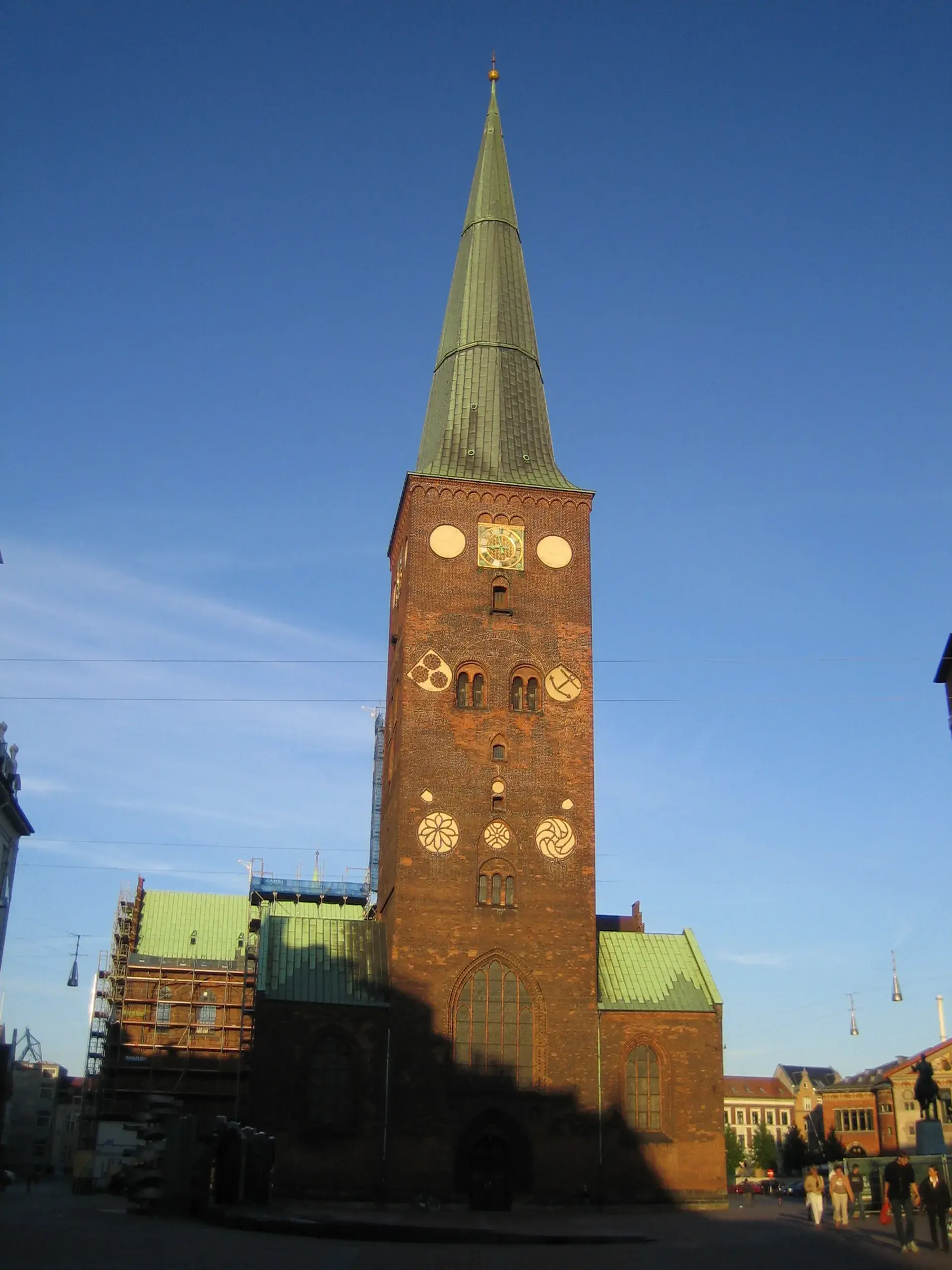
The Latin Quarter, locally known as Latinerkvarteret, is the oldest surviving neighborhood in inner Aarhus. Situated directly north of Aarhus Cathedral and Store Torv, the district bridges the city's medieval ecclesiastical core with the historic merchant harbor zone along Mejlgade. Uneven cobblestone paving, narrow winding alleys, and low half-timbered rooflines create an intimate streetscape that preserves centuries of Danish history.
Viking Boundaries and Medieval Streets
The foundation of the neighborhood dates back to the Viking Age. Archaeological excavations along Badstuegade have uncovered massive timber posts and rampart palisades dating to around 980 AD, marking the northern boundary of Viking Age Aros. The current street layout began taking shape in the late 14th century and expanded after 1477, when King Christian I granted permission to build over the original defense earthworks.
Several street names preserve this medieval geography. Volden (The Rampart) traces the former Viking earthworks, while Graven (The Moat) follows the outer defensive ditch. Klostergade (Convent Street) references a nearby Dominican friary complex, and Badstuegade (Bath House Street) was named for the public bathhouses that operated during the late Middle Ages. Notably, these bathhouses were forcibly shut down by authorities in the 1500s after being deemed breeding grounds for syphilis outbreaks.
Architectural Curiosities
The area features Juuls Gård at Mejlgade 19, one of the city's oldest half-timbered Renaissance buildings. Constructed between 1600 and 1629, it hosted Denmark's oldest operating paint store from 1842 until 2010. Inside the building, wooden drawers retain signatures from store employees dating back to 1880, alongside paint mixing samples spanning over a century.
Another historic structure, Marcus Bechs Gård, was a massive 16th-century merchant estate that once spanned Store Torv, Volden, and Badstuegade. In 1915, this estate was dismantled and reassembled to become a cornerstone of Den Gamle By, the city's open-air museum.
A Modern Cultural Hub
Despite its historical depth, the name "Latin Quarter" is not a remnant of a medieval Latin school. The title was adopted in the 1990s as a marketing initiative by local merchants to evoke the bohemian atmosphere of the Latin Quarter in Paris.
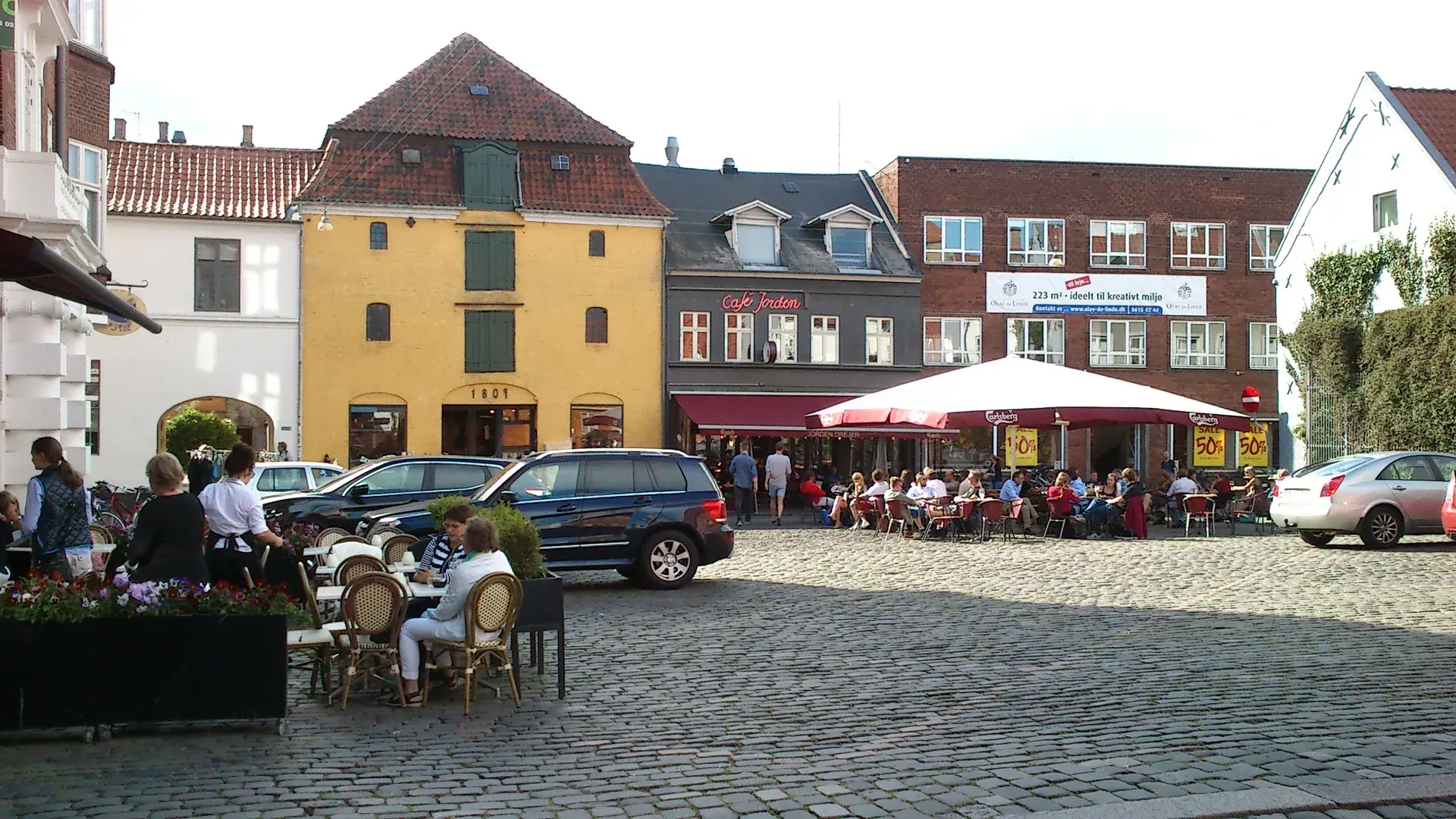
Today, the pedestrian-oriented district thrives with independent boutiques, artisan bakeries, specialty coffee roasters, and galleries. Pustervig Torv serves as the central gathering place, offering outdoor cafe seating. The ambient atmosphere is shaped by the aroma of freshly roasted coffee blending with acoustic music drifting from small storefront stages. The neighborhood also maintains an active cultural life, hosting small music venues, workshops, and creative initiatives such as the Kaospilot school.
FAQ
Why is the neighborhood in Aarhus called the Latin Quarter?
The name "Latin Quarter" was adopted in the 1990s as a marketing initiative by local merchants. It was chosen to reflect the district's bohemian atmosphere, drawing a comparison to the famous Latin Quarter of Paris, rather than referencing a historical medieval Latin school.
What is the oldest building in the Latin Quarter?
Juuls Gård, located at Mejlgade 19, is one of the oldest structures in the district. It is a half-timbered Renaissance building constructed between 1600 and 1629.
How do the street names in the Latin Quarter reflect its history?
Street names in the neighborhood preserve its medieval geography. For example, Volden (The Rampart) traces the Viking earthworks, Graven (The Moat) follows the outer defensive ditch, and Badstuegade (Bath House Street) is named after public bathhouses that were eventually shut down in the 1500s.
Gallery