Lille Torv: Aarhus's Historic Pedestrian Square
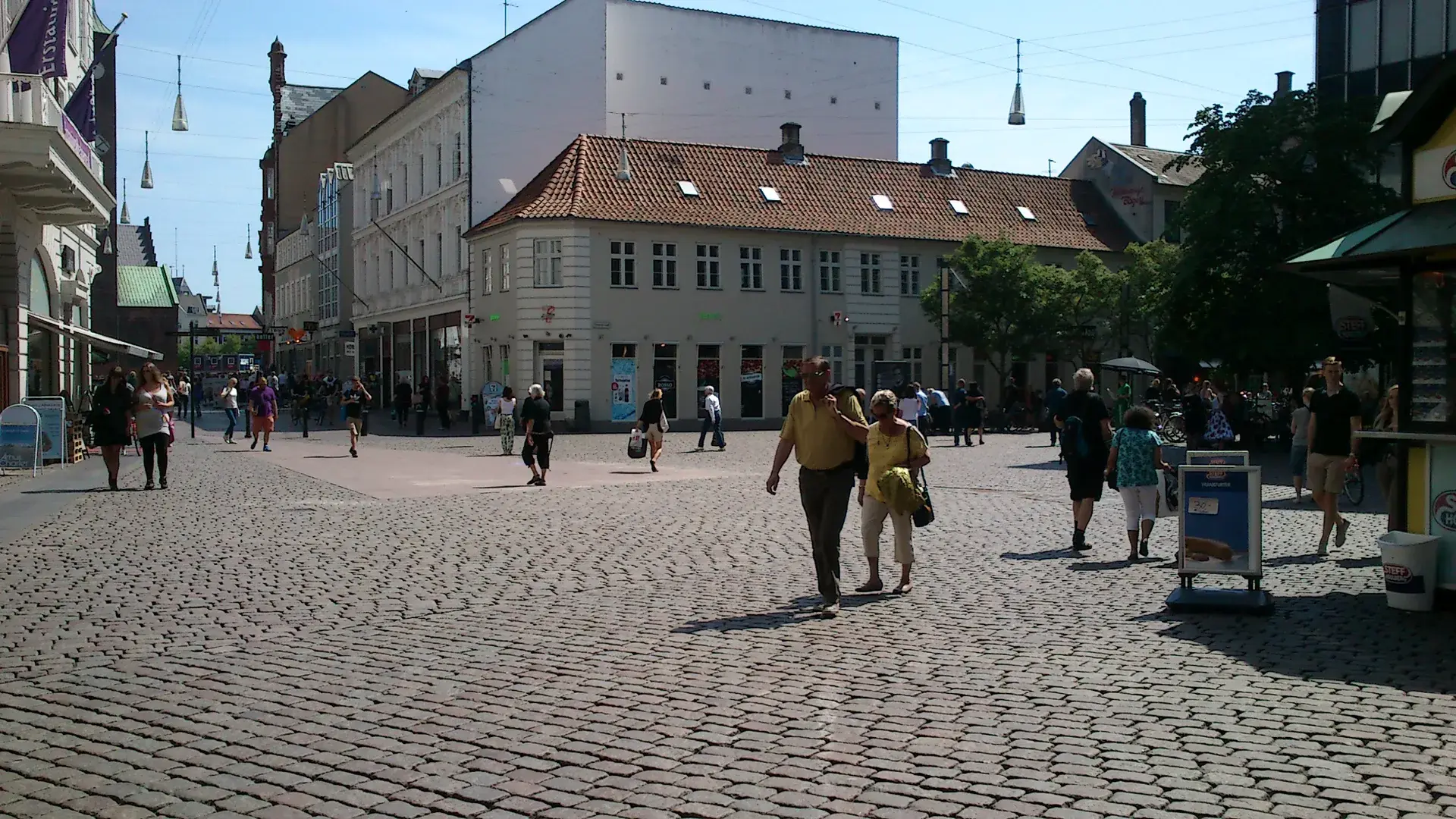
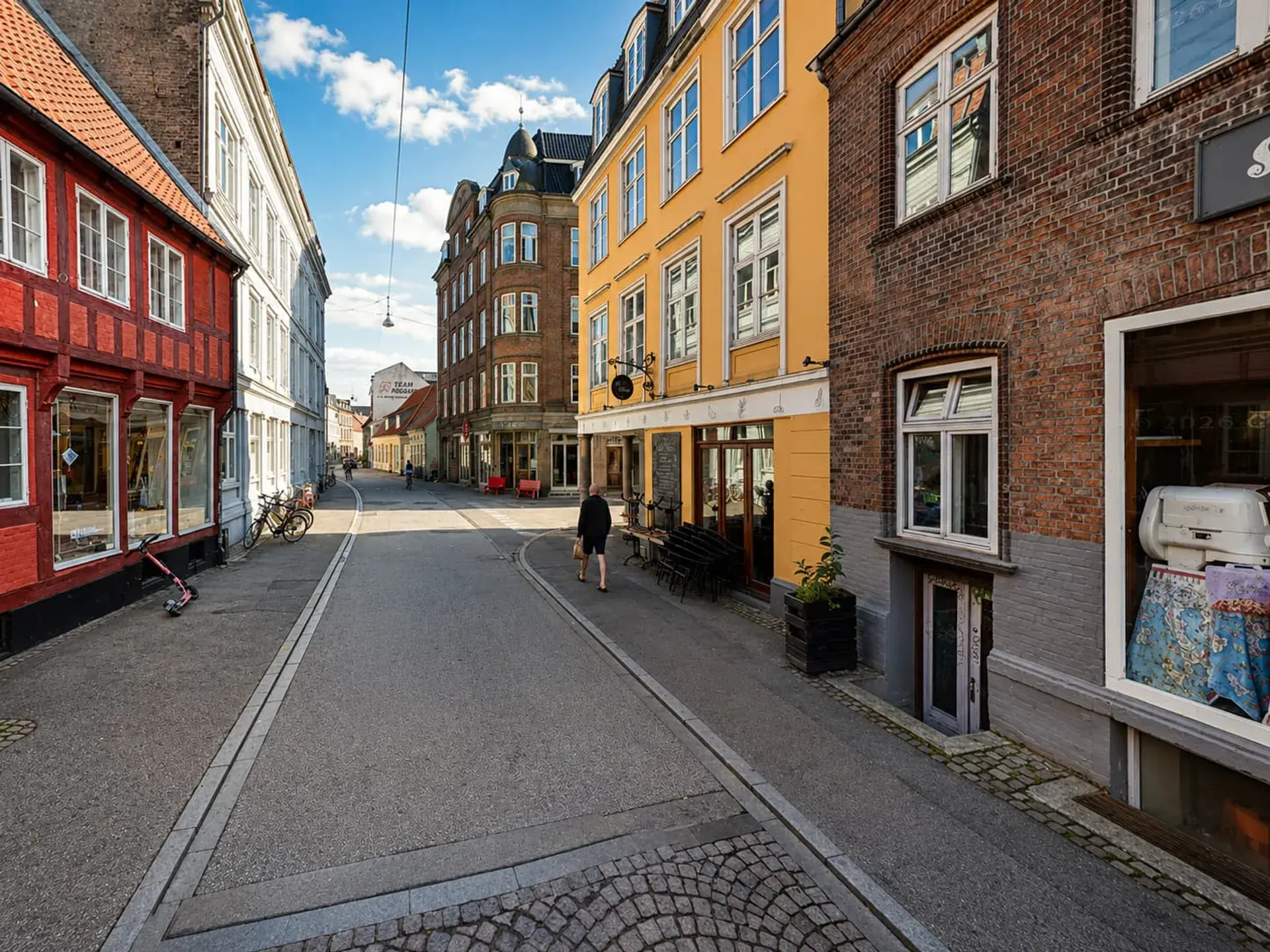
The very first building in Aarhus's famous open-air museum did not start in a museum at all—it originally stood on Lille Torv. Today, this cobbled public square situated in the Indre By district serves as a major pedestrian gathering space connecting the Strøget shopping street to the Latin Quarter. As a transition point between Store Torv, the Aarhus River, and historic radiating streets like Vestergade and Guldsmedgade, Lille Torv exemplifies the evolution of the city's medieval street layout into a modern urban core.
Medieval Origins and Market History
Originally a swampy area outside the medieval city walls, the land was drained around 1200 and formally established as a square by 1250. It remarkably retains its original spatial proportions today. First recorded in 1386 as Gammeltorv (Old Square), it was also known as Axeltorvet due to the produce brought in by horse carts. The name Lille Torv, meaning "the Little Square," was officially assigned in the 1700s.
For centuries, a medieval tower gate known as Borgporten separated Lille Torv from neighboring Store Torv. This gate housed the city watchmen until its demolition in 1685, which opened a direct passage for vehicle traffic. Lille Torv functioned as a prominent trading site, hosting the annual St. Oluf's market. However, city officials phased out market trading in 1896 due to rising urban traffic, and by 1904, the square had transformed into a central intersection for the city's new electrical tram lines.
The Birthplace of Den Gamle By
Aarhus is celebrated for Den Gamle By, an iconic open-air museum of historic buildings, and its founding structure has direct ties to Lille Torv. A 1597 timber-framed merchant mansion known as Borgmestergården (Mayor's House) stood at Lille Torv 1-3 for over three centuries. In 1909, the mansion was dismantled for the Aarhus National Exhibition. It was eventually relocated to the Botanical Garden in 1913, where it became the first building of the renowned museum.
Architectural Contrasts
The square features a striking visual juxtaposition between its textured cobblestone ground and its surrounding historic facades. At Lille Torv 2 stands Det Meulengrachtske Palæ, built in 1816 by merchant Harboe Meulengracht. Featuring a smooth, white Neoclassical exterior, the mansion became a prominent hub for high society in the nineteenth century and hosted Danish royal visits.
In stark contrast, the listed building at Lille Torv 6 displays heavy, rusticated granite masonry. Erected in 1899 by architect Sophus Frederik Kühnel, its Renaissance-inspired design mimics Florence's Palazzo Rucellai. Today, these historic buildings share the square with modern commercial landmarks, including design showrooms like Paustian, the Magasin du Nord department store complex, and bustling outdoor cafes.
FAQ
How old is Lille Torv in Aarhus?
Lille Torv was formally established around 1250 after the swampy land outside the medieval city walls was drained. It still retains its original medieval spatial proportions today.
What is the connection between Lille Torv and Den Gamle By?
Den Gamle By, Aarhus's renowned open-air museum, was founded with a 1597 timber-framed merchant mansion called Borgmestergården. This historic building originally stood at Lille Torv 1-3 until it was dismantled in 1909 and relocated.
What are the prominent historic buildings on Lille Torv?
Notable historic buildings include Det Meulengrachtske Palæ, an 1816 Neoclassical mansion that once hosted Danish royalty, and a Renaissance-inspired former bank building at Lille Torv 6 featuring heavy granite masonry.