Vor Frue Kirke: Historic Aarhus Church
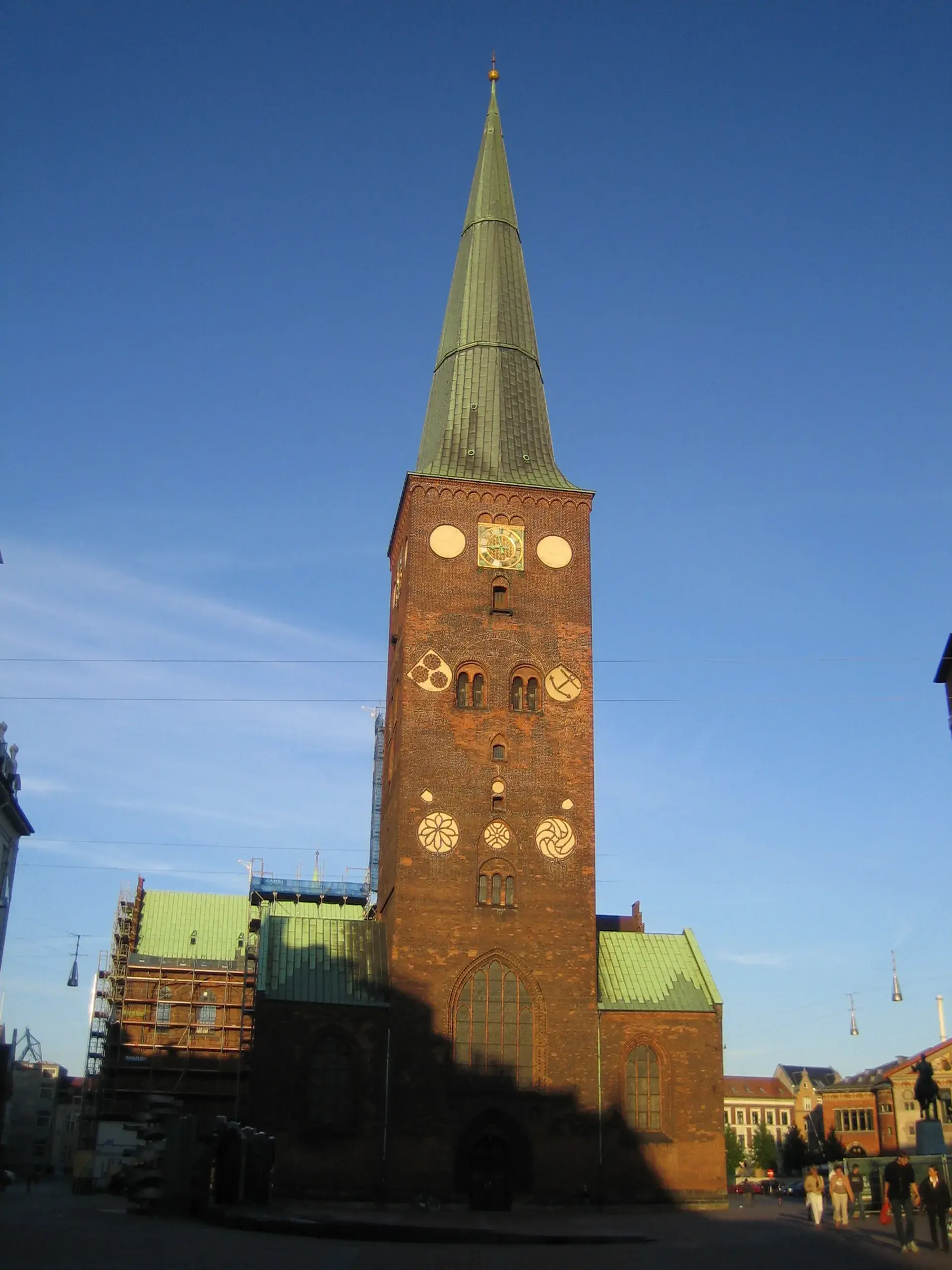
Located at Frue Kirkeplads and Vestergade, the complex known as Vor Frue Kirke (The Church of Our Lady) stands as a foundational ecclesiastical landmark in Aarhus. Representing the city's transition from a Viking-era settlement to a medieval cathedral city, the active Evangelical Lutheran parish anchors the classic central route connecting Store Torv, the Latin Quarter, and Møllestien.
From Viking Ashes to a Gothic Priory
The religious history of the site dates back to around 930 AD, when a wooden stave church first stood on the grounds. This structure was destroyed by fire around 1050 during Viking warfare. In 1060, King Svend Estridsen established an Aarhus bishopric, prompting Bishop Christian to construct a stone church with a crypt dedicated to St. Nicholas.
Around 1240, Dominican friars arrived and established a monastery. Between 1250 and 1500, the site was expanded into a large red-brick Gothic building. Following the Protestant Reformation, King Christian III renamed the complex the Church of Our Lady and converted the priory into a municipal hospital and housing. Today, the surviving wings of the medieval monastery function as senior residential apartments.
Three Churches in One
The architectural layout of Vor Frue Kirke is often described as "three churches in one." The main red-brick Gothic parish church features a high-vaulted, brightly painted nave. Adjoining it is the Abbey Church, originally used as the chapter house for the Dominican priory. Finally, beneath the chancel floor lies the subterranean Crypt Church. The complex hosts regular services, choirs, and specialized masses across these distinct spaces.
Scandinavia's Oldest Stone Church
For centuries, the 11th-century stone crypt was walled off and forgotten, even serving as firewood storage in the late Middle Ages. It was rediscovered intact during interior restoration work in 1955 and reopened to the public in 1957.
Descending the stone steps from the soaring Gothic nave into the crypt reveals a sudden atmospheric shift. The space transitions into a low-arched, dimly lit, and cool rough-hewn medieval stone environment. Dating to around 1060, this subterranean space is recognized as the oldest surviving stone church structure in Scandinavia. Excavations in the 1950s uncovered two medieval graves and 23 14th-century coins originating from Hamburg and Lübeck within the crypt.
Historic Art and Altarpieces
The main church houses several significant historic artifacts. The high altar features a gilded late-Gothic triptych altarpiece carved around 1520 by the master sculptor Claus Berg. Additionally, the church displays a replica of the 11th-century Åby Crucifix. Unlike traditional depictions of a suffering Christ, this early Danish artifact portrays Jesus as a crowned, victorious monarch.
FAQ
What are the opening hours for Vor Frue Kirke in Aarhus?
The church is open to visitors on weekdays from 10:00 to 16:00 and on Saturdays from 10:00 to 14:00.
Why is Vor Frue Kirke called 'three churches in one'?
The complex consists of a red-brick Gothic main church, a subterranean stone Crypt Church, and an Abbey Church that was originally used as a chapter house by a Dominican priory.
How old is the crypt beneath Vor Frue Kirke?
The subterranean Crypt Church dates back to around 1060 and is recognized as the oldest surviving stone church structure in Scandinavia.