Vægmaleri Atomkraft - Nej tak: The Smiling Sun Mural
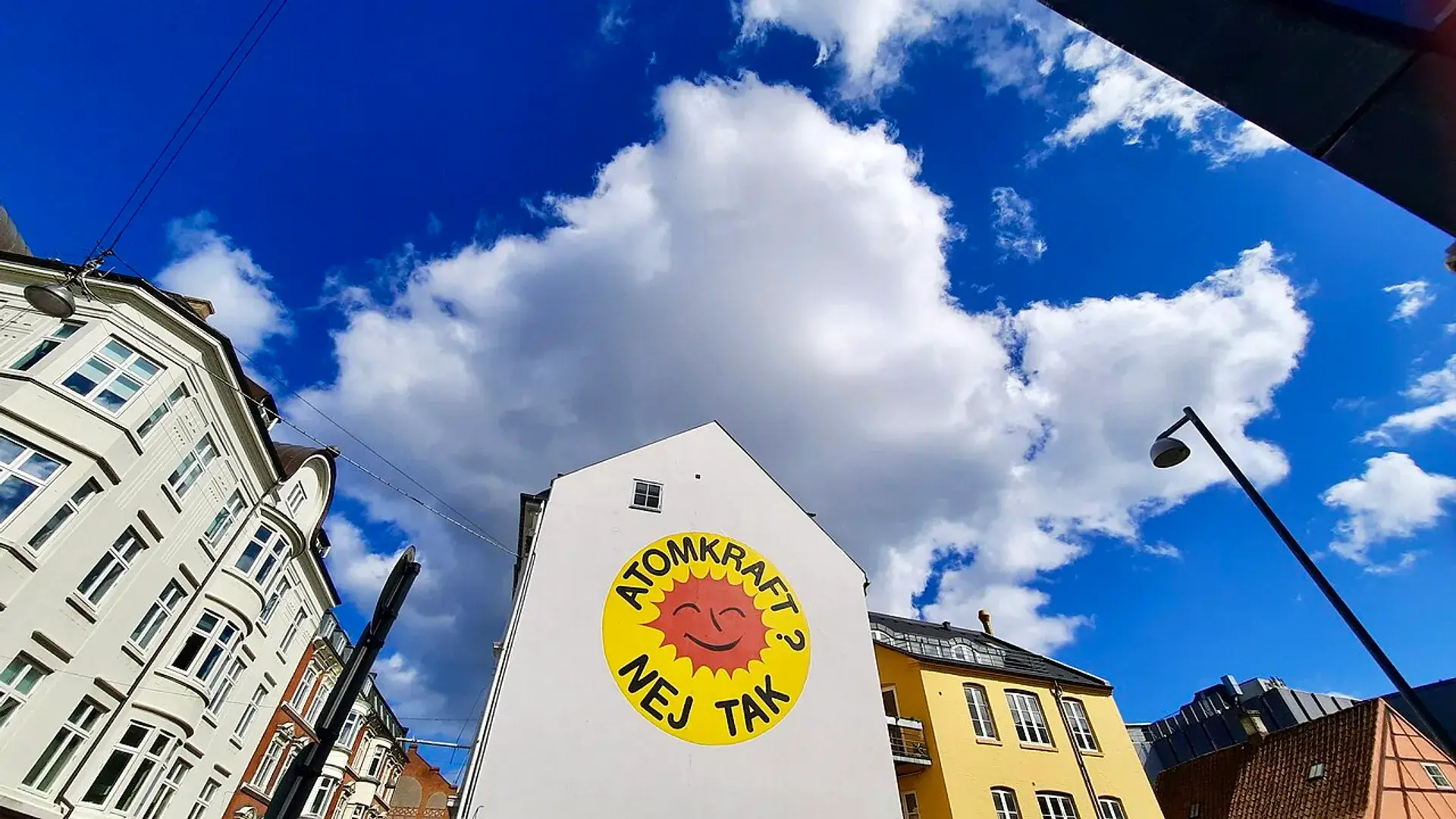
A globally recognized symbol of polite protest originated in Aarhus. The 8-meter mural known as Vægmaleri Atomkraft - Nej tak (The Smiling Sun) at Vestergade 7 displays a piece of notable Danish social history directly on a brick building gable. The artwork features a bright orange-red smiling face set inside a vivid yellow circle, framed by a simple question and answer.
Origins of a Polite Protest
Between 1974 and 1975, public debate in Denmark intensified regarding proposed nuclear power plants, including a candidate site south of Aarhus. During this period, a 21-year-old Danish activist named Anne Lund sought an alternative to the aggressive, fear-based imagery typical of protests, such as skulls or clenched fists. Despite having no formal graphic design training, Lund conceptualized a positive design representing renewable solar energy and polite dissent.
Created in April 1975 at Klostergade 6-8, the design was finalized with input from fellow activist Søren Lisberg and graphic assistance from Lene Hvidtfeldt Larsen. It was made on behalf of the Danish Organization for Information on Nuclear Power (OOA). Deliberately omitting exclamation points, the text reads "Atomkraft? Nej tak" to promote conversation rather than confrontation.
Global Reach and Cultural Impact
The symbol officially debuted on May 1, 1975, at May Day celebrations in Aarhus, where the initial batch of 500 handmade badges sold out immediately. The logo rapidly spread worldwide. It was translated into more than 60 languages and printed on tens of millions of items. In 1980, a team of Basque mountaineers even planted a flag carrying a Basque-language version of the Smiling Sun on the summit of Mount Everest.
The movement heavily influenced Danish public opinion, contributing to the Danish Parliament's 1985 resolution to exclude nuclear energy from national energy planning. The design's widespread recognition also inspired a pro-nuclear counter-movement adaptation titled "Atomkraft? Ja tak," which featured a smiling atom.
The Vestergade Mural and Legacy
In 1983, local activists painted a large, 8-meter mural of the logo at Vestergade 7, near its place of origin. The artwork faced a major threat in 2008 when real estate development endangered the building. However, public protests successfully saved the mural, leading to its preservation and eventual restoration.
Today, the Vestergade mural stands as a visible public landmark and a recognized piece of cultural heritage street art in central Aarhus. To prevent commercial or partisan political misuse, the logo remains an internationally registered trademark managed by the OOA Fund. Original drawings and historical badges are now preserved and displayed at the National Museum of Denmark in Copenhagen.
FAQ
Who designed the Atomkraft Nej tak logo?
The logo was designed in April 1975 by 21-year-old activist Anne Lund, who had no formal graphic design training, alongside Søren Lisberg and Lene Hvidtfeldt Larsen.
Where is the Smiling Sun mural located in Aarhus?
The 8-meter mural is painted directly onto a brick building gable at Vestergade 7 in the historic center of Aarhus.
What does the text on the Smiling Sun logo mean?
The Danish text "Atomkraft? Nej tak" translates to "Nuclear Power? No thanks." It was formatted as a polite question and answer without exclamation points to encourage conversation rather than aggressive confrontation.