Ateneum Art Museum: Finland's Classical Art Palace
A Temple for Finnish Visual Culture
Conceived in the 1870s by art historian and professor Carl Gustaf Estlander, the Ateneum was envisioned as a grand cultural temple to foster visual arts and national identity in the Grand Duchy of Finland. Built between 1885 and 1887, the landmark opened its doors in November 1887. Rather than serving solely as an exhibition hall, the building originally unified two distinct organizations: the Fine Arts Association of Finland and the Finnish Society of Crafts and Design.
For nearly a century, the building fulfilled a dual role as both a public museum and a training academy. It housed the Drawing School of the Finnish Art Society and the School of Applied Arts, nurturing generations of Finnish painters, sculptors, and designers until the academies relocated during the 1970s and 1980s. The property was dedicated solely to museum operations in 1977, followed by comprehensive restorations between 1979 and 1991, as well as an extensive infrastructure overhaul completed in 2023.
Neo-Renaissance Architecture and Exterior Symbolism
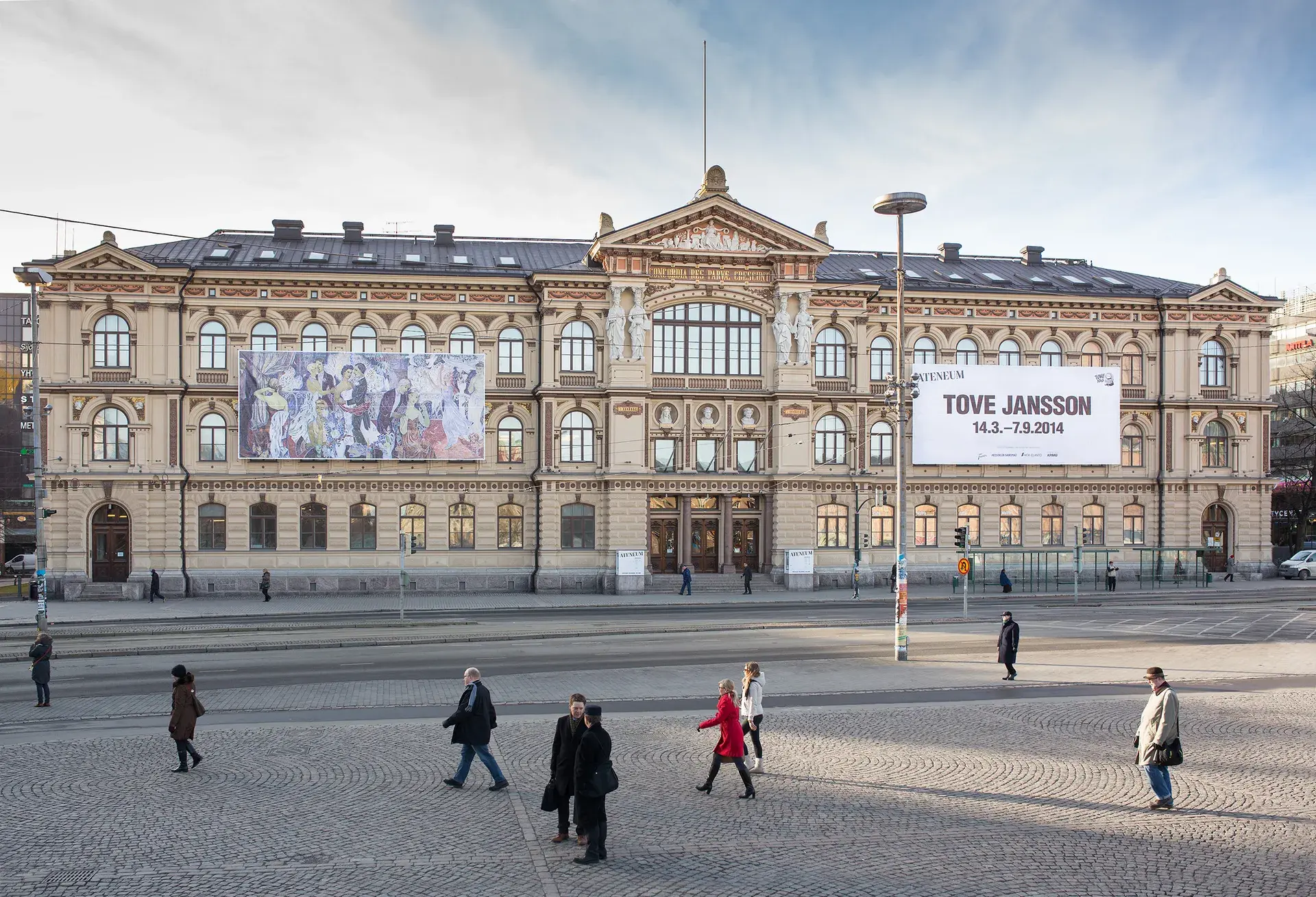
Designed by architect Theodor Höijer, the Ateneum stands as an archetype of Neo-Renaissance civic architecture. Its exterior is rich in allegorical and historical detail. Directly above the main entrance, carved bust reliefs depict the artistic masters Raphael, Donato Bramante, and Phidias, representing painting, architecture, and sculpture respectively.
Supporting the central pediment are four caryatids sculpted by Carl Eneas Sjöstrand, which symbolize architecture, painting, sculpture, and geometry, overseen by Pallas Athene, goddess of wisdom and arts. Directly below sits the Latin motto Concordia res parvae crescunt ("Through concord small things grow"), carved to commemorate the uneasy compromise of housing rival fine-art and applied-craft societies under one roof. Across the facade, 16 medallion reliefs by sculptor Ville Vallgren honor foundational figures in Finnish cultural history, including architect Carl Ludvig Engel and painter Aleksander Lauréus.
Vestibule and Interior Atmosphere
The building marks a distinct shift in environment from its central urban surroundings. While the facade faces the bustling transit hub of Railway Square, entering the vestibule transitions visitors into a tranquil interior. Daylight pouring from high windows illuminates a monumental stone staircase bordered by classical columns, leading upward toward the main exhibition halls.
Masterpieces of the Collection
As the principal classical art venue of the Finnish National Gallery, the Ateneum preserves an extensive collection dating from mid-18th-century rococo and Gustavian portraiture to mid-20th-century modernism. The permanent collection features definitive national masterworks, including Akseli Gallen-Kallela's Kalevala paintings, Hugo Simberg's The Wounded Angel, and acclaimed works by Helene Schjerfbeck and Albert Edelfelt.
The museum also holds an exceptional place in international art history. In 1903, the Ateneum became the first museum in the world to purchase a painting by Vincent van Gogh. His 1890 canvas, Street in Auvers-sur-Oise, was acquired via the Antell delegation through the efforts of Finnish artist Fanny Flodin and French critic Julien Leclercq.
Contemporary Role in Helsinki
Operating year-round, the museum showcases its collections alongside temporary exhibitions, educational events, an art bistro, and a museum shop. Following its 2023 renovation, the museum unveiled A Question of Time, a collection display presenting over 400 artworks organized around the core themes of nature, identity, modern life, and power.
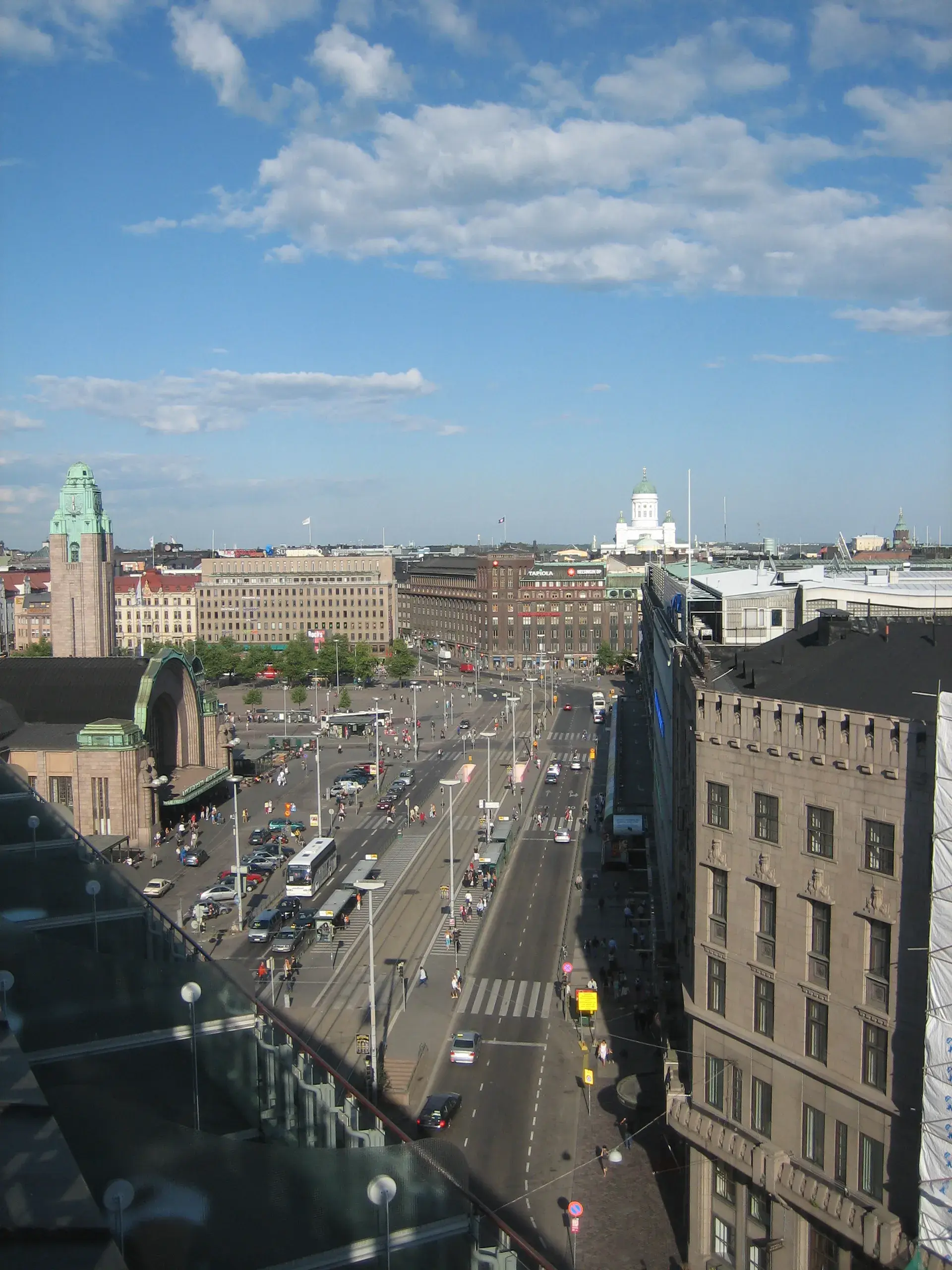
Positioned at Kaivokatu 2 along the southern edge of Rautatientori, the Ateneum stands opposite Eliel Saarinen's Central Railway Station and the Finnish National Theatre. In the city layout, the museum serves as a cultural and architectural link connecting the 19th-century neoclassical Senate Square district to the 20th-century civic monuments along Mannerheimintie.
FAQ
What significant artworks are displayed at the Ateneum?
The Ateneum holds key Finnish art from the mid-18th to mid-20th centuries, including Akseli Gallen-Kallela's Kalevala paintings, Hugo Simberg's The Wounded Angel, and works by Helene Schjerfbeck and Albert Edelfelt.
Why is the Ateneum significant to Vincent van Gogh's legacy?
In 1903, the Ateneum became the first public museum in the world to acquire a painting by Vincent van Gogh when it purchased his 1890 work 'Street in Auvers-sur-Oise'.
What does the Latin motto on the facade signify?
The inscription 'Concordia res parvae crescunt' ('Through concord small things grow') commemorates the historic agreement to house both fine arts and applied craft institutions within the same building.