Havis Amanda: Helsinki's Iconic Sea Nymph Fountain
History and the 1908 Controversy
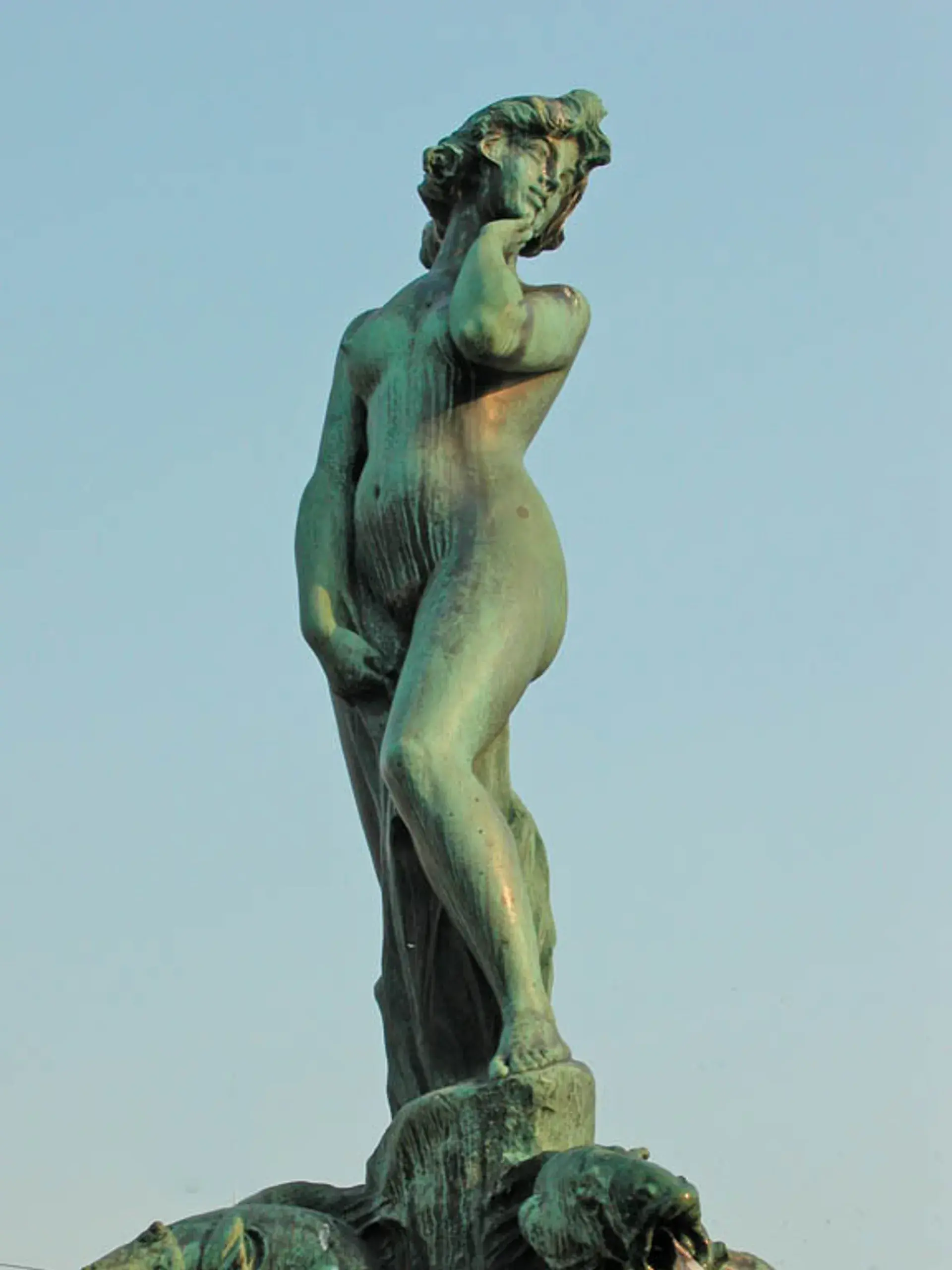
Havis Amanda stands as one of the most recognizable public landmarks in Helsinki. Commissioned by the City of Helsinki to symbolize the capital emerging from the sea, the monument was designed in Paris by sculptor Ville Vallgren and cast in bronze in 1906. Despite being created to represent the Finnish capital, Vallgren modeled the figure in his Parisian studio after a 19-year-old French woman named Marcelle Delquini.
When the statue was unveiled on September 20, 1908, it immediately stirred intense public controversy. Cultural conservatives and women's rights advocates condemned the work, criticizing its nude form and Parisian sensuality as indecent and out of step with austere national traditions. Over time, initial hostility dissipated, and the figure became an affectionate symbol of the city, often identified with the title "Daughter of the Baltic."
Design and Setting
The entire monument rises five meters high. At its center stands a 1.94-meter bronze nude sea nymph balancing upon swaying seaweed. The statue is anchored within a basin of pink Vehmaa granite, surrounded by four water-spouting fish at her feet and an outer perimeter of four bronze sea lions that spout water inward. The continuous flow from these figures produces a persistent splashing sound that filters through the ambient noise of surrounding street and port traffic.
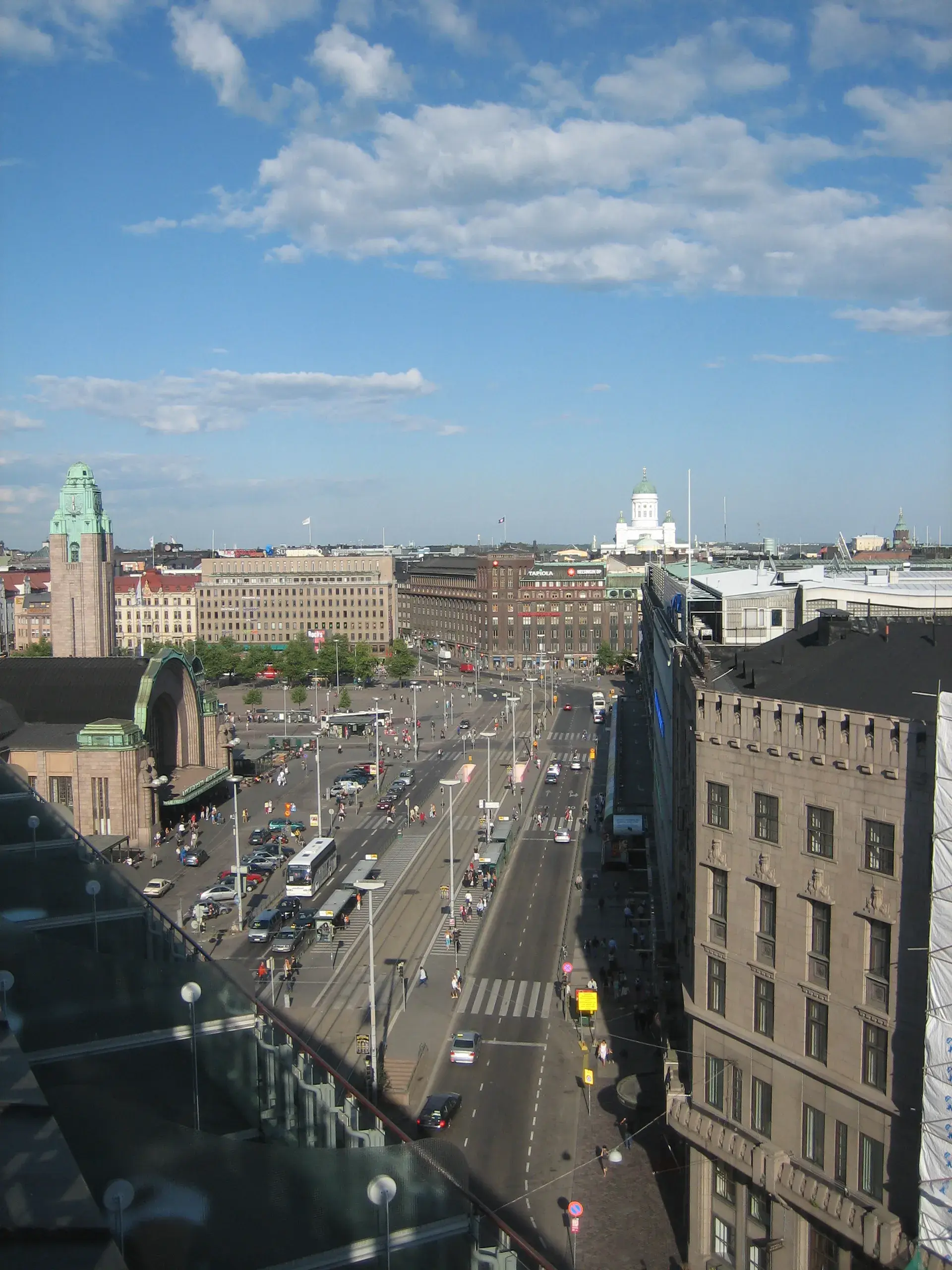
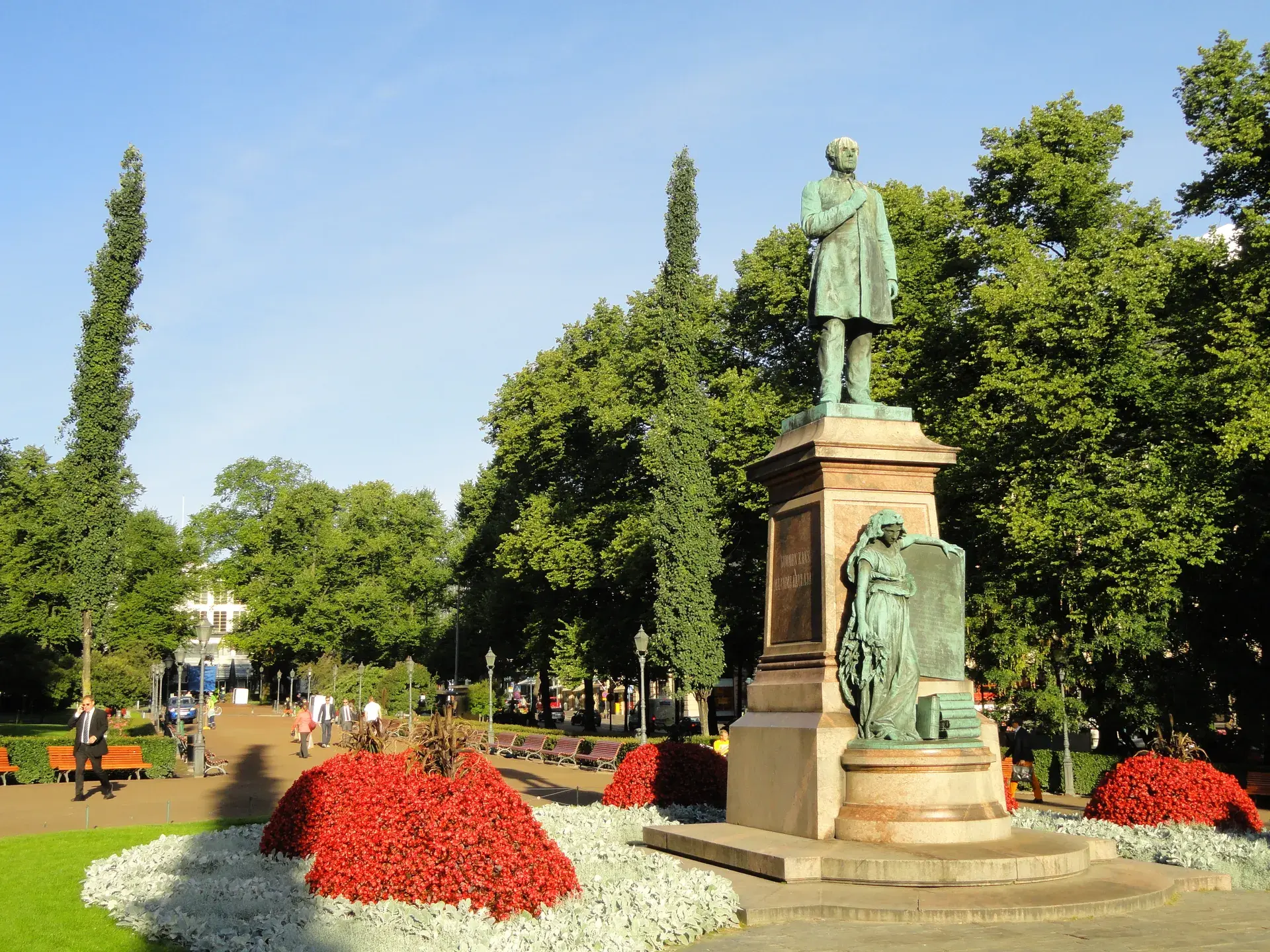
Managed by the Helsinki Art Museum (HAM), the fountain is located at the eastern end of the Esplanade Park promenade where the gardens open out into Market Square and the South Harbour. This placement creates a visual and physical bridge connecting the formal green urban space with the bustling waterfront.
Vappu and Public Celebrations
Havis Amanda is the traditional focal point for Helsinki's annual May Day Eve (Vappu) festivities on April 30. At 18:00, rotating student unions clean the bronze statue and lower a large white student cap (ylioppilaslakki) onto her head using a crane. This capping prompts thousands of onlookers gathered across the harbourfront to don their own white caps simultaneously. The ritual began informally around 1909 as an unauthorized midnight prank by university students before the city officially permitted the ceremony in 1951.
Beyond May Day, the plaza around the fountain serves as the primary municipal gathering point for spontaneous public street parties, including gatherings following major international sporting victories.
Restoration and Heritage
Vallgren originally titled the sculpture Merenneito ("The Mermaid"), linking the concept to a folk ballad about a heartbroken woman named Amanda who drowned herself and was transformed into a sea nymph. Swedish-language newspapers later popularized the moniker Havis Amanda, while Finnish speakers commonly refer to the statue as Manta. An enduring urban myth claimed the fountain was an advertisement for the Havi soap manufacturer, but records prove the "Amanda" soap brand did not exist until the 1920s, well after the name was established.
To address structural wear caused by decades of celebration crowds and the corrosive effects of salty Baltic winds, the monument was completely dismantled between May 2023 and August 2024. This extensive conservation project modernized the interior pipelines and stabilized the historic bronze and granite before the fountain was reinstalled in late August 2024.
FAQ
Who modeled for the Havis Amanda statue?
Although commissioned to represent Helsinki, the statue was modeled in Ville Vallgren's Paris studio by a 19-year-old French woman named Marcelle Delquini.
What happens at Havis Amanda on May Day Eve?
Every April 30 at 18:00, student unions wash the bronze maiden and use a crane to crown her with a white student cap, prompting the crowd to put on their own caps.
When was Havis Amanda restored?
The monument was dismantled for structural conservation and pipeline modernization between May 2023 and August 2024 to repair damage from salty sea air and large crowds.