Oodi Central Library: Helsinki's Modern Living Room
A Centenary Gift to Finnish Democracy
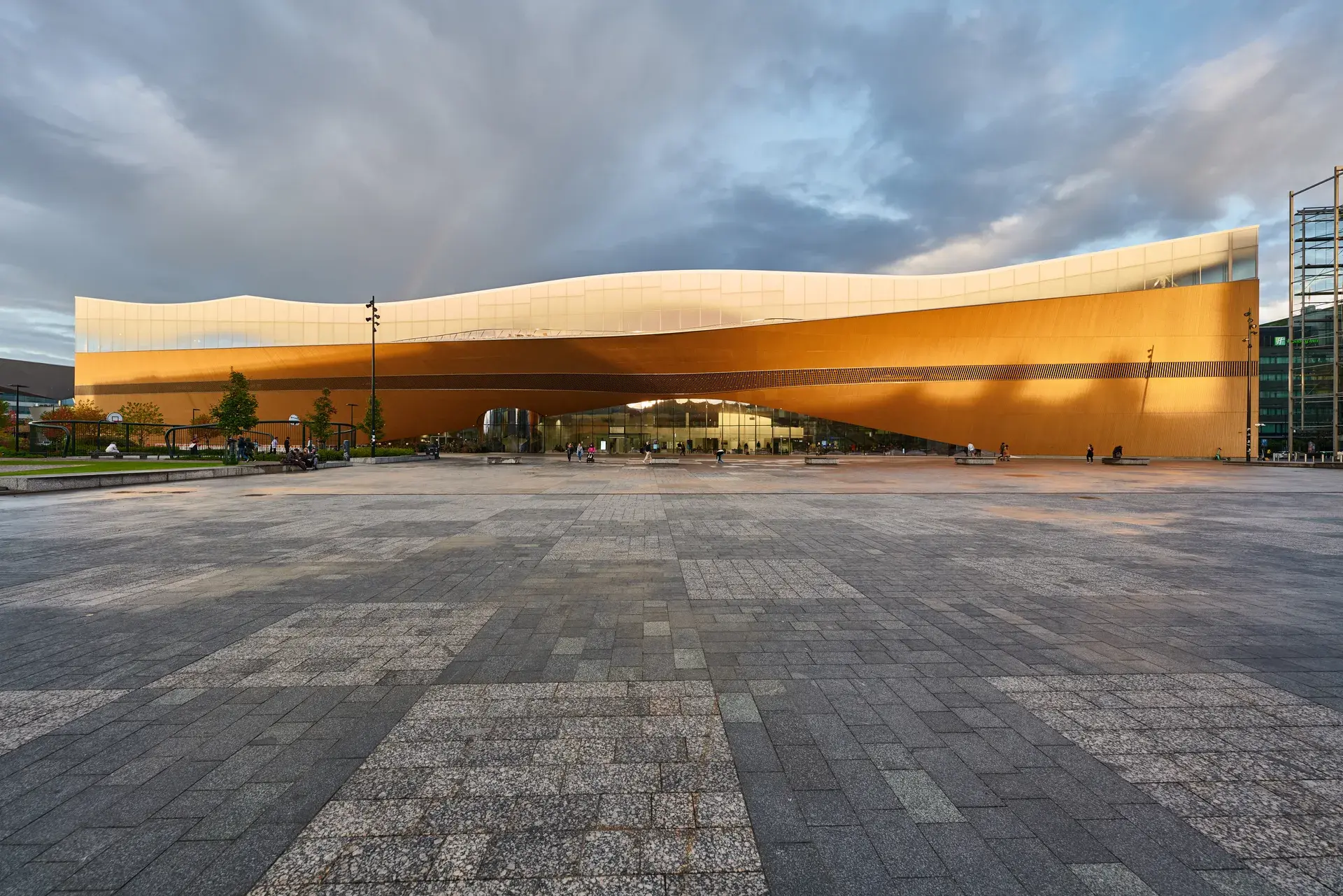
Helsinki Central Library Oodi (Helsingin keskustakirjasto Oodi) stands at Kansalaistori (Citizens' Square) in the capital's Töölönlahti cultural district. First championed in the late 1990s by Minister of Culture Claes Andersson, the project came to fruition on December 5, 2018. The building was presented to the public as a flagship national gift honoring the centenary of Finland's independence.
Designed to reflect Finland's updated Public Libraries Act, Oodi reinterprets traditional library services. Rather than functioning solely as a repository for printed volumes, the institution embodies a legislative mandate to foster active citizenship, lifelong learning, freedom of speech, and equal access to shared cultural tools. Its name, which translates to "Ode" in Finnish, was chosen through a public naming competition to celebrate literacy, education, and the nation's citizens.
Architectural Engineering on Kansalaistori
The library's design originated from an open international architectural competition held in 2012–2013 that drew 544 entries. The winning concept, titled "Käännös" (Turn or Translation), was created by Finnish firm ALA Architects and constructed by YIT. Covering approximately 17,250 square meters, the building is clad inside and out in native Finnish spruce timber.
To keep the ground floor entirely column-free and open, engineers anchored the structure to two massive steel arches spanning more than 100 meters. The curved timber exterior softens the surrounding district, which includes the Helsinki Music Centre (Musiikkitalo), the Kiasma Museum of Contemporary Art, and the Sanoma House media headquarters.
Three Vertical Atmospheres
Oodi operates seven days a week as a free, non-commercial civic space arranged across three vertical tiers, each offering a distinct acoustic profile and functional identity:
- Ground Floor: A fast-paced civic hub that combines an open lobby, a café and restaurant, multipurpose event halls, and Kino Regina, a 250-seat cinematheque operated by the National Audiovisual Institute.
- Second Floor: A hands-on civic workshop defined by the mechanical hum of creative activity. This maker space features 3D printers, laser cutters, sewing machines, digitizing stations, recording and editing studios, meeting areas, and a glass-walled workspace known as the Cube (Kuutio).
- Third Floor ("Book Heaven"): A serene reading sanctuary illuminated by natural daylight from continuous floor-to-ceiling glass and circular skylights. It features living indoor trees, an undulating wave-like spruce floor, a children's storytelling zone, a reading café, and a wide outdoor summer terrace. The timber surfaces and specialized acoustic ceilings absorb noise to maintain a diffused quiet.
Automated Logistics and Public Art
Despite its size, Oodi intentionally keeps only around 100,000 physical volumes on its shelves. The building prioritizes public workstations, fabrication spaces, and community gatherings over static archive storage, functioning instead as a dynamic portal to the city-wide Helmet library network.
Behind the scenes, returned books are sorted by cobots in the basement. Automated guided vehicles named Tatu, Patu, and Veera—named after famous Finnish children's book characters through a public vote—shuttle materials autonomously to the third floor via elevators.
At the core of the library, a black double-helix spiral staircase features the art installation Omistuskirjoitus ("Dedication") by artist Otto Karvonen. Painted directly onto the structure, the words represent submissions from the public, formally dedicating the library to varied groups including "the dreamers," "taxpayers," "refugees," and "the lonely."
Symbolic Dialogue with Parliament
Positioned directly across Kansalaistori from the Finnish Parliament House (Eduskuntatalo), Oodi maintains a deliberate civic dialogue with the state. The top-floor balcony and windows were specifically engineered to sit at eye level with the steps of the Parliament building. This architectural alignment serves as a visual metaphor, placing everyday citizens and their shared institution of knowledge on equal footing with government authority.
FAQ
Why does Oodi have only around 100,000 physical books?
Oodi prioritizes maker spaces, civic gathering, and communal fabrication equipment over long-term archive storage. It operates as an active portal to the broader metropolitan Helmet library network rather than an exhaustive book warehouse.
What is the artwork on the central spiral staircase?
The black double-helix staircase features the art installation Omistuskirjoitus (Dedication) by Otto Karvonen. It displays words submitted by the public to dedicate the library to a wide variety of groups, including dreamers, taxpayers, and refugees.
What are Tatu, Patu, and Veera in Oodi?
Tatu, Patu, and Veera are autonomous mobile robots that transport sorted books from the basement to the third floor using the library's elevators. They are named after popular Finnish children's book characters.