Uspenski Cathedral: Helsinki's Orthodox Landmark
The Orthodox Anchor of Helsinki's Skyline
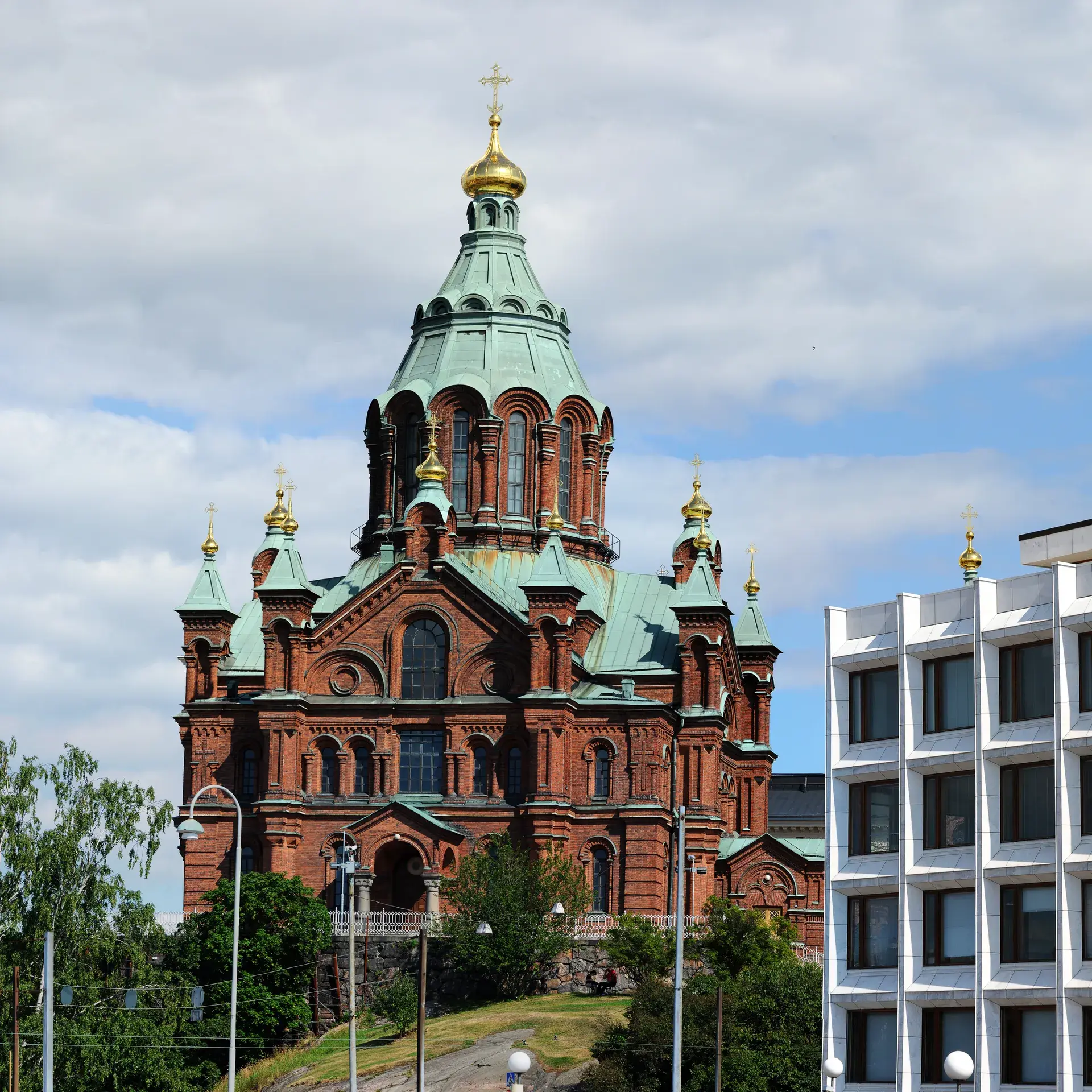
Perched atop a rocky outcrop on the Katajanokka peninsula overlooking Helsinki's South Harbour, Uspenski Cathedral stands as the largest Orthodox church in Northern and Western Europe. Dedicated to the Dormition of the Virgin Mary—derived from the Old Church Slavonic word uspenie—the cathedral presents a striking visual identity defined by a red-brick facade and 13 gilded, onion-shaped domes.
Positioned a 10-minute walk from Market Square and clearly visible to ferry passengers sailing to the Suomenlinna sea fortress, the structure forms an intentional architectural counterpoint to the neoclassical white Helsinki Cathedral. Together, the two landmarks reflect Finland's historic position between Russian-Orthodox and Western-Lutheran spheres of influence.
Imperial Origins and Recycled Fortress Bricks
After Helsinki became the capital of the autonomous Grand Duchy of Finland within the Russian Empire in 1812, Tsar Alexander I decreed in 1814 that 15 percent of an import tax on salt would fund two grand houses of worship: one Lutheran and one Orthodox. Built to serve Helsinki's expanding Orthodox community and demonstrate imperial presence without imposing faith on the predominantly Lutheran public, the cathedral was largely financed by parishioner donations.
Designed by architect Aleksei M. Gornostajev in the Russian-Byzantine revival style, construction began under Ivan Varek following Gornostajev's death in 1862. The cathedral's exterior walls contain roughly 700,000 recycled red bricks. These materials were salvaged from the ruins of Bomarsund Fortress in the Åland Islands, which had been demolished by British and French forces during the Crimean War, and transported to Helsinki by barge. The cathedral was consecrated on October 25, 1868, and a commemorative plaque on the rear exterior honors Tsar Alexander II, who reigned during its construction.
Interior Atmosphere and Architecture
The interior of Uspenski Cathedral offers a distinct sensory environment filled with the scent of incense and melting beeswax candles. Consistent with traditional Orthodox architecture, the cavernous space lacks pews, emphasizing openness under a central cupola that rises 33 meters high. This massive dome is supported by four solid granite pillars.
Historic Relics and High-Profile Thefts
Over the years, Uspenski Cathedral has housed notable religious treasures that became targets of high-profile thefts. In August 2007, an antique icon depicting St. Nicolas was stolen in broad daylight while visitors were inside the sanctuary.
In June 2010, the historic Mother of God of Kozeltshan icon—revered as a miracle-working relic associated with the healing of a Russian girl—was taken from the cathedral. Thieves stripped the piece of its jeweled pearl offerings and buried it under dirt and snow. The icon was recovered eight months later and subsequently restored by conservators from Valamo Monastery.
Current Services and Visitor Access
Uspenski Cathedral functions as the mother church of the Orthodox Parish of Helsinki and the Diocese of Helsinki. Divine services are conducted primarily in Finnish, with an annual festive service (praasniekka) held every August 15 to celebrate the Feast of the Dormition.
Attracting approximately 500,000 visitors each year, the cathedral also serves as a concert venue. Tourist entry requires a 5-euro admission fee for adults, while access remains free for attendees of divine services and visitors under the age of 18.
FAQ
What style of architecture is Uspenski Cathedral?
The cathedral was designed by architect Aleksei M. Gornostajev in the Russian-Byzantine revival style, highlighted by 13 gilded onion domes and a red-brick exterior.
Where did the materials for the cathedral's walls come from?
The building was constructed using approximately 700,000 recycled red bricks transported by barge from the ruins of Bomarsund Fortress, which was destroyed during the Crimean War.
What is the admission policy for Uspenski Cathedral?
General tourist admission is 5 euros for adults, while entry is free for visitors under 18 years of age and individuals attending divine services.