Aleksis Kivi Monument in Turku: History & Design
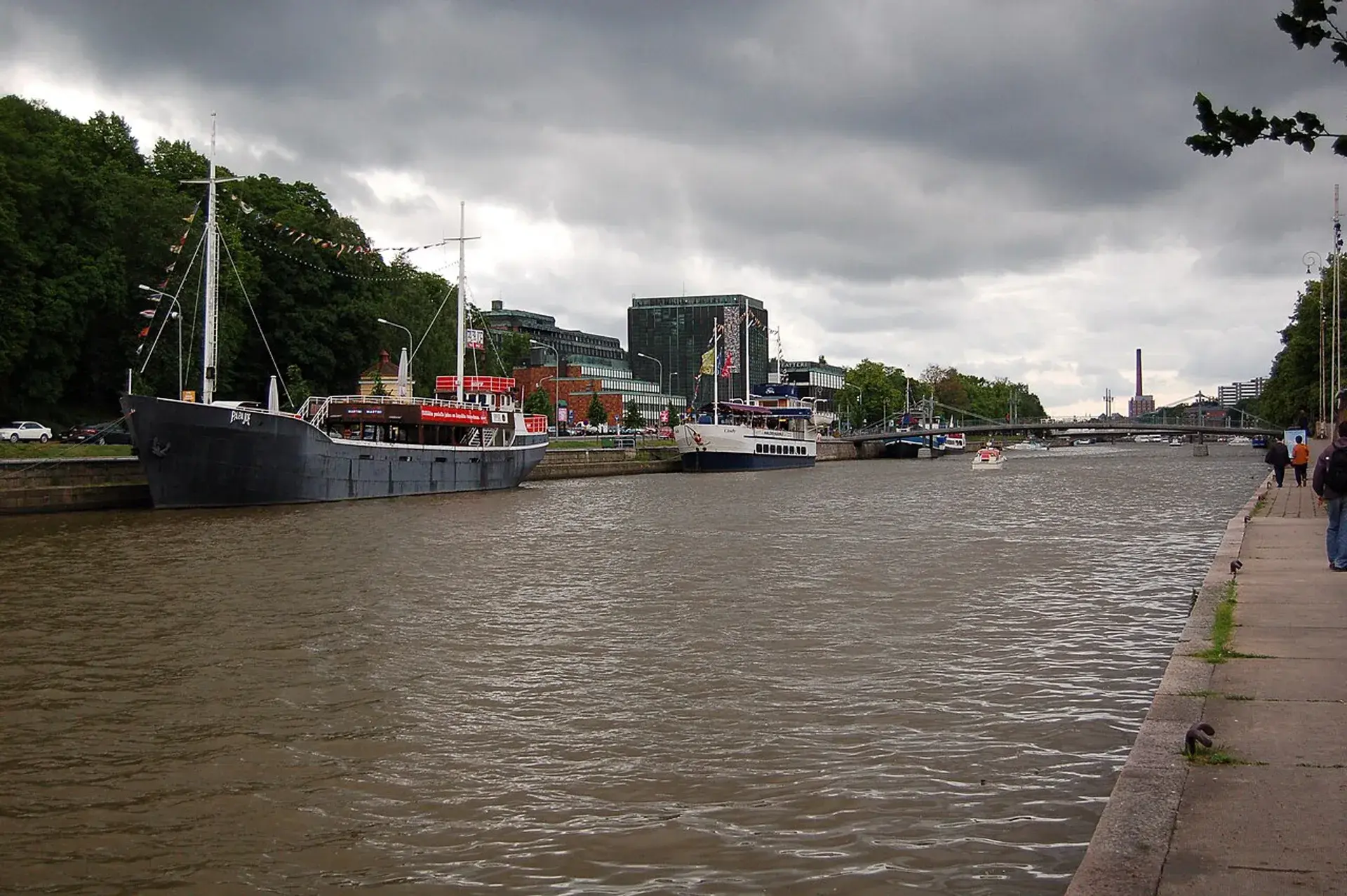
The Aleksis Kivi Monument (Aleksis Kiven muistomerkki) in Turku pays tribute to Aleksis Kivi (1834–1872), recognized as Finland's national author. Positioned along the pedestrian esplanade of Itäinen Rantakatu directly outside the Turku City Theatre (Turun kaupunginteatteri), the monument forms an enduring part of the city's public art landscape. The artwork is owned by the Turku City Art Collection and serves as both an assembly point and a cultural anchor along the Aura River.
Designed by renowned sculptor Wäinö Aaltonen, the sculpture features a dark bronze portrait head measuring approximately one meter in height, elevated on a rough-hewn red granite pedestal that stands roughly two meters tall. This juxtaposition of traditional materials contrasts with the geometric, modernist glass-and-stone facade of the adjacent theatre building.
The Likeness and Its Macabre Origins
One of the most notable aspects of the Aleksis Kivi Monument is how Aaltonen reconstructed the author's appearance. No authenticated photographs of Kivi were taken during his lifetime. As a result, artists seeking to depict him relied on a deathbed sketch produced by his friend Ernst Albert Forssell while Kivi lay dying or in an open coffin, a depiction later adapted into an illustration by Albert Edelfelt.
During historic debates surrounding how Kivi should be memorialized, disagreements over his physical features were so intense that some critics proposed exhuming the author's body to measure his skull. Rather than pursuing rigid anatomical recreation, Aaltonen chose an idealized depiction focused on conveying the writer's inner soul and mental landscape. The resulting head in Turku is an adapted variation of the one Aaltonen sculpted for his full-figure seated monument of Kivi, which was unveiled in Helsinki’s Railway Square in 1939.
Creation and Journey Across Turku
Aaltonen gifted the plaster model of Kivi's head to the City of Turku under the condition that municipal authorities fund its casting in bronze. The casting was completed between 1948 and 1949, and the monument was officially unveiled on May 21, 1949.
Its original home was on Yliopistonkatu outside the Phoenix building, which served at the time as the main building of the University of Turku near the Market Square. When the Phoenix building was slated for demolition, the sculpture was temporarily moved to the Turku Concert Hall (Konserttitalo). After the completion of the modernist Turku City Theatre along the Aura River, the monument was relocated to its permanent riverside position outside the theatre entrance on September 8, 1962.
Kivi's Literary Connection to Turku
While Kivi spent much of his life elsewhere, archival notices from the newspaper Suometar confirm that he visited Turku in October 1864 before continuing onward to Helsinki. Turku also makes a memorable appearance in his landmark novel Seitsemän veljestä (Seven Brothers). In the book, the eldest brother Juhani reflects on his own excursion to Turku, warning his siblings that vanity, worldly temptations, and powdered ladies abound in the city.
The monument’s location outside the municipal theatre carries additional theatrical significance. Between 1972 and 1976, directors Kalle Holmberg and Ralf Långbacka staged an acclaimed production of Seven Brothers at the venue. Starring celebrated actors including Esko Salminen, Vesa-Matti Loiri, and Heikki Kinnunen, the production drew roughly 350,000 theatergoers from across Finland.
Riverfront Cultural Context
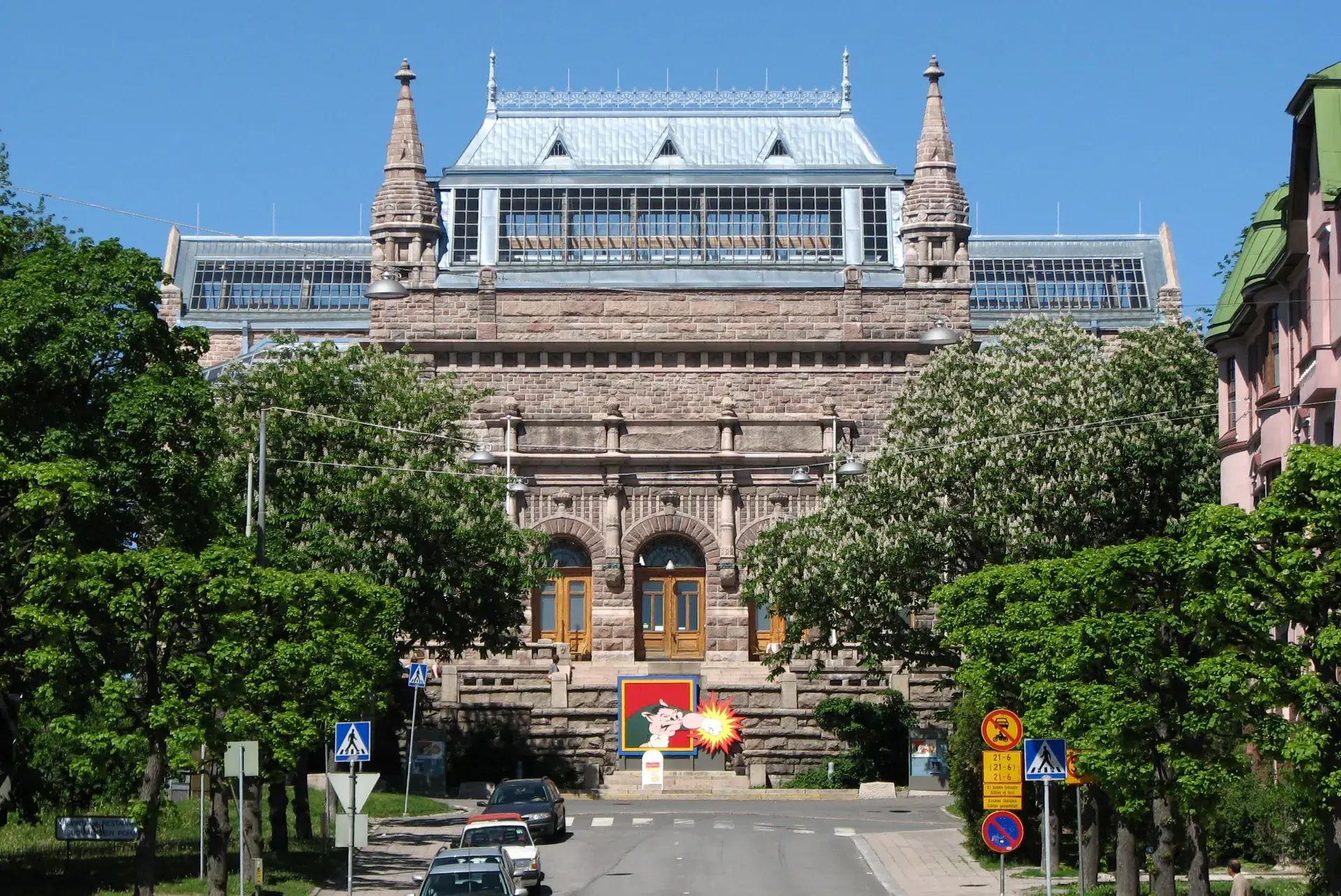
Standing on the eastern riverbank, the Aleksis Kivi Monument is integrated into Turku’s civic cultural corridor. Situated near the Wäinö Aaltonen Museum of Art located further downriver, the sculpture maintains a tangible link between the artist's legacy, mid-century modern architecture, and Finland's foundational literary history.
FAQ
Who created the Aleksis Kivi Monument in Turku?
The monument was created by sculptor Wäinö Aaltonen. The bronze head is an adapted variation of the head from Aaltonen’s 1939 seated monument of Aleksis Kivi located in Helsinki.
How was the author's likeness determined if no photographs exist?
Because no photograph was ever taken of Aleksis Kivi during his lifetime, Aaltonen based the author's likeness on a deathbed sketch drawn by Kivi's friend Ernst Albert Forssell, which was later adapted into an illustration by Albert Edelfelt.
Where has the monument been located in Turku over time?
The monument was first erected in 1949 on Yliopistonkatu outside the University of Turku's Phoenix building. It was later temporarily held at the Turku Concert Hall before being installed in front of the Turku City Theatre in September 1962.