Turku Art Museum: Granite Castle on Puolalanmäki
A Granite Landmark on Puolalanmäki
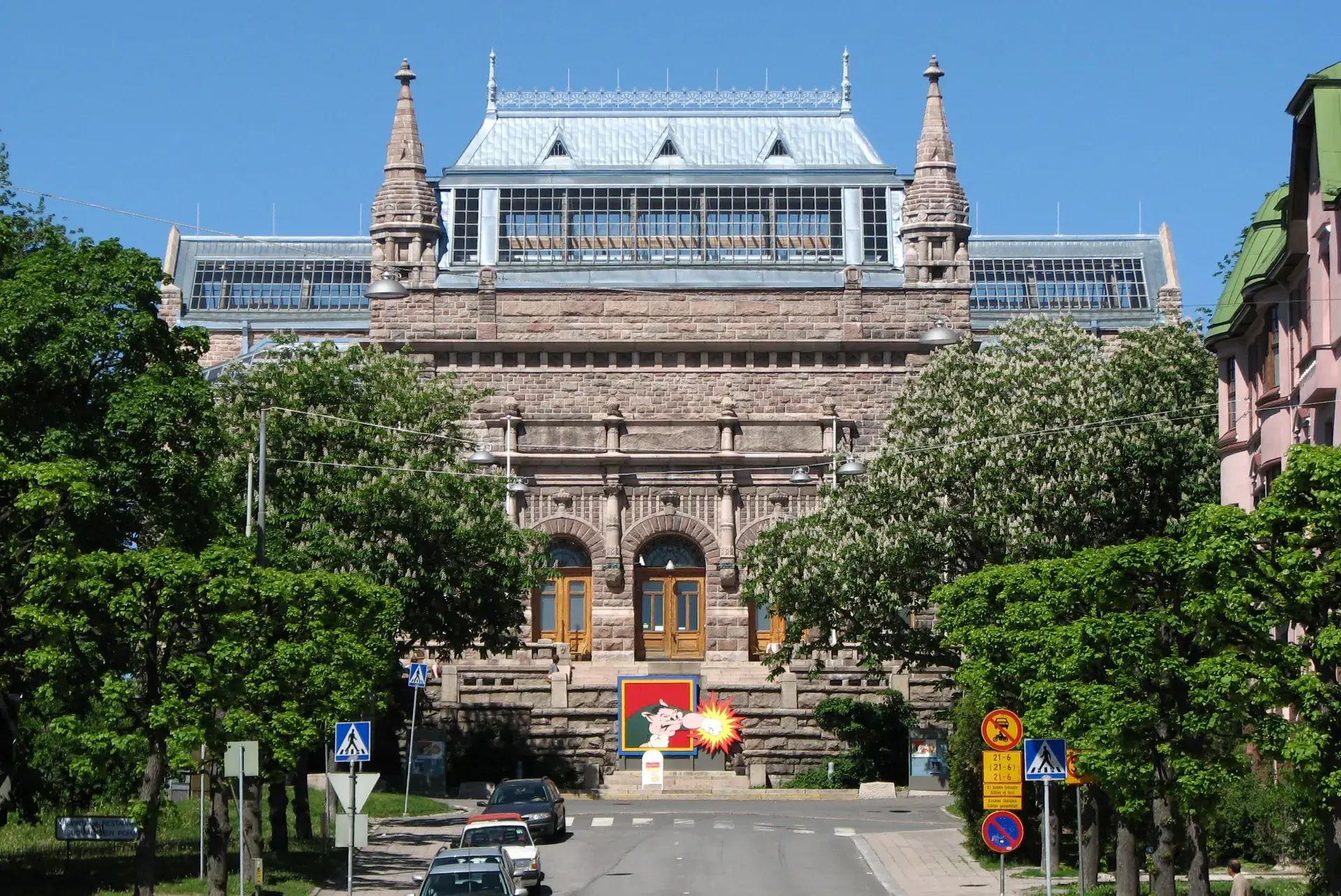
Perched atop Puolalanmäki—one of Turku's seven historic hills, rising approximately 35 meters above sea level—the Turku Art Museum (Turun taidemuseo) serves as a defining visual landmark. The building stands directly at the visual terminus of Aurakatu, completing an axial vista that rises from the Aura River and passes through the central Market Square. Built from dark, rusticated red granite ashlar blocks, the structure resembles a medieval stone keep or redoubt, presenting a rugged stone exterior that contrasts with the surrounding greenery.
Puolalanmäki was historically an informal district populated by timber cottages, some of which survived the Great Fire of Turku in 1827. In 1900, architect Gustaf Nyström won an invitational competition funded by brothers Ernst and Magnus Dahlström to design a building that would house both an art museum and a drawing school. Constructed between 1901 and 1904 in the Finnish National Romantic and Neo-Romanesque styles, it became the second purpose-built art museum in Finland, preceded only by the Ateneum in Helsinki.
Architecture and Expansion
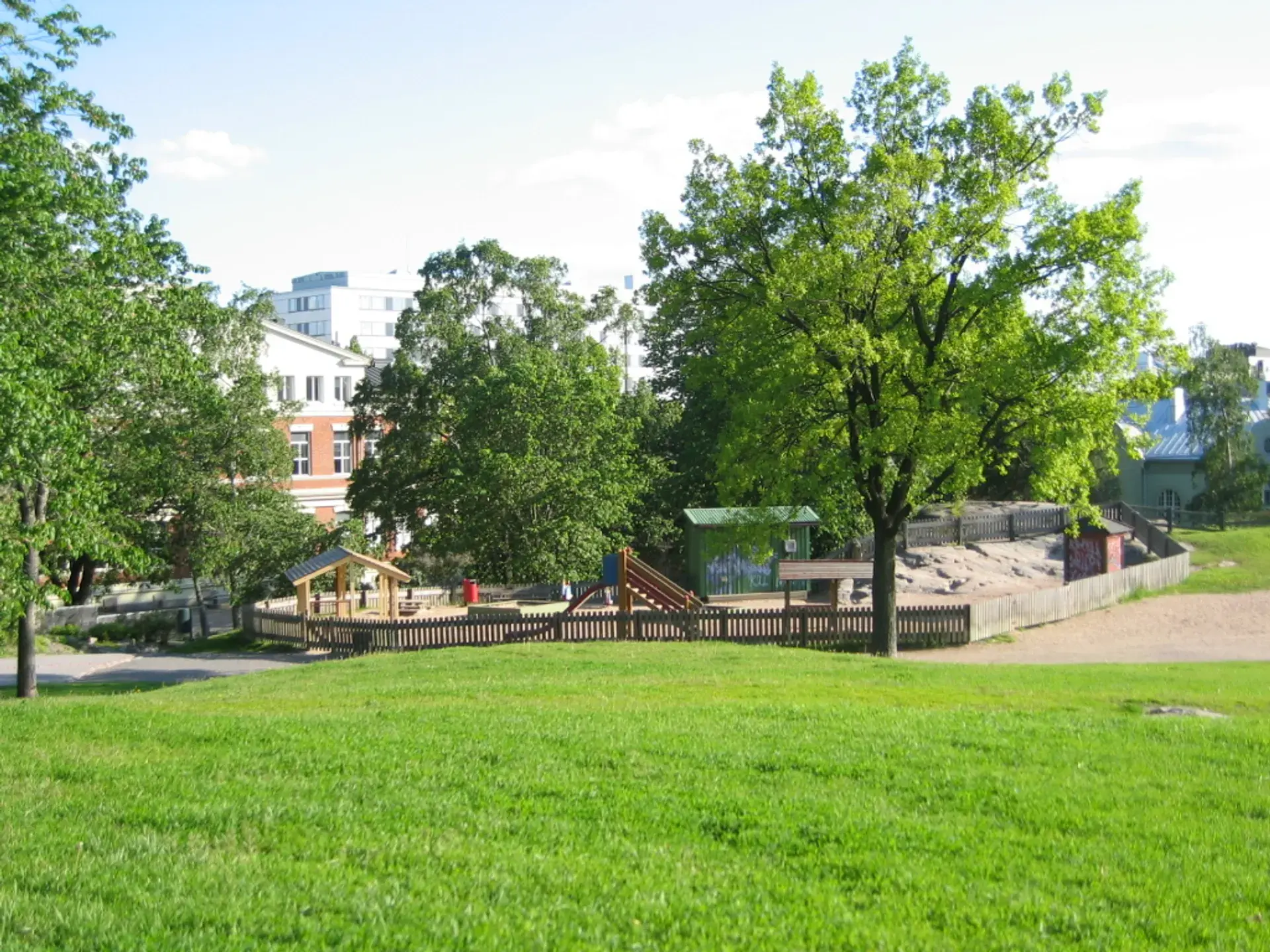
The completion of Nyström’s granite museum shifted the urban development of Puolalanmäki. Surrounding the building, an English-style public park known as Puolalanpuisto was established, accompanied by early 20th-century Art Nouveau (Jugendstil) residential buildings along the park edge, including Päivölä (1908) and Albatross (1910).
Between 2000 and 2004, the museum underwent major renovation work. This project introduced an underground vault dedicated to secure art storage and added a modern vertical circulation tower at the rear of the building. Constructed of glass and steel to house elevators and emergency stairs, this addition was designed to create an intentional visual contrast with the heavy historic stonework.
The Entrance Herms by Wäinö Aaltonen
Instead of conventional freestanding statues, the entrance to the museum is flanked by classical Greek-style herms. Positioned alongside the grand terrace stairway, these monolithic 4.1-meter-high rectangular granite pillars are topped with stern portrait busts chiseled by sculptor Wäinö Aaltonen between 1924 and 1926. Unveiled in 1927, the herms depict painter Robert Wilhelm Ekman and landscape painter Victor Westerholm, the museum's first director.
Public Sculptures in Puolalanpuisto
The grounds surrounding the museum contain several public artworks that reflect various eras of Finnish sculpture:
- Joutsenet (The Swans, 1959): Located in the park, this bronze fountain sculpture by Jussi Mäntynen depicts swans in flight. Mäntynen, who spent earlier years working as the chief taxidermist at the Helsinki Zoological Museum, applied his deep knowledge of animal anatomy directly to bronze wildlife casts.
- Statue of Friendship Between Leningrad and Turku (1969): Positioned behind the museum, this bronze sculpture by Antti Louhisto depicts four stylized figures locked in an embrace on a red granite plinth, marking 15 years of sister-city ties with Soviet Leningrad.
A separate bronze bust of Vladimir Lenin by sculptor Mikhail Anikushin, presented by Leningrad in 1977, was long situated near the foot of the hill along Aurakatu before being removed into city storage following the Russian invasion of Ukraine.
Collections and Civic Traditions
The building was gifted to the City of Turku by the Dahlström brothers, while its art collection continues to be managed by the Turku Art Society (Turun Taideyhdistys), established in 1891. The museum oversees a permanent collection of more than 7,600 works and hosts a regular schedule of rotating exhibitions featuring both historical and contemporary art. Visitors can also access Café Victor, which features an outdoor terrace overlooking the Aurakatu city axis, along with a museum shop.
The terrace and front steps remain an active part of civic life in Turku. Each year during May Day (Vappu), crowds assemble at the foot of the museum steps to don their white graduation caps, continuing a local tradition that has been observed continuously since 1949.
FAQ
Who designed the Turku Art Museum?
The museum was designed by Finnish architect Gustaf Nyström, who won an invitational design competition in 1900. Construction took place between 1901 and 1904.
What kind of sculptures stand at the entrance of the museum?
The entrance is framed by two 4.1-meter-tall granite herms carved by sculptor Wäinö Aaltonen between 1924 and 1926. Unveiled in 1927, they portray painter Robert Wilhelm Ekman and artist and museum director Victor Westerholm.
What annual celebration is held on the museum steps?
Since 1949, the front steps and terrace have served as the gathering place for Turku's annual May Day (Vappu) celebration, where crowds gather to put on their student caps.