Leningrad Friendship Statue: Cold War Art in Turku
Origins and Diplomatic Context
In 1953, the city of Turku established twin-city ties with Leningrad (now Saint Petersburg), marking one of the earliest official twinned-city partnerships between a Finnish municipality and the Soviet Union. To commemorate the fifteenth anniversary of this agreement, Turku commissioned the Friendship Statue (Leningradin ja Turun ystävyyden patsas), sculpted by Finnish artist Antti Louhisto between 1967 and 1968. The monument was officially unveiled on May 19, 1969.
Created during the Cold War era of Finnish diplomatic balancing, often termed Finlandization, the artwork was conceived to celebrate civilian neighbourliness and peace rather than overt state ideology. While Turku traditionally emphasizes its historical identity as Finland's gateway to Sweden and the West, its Cold War monuments to Leningrad remain physical markers of twentieth-century geopolitical realities. The statue was initially planned for the grounds of the Turku Finnish-language Workers' Institute, but its substantial size prompted officials to relocate it to a more expansive hilltop park setting.
Folk Realism and Sculpture Design
Standing 2.5 meters tall atop a 0.5-meter pedestal of rough-hewn red granite quarried in Vehmaa, the sculpture presents a striking contrast of materials and textures. The rounded, weather-patinated bronze grouping consists of four stout, stylized figures arranged in an intimate circle to greet and embrace one another.
Rather than portraying political dignitaries or relying on classical allegorical motifs, Louhisto opted for a rustic folk aesthetic. The grouping depicts heavy-coated working people, comprising three men and a woman wearing a headscarf. Their low-slung, blocky forms meld together into a collective bronze huddle, evoking a shared embrace free of sharp, militaristic angles.
Setting in Puolalanpuisto
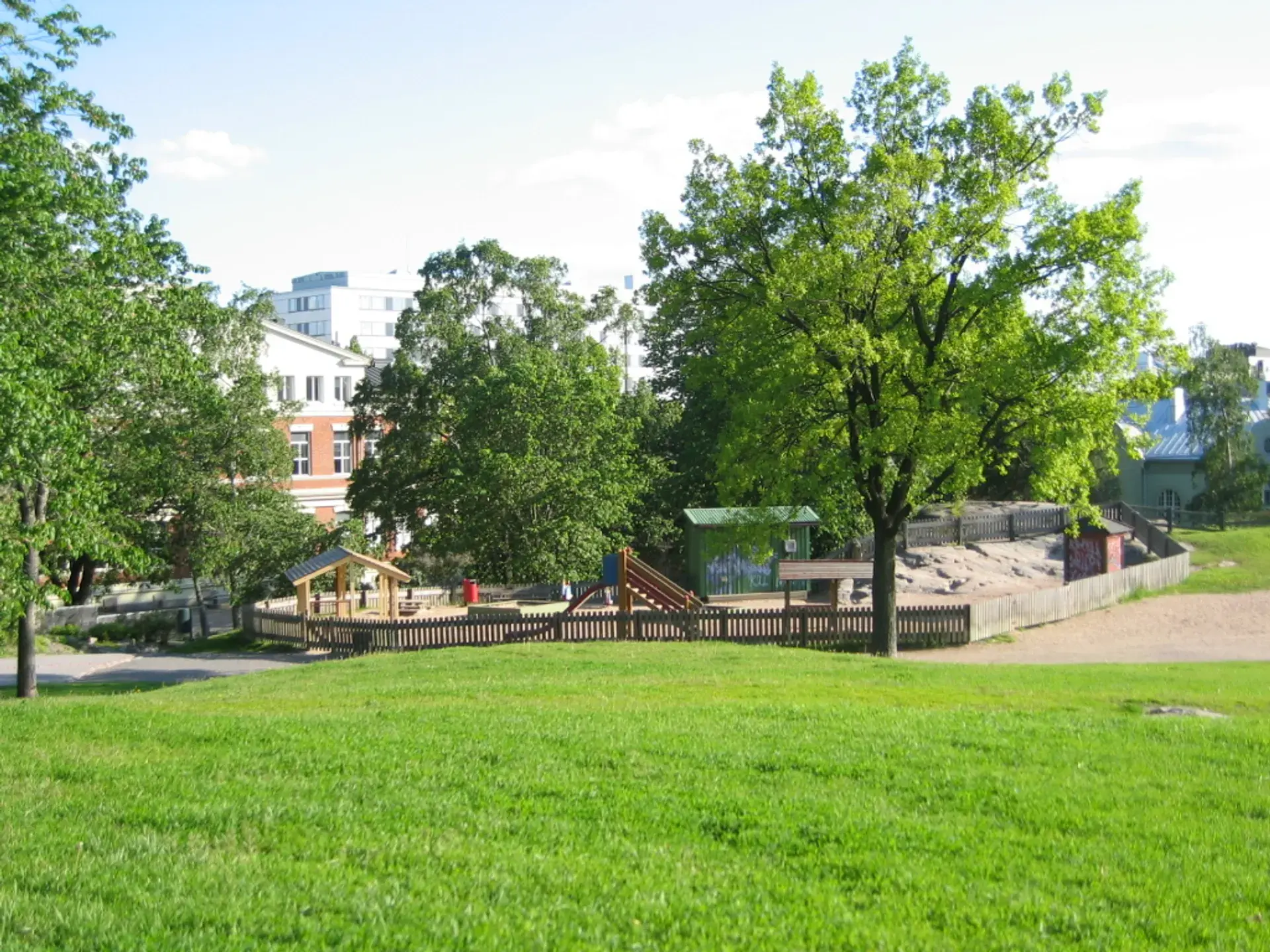
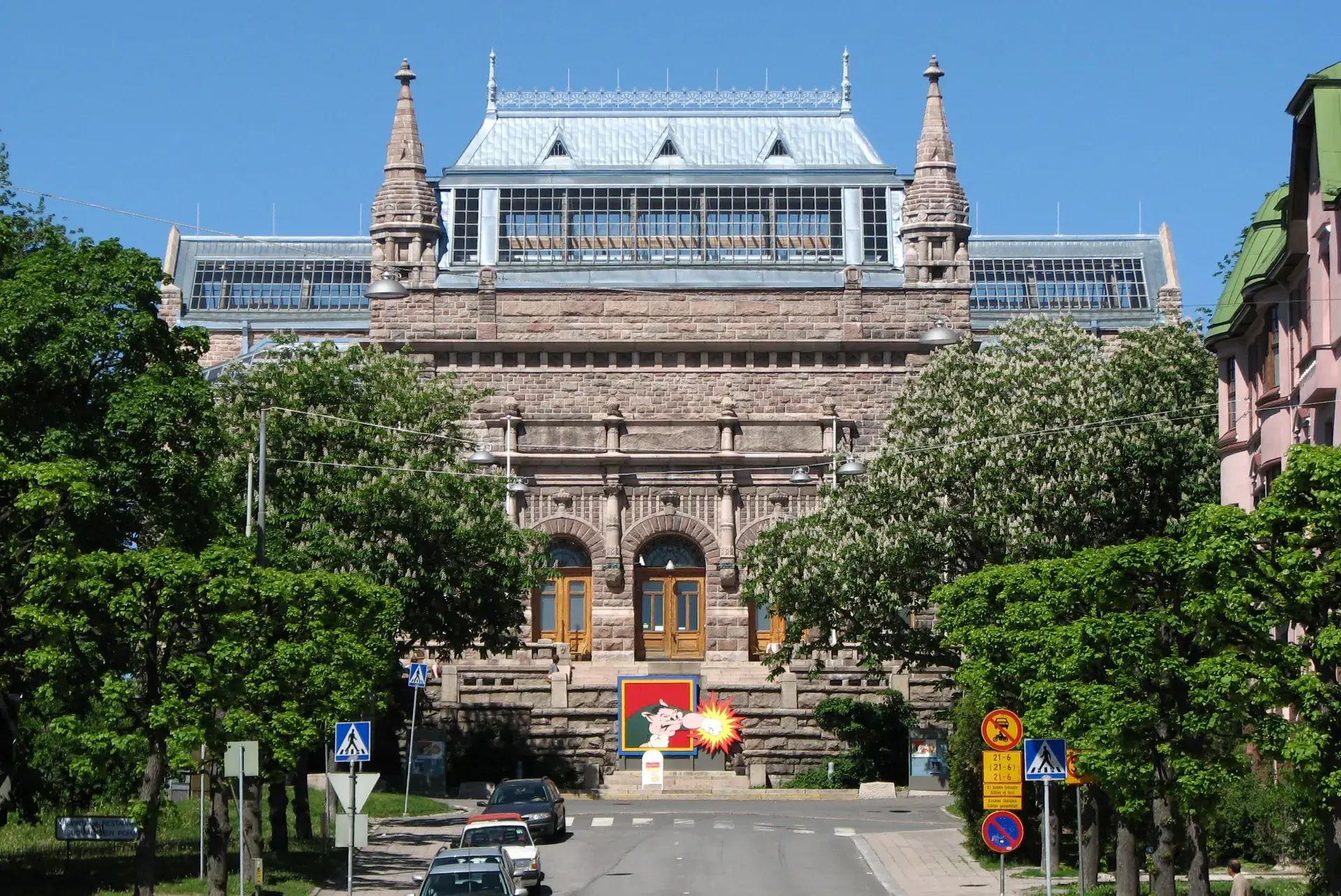
The statue stands outdoors in Puolalanpuisto on Puolalanmäki hill, situated near the Turku Art Museum. The park and its surrounding neighbourhood serve as an open-air display of Finnish art and architecture, characterized by mature oaks, elms, maples, and intact Art Nouveau residential villas. Within this setting, Louhisto's monument shares the area with granite herms by Wäinö Aaltonen and decorative animal fountains by Jussi Mäntynen.
Today, the Friendship Statue is maintained by the Turku Museum Centre as a component of the Turku City Art Collection.
Public Reaction and Contemporary Standing
Because of its direct association with the Soviet Union, the monument has long been one of the most frequently vandalized pieces of public art in Turku, regularly targeted with paint and graffiti over the decades.
Following the 2022 Russian invasion of Ukraine, Turku formally severed its twin-city relationship with Saint Petersburg and closed its representative Turku Centre. The municipality also took down a nearby bronze bust of Vladimir Lenin, which had been gifted by Leningrad in 1977, transferring it to museum storage. Louhisto's Friendship Statue, however, was permitted to remain in place on its granite plinth in Puolalanpuisto, continuing to stand as a historical artifact of mid-century diplomacy and Finnish figurative sculpture.
FAQ
Who created the Leningrad Friendship Statue and when was it unveiled?
The statue was sculpted by Finnish artist Antti Louhisto between 1967 and 1968, and it was unveiled in Puolalanpuisto on May 19, 1969.
What does the Friendship Statue depict?
It depicts four stylized, heavy-coated working people—three men and one woman wearing a headscarf—standing in a close circle to greet and embrace one another.
Why was the statue placed in Puolalanpuisto instead of its original intended site?
It was originally designed for the grounds of the Turku Finnish-language Workers' Institute, but due to its large scale, it was relocated to the hillside of Puolalanpuisto.
What happened to the statue after Turku severed ties with Saint Petersburg in 2022?
While Turku ended twin-city ties and placed a nearby 1977 bust of Vladimir Lenin into storage, Louhisto's Friendship Statue was kept in place in Puolalanpuisto.