Harmonia: Achim Kühn’s Aura River Sculpture
An Iconic Fluke in the Aura River
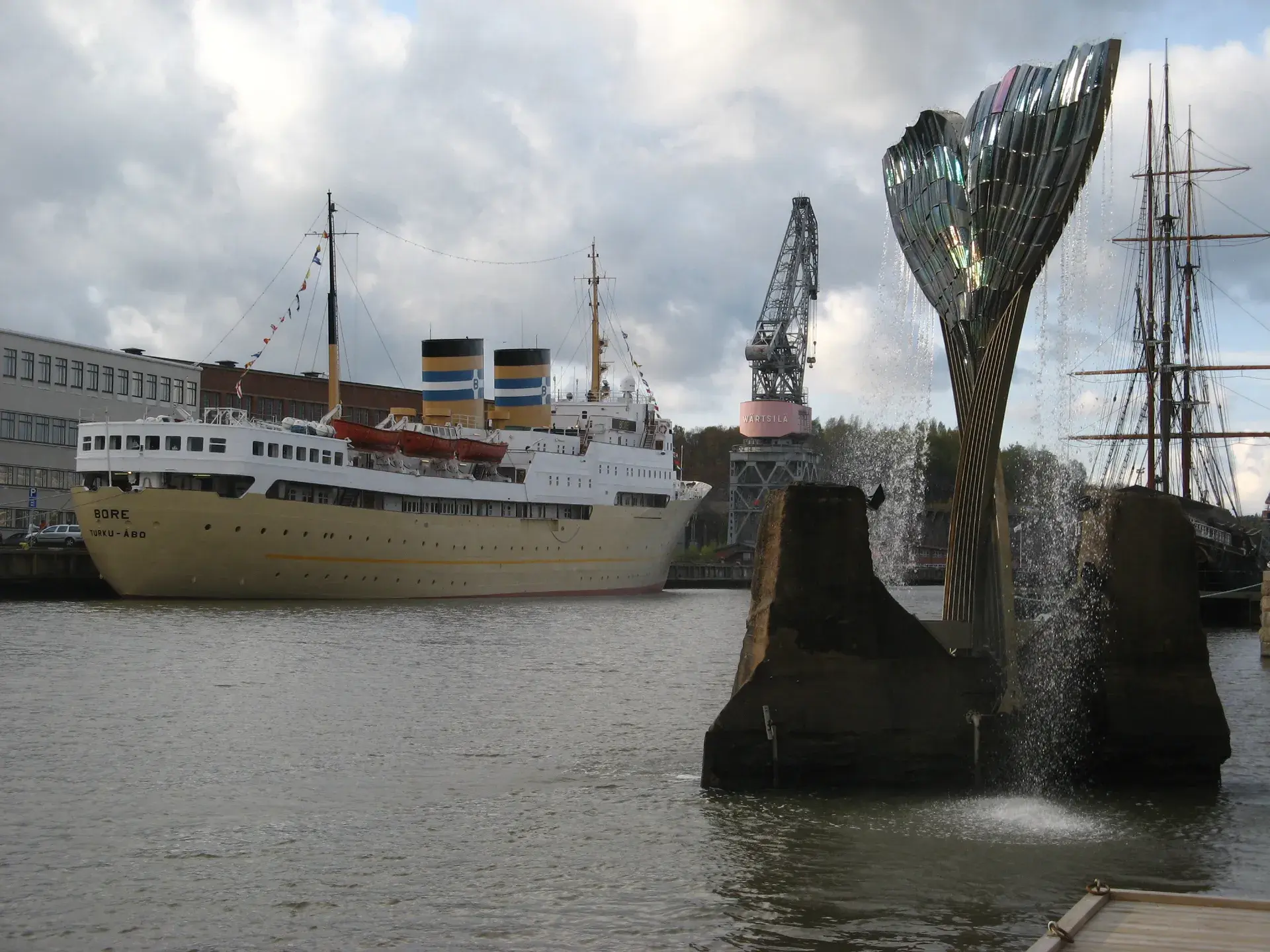
Unveiled in 1996, Harmonia is a 6.3-meter-tall public artwork positioned directly in the waters of the Aura River near the Turku Guest Harbour along Läntinen Rantakatu. Created by Berlin-based artist-blacksmith Achim Kühn, the piece is known locally as Valaan pyrstö ("The Whale’s Tail") and belongs to the City of Turku Art Collection.
The sculpture was commissioned under the Pro Cultura Foundation’s European Sculpture City initiative (Eurooppalainen veistoskaupunki), an effort that introduced contemporary international art throughout Turku in the mid-1990s. Kühn, who studied architecture at the Bauhaus University in Weimar and trained in the Berlin metal workshop of his father Fritz Kühn, considers the installation one of the central achievements of his career.
Craftsmanship and Seasonal Operation
Harmonia is fabricated from approximately 280 hand-forged, acid-resistant stainless steel plates. Its surface was treated electrolytically to create an iridescent, scale-like sheen that subtly shifts in hue when exposed to direct sunlight.
In addition to serving as a visual landmark, the structure functions as an active water fountain. Between May and October, water is pumped from the Aura River bed and dispersed through an array of small perforations along the tail flukes. This creates cascading curtains of water accompanied by a continuous splashing sound. During freezing winter conditions, the water system is turned off, and the steel frame is illuminated by spotlights mounted on the riverbank.
Industrial Foundations and Maritime Heritage
Rather than resting on an artificial pedestal, Harmonia is anchored directly to the submerged concrete foundation of a decommissioned harbor crane. This site choice embeds the artwork in the physical remnants of the lower Aura River’s working past, representing the district's transition from heavy industrial shipbuilding—historically driven by shipbuilders such as Wärtsilä and Crichton-Vulcan—into a cultural and pedestrian corridor.
The cetacean form also connects with local maritime history. During the 19th century, Turku-based whaling expeditions set sail from the wharves of the lower river to the Arctic and Pacific Oceans. In addition to Harmonia, Kühn produced a second public sculpture for Turku, Sepän soinnut ("The Blacksmith’s Chords"), which is located nearby inside the Sigyn Concert Hall.
FAQ
What is the sculpture Harmonia made of?
Harmonia is constructed from roughly 280 hand-forged, acid-resistant stainless steel plates that were electrolytically treated to create an iridescent sheen.
What is the sculpture anchored to?
The artwork is mounted directly onto the submerged concrete footing of a decommissioned harbor crane from Turku's former port and shipyard era.
Does Harmonia operate as a fountain year-round?
No. The fountain operates from May through October, pumping river water through the tail flukes. In winter, the water mechanism is shut off and the sculpture is lit with spotlights from the riverbank.
What historical events inspired the whale tail design?
Beyond its aquatic theme, the sculpture references the 19th-century whaling vessels that departed from the lower Aura River for expeditions in the Arctic and Pacific.