Pudelma Pavilion: Turku's Woven Timber Landmark
An Accidental Riverside Fixture
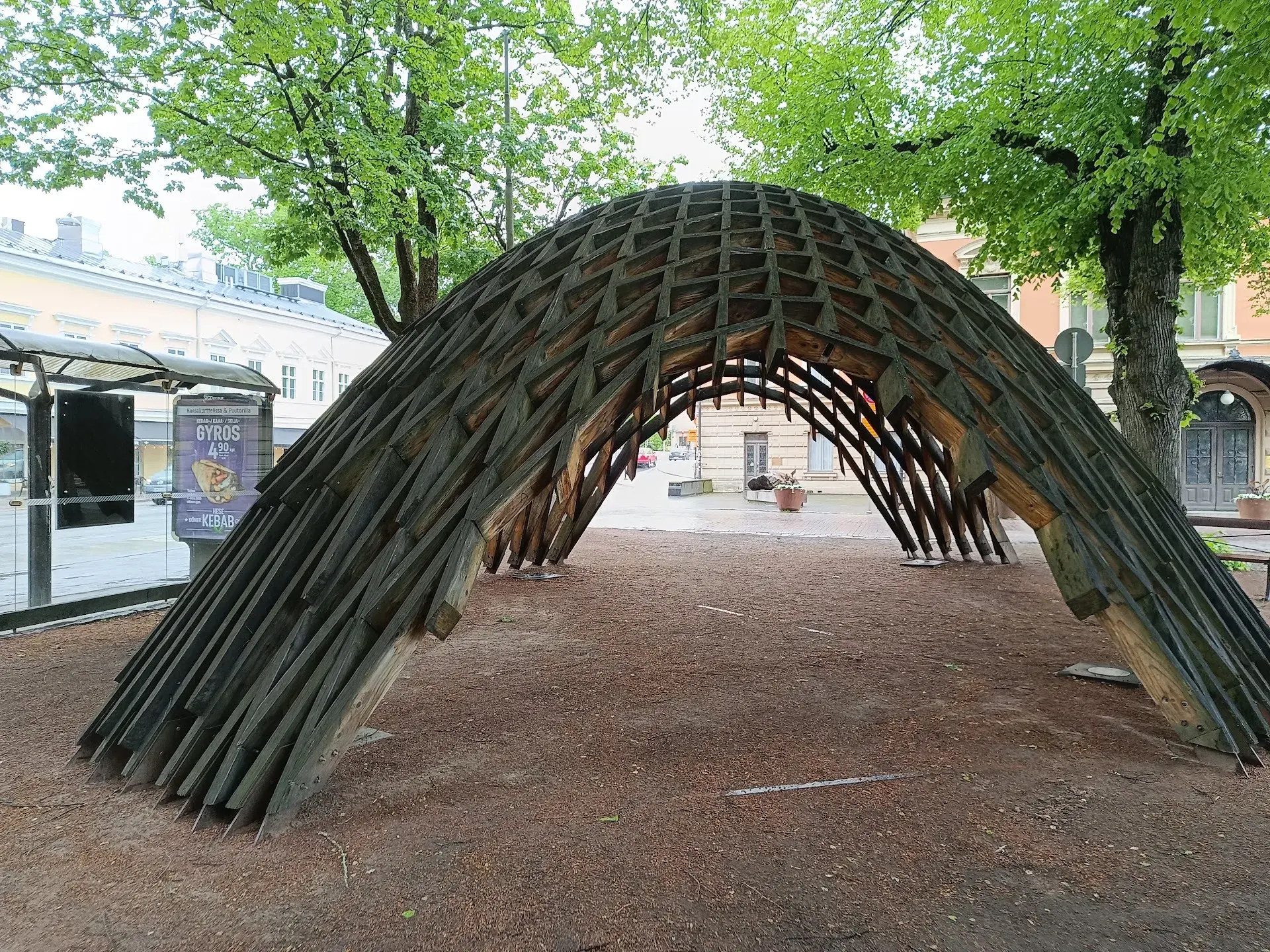
Situated in Turku City Hall Park (Kaupungintalon puisto) near Aurakatu and the Aura River embankment, the Pudelma Pavilion is an open-air timber structure covering approximately 70 square meters. Its name is a portmanteau of the Finnish words puu (wood) and kudelma (weave). Unveiled between August and September 2011, the structure was originally commissioned as an ephemeral summer installation celebrating Turku’s year as the European Capital of Culture.
Although conceived as a transient student project and seasonal venue, the pavilion proved immensely popular with residents and visitors. Over the subsequent decade, the City of Turku repeatedly evaluated proposals to dismantle or relocate the installation, but municipal authorities consistently deferred removal. As a result, the pavilion outstayed its original temporary remit to become an enduring fixture of the city's riverfront sculpture landscape.
Digital Craft and Timber Engineering
The pavilion originated when Finnish architect Eero Lundén, while studying at Columbia University in New York, persuaded American architecture students to relocate their annual international field project to Finland to study the nation's timber industry. The concept developed into a collaborative design and fabrication endeavor led by Lundén and architect Markus Wikar, joining faculty and students from Columbia University, the University of Oulu, and Aalto University, with financial backing from the Turku 2011 Foundation and the City of Turku.
The installation consists of 490 uniquely proportioned, cross-laminated timber beams made of Kerto-Q wood. These components, which range in length from roughly 0.5 to 2 meters, were fabricated using robotic CNC routers at the Woodpolis facility in Kuhmo. Despite its flowing, digitally modeled curve, the dome stands under pure compression without structural adhesives and virtually free of screws. The self-supporting structure relies on approximately 1,000 mortise-and-tenon joints, with each timber piece slotting directly into four neighboring elements to secure the weave under its own tension.
Global Recognition and Park Life
In 2012, the pavilion represented contemporary Finnish timber innovation on the international stage when it was featured in the New Forms in Wood exhibition at the Venice Architecture Biennale. Back along the Aura River, it bridges Turku's historic stone and bronze monuments with experimental contemporary civic design.
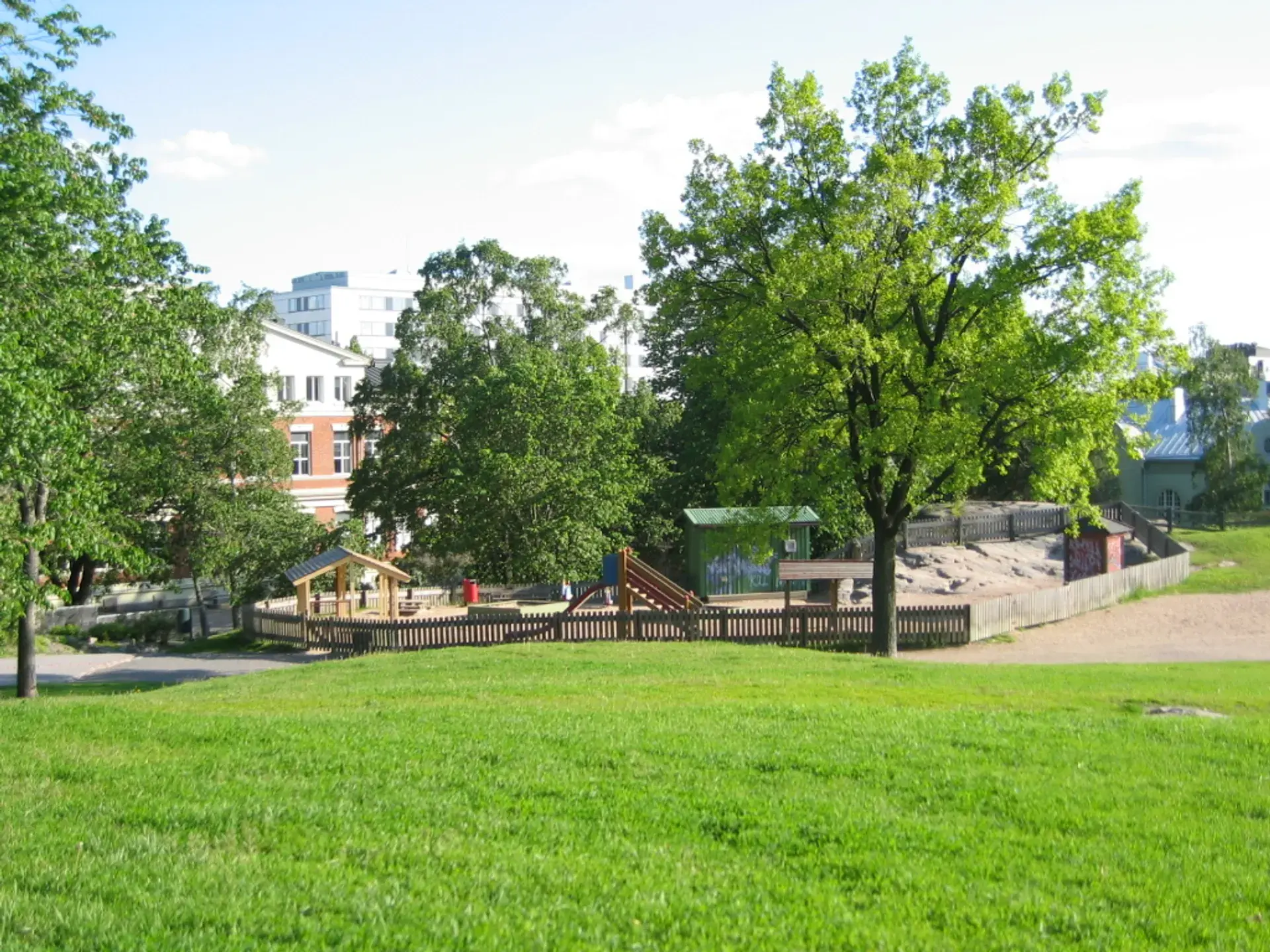
Today, Pudelma functions as an accessible public resting point and gathering area in City Hall Park. The multi-directional lattice acts as an open canopy, filtering daylight into shifting geometric shadow patterns on the gravel paths below while preserving clear views of Turku City Hall and the river. It also periodically serves as a community setting for outdoor exhibitions, cultural pop-ups, and temporary art installations.
FAQ
What does the name Pudelma mean?
The name Pudelma is a portmanteau merging two Finnish words: puu, meaning wood, and kudelma, meaning weave.
How is the Pudelma Pavilion held together without glue or screws?
The pavilion is a self-supporting dome that stands under pure compression. It utilizes approximately 1,000 robotic-milled mortise-and-tenon joints, with each timber component interlocking directly into four neighboring beams.
Why was the pavilion originally built?
It was constructed in 2011 as a temporary summer pavilion and collaborative student design project for Turku's tenure as the European Capital of Culture.
Discover Turku like never before
Dive into Turku hidden stories and secret spots with Ciceru interactive tours.
Explore tour
Audioguide
Quizzes
Maps
Solo
Couples
Groups & families
© Photo by Timo Koponen via Google Maps · Google Places