Lily of Turku: History of the Granite Sculpture
Origins and Sculptural Form
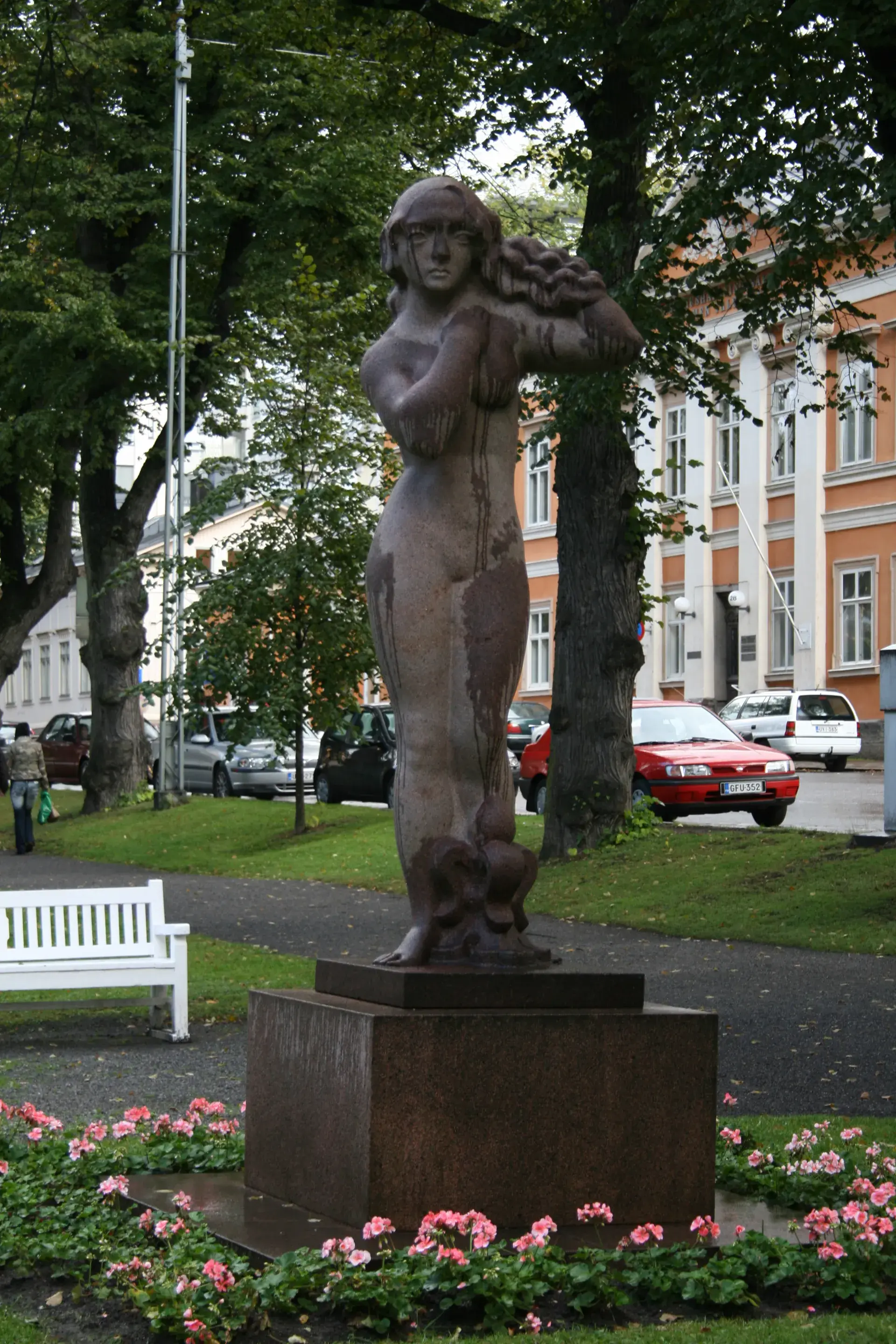
The Lily of Turku (Turun Lilja) is a modernist outdoor sculpture created by Finnish artist Wäinö Aaltonen. Carved between 1924 and 1926 at J. E. Forsman's stone workshop in Helsinki, the statue portrays a nude female figure positioned in a classical contrapposto stance, rising above a carved lily blossom at the base.
Aaltonen executed the sculpture in Vehmaa red granite. Coarse crystalline flecks embedded in the deep-red stone catch low sunlight reflected off the adjacent Aura River, contrasting with the smooth, curved contours of the figure.
From French Lily to Civic Emblem
When Aaltonen originally created the carving, the artwork had no civic connection to Turku. The sculptor initially titled the piece Ranskan Lilja ("French Lily"). In 1927, when the municipal council moved to purchase the sculpture, Aaltonen suggested renaming it Turun Lilja to link it directly to local civic identity.
The lily blossom carved at the figure's base echoes the fleur-de-lis on Turku's municipal coat of arms. This heraldic design originates from a 1309 medieval seal that depicted a Gothic letter "A" framed by Marian lilies honoring the patroness of Turku Cathedral. Unveiled in Runeberginpuisto on September 7, 1928, the monument stands as the first outdoor public artwork commissioned and purchased directly by the City of Turku.
Setting in Runeberginpuisto
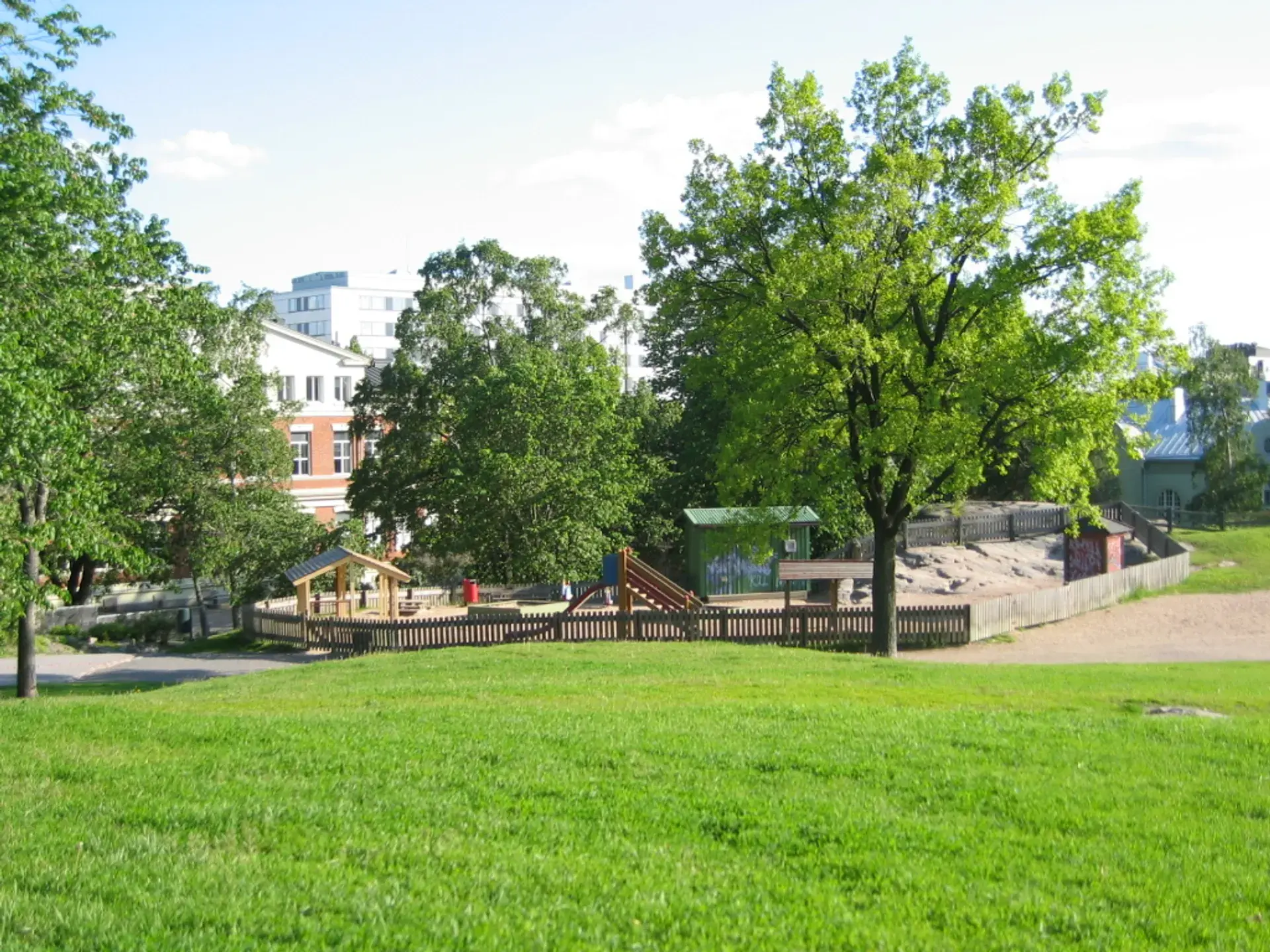
The statue stands in Runeberginpuisto (Runeberg Park), an elevated terraced public space situated along the Aura River adjacent to the Aura Bridge (Auransilta). The park grounds occupy the former Tullihuoneentori (customs square), which was laid out following the Great Fire of Turku. In addition to the sculpture, the terraced grounds are home to Finland's largest single-trunk maple tree.
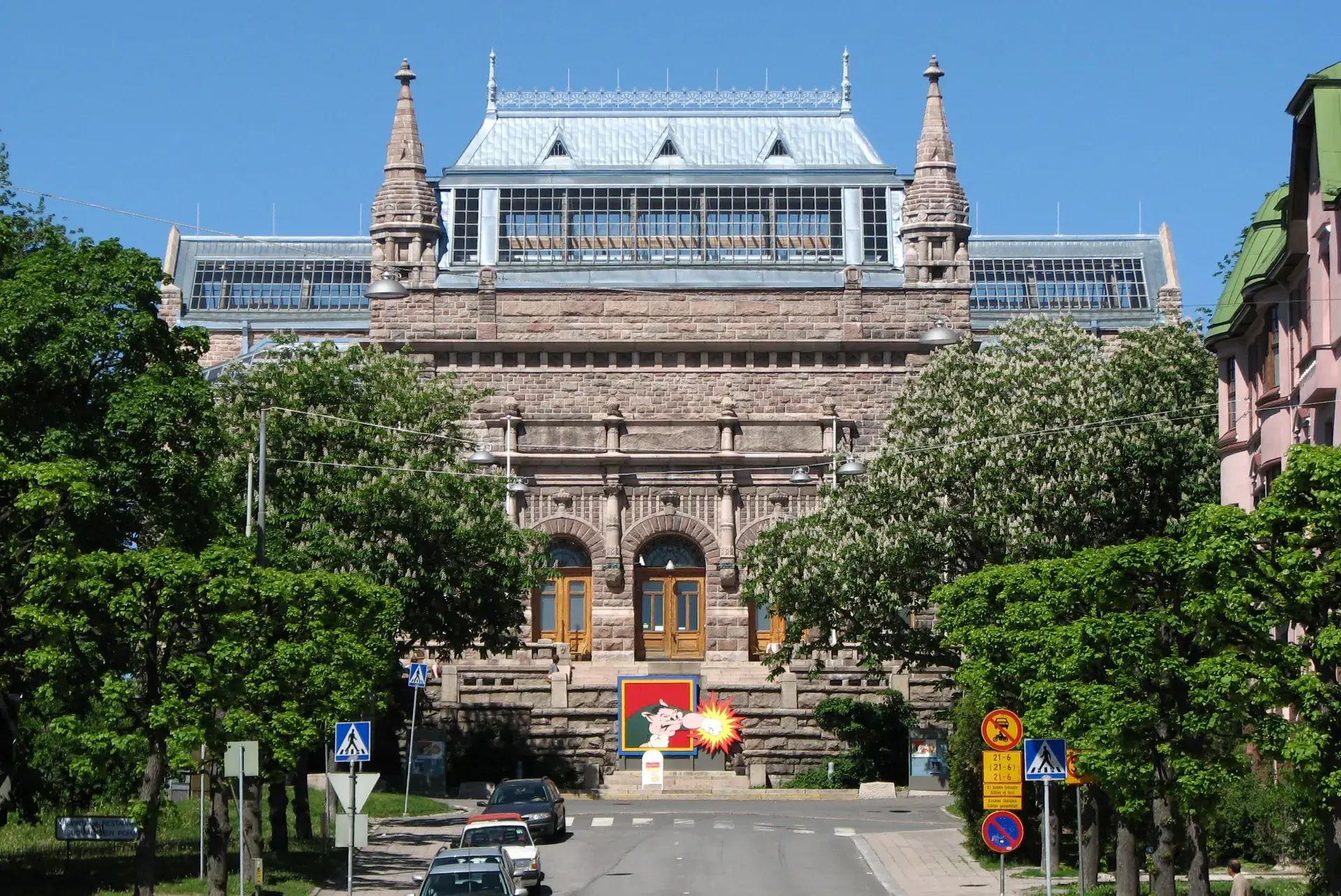
The monument is part of a broader local presence for Aaltonen, who lived and worked in the city. His public works and the dedicated municipal contemporary art museum, the Wäinö Aaltonen Museum (WAM), are located along the same riverfront.
May Day Eve and Student Traditions
The Lily of Turku serves as the central gathering place for May Day Eve (Vappuaatto) celebrations on April 30. Local university students initiated a statue-capping ritual in the spring of 1929 as an explicit local answer to the student capping of the Havis Amanda fountain in Helsinki.
In the late 1960s, student organizations introduced a washing ceremony. This ritual evolved into an annual event carried out by University of Turku dental students, who scrub the red granite figure with an oversized toothbrush before crowning her with an oversized white student cap.
FAQ
What material was used to carve the Lily of Turku?
The sculpture was carved from Vehmaa red granite at J. E. Forsman's stone workshop in Helsinki between 1924 and 1926.
Why was the sculpture renamed from French Lily to Lily of Turku?
Wäinö Aaltonen originally created the piece under the title Ranskan Lilja (French Lily). When the City of Turku moved to purchase it in 1927, Aaltonen suggested renaming it Turun Lilja to connect the carved lily to the fleur-de-lis found on Turku's 1309 municipal coat of arms.
What tradition takes place at the statue on May Day Eve?
Every April 30, crowds gather at the statue as University of Turku dental students scrub the granite figure using an oversized toothbrush and crown her with an oversized white student cap.