Maison Gobineau: Bordeaux's Neoclassical Flatiron
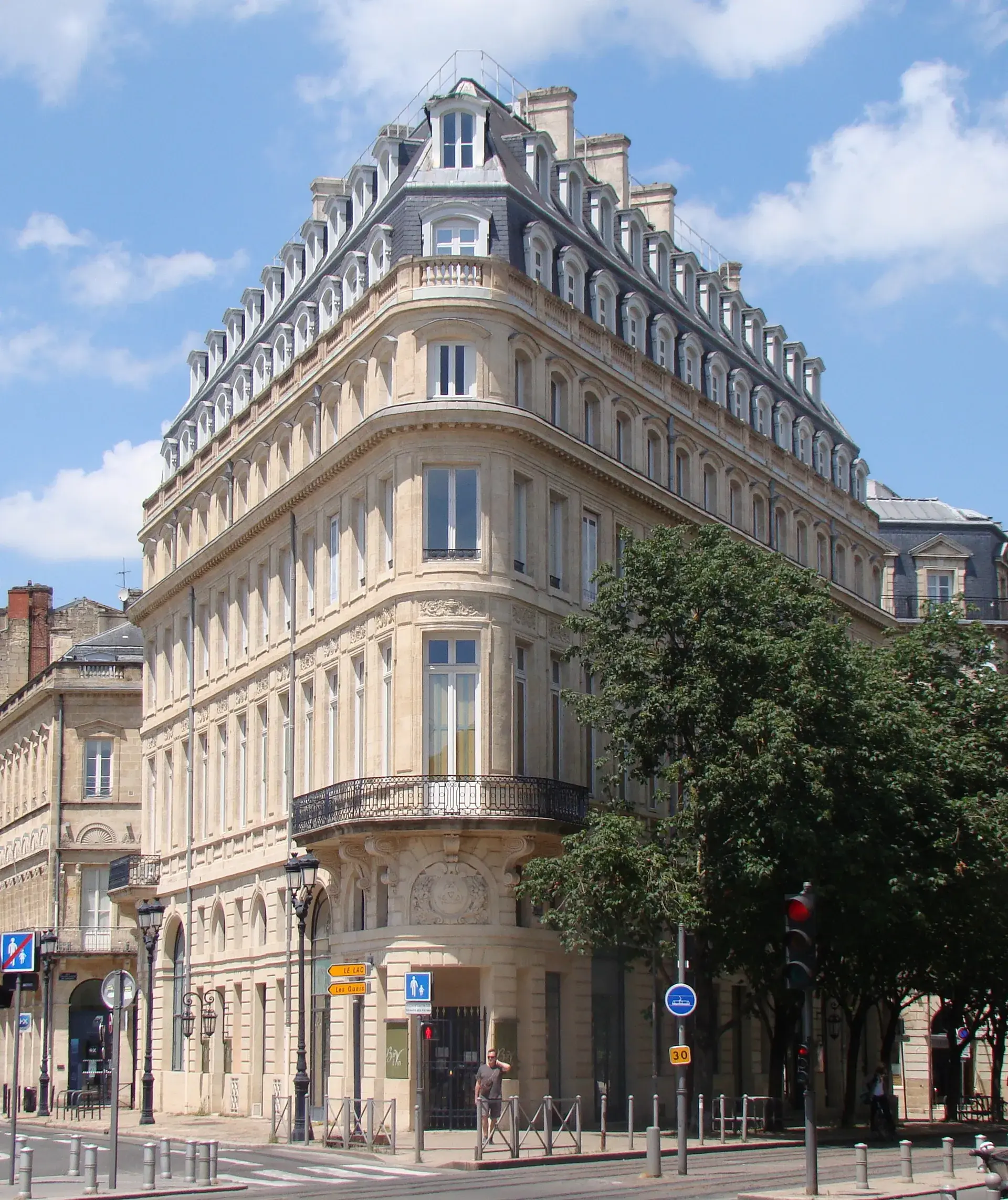
Positioned at 1 Cours du 30-Juillet, Maison Gobineau anchors the northern corner of Bordeaux's historic Golden Triangle (Triangle d'Or). With its acute triangular plan and distinctively rounded apex, the building acts as a structural pivot between the Place de la Comédie and the Allées de Tourny, channeling sightlines and movement toward the Esplanade des Quinconces. Though often nicknamed by locals as Bordeaux's own Flatiron Building, this pale limestone monument predates New York's famous skyscraper by more than a century.
18th-Century Origins and Urban Scenography
The construction of Maison Gobineau emerged from the late 18th-century dismantling of the Château Trompette fortress, an urban clearance that freed vital land between the river and Bordeaux's historic core. In 1787, architect Victor Louis—who had just completed the monumental Grand-Théâtre directly opposite—conceived the mansion as a deliberate piece of urban scenography. Executed by architect Gabriel Durand, construction began around 1788 to 1789 and reached final completion between 1789 and 1816.
Commissioned as a private residence (hôtel particulier) for Thibault-Joseph de Gobineau, a councillor in the Parliament of Bordeaux, the Neoclassical structure features pale Aquitaine limestone, curved balconies, and elegant stone balustrades. Its sharp wedge plan tapers to a rounded front angle (étrave). In local architectural tradition, this prow-like facade is interpreted as a nautical metaphor honoring Bordeaux's storied prominence as an Atlantic commercial shipping port.
Self guided walking tour of Bordeaux with audio guide
2 hours8 stopsAudio guideStart any day, at your own paceTicket on your phone · 30-day refundA Century of Reinvention: From Cinema to Citroën
Throughout the 20th century, Maison Gobineau transitioned from an aristocratic residence to a hub of commerce. By the early 1900s, it housed a hotel and a café-restaurant. Archival postcards from around 1908 reveal that the premises also functioned as an early temporary film projection hall, marked by a prominent "CINÉMA" marquee.
Physical changes accompanied its evolving uses. Around 1920, architect Raymond Mothe remodeled the property by adding two upper floors, seamlessly integrating them into the original Neoclassical facade to increase its overall height. In 1925, the ground level took on another pioneering commercial role when it opened as Bordeaux's first urban showroom for Citroën automobiles. The building later gained formal national recognition when it was designated as a French Monument Historique.
The Embassy of Bordeaux Wine
In 1948, Maison Gobineau entered its defining contemporary era by becoming the official headquarters of the Conseil Interprofessionnel du Vin de Bordeaux (CIVB), the governing trade organization for the regional wine industry. This stewardship earned the landmark its alternate title: La Maison du Vin de Bordeaux.
Today, the building’s ground floor operates as Le Bar à Vin, an official tasting room open to the public. The venue serves a rotating selection of Bordeaux appellations alongside regional pairings. Inside, wine service unfolds in an ambiance illuminated by mid-20th-century monumental stained-glass windows created by Bordeaux master René Buthaud—depicting Le Triomphe de Bacchus and À la Gloire de Bordeaux—complemented by a large Aubusson tapestry designed by artist Marc Saint-Saëns.
FAQ
Why is Maison Gobineau compared to New York's Flatiron Building?
Locals and guides often refer to Maison Gobineau as Bordeaux's Flatiron Building because of its sharp triangular footprint, even though it was designed in 1787—predating its New York counterpart by more than a century.
What is the symbolic meaning behind the building's rounded prow?
In local architectural lore, the rounded front corner (étrave) is viewed as a deliberate nautical metaphor reflecting a ship's prow, honoring Bordeaux's history as an Atlantic trading and maritime port.
Who designed and commissioned Maison Gobineau?
The mansion was designed in 1787 by architect Victor Louis and constructed by Gabriel Durand for Thibault-Joseph de Gobineau, a councillor in the Parliament of Bordeaux.
Can the public visit Maison Gobineau?
Yes. While the upper floors serve as the administrative offices for the CIVB wine council, the ground floor hosts Le Bar à Vin, an official tasting room open to the public offering Bordeaux wines by the glass.
More places in Bordeaux
bordeaux, france
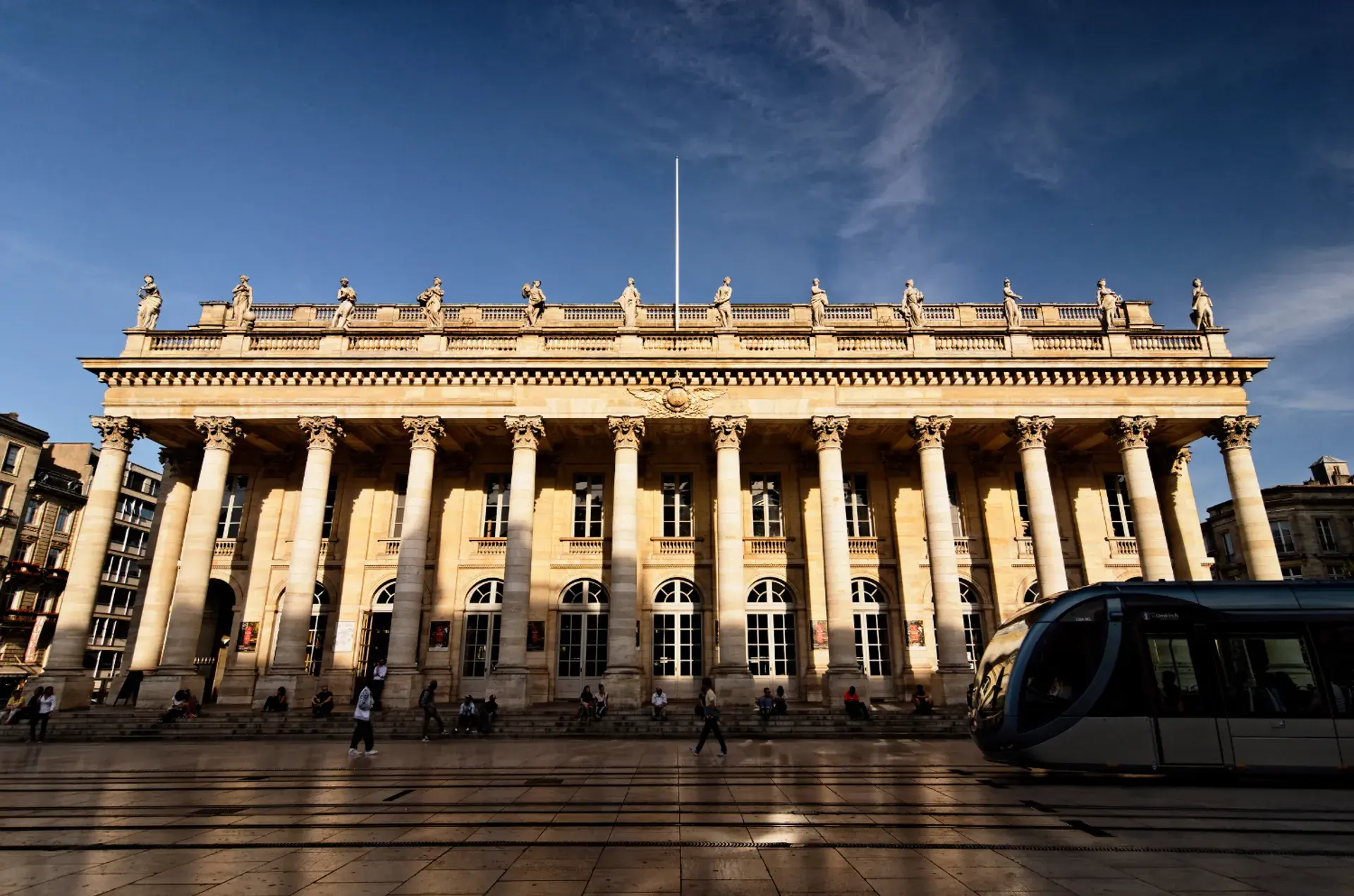
Grand Théâtre: the temple of the twelve muses
Grand Théâtre: the temple of the twelve muses
bordeaux, france
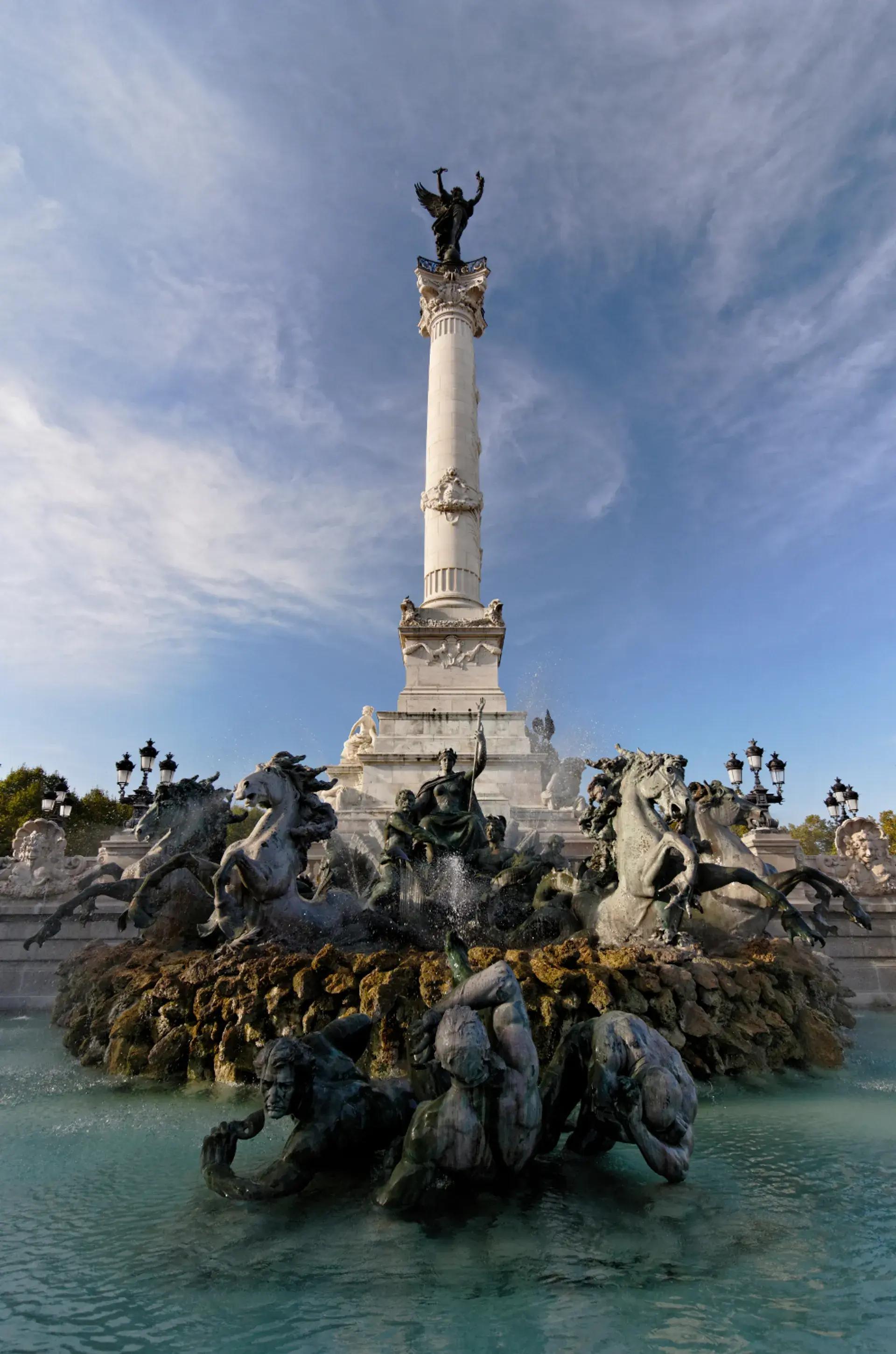
Monument aux Girondins: the fountain of bronze horses
Monument aux Girondins: the fountain of bronze horses
bordeaux, france
Porte Cailhau: a gate built to impress