La Vieille Bourse: Lille's Flemish Renaissance Gem
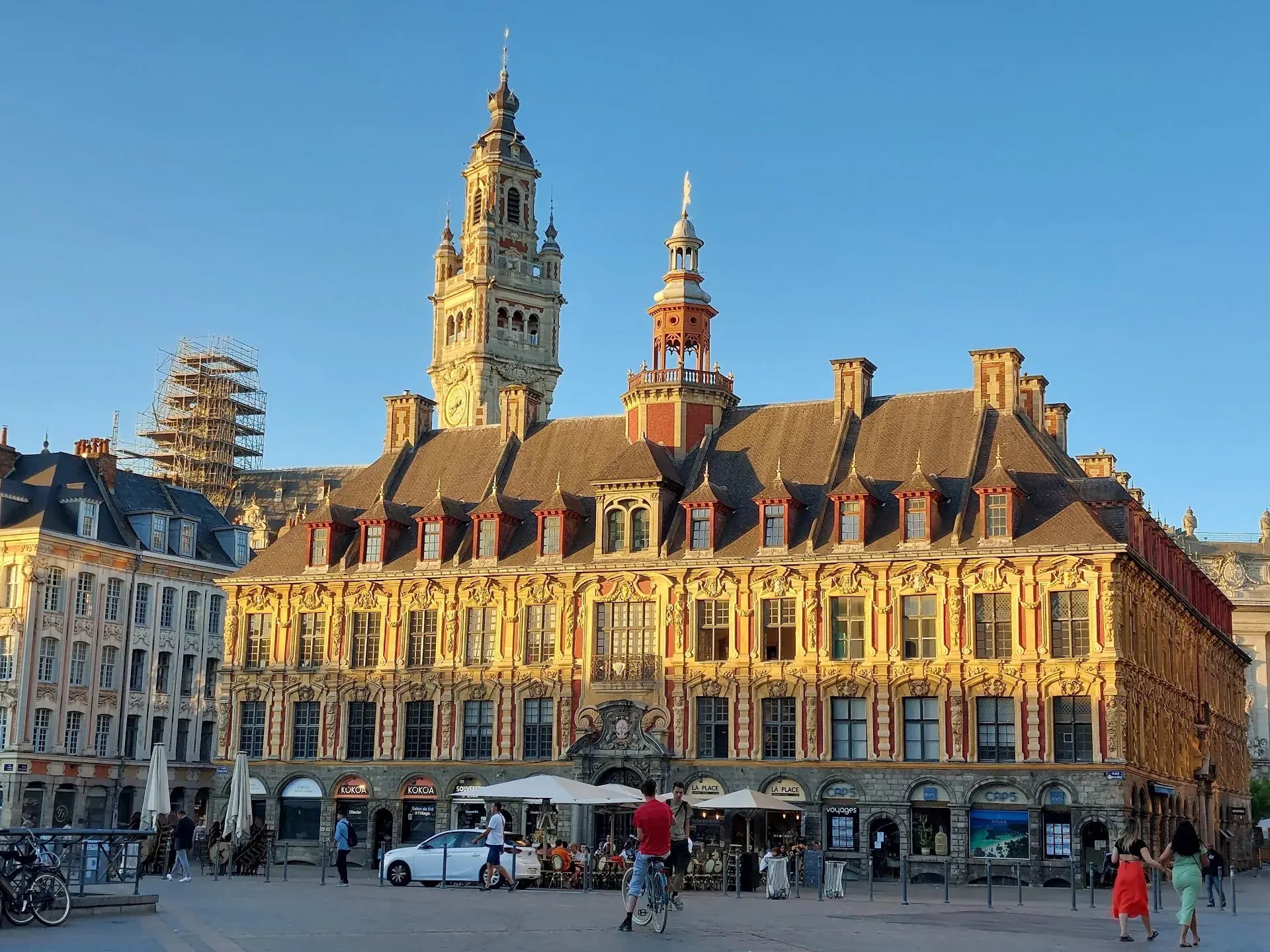
La Vieille Bourse, or Old Stock Exchange, stands as a magnificent testament to Lille's historic commercial grandeur. Constructed between 1652 and 1653, this opulent building exemplifies the Flemish Renaissance style with its richly decorated facades and iconic inner courtyard, reflecting the city's prosperous past.
A Monument to 17th-Century Commerce
La Vieille Bourse was conceived during a golden era for Lille, when the city was a thriving center for textile trade and manufacturing within the Spanish Netherlands. In 1651, Philip IV of Spain authorized the construction of a central hub for merchants to conduct business, designed to rival the stock exchange in Antwerp. The project was overseen by master mason Julien Destrée, who was originally a craftsman of small furniture, a background that hints at the structure's meticulous detail.
The building possesses a unique composition. It is not a single structure but a quadrangle of 24 identical, privately-owned houses built around a central public courtyard. The city sold the individual plots to traders to fund the project, retaining ownership of the galleries and courtyard. This arrangement of private pavilions around a public space was a common feature of urban planning at the time, emphasizing both uniformity and decorative quality.
Architectural Splendor and Symbolism
The architecture of La Vieille Bourse is a prime example of Flemish Mannerism. Its facades are lavishly adorned, and a golden statue of Mercury, the Roman god of commerce, crowns the building's campanile, symbolizing its original mercantile purpose.
Over the centuries, the building has recorded its history on its walls. During a 19th-century restoration, the coats of arms of significant regional companies were added above the upper windows to acknowledge their support. More recently, during a major restoration between 1989 and 1998, modern logos of corporate sponsors were subtly placed within colorful cartouches, blending contemporary identity with the 17th-century design.
La Vieille Bourse Today: A Cultural Hub
While no longer a stock exchange since 1921, La Vieille Bourse has evolved into a vibrant cultural and social center. The inner courtyard, which is free to enter, hosts a popular open-air second-hand book market from Tuesday to Sunday. Here, vendors known as 'bouquinistes' sell old books, vintage posters, maps, and comics. The courtyard is also a regular gathering spot for local chess players.
During the summer months, from July to mid-September, the space comes alive with free tango demonstrations and dances on Sunday evenings. While the courtyard and its galleries are publicly accessible, the 24 houses that form the building's perimeter contain private apartments, shops, and offices. The building was listed as a historic monument in the early 1920s and continues to be a cherished meeting point for locals and visitors alike.
FAQ
What is inside La Vieille Bourse?
The public inner courtyard of La Vieille Bourse hosts a second-hand book market, chess players, and summer tango events. The 24 surrounding houses that form the structure contain private apartments, shops, and offices.
When was La Vieille Bourse built?
La Vieille Bourse was built between 1652 and 1653. Its construction was authorized by Philip IV of Spain in 1651 to serve as a commercial hub for Lille's merchants.
Is it free to visit La Vieille Bourse in Lille?
Yes, general entry to the inner courtyard of La Vieille Bourse is free. It is typically open to the public from Tuesday to Sunday.
What is the structure of La Vieille Bourse?
Despite its singular appearance, La Vieille Bourse is not one building but a complex of 24 identical, privately-owned houses arranged around a central, publicly-owned courtyard and gallery.
Discover Lille like never before
Dive into Lille hidden stories and secret spots with Ciceru interactive tours.
Explore tour
Audioguide
Quizzes
Maps
Solo
Couples
Groups & families

© Photo by Daniel Würfel via Google Maps · Google Places