Palais Rihour: Lille's Burgundian Gothic Legacy
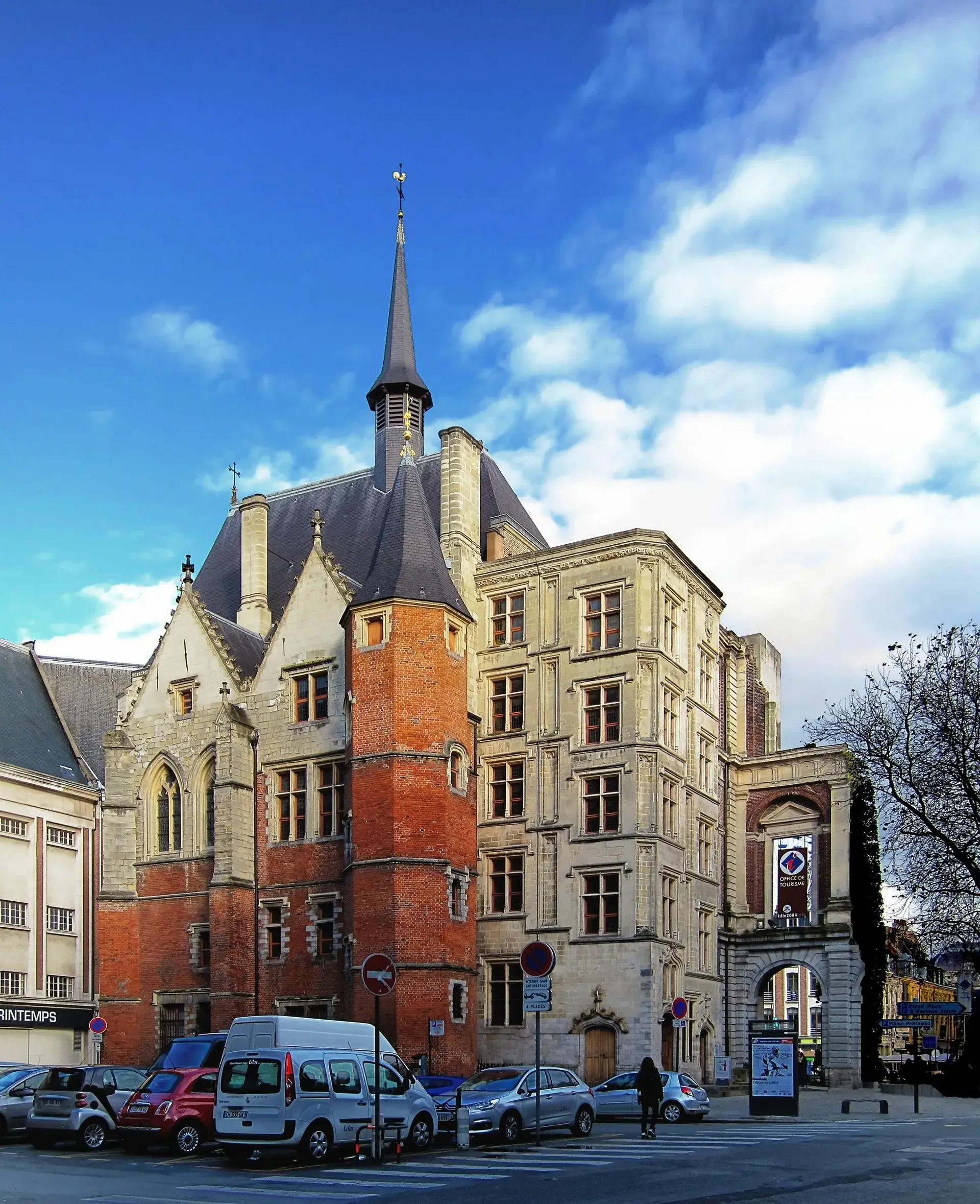
In the heart of Lille stands the Palais Rihour, the last remaining vestige of a grand palace built for the powerful Dukes of Burgundy. Its intricate Flamboyant Gothic architecture offers a glimpse into the city's medieval past, though its history is a complex tale of ambition, destruction, and rebirth.
A Ducal Residence
Construction of the Palais Rihour began in 1453, commissioned by Philip the Good, Duke of Burgundy, to serve as his magnificent urban residence. The project, with architectural plans developed by Evrard de Mazières, was intended to be a grand display of princely magnificence. Built on marshy land near the city's commercial heart, its construction required significant negotiation and investment. The palace was completed around 1473 under Philip's son, Charles the Bold. In its heyday, it hosted lavish feasts and important political meetings, including the signing of the Treaty of Lille in 1667, which concluded the War of Devolution.
A History of Destruction and Rebirth
The building's story is marked by significant change. The city purchased the palace in 1664 to use as its town hall. However, fires in 1700 and 1756 caused significant damage. More destruction followed during the French Revolution, and the palace was largely demolished and rebuilt in a Neo-Renaissance style between 1846 and 1857.
A final devastating fire in 1916, exacerbated by a wartime curfew that delayed firefighters, sealed the fate of the 19th-century structure. Most of it was razed in 1918. Today, only a few original 15th-century elements survive: the chapel (known as the Salle du Conclave), the guardroom, and the monumental staircase, which had been relocated during the 19th-century rebuild. Despite its appearance as a stone edifice, much of the original palace was surprisingly built with brick due to the poor quality of local stone.
The Palace Today
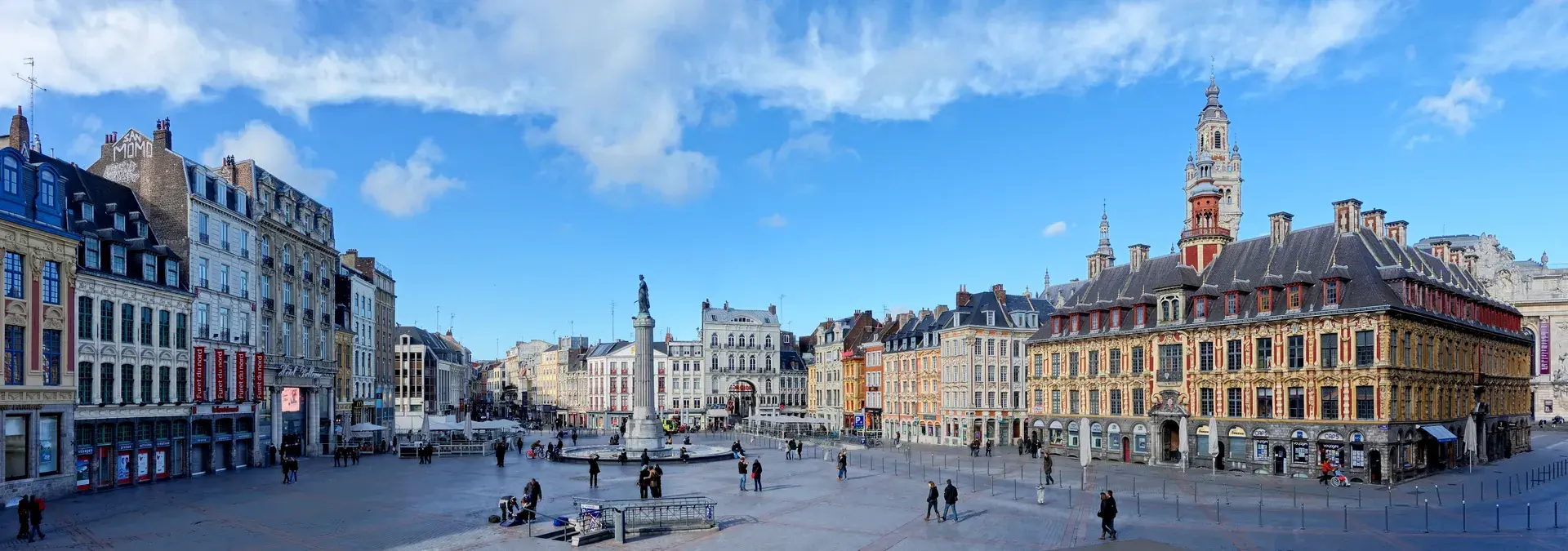
Designated a historic monument in 1875, the surviving portion of Palais Rihour continues to serve the city of Lille. The ground floor houses the Lille Tourist Office, making it a central starting point for visitors. The upper floors contain a small museum dedicated to the history of Lille, with a focus on its textile industry. The historic Salle du Conclave and the guardroom are used for cultural activities, including temporary exhibitions and fairs. In the winter, the surrounding Place Rihour becomes the vibrant setting for Lille's popular Christmas Market.
FAQ
When was the Palais Rihour built?
Construction on the Palais Rihour began in 1453 under Philip the Good, Duke of Burgundy, and was completed around 1473 under his son, Charles the Bold.
Is the Palais Rihour the original building?
No, most of the original palace has been destroyed by fires and demolitions. What remains is largely a 19th-century reconstruction, with only the chapel, guardroom, and a relocated 15th-century staircase surviving from the original structure.
What is inside the Palais Rihour today?
The ground floor of the Palais Rihour houses the Lille Tourist Office. The upper floors contain a small museum, and the historic rooms are used for cultural events and exhibitions.