Alte Hofhaltung: Bamberg's Historic Episcopal Court
Origins and Episcopal Seat
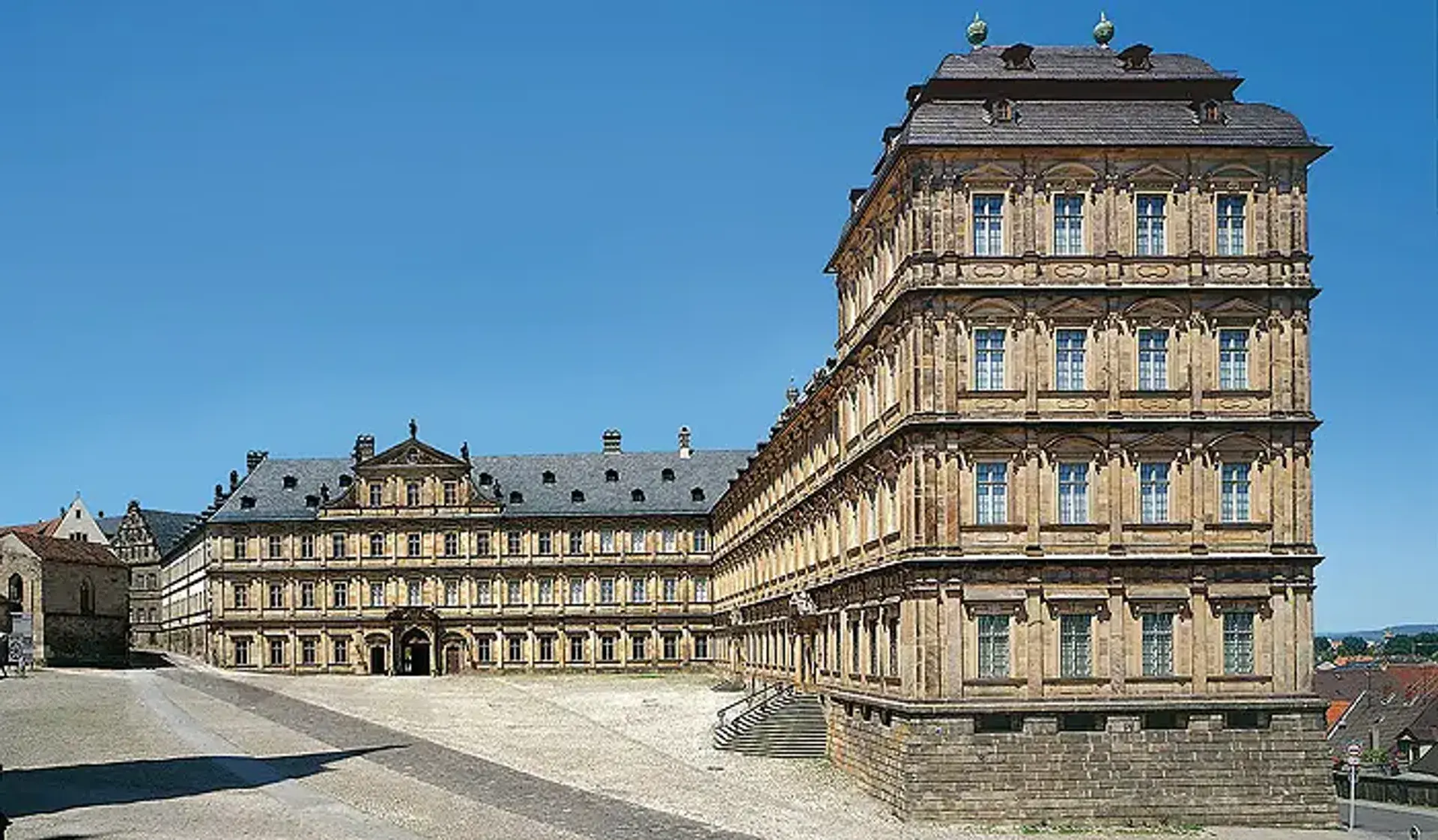
Standing on Cathedral Hill (Domberg) in Bamberg, the Alte Hofhaltung occupies a prominent position on Cathedral Square (Domplatz), situated directly next to Bamberg Cathedral and across from the Neue Residenz. The complex traces its origins to the 11th-century Castrum Babenberg and imperial palace (Kaiserpfalz) established under Emperor Heinrich II. Following the foundation of the Diocese of Bamberg in 1007, the compound became the official residential and administrative center of the Prince-Bishops.
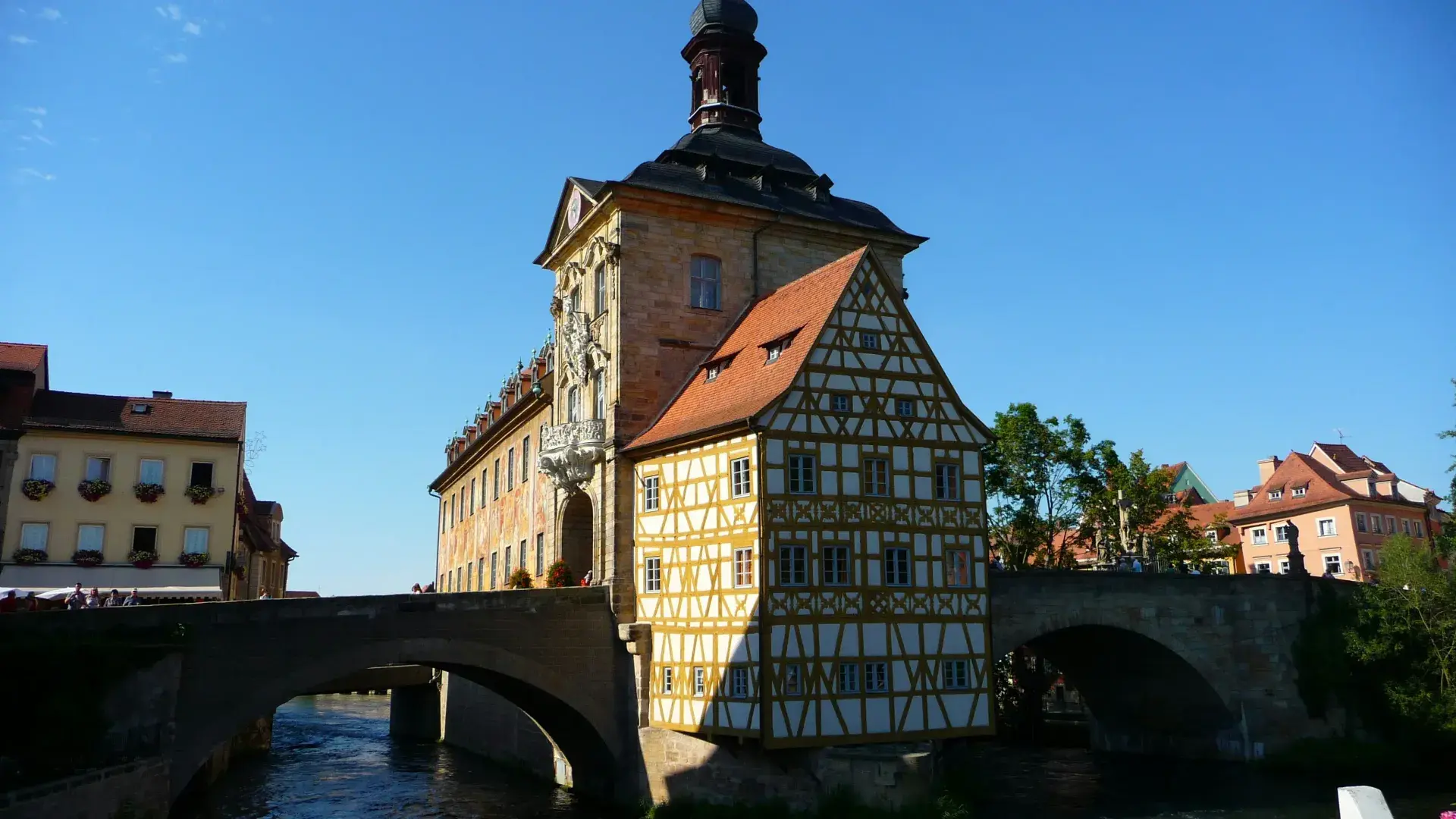
In historic Bamberg's urban geography, the complex represents the territorial and ecclesiastical authority anchored on Domberg, creating a symbolic counterweight to the merchant-driven civic center downriver at the Old Town Hall (Altes Rathaus). In June 1208, the episcopal residence became the setting for the first regicide in medieval German history when Count Palatine Otto VIII of Wittelsbach assassinated Philip of Swabia, King of the Romans, following a dispute over a broken betrothal.
Bamberg walking tour with audio and quizzes: bishops, beer and bridges
2 hours8 stopsAudio guideStart any day, at your own paceTicket on your phone · 30-day refundRenaissance Transformation and the Schöne Pforte
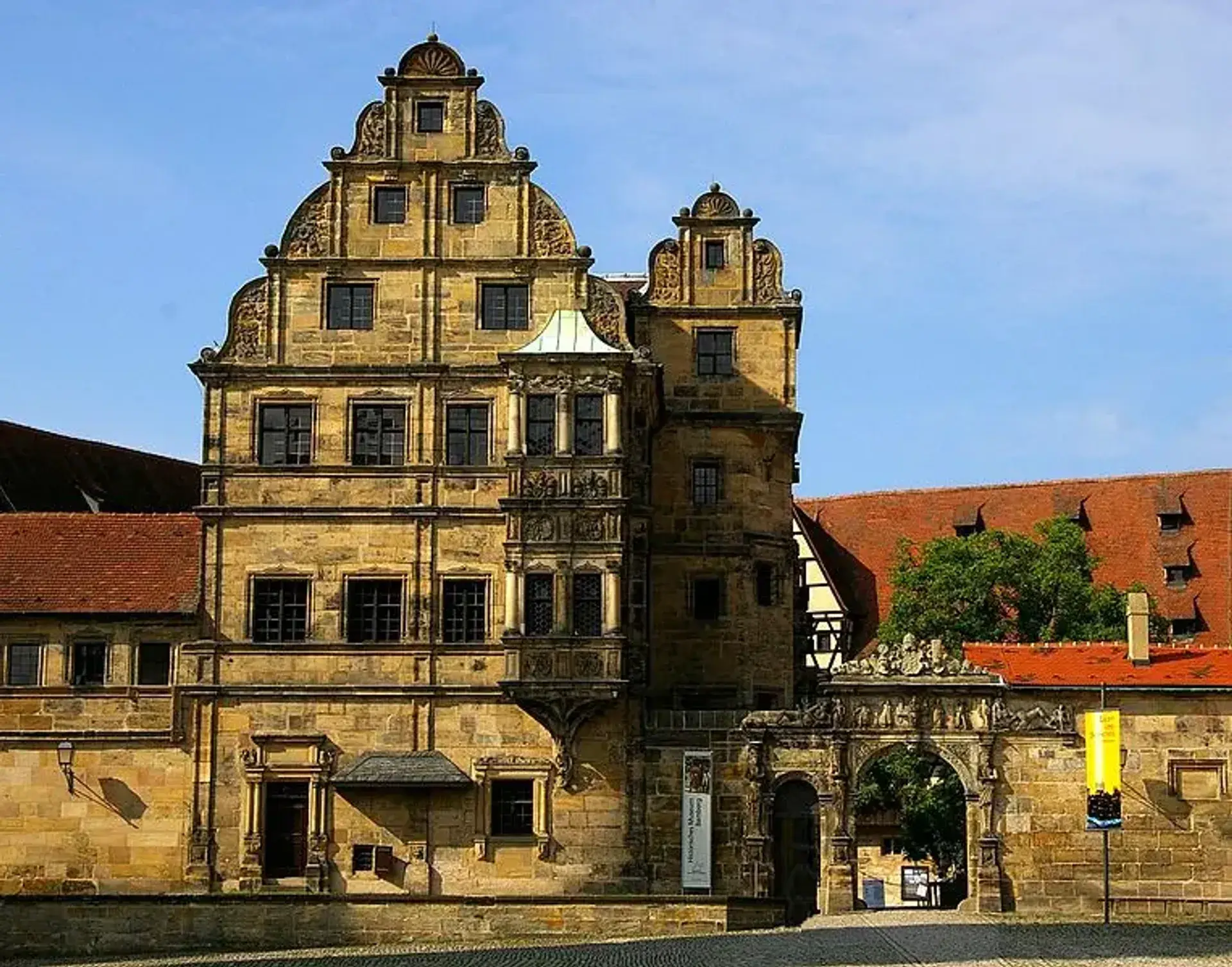
Between 1568 and the 1570s, Prince-Bishop Veit II von Würtzburg commissioned master builder Erasmus Braun to rebuild and modernize the street-facing sections of the site. This campaign introduced Renaissance structures containing administrative chancery offices, council chambers, and a library. The prince-bishops used this complex as their primary seat until the early 17th century, when the episcopal court moved across Domplatz into the newly built Baroque Neue Residenz.
The public entrance from Domplatz is the Schöne Pforte (Beautiful Gate), an ornate Renaissance portal sculpted between 1571 and 1573 by Pankras Wagner. The relief above the gate depicts the Virgin Mary flanked by Emperor Heinrich II, Empress Kunigunde, Saint Peter, and Saint George. Accompanying these figures are allegorical representations of the region's two major waterways: the river Main is carved as a resting man with a sleeping dog, referencing a sluggish current, while the river Regnitz is personified as a woman whose toe is pinched by a playful putto, signifying a rushing current.
Courtyard Architecture and Film History
Passing through the stone arch of the Schöne Pforte cuts off the open air and city sounds of Domplatz, transitioning into an enclosed, quiet cobblestone courtyard. The interior courtyard is framed by late 15th-century timber-framed (Fachwerk) residential wings featuring steep rooflines, remnants of earlier medieval stonework, and wooden open-air galleries (Laubengänge). Within the courtyard grounds, visitors can also find a detailed architectural model of Bamberg Cathedral.
The historic atmosphere of the courtyard has attracted modern film productions. In 2011, director Paul W. S. Anderson used the timber-framed courtyard as a stand-in for 17th-century Parisian streets in his film adaptation of The Three Musketeers.
Current Cultural Role and Access
Today, the Renaissance wings house the Historisches Museum Bamberg. The museum showcases collections of regional prehistoric and medieval artifacts, civic guild treasures, historical timepieces, and rotating municipal exhibitions. Also located within the complex is the Katharinenkapelle (St. Catherine's Chapel), which serves as a venue for local civil weddings and historical theater.
The central courtyard is open to the public during daytime hours and hosts seasonal cultural gatherings, including the open-air theater performances of the Calderón-Festspiele. While entering Bamberg Cathedral on the square is free of charge, the interior state rooms of the Neue Residenz and the Historisches Museum inside the Alte Hofhaltung require admission tickets.
FAQ
What is the Historisches Museum Bamberg?
Housed within the Renaissance wings of the Alte Hofhaltung, the Historisches Museum Bamberg exhibits regional prehistoric and medieval artifacts, historic timepieces, guild treasures, and temporary civic exhibitions.
What historical event took place at the Alte Hofhaltung in 1208?
In June 1208, the bishop's residence was the site of the first regicide in medieval German history, where Philip of Swabia, King of the Romans, was assassinated by Count Palatine Otto VIII of Wittelsbach.
What do the carvings on the Schöne Pforte represent?
Sculpted by Pankras Wagner between 1571 and 1573, the portal includes allegorical figures representing local rivers: the Main is carved as a resting man with a sleeping dog to depict a sluggish flow, while the Regnitz is shown as a woman whose toe is pinched by a putto to depict a swift current.
Is entry to the Alte Hofhaltung ticketed?
Access to the cobblestone courtyard is open to the public during the day, while visiting the Historisches Museum inside the Renaissance wings requires a paid ticket.