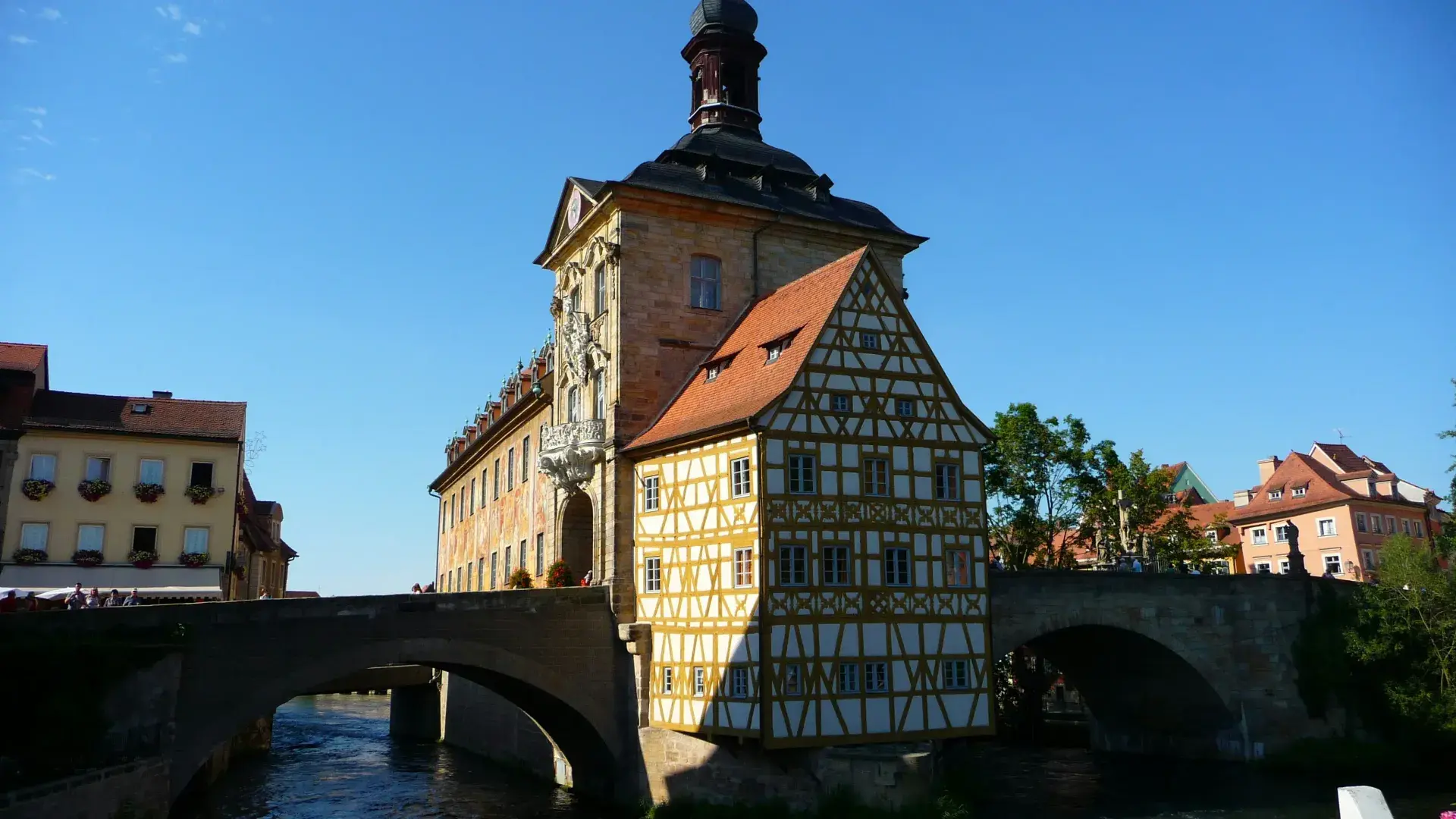
Saint Kunigunde: Protectress of Bamberg's Lower Bridge
The Empress Who Founded Bamberg
Saint Kunigunde (c. 975/980–1033/1040) was Holy Roman Empress as the consort of Emperor Henry II. Far from an ornamental figure, she took an active role in imperial administration, regularly participating in imperial diets and managing government affairs during Henry's absences. Following the emperor's death in 1024, Kunigunde served as interregnum regent, holding the imperial regalia until the election of King Conrad II.
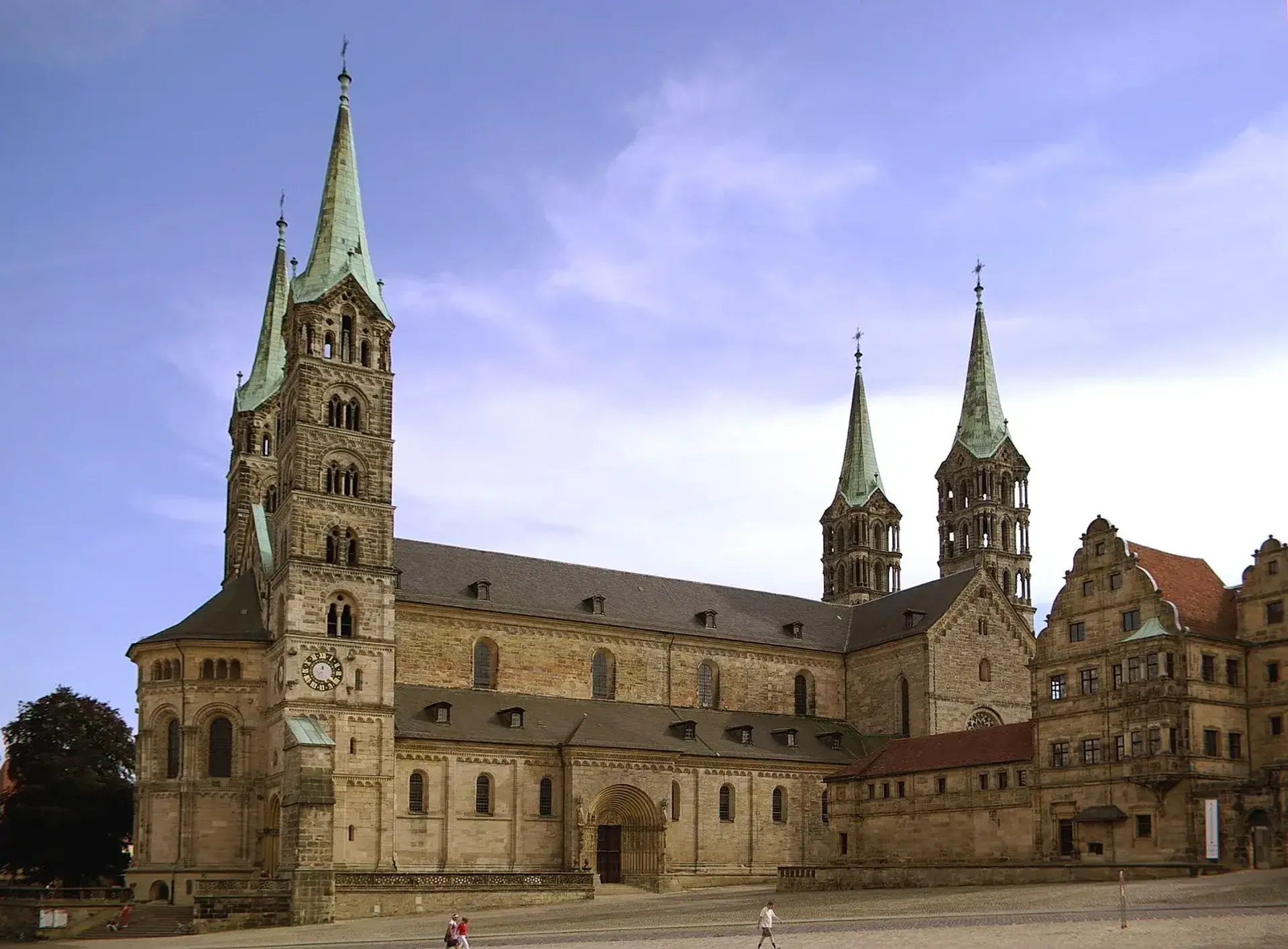
Kunigunde's historical legacy is inextricably tied to the city of Bamberg. In 1007, she and Henry II founded the Diocese of Bamberg, with Kunigunde dedicating her own dowry lands to establish the bishopric and finance the construction of Bamberg Cathedral. In 1025, she stepped away from royal life to enter the Benedictine convent she founded in Kaufungen, living as an ordinary nun until her death on March 3. In 1200, Pope Innocent III canonized Kunigunde. Together with Henry II, she forms the Catholic Church's only canonized imperial couple.
Bamberg walking tour with audio and quizzes: bishops, beer and bridges
2 hours8 stopsAudio guideStart any day, at your own paceTicket on your phone · 30-day refundThe Guardian of the Untere Brücke
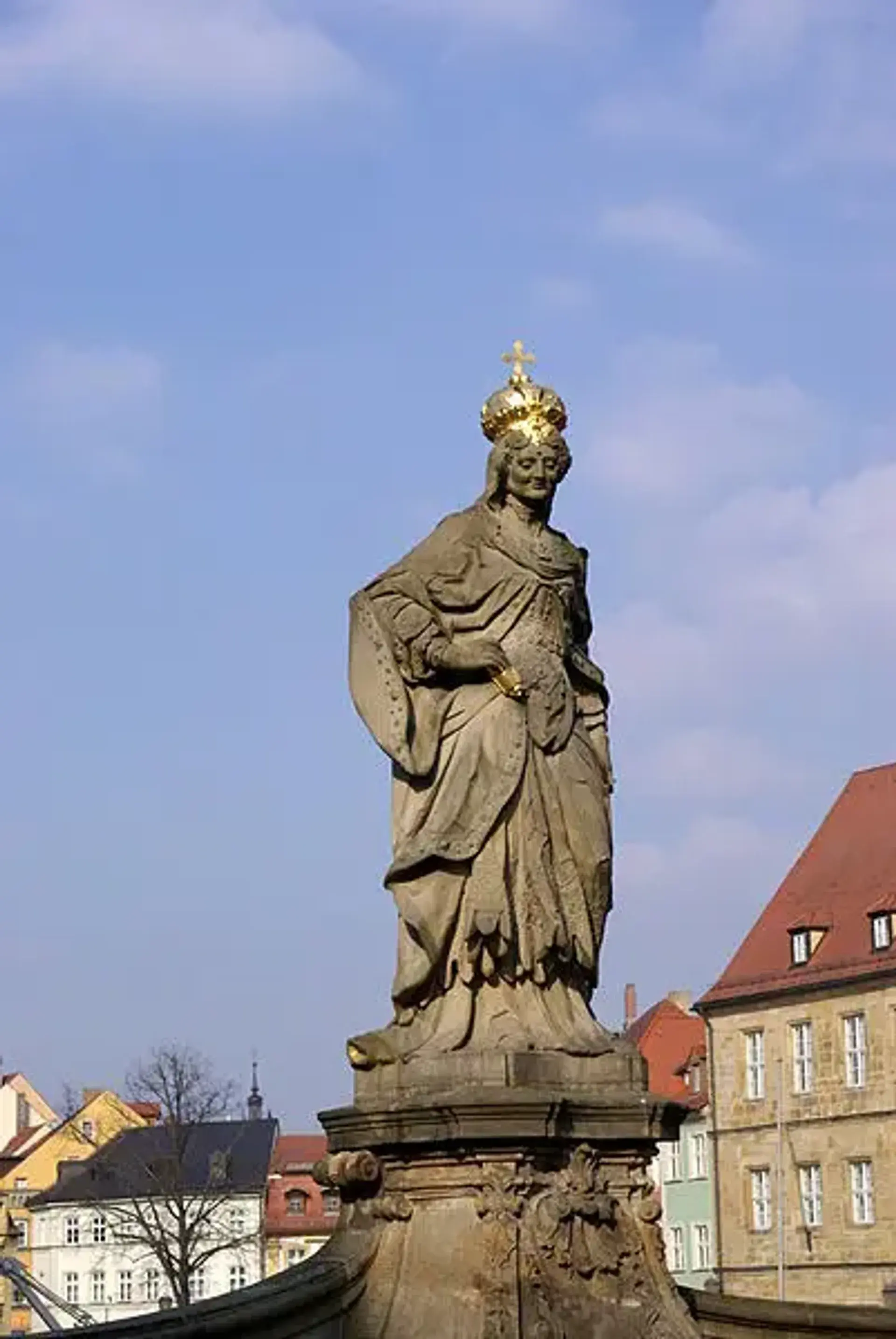
In Bamberg's civic consciousness, Kunigunde is revered as the motherly protectress of the city, often eclipsing her husband in local folklore. Her presence links the civic island district with the ecclesiastical hill of the Domberg. One of her most prominent monuments stands on the balustrade of the Untere Brücke (Lower Bridge).
The monument depicts the crowned empress holding a sceptre overlooking the rushing waters of the Regnitz River, directly facing the half-timbered facade of the Old Town Hall and the fishermen's quarter known as Klein Venedig. The sculpture on the bridge is a 1992 cast replica; the original 1750 Baroque sculpture by Johann Peter Benkert is housed indoors for preservation at St. Jakob's Church. Each year on March 3, local feast day traditions honor her memory by placing a fresh bouquet of roses into the arms of the bridge statue.
Survival of the 1784 Ice Flood
The bridge monument gained legendary status following the catastrophic natural disaster of February 1784. Extreme winter flooding and heavy drifting ice tore through Bamberg, completely destroying the Untere Brücke. At the time, six Baroque statues adorned the bridge. The floodwaters washed away five of the sculptures, leaving only Benkert's statue of Kunigunde standing undamaged amidst the destruction.
The Imperial Tomb in Bamberg Cathedral
Following her canonization, Kunigunde's remains were translated in 1201 to Bamberg Cathedral to rest beside Henry II. Today, their joint tomb (Tumba) is one of the cathedral's defining artistic treasures. Carved between 1499 and 1513 by renowned Late Gothic sculptor Tilman Riemenschneider, the monument is crafted from Franconian Jura limestone and Solnhofen marble.
Complementing the tomb, the adjacent Diocesan Museum exhibits the Great Mantle of St. Kunigunde (Kunigundenmantel). Dating back to the 11th century, this ceremonial vestment is considered a masterpiece of medieval liturgical silk embroidery.
Legends of the Ploughshares and the Dish of Pfennigs
Throughout Bamberg, iconography frequently depicts Kunigunde carrying an iron ploughshare or an architectural model of the cathedral, reflecting vivid medieval hagiography.
According to tradition, Kunigunde was once accused of infidelity by political rivals. To prove her purity, she submitted to a trial by ordeal, walking barefoot across red-hot iron ploughshares unharmed. Tilman Riemenschneider immortalized this trial in one of the detailed relief panels carved on the side of her cathedral tomb.
Another enduring local legend involves the construction of Bamberg Cathedral. Kunigunde reportedly placed workers' wages in an open bowl so each laborer could collect their due. Honest builders retrieved their correct pay without incident, but when a dishonest worker attempted to grab more coins than he had earned, the pfennigs burned into his hand like hot coals.
FAQ
Why is Saint Kunigunde significant to Bamberg?
Saint Kunigunde co-founded the Diocese of Bamberg in 1007 by donating her personal dowry lands to establish the bishopric and finance the cathedral. She is revered as the motherly protectress of the city.
Is the Saint Kunigunde statue on the Untere Brücke an original?
The statue on the Untere Brücke is a 1992 cast replica. The original 1750 Baroque statue by sculptor Johann Peter Benkert is preserved inside St. Jakob's Church.
What happened to the Lower Bridge statues during the flood of 1784?
In February 1784, catastrophic flooding and drifting ice destroyed the Untere Brücke and washed away five of its six Baroque statues. Only the sculpture of Saint Kunigunde survived undamaged.
Who carved Saint Kunigunde's tomb in Bamberg Cathedral?
The joint tomb of Saint Kunigunde and Emperor Henry II was sculpted between 1499 and 1513 by Tilman Riemenschneider using Franconian Jura limestone and Solnhofen marble.