Bamberg Cathedral: Architecture and Imperial Tombs
An Imperial Seat on Cathedral Hill
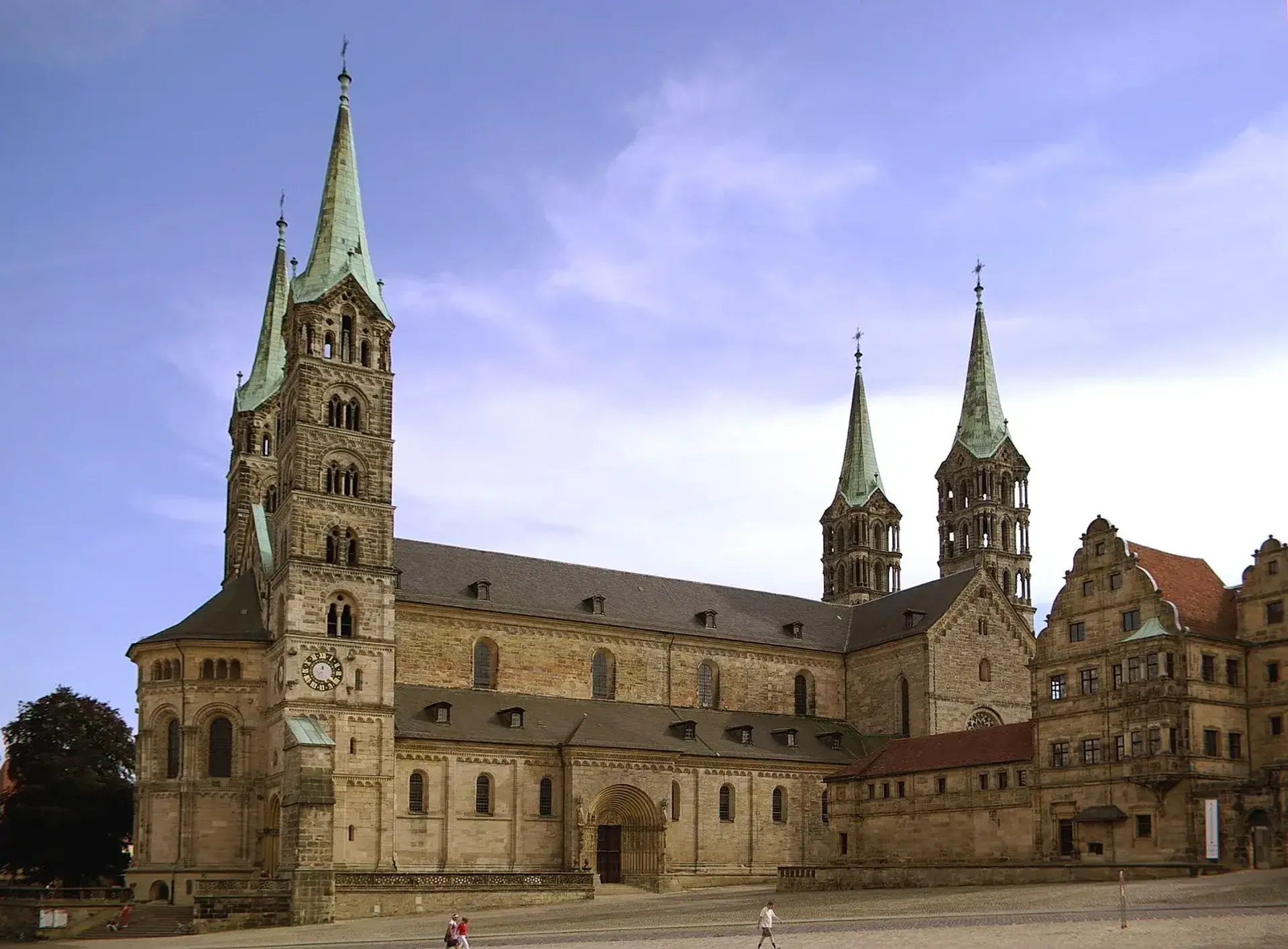
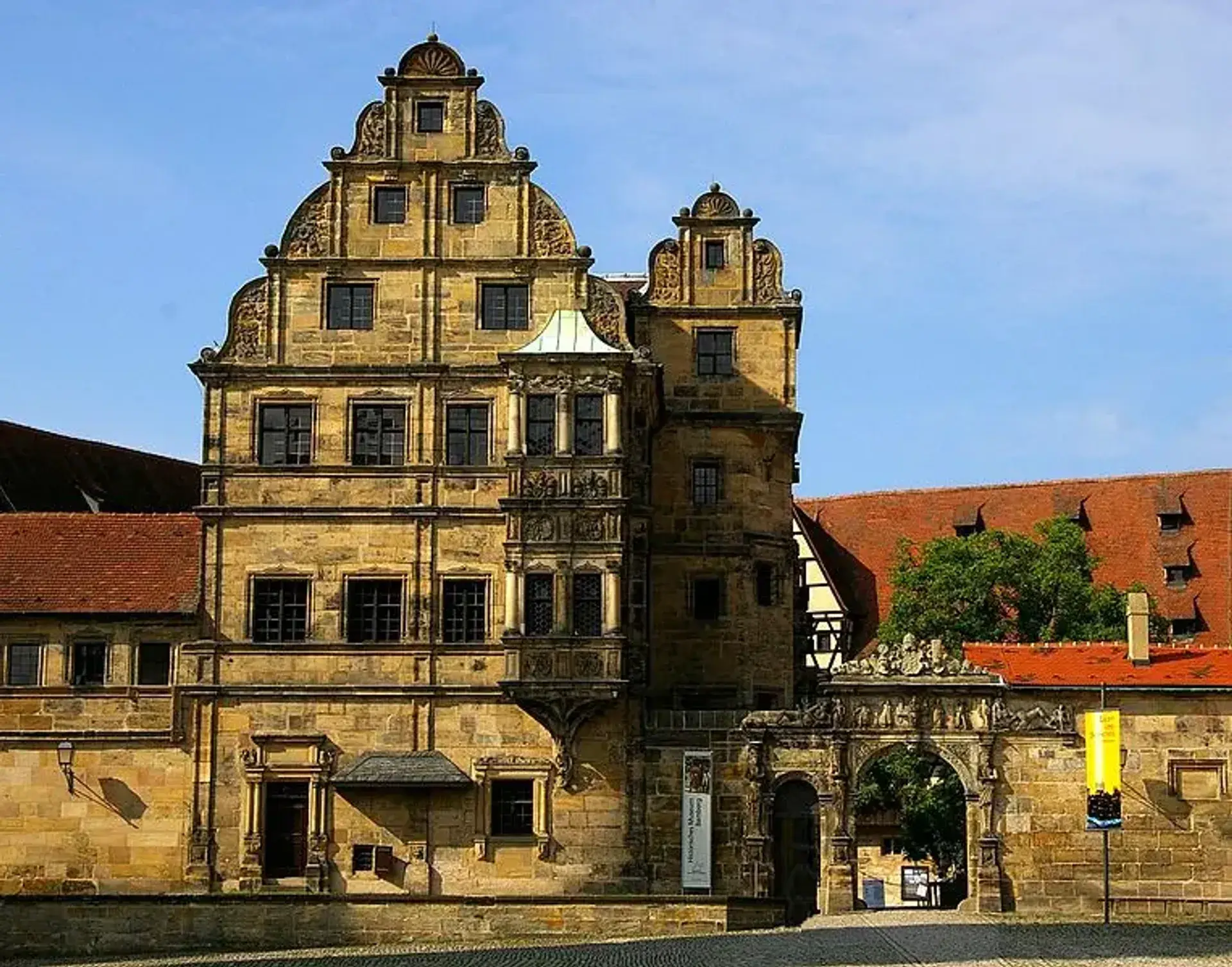
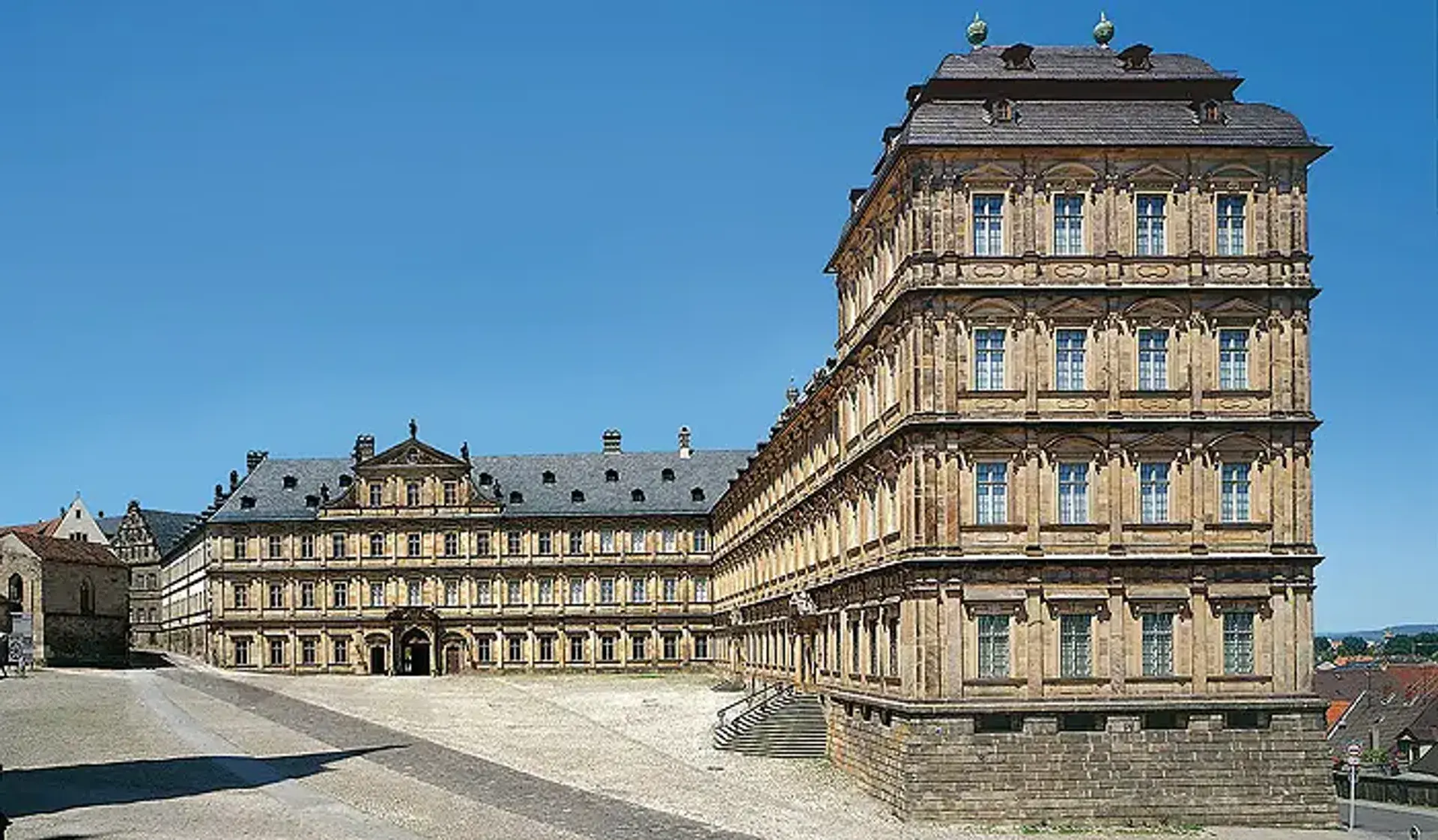
Bamberg Cathedral, officially dedicated as the Cathedral Church of St. Peter and St. George, stands prominently on Cathedral Hill overlooking the historic center of Bamberg. Inscribed as part of a UNESCO World Heritage Site in 1993, the cathedral anchors the ecclesiastical district known as the Bergstadt. It faces Domplatz alongside the historic Alte Hofhaltung and the Baroque Neue Residenz, forming a stark institutional counterpart to the commercial island district below.
Founded in 1002 by King Heinrich II, who was crowned Holy Roman Emperor in 1014, the church was consecrated on May 6, 1012, to establish the Diocese of Bamberg. After suffering severe damage from a fire in 1081 and destruction by a subsequent blaze in 1185, the cathedral underwent extensive reconstruction under the patronage of the House of Andechs-Merania and Bishop Ekbert. The rebuilt edifice was formally reconsecrated on May 6, 1237.
Bamberg walking tour with audio and quizzes: bishops, beer and bridges
2 hours8 stopsAudio guideStart any day, at your own paceTicket on your phone · 30-day refundArchitectural Transition from Romanesque to Gothic
The structure of Bamberg Cathedral marks a defining transitional moment between two major medieval architectural styles. The eastern sections retain the austere, solid forms of German Romanesque craftsmanship, while the western towers and portals introduce French-influenced early Gothic engineering.
Constructed as a double-choir basilica, the building features St. George's choir at the eastern end and St. Peter's choir at the western end. Four towers, each reaching approximately 81 meters in height, dominate the city skyline. Within the nave, the cathedral measures roughly 94 meters long, 28 meters wide, and 26 meters high, creating an expansive interior bounded by ribbed stone vaulting and opposing elevated choir platforms.
The Sculptural Portals and Civic Standards
The exterior of Bamberg Cathedral features several carved stone entryways, most notably the Fürstenportal, or Prince's Portal, located on the northern flank. The portal entrance is flanked by six carved figures, while its tympanum presents a depiction of the Last Judgment. In this carving, a laughing devil pulls chained sinners toward damnation, including a crowned monarch, a bishop, and a miser.
Other notable entrances include the Adamspforte and the Gnadenpforte. Embedded into the stonework beside the Gnadenpforte are iron lion heads that historically displayed official civic measurements for medieval commerce: the Bamberger Fuß, measuring 26.8 centimeters, and the Bamberger Elle, measuring 67 centimeters.
The Imperial and Papal Tombs
Bamberg Cathedral holds notable significance as a burial site for both secular rulers and church leadership. It houses the tomb of Pope Clement II, the former Bishop of Bamberg who died in 1047. Carved from marble, this monument is the only surviving papal burial site located outside Italy and France.
The cathedral also preserves the joint high tomb of its imperial founders, Emperor Heinrich II and Empress Kunigunde, who remain the only canonized ruling couple of the Holy Roman Empire. Created between 1499 and 1513 by master late-Gothic sculptor Tilman Riemenschneider, the monument is crafted from Solnhofen limestone. Its relief panels portray legendary events from the couple's lives, including Heinrich receiving a miraculous cure for kidney stones and a dishonest worker whose hand burned when trying to steal from Kunigunde's cathedral construction payroll.
The Bamberg Horseman
Mounted on a pillar within the eastern choir stands the Bamberg Horseman, an early 13th-century life-sized sandstone equestrian sculpture. It is celebrated as the first monumental equestrian statue produced in Western art since classical antiquity. Crouching beneath the front hooves of the steed is a carved Green Man figure wearing a mask of leaves. While theories have suggested identities ranging from Emperor Heinrich II and King Stephen of Hungary to Emperor Frederick II or an apocalyptic rider, the specific identity of both the rider and the sculptor remains unconfirmed.
Modern Worship and Visitor Access
Today, Bamberg Cathedral functions as the active mother church and metropolitan seat of the Roman Catholic Archdiocese of Bamberg, presided over by Archbishop Herwig Gössl. The cathedral holds daily religious services and sacred choir performances while remaining open to tourists outside regular liturgical hours.
FAQ
Why is the papal tomb in Bamberg Cathedral unique?
The marble tomb of Pope Clement II, who died in 1047, is the only surviving papal burial site located outside of Italy and France.
Who carved the tomb of Heinrich II and Kunigunde?
The imperial tomb was carved from Solnhofen limestone between 1499 and 1513 by the late-Gothic sculptor Tilman Riemenschneider.
What is the architectural style of Bamberg Cathedral?
Bamberg Cathedral represents a transition between late Romanesque and early Gothic architecture, featuring Romanesque work in the eastern choir and French-influenced early Gothic design in the western towers and portals.
What is depicted on the Fürstenportal tympanum?
The tympanum of the Fürstenportal illustrates the Last Judgment, showing a laughing devil dragging chained sinners, including a king and a bishop, down to damnation.