Neue Residenz Bamberg: The Prince-Bishops' Palace
The Seat of Bamberg's Prince-Bishops
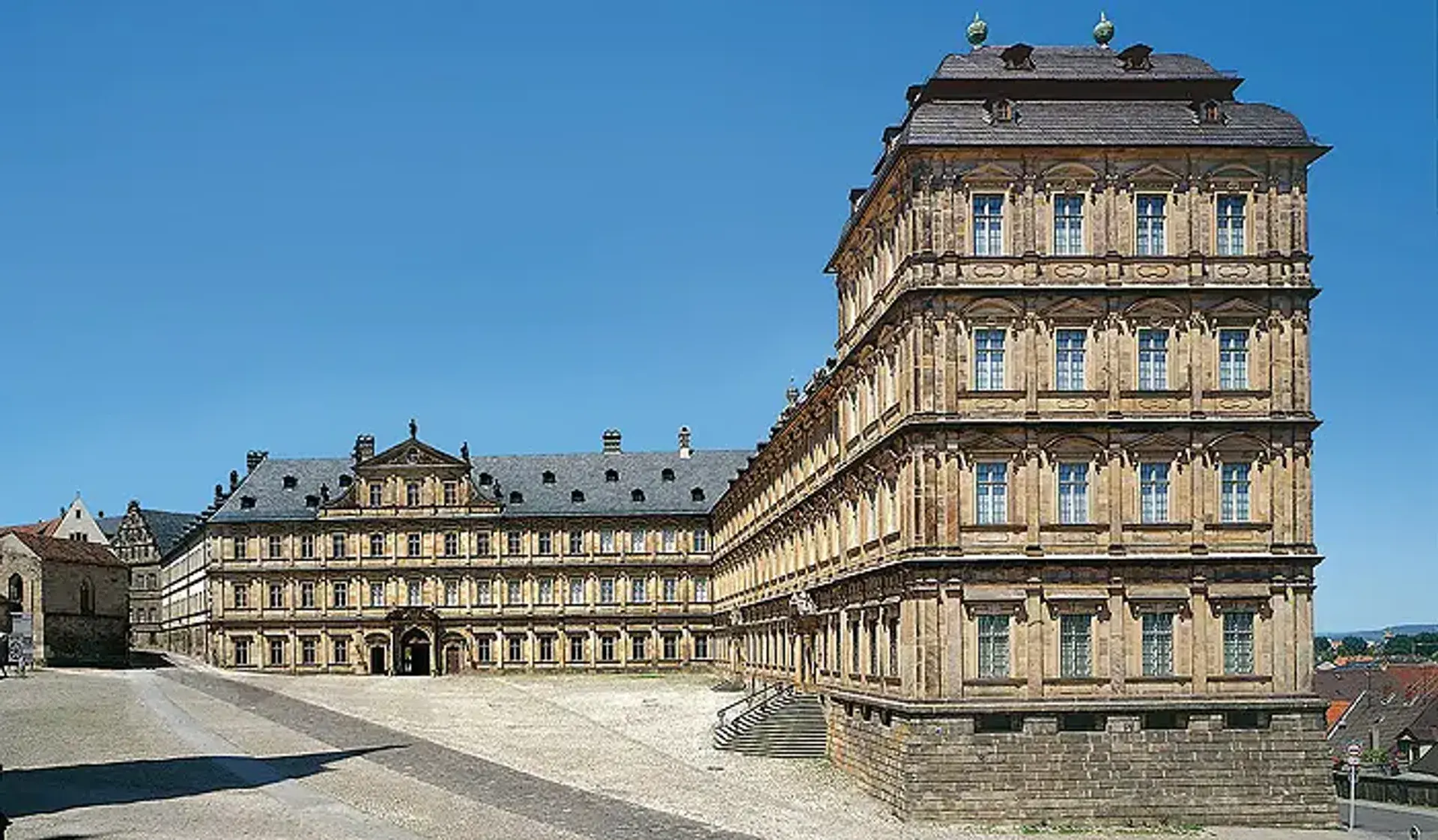
Standing at Domplatz 8 on Bamberg's Domberg hill, the Neue Residenz formed the palace and political center for Bamberg's prince-bishops from the early 17th century until secularisation in 1802. It was constructed to replace the neighboring medieval complex, the Alte Hofhaltung, providing the ecclesiastical rulers with a modern and representative palace. Situated on the northwest side of Domplatz alongside Bamberg Cathedral and the Old Court, the complex reflects the shift from medieval administration to Baroque absolutism within the UNESCO World Heritage city.
Bamberg walking tour with audio and quizzes: bishops, beer and bridges
2 hours8 stopsAudio guideStart any day, at your own paceTicket on your phone · 30-day refundRenaissance Roots and Baroque Expansion
The sandstone complex was built in two distinct architectural campaigns. The initial phase began between 1602 and 1603 under Prince-Bishop Johann Philipp von Gebsattel and continued under Johann Gottfried von Aschhausen, producing Renaissance wings situated toward the rear. Following an interruption caused by the Thirty Years' War, construction resumed when Lothar Franz von Schönborn was elected prince-bishop in 1693 and named imperial arch-chancellor in 1695. Schönborn commissioned architect Johann Leonhard Dientzenhofer to design grand, high-Baroque wings along Domplatz between 1697 and 1703.
Ceremonial Interiors and the Imperial Hall
The interior contains more than 40 ceremonial rooms, comprising the Prince-Bishop's Apartments, the Elector's Rooms, and the Imperial Hall (Kaisersaal). These apartments showcase original 17th- and 18th-century stucco work, tapestries, and period furnishings spanning three historical eras. The Imperial Hall is decorated with large-scale illusionistic ceiling frescoes and 16 monumental wall portraits of Holy Roman emperors, executed by Melchior Steidl between 1707 and 1709.
Exiles, Intrigue, and Government Refuge
Following the secularisation of the prince-bishopric in 1802–1803, the Neue Residenz transitioned into the hands of the Bavarian state and functioned as a royal residence. On June 1, 1815, shortly before the Battle of Waterloo, Napoleon's former chief of staff Marshal Louis-Alexandre Berthier plunged to his death from an upper window while watching Russian troops march through Bamberg. Whether his death was an accident, suicide, or murder remains a matter of historical debate, commemorated today by a stone marker in Residenzstraße.
Later in the 19th century, the palace housed King Otto of Greece and Queen Amalia after Otto's deposition in 1862. Otto resided on the upper floors until his death in 1867, maintaining Greek court traditions and habitually wearing traditional Greek fustanella garments, while Amalia remained in residence until 1875. In 1919, the building served another political function when the elected Bavarian state government under Minister-President Johannes Hoffmann temporarily operated from Bamberg during the unrest of the Munich Soviet Republic.
The Rose Garden and Cultural Institutions
Administered by the Bavarian Palace Administration, the Neue Residenz functions as a multi-institution cultural site. Its east wing houses the Staatsbibliothek Bamberg, while another section accommodates the Staatsgalerie Bamberg, a branch of the Bavarian State Painting Collections that exhibits medieval, Old German, and Baroque art.
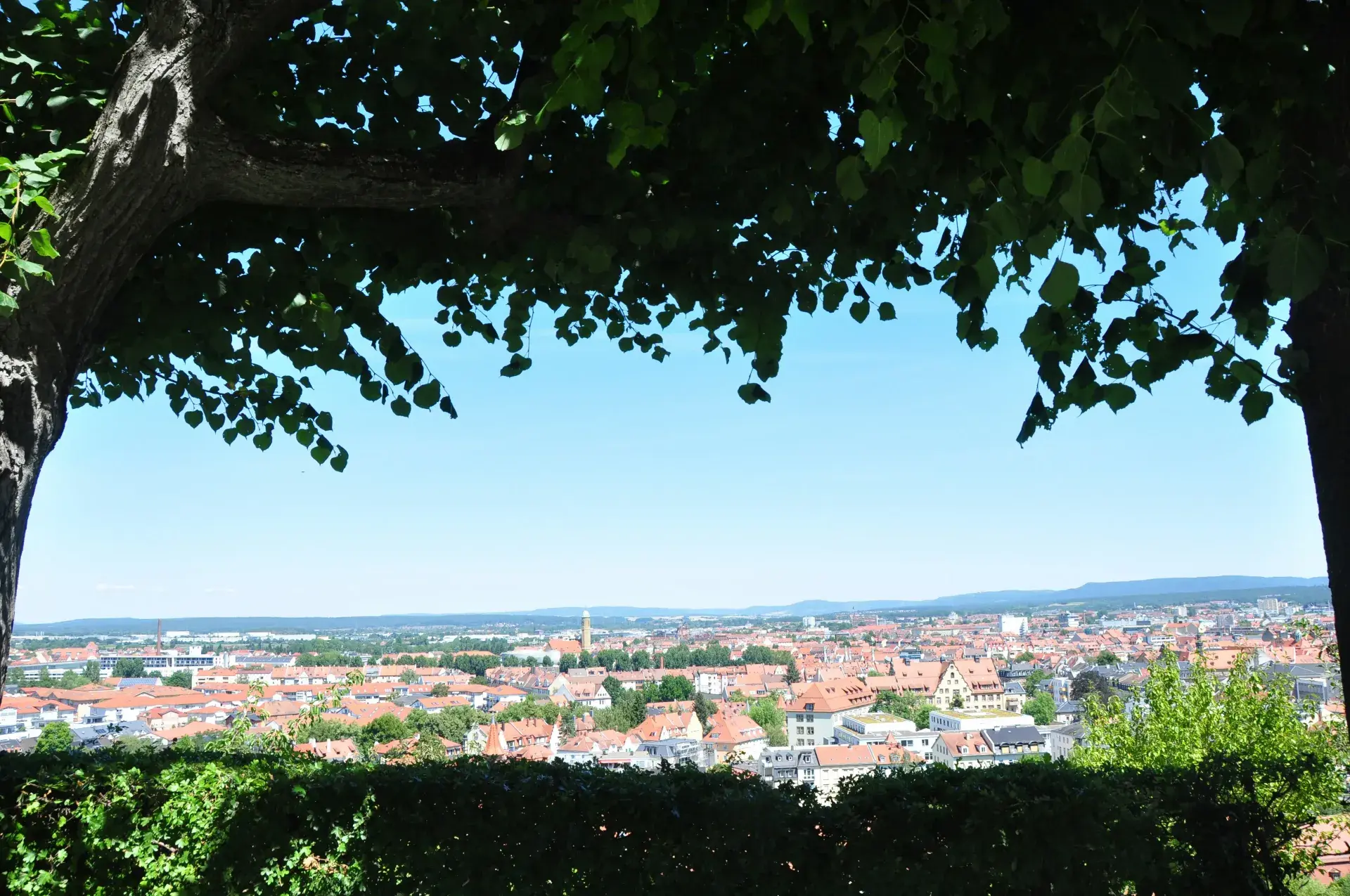
In the inner courtyard lies the publicly accessible Baroque Rose Garden. Framed by stone fountains and rococo sculptures, its geometric gravel paths are planted with seasonal blooms. From its terrace wall, visitors can look out over the tiled roofs of the historic Bürgerstadt and toward Michaelsberg Abbey.
FAQ
Is entry to the Neue Residenz ticketed?
Yes. While admission to the neighboring Bamberg Cathedral is free, the interior state rooms of the Neue Residenz require a paid ticket.
What architectural styles make up the palace?
The complex incorporates early 17th-century Renaissance wings to the rear, started in 1602/1603, and sweeping high-Baroque wings facing Domplatz designed by Johann Leonhard Dientzenhofer between 1697 and 1703.
What institutions are housed within the Neue Residenz?
The complex houses the palace state rooms, the Staatsbibliothek Bamberg (regional State Library), and the Staatsgalerie Bamberg, which displays Old German, medieval, and Baroque paintings.