Imperial Post Office Bremen: Alte Post History
An Imperial Foothold in Hanseatic Bremen
Standing prominently on the southern edge of Domsheide square, the former Imperial Chief Postal Directorate (Kaiserliche Oberpostdirektion)—often referred to locally as the Alte Post or Hauptpostamt 1—represents a major architectural turning point in Bremen’s urban fabric. Following the unification of Germany in 1871 and the establishment of a state postal monopoly under the Deutsche Reichspost, an imperial directorate was organized in Bremen in 1874.
To construct a regional headquarters, the postal administration utilized land acquired through an 1869 agreement with the Bremen Senate. The site at Domsheide 15 previously held the Eschenhof, a seventeenth-century estate that served as the residence of Baron Alexander Erskein, the Swedish governor of Bremen and Verden after the Thirty Years’ War, before later housing a local school. When the massive new postal building was inaugurated in October 1878 by Imperial Postmaster General Heinrich von Stephan, it achieved historic distinction as the very first property built and owned by the German Reich within the Free Hanseatic City of Bremen.
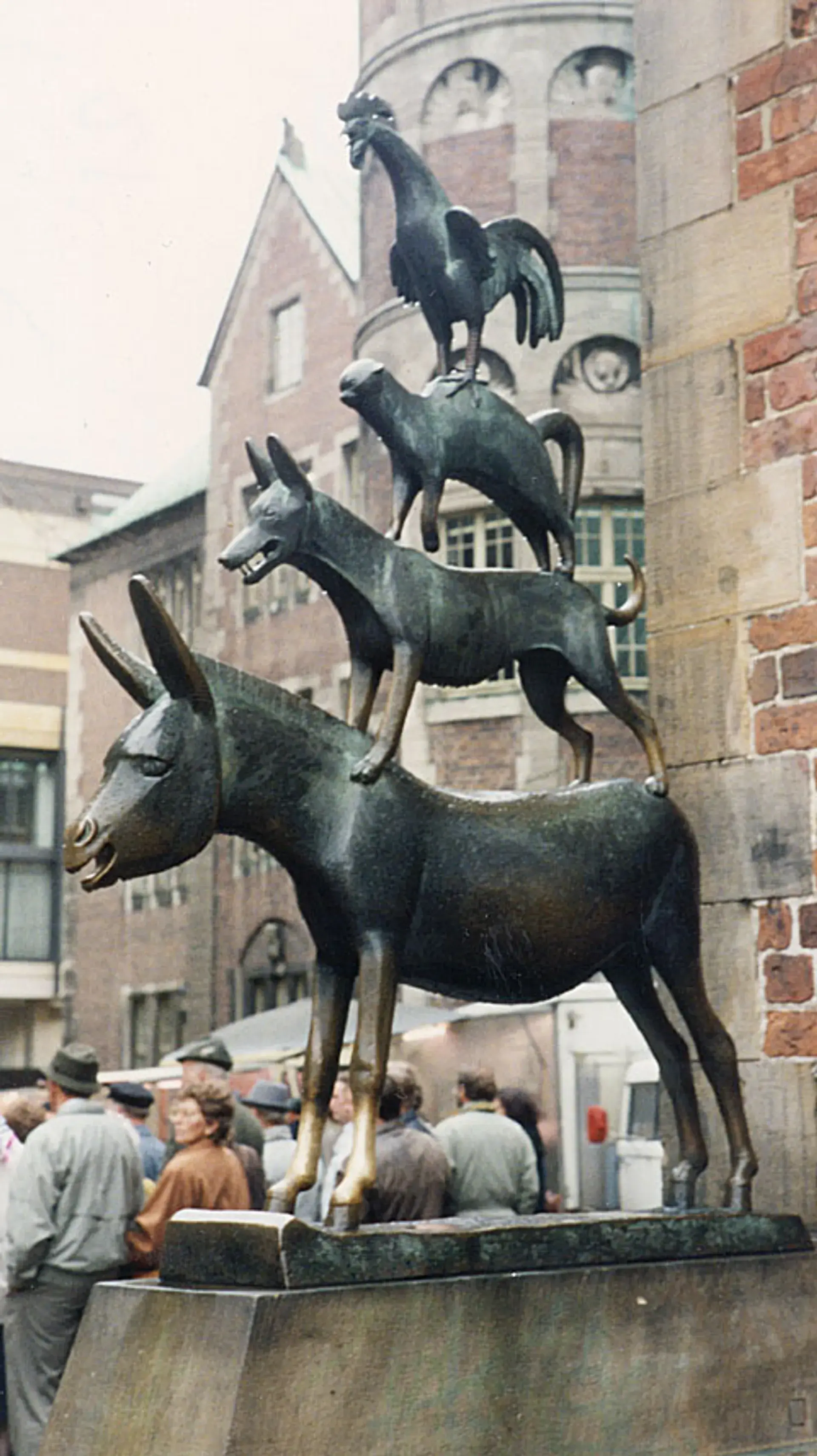
Bremen walking tour with audio and quizzes: Town Musicians and Roland
2 hours8 stopsAudio guideStart any day, at your own paceTicket on your phone · 30-day refundGerman Neo-Renaissance Architecture and Symbolism
Designed by prominent Berlin postal architect Carl Schwatlo, with construction supervision led by Ernst Hake and revisions overseen by August Kind, the complex was constructed between 1875 and 1878. Built in the German Neo-Renaissance style, the four-winged complex adapts to the natural slope descending toward the Weser and the historic Balge course: it rises three storeys above Domsheide while extending four storeys high on the Dechanatstraße elevation.
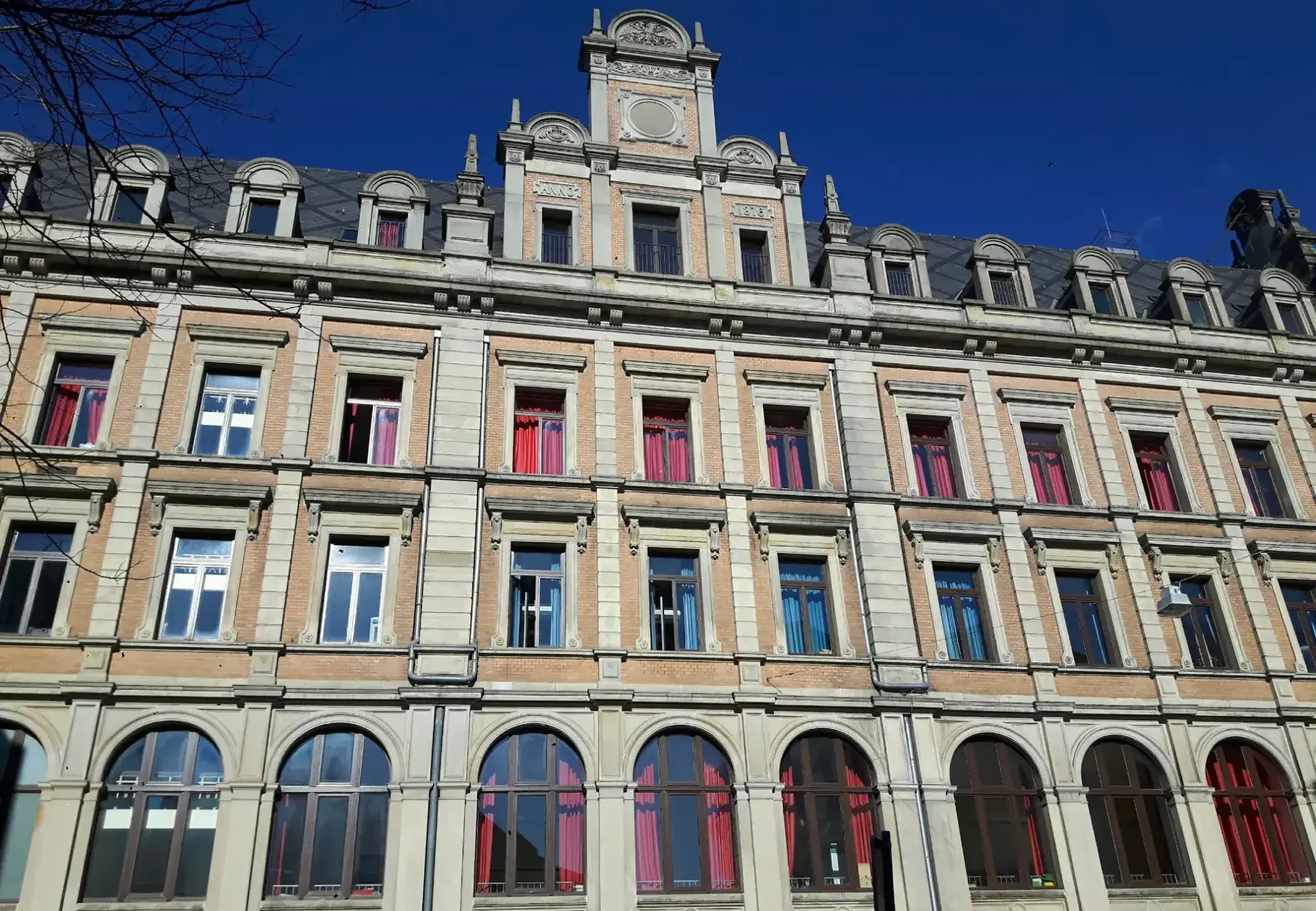
The exterior features rusticated sandstone facades, projecting pilasters (Lisenen), triangular and segmental window pediments, and decorative roofline balustrades. Sculptural programs integrated into the central avant-corps emphasize nineteenth-century postal communications. Figures in arched niches include an allegorical female representation of communication holding a letter, complemented by carved horse heads honoring the stagecoach era. Above the primary entrance portal, a sculpted imperial eagle battles a serpent.
Integrated directly into the brickwork along Dechanatstraße is another historic relic: a preserved stone Renaissance portal dating from roughly 1565 to 1600. Saved from the demolished Cathedral Deanery (Domdechanat), this portal was salvaged and woven directly into the postal complex's masonry.
The Kaisersaal and Its Curiosities
The second floor of the central facade conceals the building’s most ornate interior space: the Kaisersaal (Emperor’s Hall). Rather than serving as a public counter space, this grand hall was originally part of the private official apartment (Dienstwohnung) of the Oberpostdirektor. As the highest-ranking imperial official stationed in the Hanseatic city, imperial protocol obligated him to host a formal gala reception in this room each year to celebrate the German Emperor's birthday.
The hall is lined with wall paintings created by Arthur Fitger, Bremen’s leading nineteenth-century history painter—and the son of a postmaster—depicting classical nymphs and centaurs. The central painted centaur survives today due to precise restoration: after workers inadvertently knocked a hole through the wall in 1974 and shattered the plaster, restorer Georg Skrypzak collected the debris from the floor and pieced the image back together. Overhead, the ceiling features six heraldic emblems displaying the white eagle on a red field from the Prussian Province of Posen (Poznań), incorporated after a Posen stonemasonry firm completed work on the building with distinction. The room is illuminated by an elaborate Murano glass chandelier, on long-term loan from the historic Bremen Town Hall.
Evolution and Modern Transition
As postal operations expanded at the end of the nineteenth century, the complex’s open inner courtyard was enclosed in 1896 under a glass-and-iron roof to create a central counter hall. The building remained in active service through the Weimar Republic, the Third Reich, and the post-war decades under the Deutsche Bundespost.
Over the past two decades, the complex transitioned into educational and civic functions. Between 2004 and 2006, upper portions of the wings were leased to the Catholic St.-Johannis-Schule under a long-term leasehold. On November 21, 2024, the historic ground-floor post office and Postbank branch ceased operations permanently. In December 2024, the Free Hanseatic City of Bremen acquired the monument from Deutsche Post AG to safeguard its civic heritage and repurpose the spaces for mixed urban, cultural, and educational uses. Today, the rumbling and bells of converging trams echo across the sandstone facade, marking Domsheide's vital role as the gateway between Bremen's historic cathedral quarter and the medieval Schnoor district.
FAQ
Why was the Imperial General Post Office significant to Bremen's history?
Completed in 1878, it was the very first piece of real estate owned and built by the German Reich within the Free Hanseatic City of Bremen, symbolizing the integration of Hanseatic merchant traditions into the centralized imperial postal system.
What was the original purpose of the Kaisersaal?
The Kaisersaal was not a public counter hall, but part of the private official residence of the Oberpostdirektor. He was required by imperial protocol to host an annual gala reception in the room for the German Emperor's birthday.
Can the public visit the Kaisersaal?
While the former ground-floor postal branch closed in 2024, the protected Kaisersaal remains preserved and is opened periodically for guided tours, special cultural events, and the annual Tag des offenen Denkmals (Heritage Open Day).