St. Peter's Cathedral Bremen: History & Visiting Guide
An Architectural Landmark on Bremen's Marktplatz
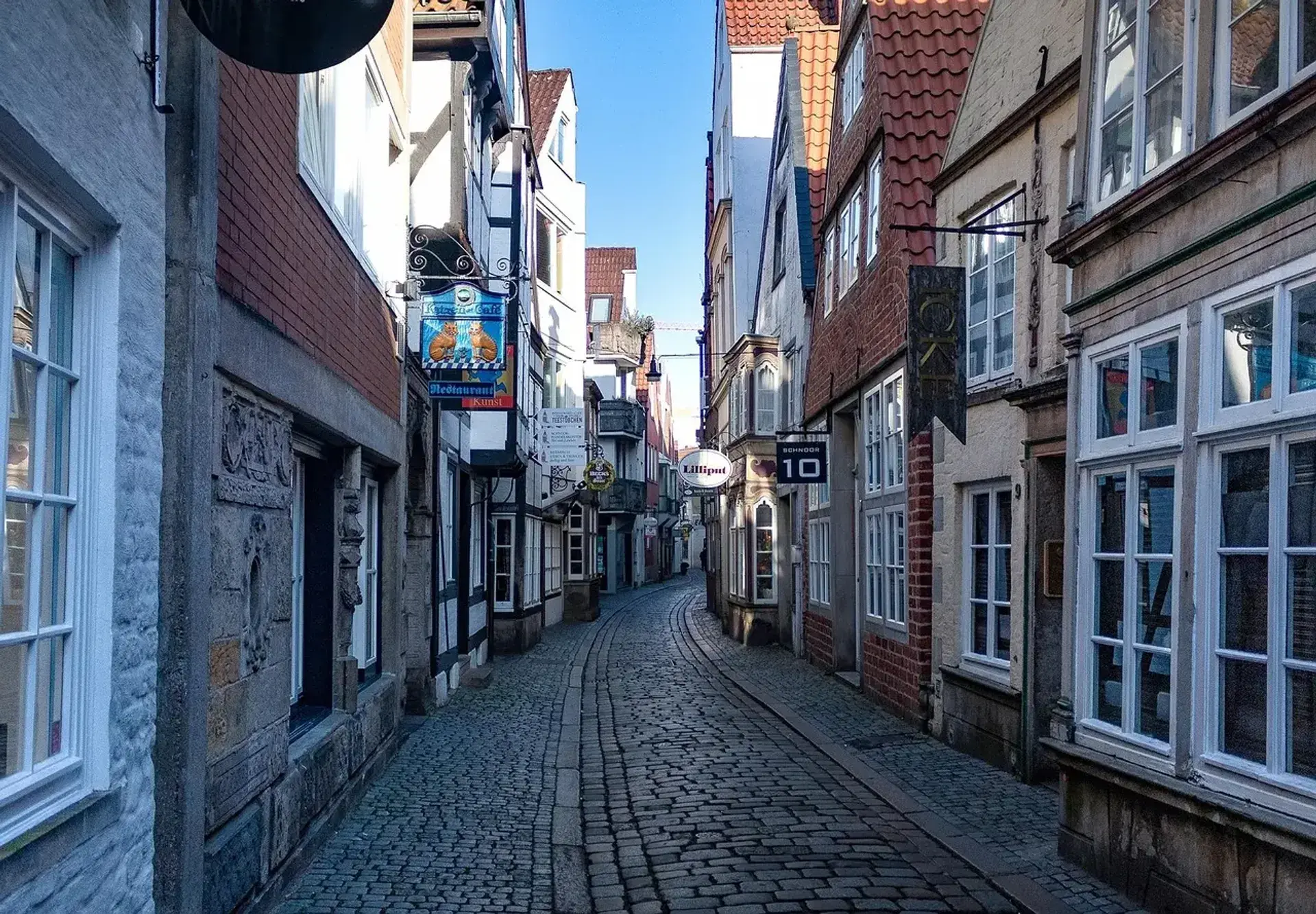
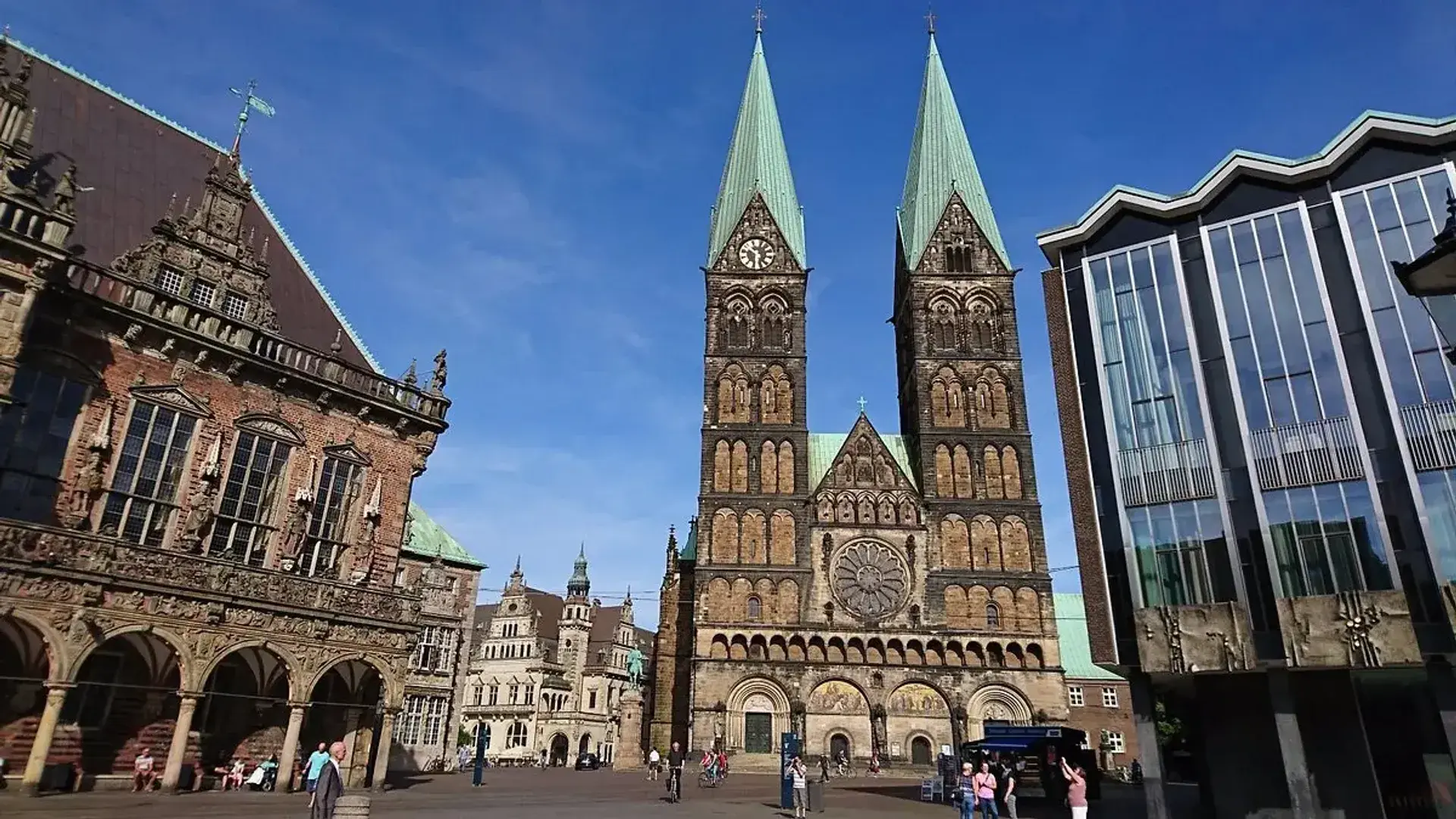
St. Peter’s Cathedral (St. Petri Dom zu Bremen) stands on the eastern boundary of Bremen's historic Marktplatz, flanked by the City Hall (Rathaus) and the State Parliament (Bürgerschaft). Its twin towers, rising roughly 89 to 92 meters and capped with late 19th-century Rhenish helmets, serve as a primary vertical landmark connecting the central market square to Böttcherstraße and the Schnoor quarter.
The cathedral's roots trace back to approximately 789, when Bishop Willehad established a timber church on the site. Rebuilt in stone during the 9th century, the structure expanded significantly in the 11th century into a Romanesque basilica core under Archbishop Adalbert. Subsequent centuries introduced 13th-century early Gothic brick additions and late Gothic net vaulting. Today, the cathedral operates as the primary church of the Protestant Bremian Evangelical Church.
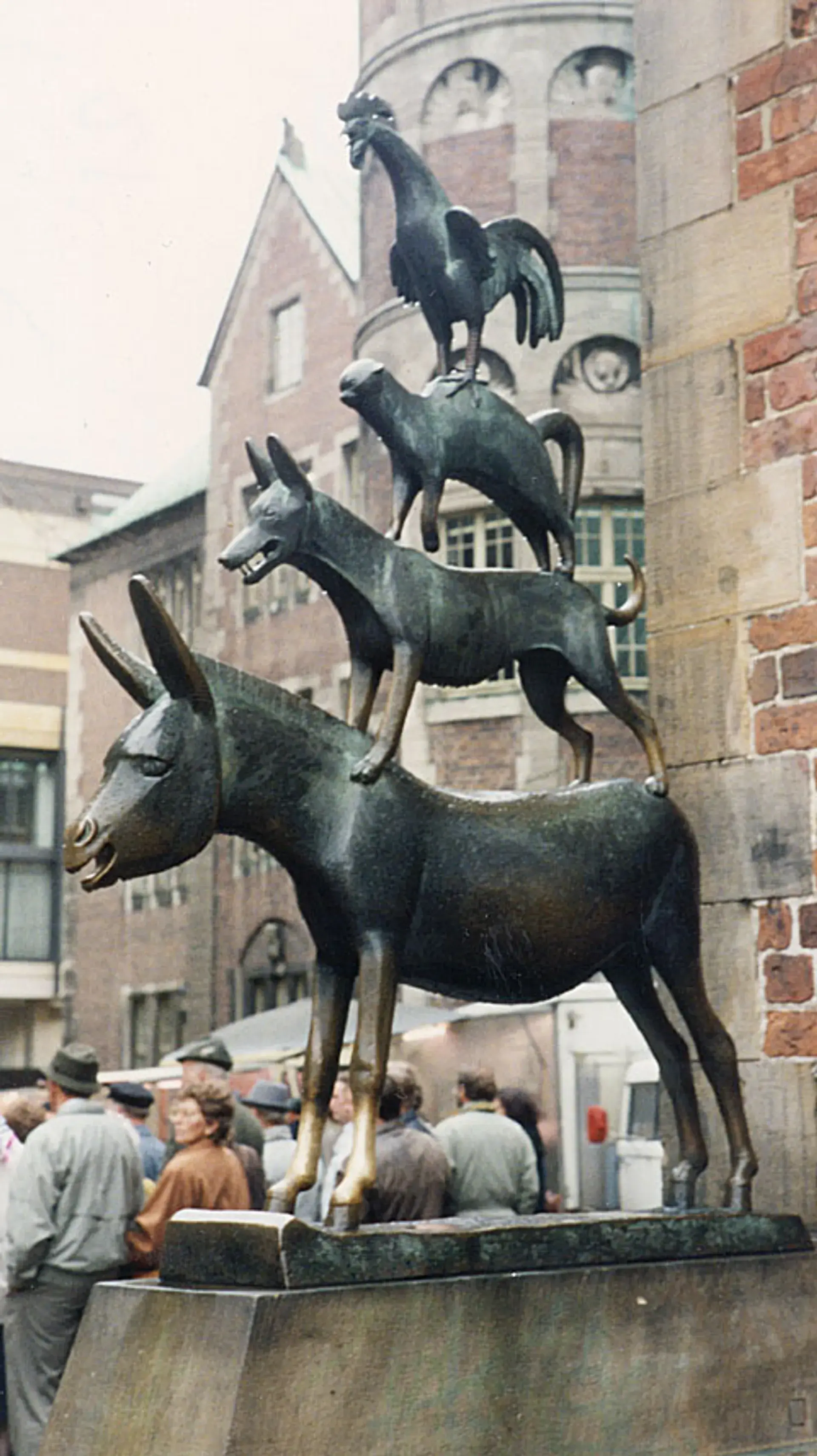
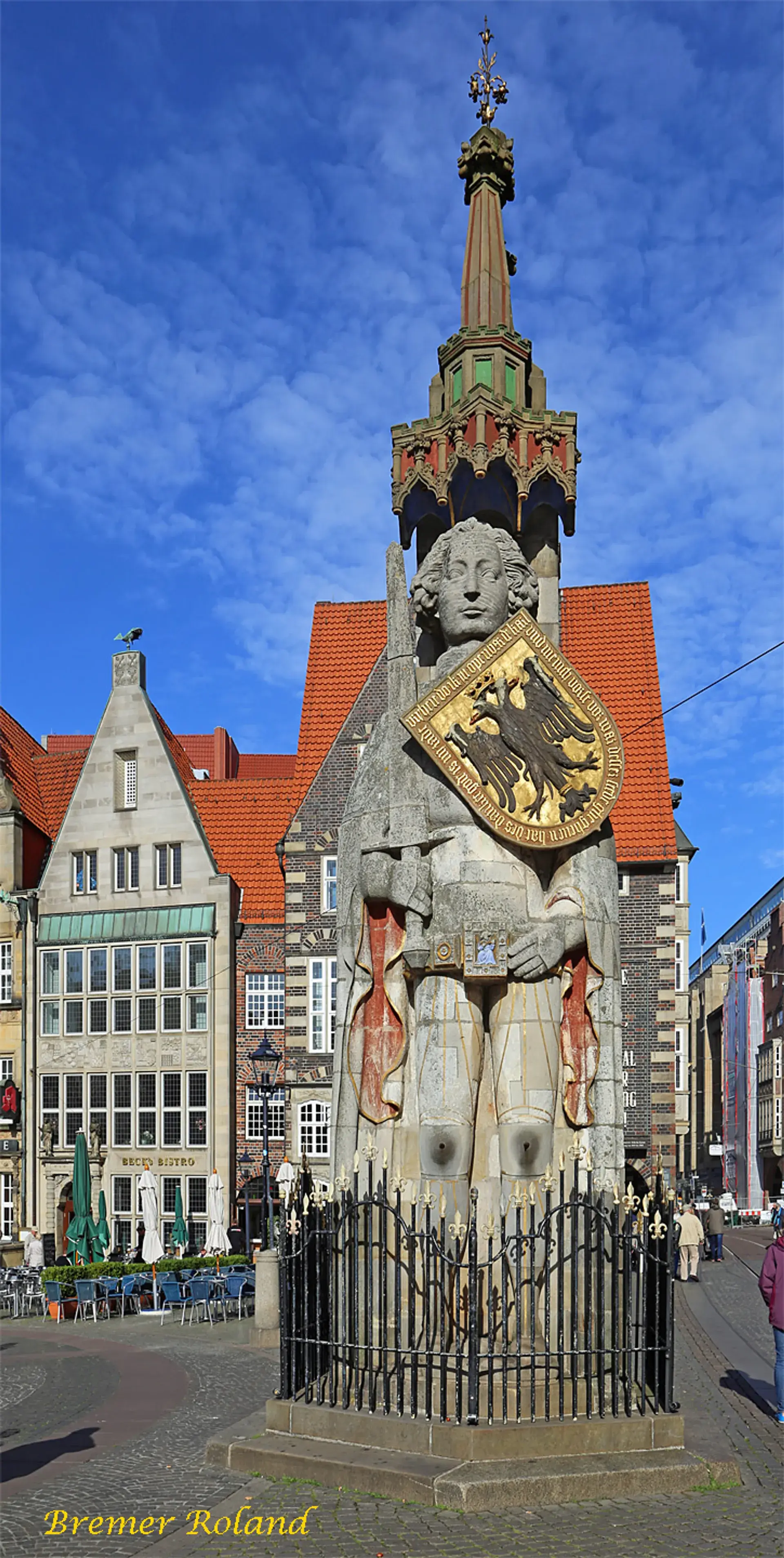
Bremen walking tour with audio and quizzes: Town Musicians and Roland
2 hours8 stopsAudio guideStart any day, at your own paceTicket on your phone · 30-day refundCivic Rivalry and the Reformation
For centuries, stepping onto the cathedral precinct (Domfreiheit) meant crossing an autonomous, extraterritorial border governed directly by the Prince-Archbishop. This jurisdiction placed the ecclesiastical territory in sharp political opposition to the merchant burghers of the Free Imperial City of Bremen. Directly opposite the cathedral stands the monumental statue of Roland, whose drawn sword and shield face the church to assert civic autonomy against episcopal rule.
During the Reformation, this friction deepened when the city accepted Protestantism while the cathedral chapter remained Catholic and imperial. The cathedral was forced to close in 1561 and remained shuttered for nearly seven decades. Neglect caused severe structural decay, culminating in the dramatic collapse of the south tower in 1638. Later reopened for Lutheran worship, the cathedral grounds were secularized and formally incorporated into the city of Bremen in 1803. Comprehensive historicist restorations led by architect Ernst Ehrhardt between 1888 and 1901 reshaped the exterior, followed by post-World War II restorations and archaeological excavations.
Subterranean Crypts and the Bleikeller
The interior of St. Peter's Cathedral features striking atmospheric contrasts. The lofty Gothic net vaulting and warm sandstone piers of the nave produce resonant acoustics, while the two subterranean Romanesque crypts maintain chilled, still air and low-ceilinged silence.
The cathedral's most unusual feature is the Bleikeller (Lead Cellar). In 1698, workers assisting organ builder Arp Schnitger entered an eastern cellar used for storing roofers' lead and discovered that interred bodies had not decayed. Constant dry drafts and a natural chimney effect had preserved the corpses through natural mummification. Eight of these mummies—including a Swedish general, an English noblewoman, and a student—are preserved in glass-lidded coffins on seasonal display.
Symbols, Relics, and Traditions
St. Peter's Cathedral preserves several unique historical details. At the base of an east choir portal sits the Bremer Dommaus, a 10-centimeter stone relief of a mouse. Medieval builders carved the mouse as an apotropaic symbol intended to ward off evil and impurities from the sacred interior, contrary to folklore claiming it was a mason's personal joke.
The cathedral steps are also the setting for Domtreppenfegen, a Bremen tradition recorded since the late 19th century. According to local custom, an unmarried man turning 30 must sweep bottle caps off the cathedral steps until redeemed by a kiss from a maiden.
Visiting and Public Access
The cathedral remains an active house of worship hosting Sunday services, daily prayers, choral recitals, and organ performances across its five instruments. The nave and Romanesque crypts are open daily to the public free of charge. Adjacent to the east choir, the on-site Dom-Museum offers free admission to view liturgical art, historical vestments, and archaeological items excavated from seven medieval bishops' tombs. Seasonal access is available for a fee to tour the Bleikeller crypt and climb the 265 steps of the south tower for panoramic views across the historic center and the Weser River.
FAQ
What is the Bleikeller at St. Peter's Cathedral?
The Bleikeller (Lead Cellar) is a crypt where naturally mummified human remains are displayed. First discovered in 1698 by workers assisting organ builder Arp Schnitger, the bodies were preserved from decomposition by dry air currents and a natural chimney effect.
What does the carved mouse in the cathedral represent?
The Bremer Dommaus is a small 10-centimeter stone relief carved into an east choir portal base. Art historical records show it was created in the Middle Ages as an apotropaic symbol to ward off evil, rather than as a stonemason's prank.
Can visitors climb the cathedral towers?
Yes, the south tower is open to visitors seasonally for a small admission fee. A climb of 265 steps leads to views over Bremen's Marktplatz and the Weser River.
What is the Domtreppenfegen tradition?
Domtreppenfegen is a local custom dating back to the late 19th century in which an unmarried man turning 30 is tasked with sweeping bottle caps off the cathedral steps until kissed by a maiden.