Bremen Town Musicians: The Iconic Bronze Statue
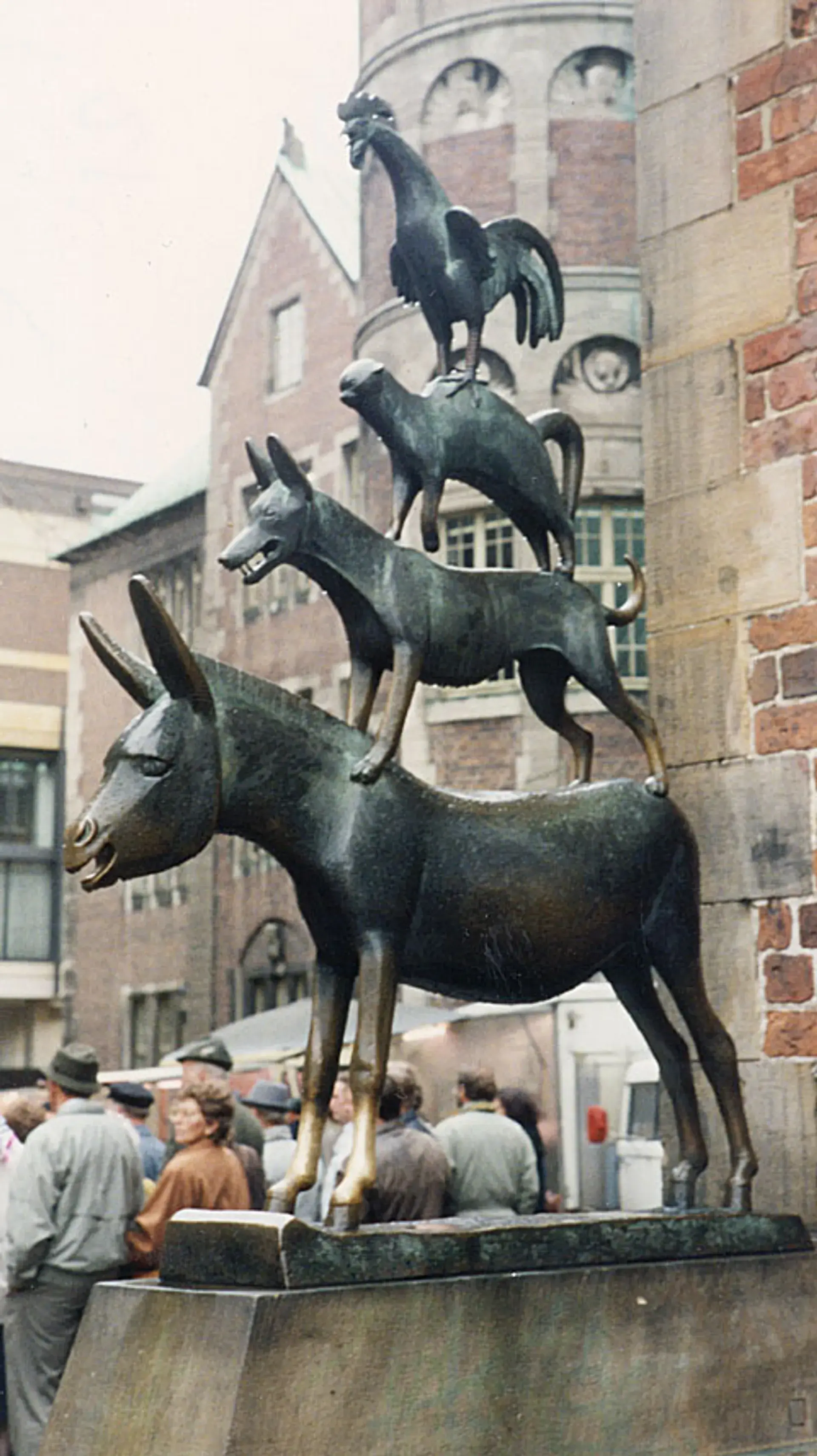
Standing on the west side of Bremen's historic Town Hall (Rathaus), the bronze sculpture of the Town Musicians (Bremer Stadtmusikanten) is one of the most recognized monuments in Germany. Bremen's most famous musical troupe never actually set foot in the city in folklore, yet this 200-centimetre-tall sculpture has served as the city's definitive civic emblem since the mid-twentieth century.
Origins and Postwar Creation
While municipal officials initially explored creating a tourism monument based on the fairy tale as early as 1938, the project only materialized after World War II. Seeking a symbol of community resilience, cooperation, and renewal, Bremen's tourism association commissioned renowned German sculptor Gerhard Marcks to design the piece.
Marcks conceived and cast the bronze work in 1951. It was installed on loan on September 30, 1953, and officially purchased by the city in 1955 following public donations. When first erected, the statue sparked controversy among certain local politicians and residents who found it disrespectful that the donkey’s rear faced the Town Hall’s facade. Over time, initial hesitation gave way to widespread affection, and the stacked formation—a donkey supporting a dog, a cat, and a perched rooster—became integrated into Bremen’s municipal identity, appearing on street signs, souvenirs, and pedestrian traffic signals.
Bremen walking tour with audio and quizzes: Town Musicians and Roland
2 hours8 stopsAudio guideStart any day, at your own paceTicket on your phone · 30-day refundFolklore and Hanseatic Heritage
The sculpture draws directly from the Brothers Grimm fairy tale, first published in 1819 in the second edition of Kinder- und Hausmärchen. The narrative follows four aging domestic beasts who face mistreatment and set off toward Bremen to work as city musicians. Along their journey, the quartet frightens a band of thieves away from a woodland cottage and chooses to stay there instead, never reaching their intended destination.
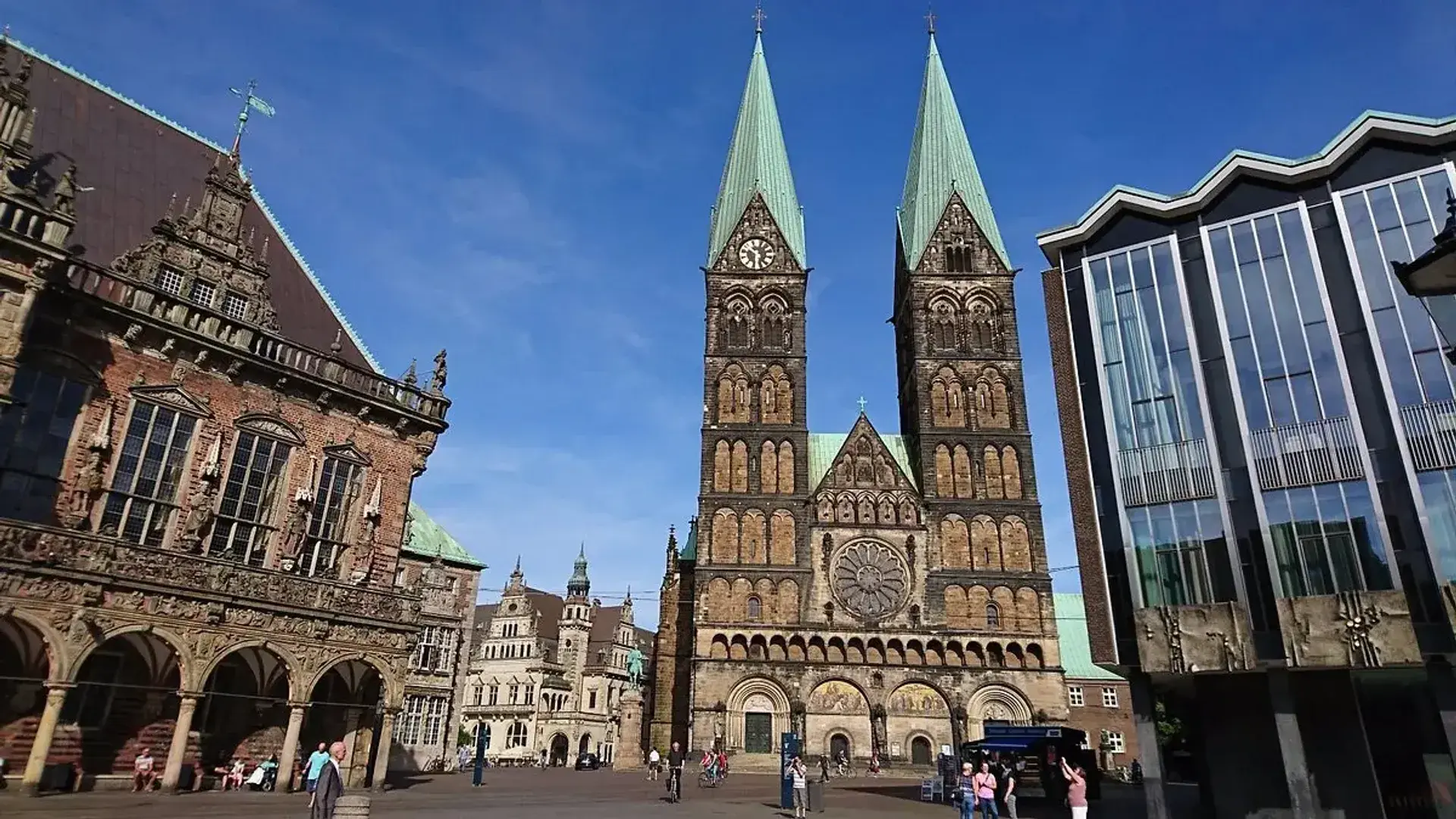
Despite the literary irony, the tale’s central sentiment—that one can find a better life anywhere by moving forward—deeply aligns with Bremen's history as a free Hanseatic port. The city long represented an autonomous haven offering refuge, social mobility, and departure for trans-Atlantic emigrants. Situated right beside the Town Hall and the Roland statue, which jointly form a UNESCO World Heritage Site celebrating civic liberty, the sculpture also marks the northern terminus of the 600-kilometre German Fairy Tale Route (Deutsche Märchenstraße).
The Golden Patina and Local Custom
While the bulk of the bronze work displays a weathered, dark greenish-brown patina, sections of the base shine with a gleaming golden brass hue. Decades of visitors have polished the donkey's nose, front hooves, and ankles through constant contact.
Local tradition holds that touching the donkey’s front legs brings good luck or ensures a future return to Bremen. According to local etiquette, visitors must place one hand on each of the donkey's front legs simultaneously. Grabbing only a single leg often prompts amused locals to remark that it is simply "one donkey shaking hands with another."
Nearby Curiosities: The Bremer Loch
The folklore extends further into the surrounding Market Square. Embedded in the cobblestones in front of the State Parliament (Bürgerschaft) lies the Bremer Loch (Bremen Hole). Disguised as an ordinary bronze manhole cover, this underground charity collection box features an integrated photocell. Dropping a coin into the slot triggers a recorded animal sound—a rooster's crow, a cat's mew, a dog's bark, or a donkey's bray—raising funds for the Wilhelm Kaisen Bürgerhilfe charity.
The statue is accessible outdoors at all hours free of charge. For visitors seeking theatrical interpretations of the tale, free open-air performances are held nearby on the Domshof square every Sunday at noon from May through September.
FAQ
Why are the donkey's legs on the statue shiny and golden?
While the rest of the bronze statue has weathered to a dark greenish-brown patina, the donkey's front legs and nose have been polished to a bright, golden brass color by millions of visitors touching them over decades.
What is the proper etiquette when touching the statue for good luck?
Local tradition dictates placing both hands on the donkey—one on each front leg. Bremen custom jokes that if someone grabs only one leg with one hand, it is just one donkey shaking hands with another.
What is the Bremer Loch located near the monument?
The Bremer Loch is an underground charity donation box on the Market Square disguised as a manhole cover. When a coin is dropped inside, a photocell triggers a recording of one of the four fairy-tale animal sounds to benefit local charity.
Did the animals in the Brothers Grimm story ever reach Bremen?
No. In the Brothers Grimm fairy tale, the four aging animals set out for Bremen to become town musicians, but after scaring robbers away from a forest house, they decided to settle there and never arrived in the city.