Imperial Palace of Goslar: Holy Roman Empire Seat
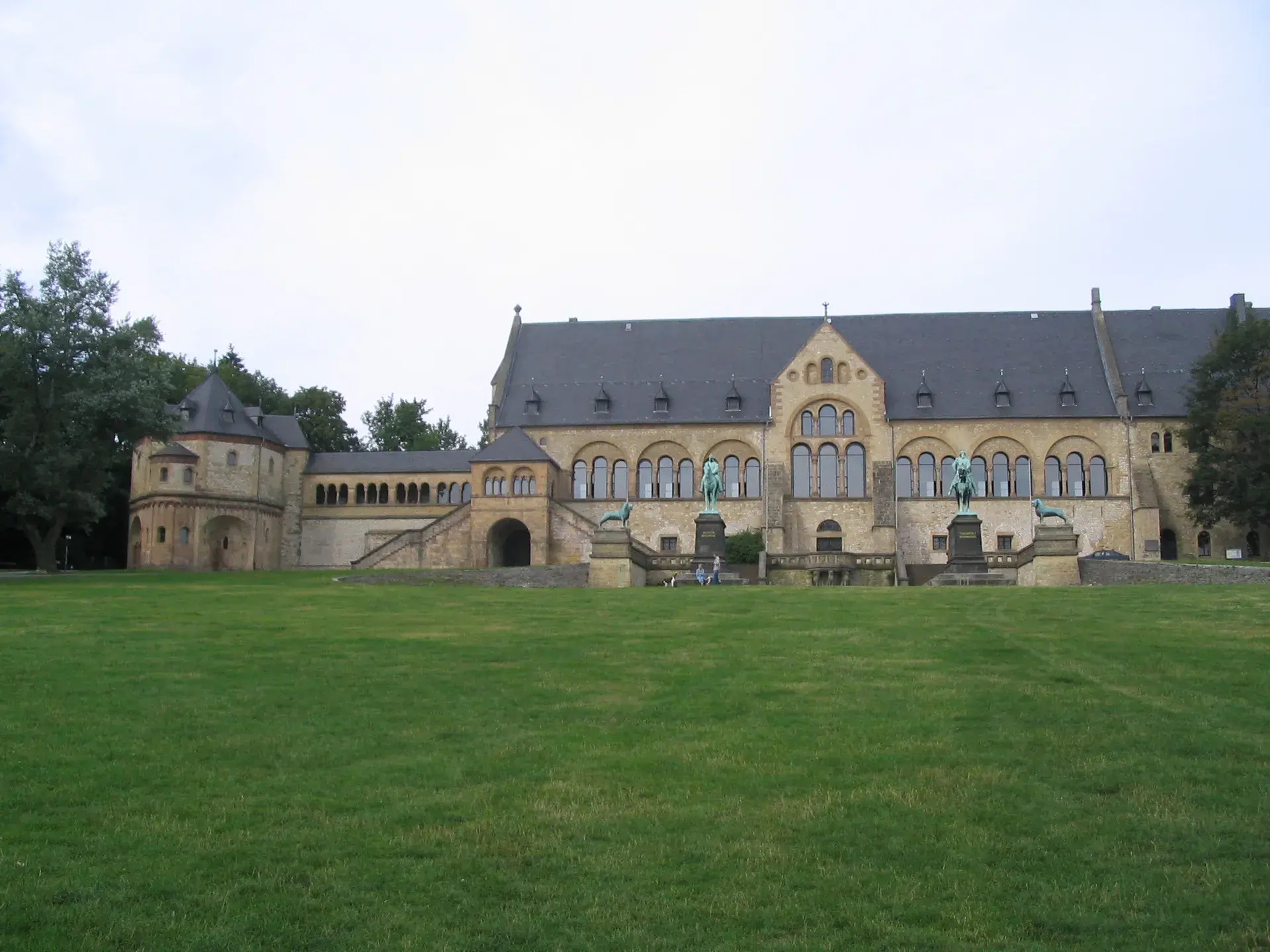
Step inside the largest surviving secular hall of the 11th century, an imperial powerhouse built on a mountain of silver. The Imperial Palace of Goslar, known locally as the Kaiserpfalz Goslar, is a sprawling Romanesque complex situated at the foot of Rammelsberg hill. Designated a UNESCO World Heritage Site in 1992, the palace symbolizes the historical connection between imperial authority and the vast wealth generated by local silver mines.
Rise of an Imperial Powerhouse
Initial construction of the palace began around 1005 under King Henry II, strategically positioned to capitalize on the rich silver and ore deposits of nearby Rammelsberg. Between 1040 and the 1050s, Holy Roman Emperor Henry III substantially expanded the complex. He enlisted architect Benno II to build the central Kaiserhaus and a collegiate church.
The resulting Kaiserhaus, measuring 54 by 18 metres, stands today as the largest and best-preserved secular hall building surviving from its era. Throughout its prime, the palace served as a primary itinerant seat for Holy Roman Emperors, particularly the Salian dynasty. It hosted at least 23 Imperial Diets and saw numerous rulers walk its halls, including Frederick I Barbarossa and Henry IV, who was born in Goslar.
Decline and National Restoration
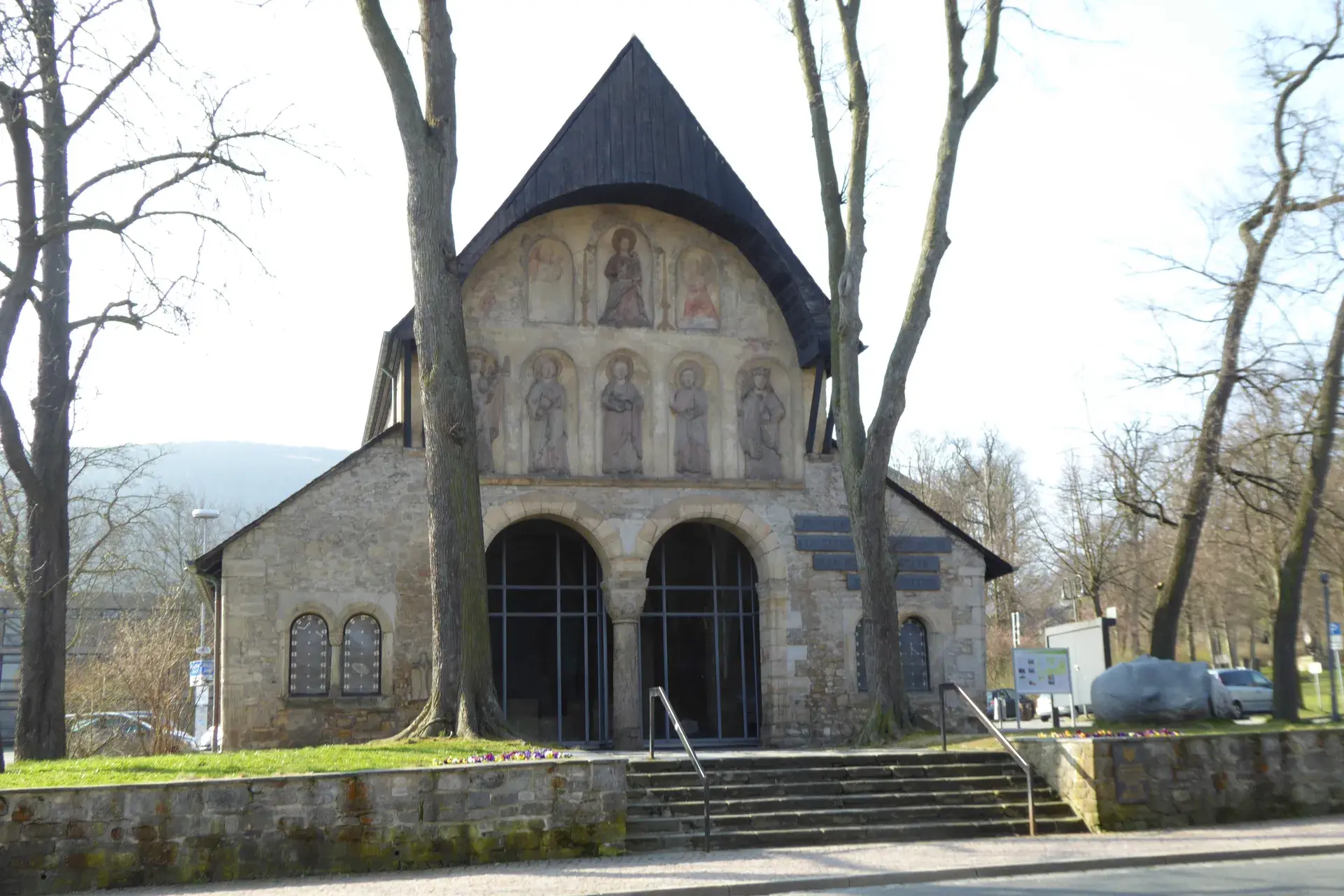
By the mid-13th century, royal power shifted away from the region, ending the imperial presence in Goslar. The complex suffered from severe neglect and multiple fires, most notably in 1289. During the 18th and early 19th centuries, the buildings were repurposed for utilitarian needs, functioning at times as storage facilities and a prison. The adjacent Goslar Cathedral became dilapidated and was demolished in 1819, leaving only its entrance porch.
Following the unification of Germany in the late 19th century, the ruined Kaiserhaus underwent a major national restoration. This project revitalized the site, transforming the neglected buildings into a grand monument celebrating the new German Empire.
Inside the Monumental Kaisersaal
Today, the Kaiserpfalz operates as a ticketed public museum and cultural heritage monument. The architectural centerpiece is the upper Kaisersaal. This expansive, high-ceilinged interior is lined with monumental, wall-filling murals painted by Hermann Wislicenus between 1879 and 1897. These artworks were specifically designed to symbolically link the medieval Holy Roman Empire to the 19th-century Hohenzollern German Empire.
Romanesque arched window arcades pierce the walls of the Kaisersaal, offering elevated vistas over the palace lawns and Goslar's medieval old town.
The Heart of Emperor Henry III
The adjoining Palace Chapel of St. Ulrich holds one of the complex's most surprising artifacts. In the lower chamber of the chapel, a 13th-century stone sarcophagus houses a gilded metal capsule. Inside this capsule is the preserved physical heart of Emperor Henry III. The emperor's body was interred at Speyer Cathedral, but his heart was kept in Goslar in accordance with his dying wish.
Cathedral Relics and the Imperial Throne
While the 11th-century Goslar Cathedral was largely demolished, its legacy remains visible. The full footprint of the original church is visually demarcated in the stone paving of the modern parking and approach area. The surviving cathedral porch, or Domvorhalle, is integrated into the landscaped public park.
Additionally, the museum houses the medieval bronze imperial throne, the Kaiserstuhl. This historic artifact was purchased by Prussian royalty in the 19th century and taken to Berlin, where Emperor Wilhelm I sat upon it during the opening of the first imperial Reichstag in 1871. The throne was eventually returned to Goslar, securing its place within the historic complex.
FAQ
What is the Kaiserhaus at the Imperial Palace of Goslar?
The Kaiserhaus is the central structure of the palace complex. Measuring 54 by 18 metres, it is considered the largest and best-preserved secular hall building surviving from the 11th century.
Why was the Imperial Palace of Goslar built?
Initial construction began around 1005 under King Henry II to capitalize on the rich silver and ore deposits found in the nearby Rammelsberg mountain, which elevated Goslar into an economic and political powerhouse.
Whose heart is buried at the Imperial Palace of Goslar?
The preserved physical heart of Emperor Henry III is kept in a gilded metal capsule inside a 13th-century stone sarcophagus within the St. Ulrich Chapel. This was done to fulfill his dying wish, even though his body was buried in Speyer.
What is the current use of the Imperial Palace of Goslar?
The site operates as a public museum and cultural heritage monument. The interior features historical exhibitions, the impressive Kaisersaal with 19th-century murals, and the preserved medieval chapels.