Lohmühle: Germany's Last Functional Bark Mill
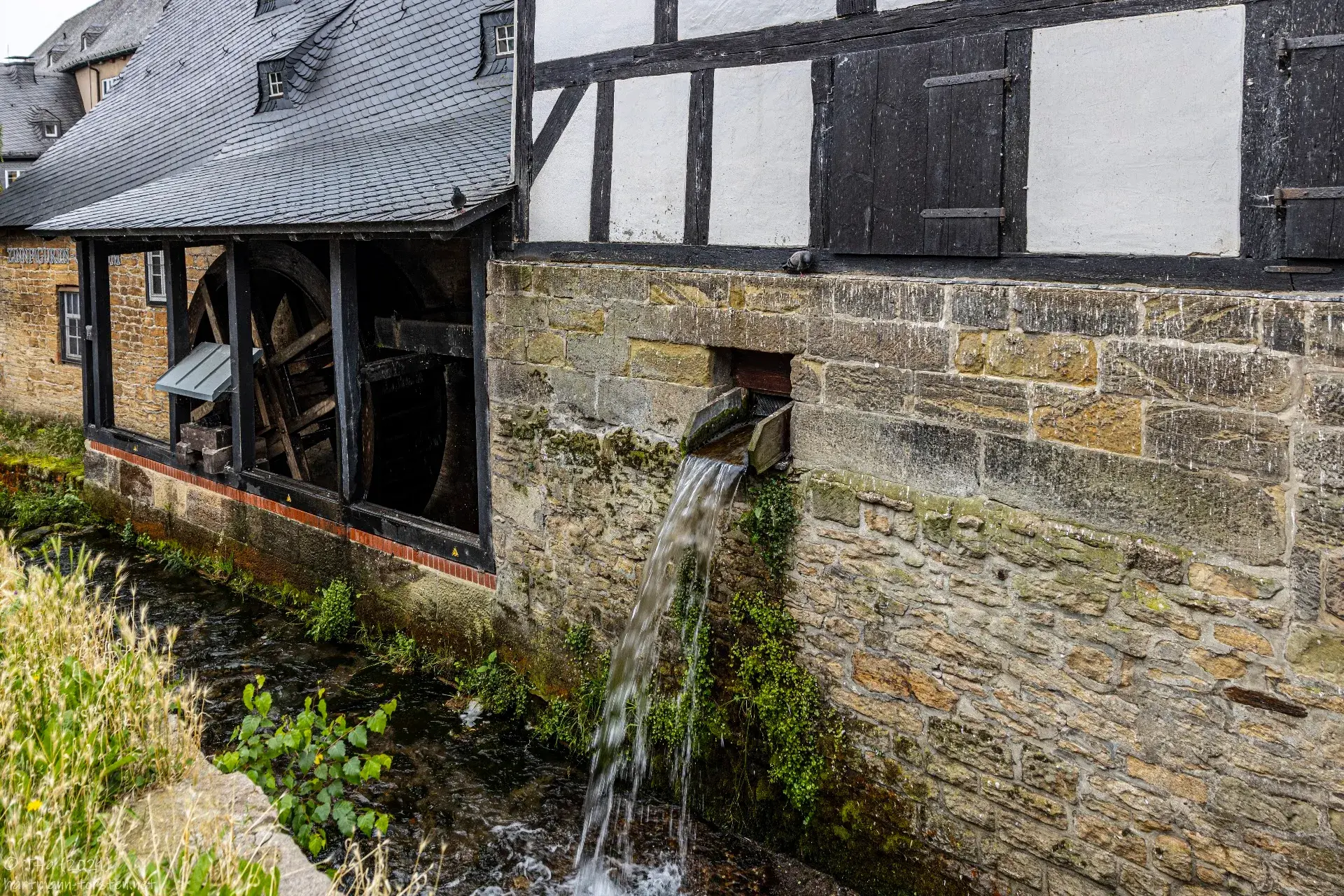
Listen for the rhythmic pounding of Germany's last fully functional bark-stamping mill, the mechanical heart of Goslar's medieval craft economy. Located at Klapperhagen 1 along the Abzucht stream, the Lohmühle is a 16th-century timber-framed watermill. Milling at this site dates back to the 12th century, serving as a vital reminder of the water-powered industries that generated the medieval wealth of the city.
Goslar's Water-Powered Craft Economy
Historically, around 40 watermills operated along Goslar's watercourses to power metallurgy, food processing, and local manufacturing. The Lohmühle functioned as a bark mill, processing oak, spruce, and fir tree bark into a fine powder. This extracted powder provided essential tannins used by local guild artisans for leather production.
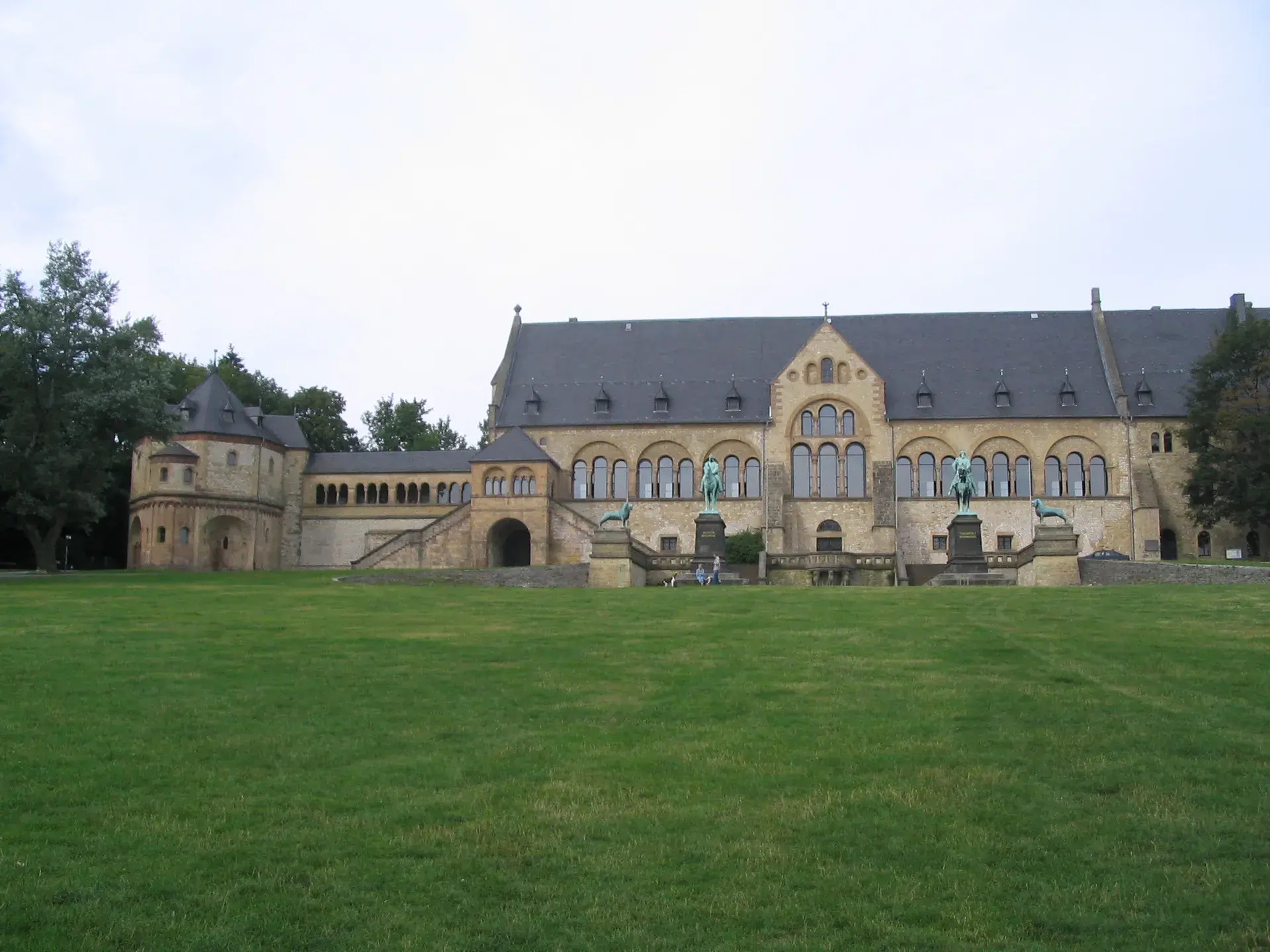
The mill sits on a transitional route between the city's grand imperial and ecclesiastical monuments, such as the Kaiserpfalz precinct, and the historic working-class waterways. While royal palaces often dominate the historical record, this mill represents the practical craft economy that funded the city alongside the famous Rammelsberg mines.
A Mechanical Marvel
The sensory environment of the Lohmühle is defined by the rushing waters of the Abzucht stream, which drive a heavy wooden water wheel. This generates the rhythmic pounding of wooden stampers and gears inside the exposed timber framework. According to local lore, the adjacent street name, Klapperhagen, is derived from the acoustic clatter of this very machinery.
The facility stands out for its all-mechanical power transmission. It utilizes a gear-and-cog system that distributes power from the single exterior water wheel to multiple stamper batteries, entirely without modern motors or electricity.
Preservation and Modern Use
Traditional bark milling became obsolete by the early 20th century due to the rise of industrial chemical tanning. To save this piece of industrial heritage, the building and its machinery underwent a comprehensive restoration between 2011 and 2013. Additionally, the exterior water wheel was completely renewed by the city in late 2024.
Water flow to the wheel is strictly regulated for ecological reasons. During summer droughts, the wheel is halted to protect the stream's local trout population.
Today, the structure serves as a protected technical monument and houses the Goslar Pewter Figurine Museum. The historic stamping mechanism is demonstrated during scheduled museum tours, which typically take place on the first Saturday of the month. Adjacent sections of the historic complex also feature a traditional inn and beer garden.
FAQ
What was the Lohmühle used for?
The Lohmühle served as a bark mill. It crushed oak, spruce, and fir bark into a fine powder to extract tannins, which local tanners used for leather production.
Is the mill machinery still functional?
Yes, the Lohmühle is the only fully preserved, functional bark-stamping mill in Germany. It operates using an all-mechanical gear-and-cog system driven by an exterior water wheel.
Where is the Lohmühle located in Goslar?
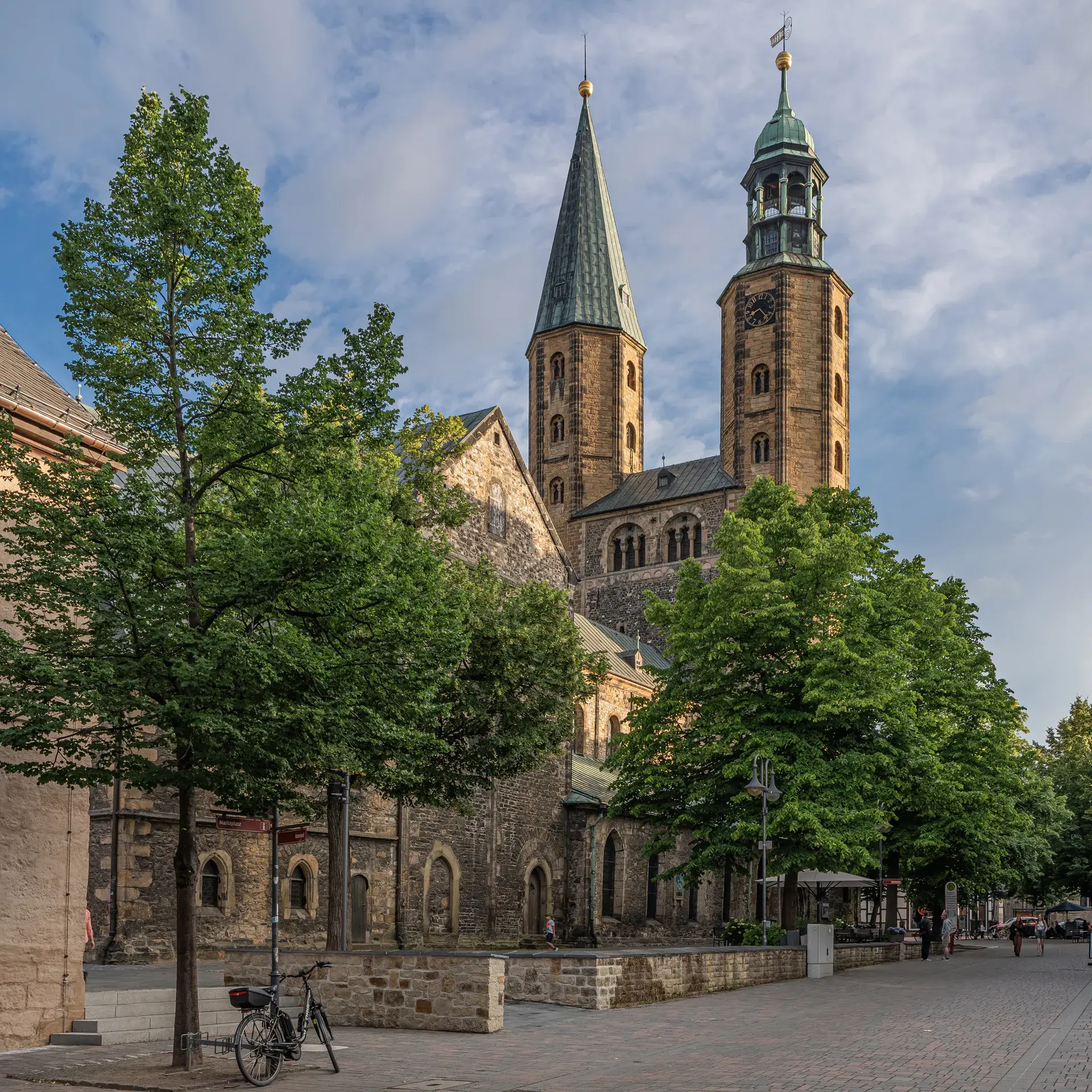
The mill is located at Klapperhagen 1 along the Abzucht stream, situated on a transitional route between the Markt quarter and the Kaiserpfalz precinct.
What else is located at the mill complex today?
Today, the building houses the Goslar Pewter Figurine Museum. The adjacent parts of the historic complex also contain a traditional inn and beer garden.
Discover Goslar like never before
Dive into Goslar hidden stories and secret spots with Ciceru interactive tours.
Explore tour
Audioguide
Quizzes
Maps
Solo
Couples
Groups & families

© Photo by Torsten Hartmann via Google Maps · Google Places