Basilica of St. Castor: Koblenz's Oldest Church
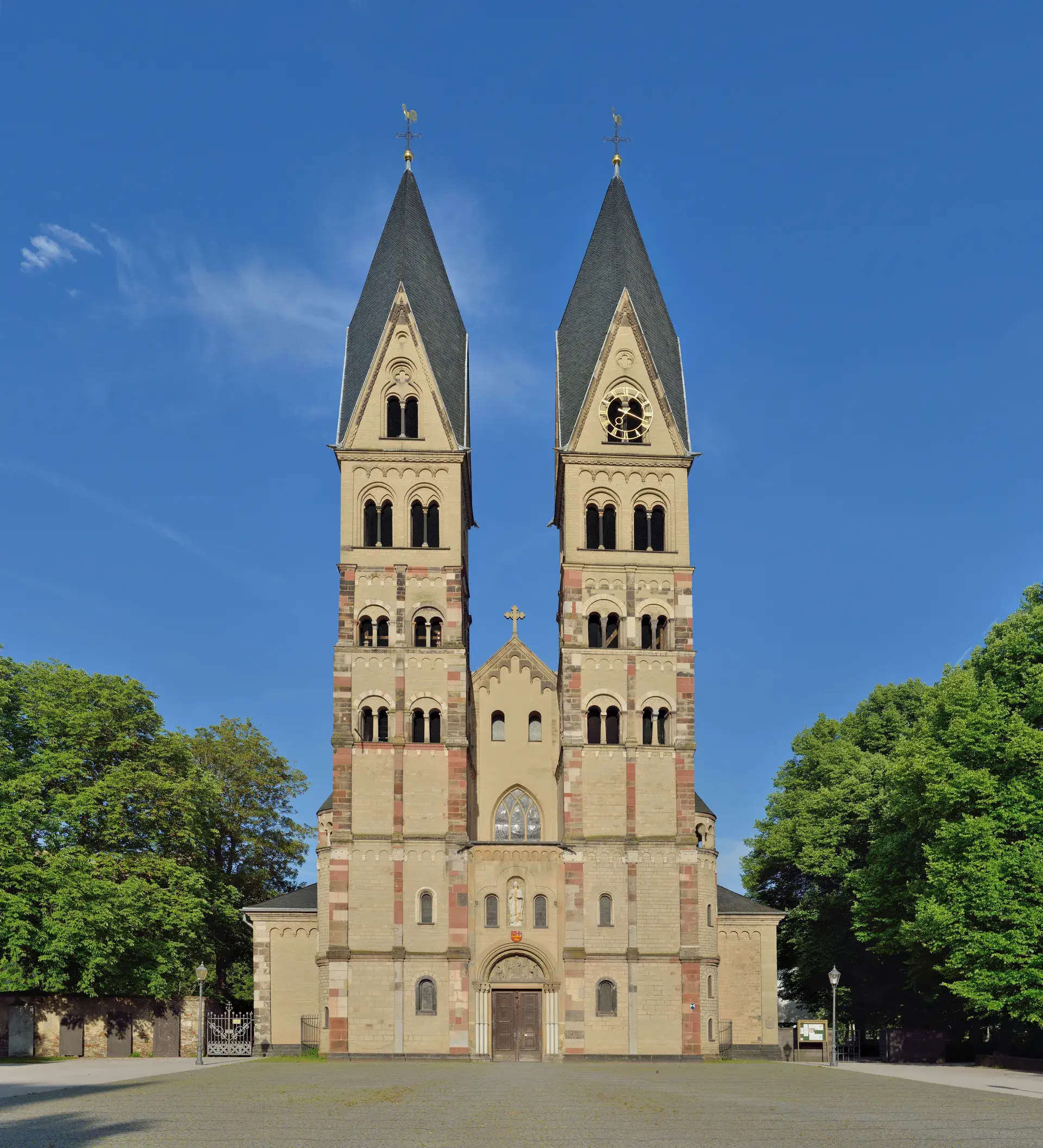
Stand before the time-tested stone facade of the Basilica of St. Castor, Koblenz's oldest sanctuary, showcasing classic Romanesque architecture from the square. Dedicated on November 12, 836, the basilica stands where the Carolingian Empire was carved into pieces, quietly laying the foundational borders of modern Europe.
The Birth of Modern Europe
Commissioned by Archbishop Hetti of Trier with support from Emperor Louis the Pious, the church was originally built to house the transferred relics of St. Castor. In the 9th century, it quickly became an essential diplomatic hub. In 842, 110 representatives of Louis the Pious's three sons assembled within its walls to negotiate the division of the Frankish realm.
These pivotal talks established the framework for the historic 843 Treaty of Verdun. This agreement partitioned the empire and laid the geographic foundations for modern France and Germany. The royal estate was later transferred to the Archbishopric of Trier in 1018.
Evolving Architecture over Ancient Ground
Archaeological excavations reveal that the basilica rests on ancient foundations, built directly over prehistoric La Tène culture hearths and a 2nd-century AD Gallo-Roman temple. Above ground, the current structure is defined by its Romanesque design, featuring four distinct towers and a classic apse.
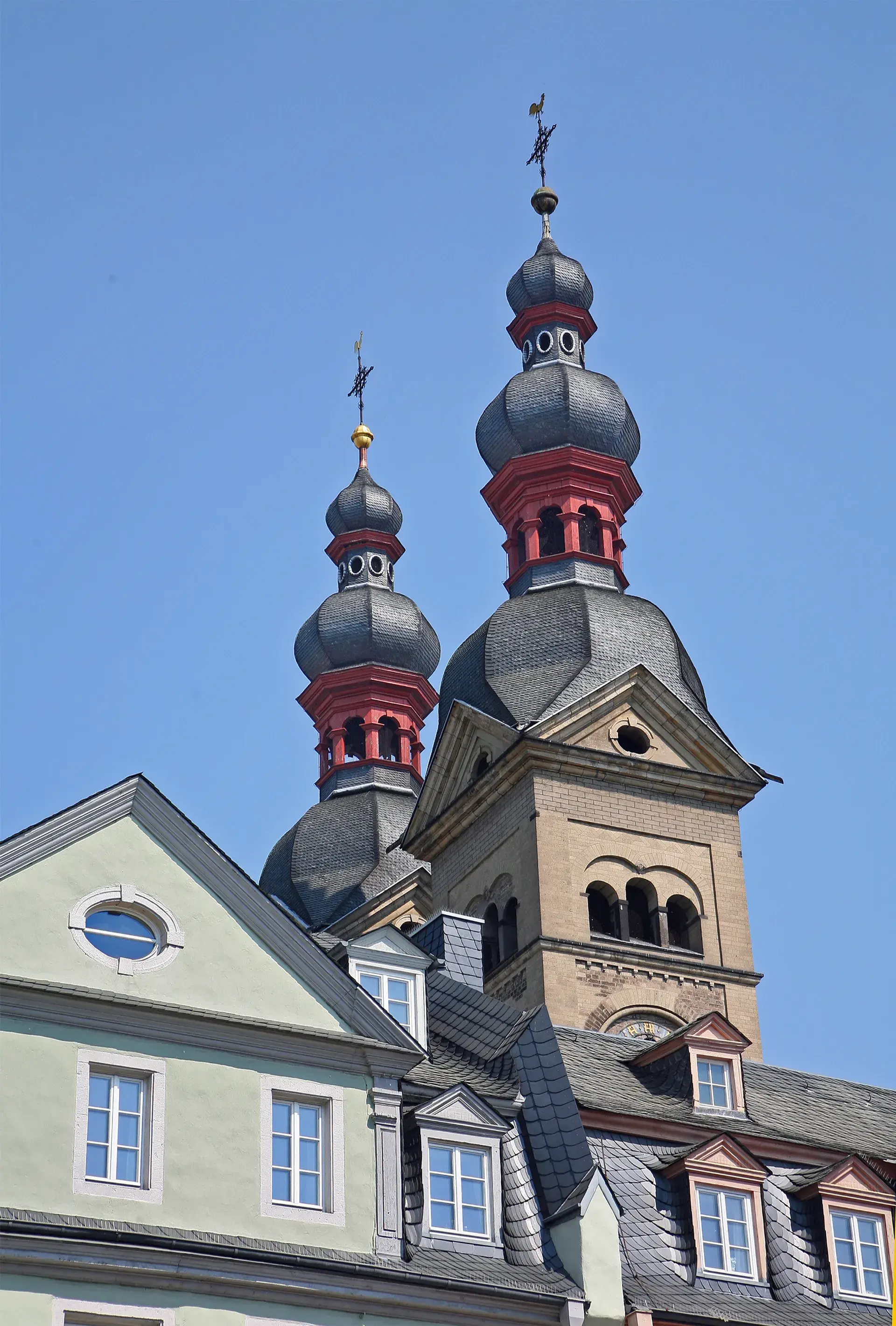
The building underwent major architectural expansions in the 12th, 15th, and 19th centuries. Between 1496 and 1499, a striking late-Gothic star-ribbed vault was installed. Later 19th-century restorations were overseen by Prussian architect Johann Claudius von Lassaulx. Today, along with the Liebfrauenkirche and Florinskirche, its towers define the historical skyline of Koblenz.
The Sarcastic Inscription of the Kastorbrunnen
In the forecourt of the basilica stands the Kastorbrunnen fountain, which features a highly unusual and sarcastic double inscription. In 1812, a French prefect preemptively carved a dedication celebrating Napoleon's expected victory against Russia.
When Napoleon's campaign instead ended in a disastrous retreat, Russian troops occupied Koblenz on New Year's Day 1814. Rather than destroying the monument, the Russian town commander, General Saint-Priest, simply carved a mocking endorsement directly underneath the French text: "Seen and approved by us, the Russian Commander of the City of Koblenz. January 1, 1814."
A Living Parish and Heritage Site
In 1991, Pope John Paul II elevated the church to a minor basilica. In 2002, it was included in the Upper Middle Rhine Valley UNESCO World Heritage landscape. The church holds a reliquary shrine for Saint Rizza, who local tradition claims was a daughter of Emperor Louis the Pious.
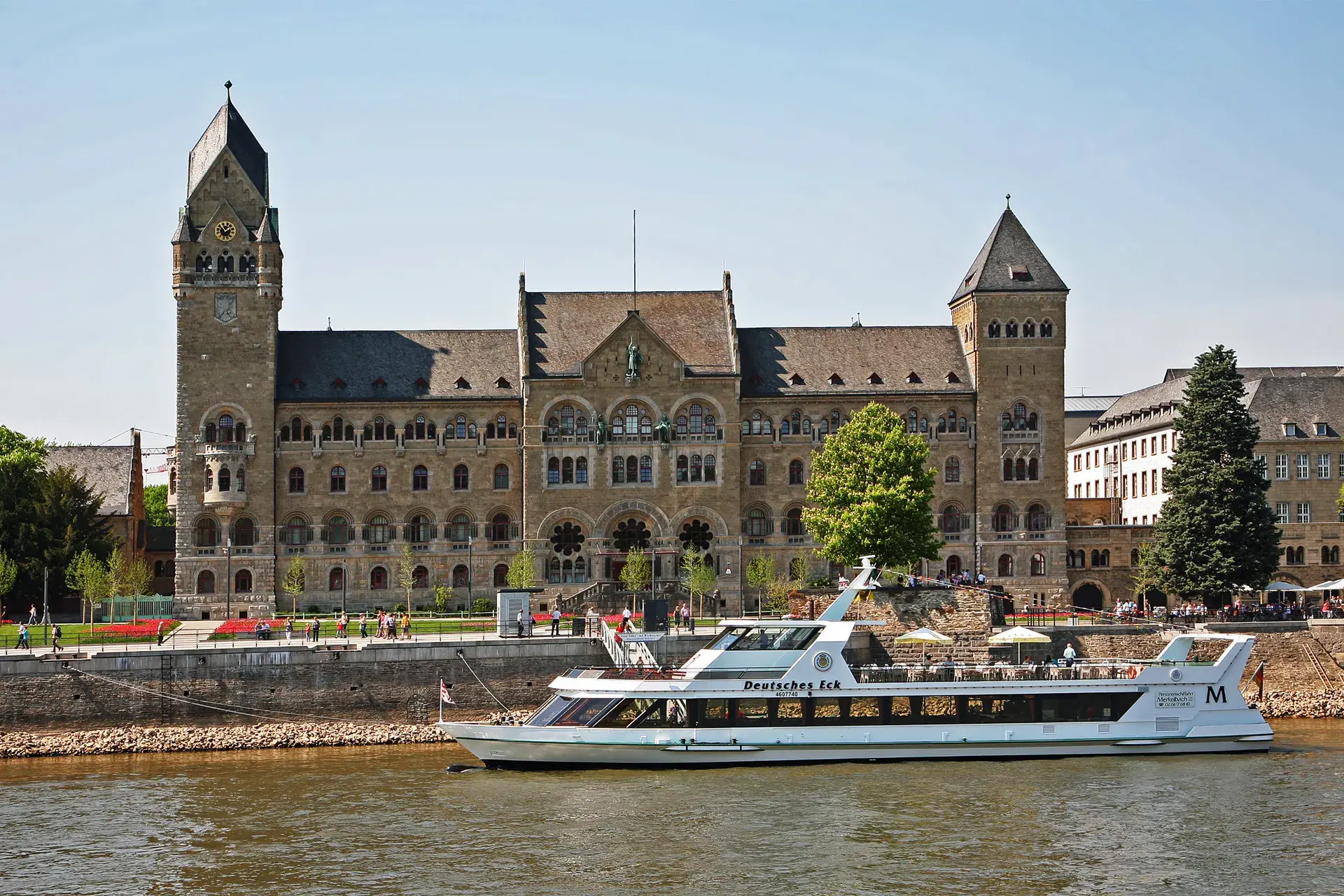
Today, the basilica functions as an active Catholic parish church, hosting regular Sunday services, Catholic liturgies, and sacred music concerts. The sound of its historic church bells frequently rings out, mingling with the ambient murmur of passing river cruise traffic and pedestrians approaching from the nearby Deutsches Eck promenade.
FAQ
What is the oldest church in Koblenz?
The Basilica of St. Castor is the oldest surviving church building in Koblenz, originally dedicated on November 12, 836.
What is the historical significance of the Basilica of St. Castor?
The church served as a major diplomatic hub in the 9th century. In 842, negotiations took place here that led to the 843 Treaty of Verdun, an agreement that partitioned the Frankish empire and laid the geographic foundations for modern France and Germany.
What does the inscription on the Kastorbrunnen say?
The fountain features a preemptive 1812 French dedication celebrating Napoleon's victory in Russia, followed by a sarcastic 1814 addition from a Russian General that reads: 'Seen and approved by us, the Russian Commander of the City of Koblenz. January 1, 1814.'