Liebfrauenkirche: Koblenz's Church of Our Lady
A Tapestry of Architectural Eras
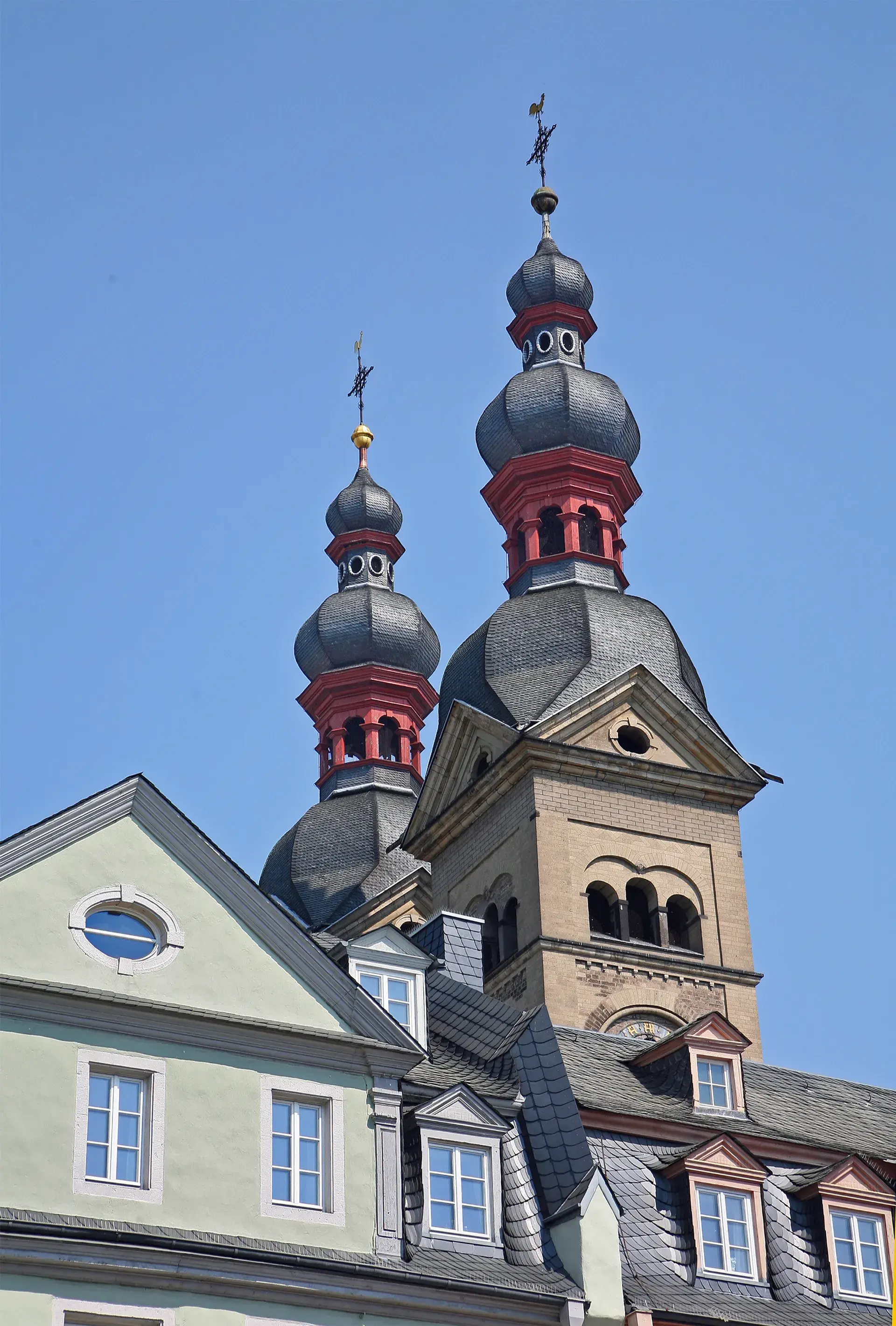
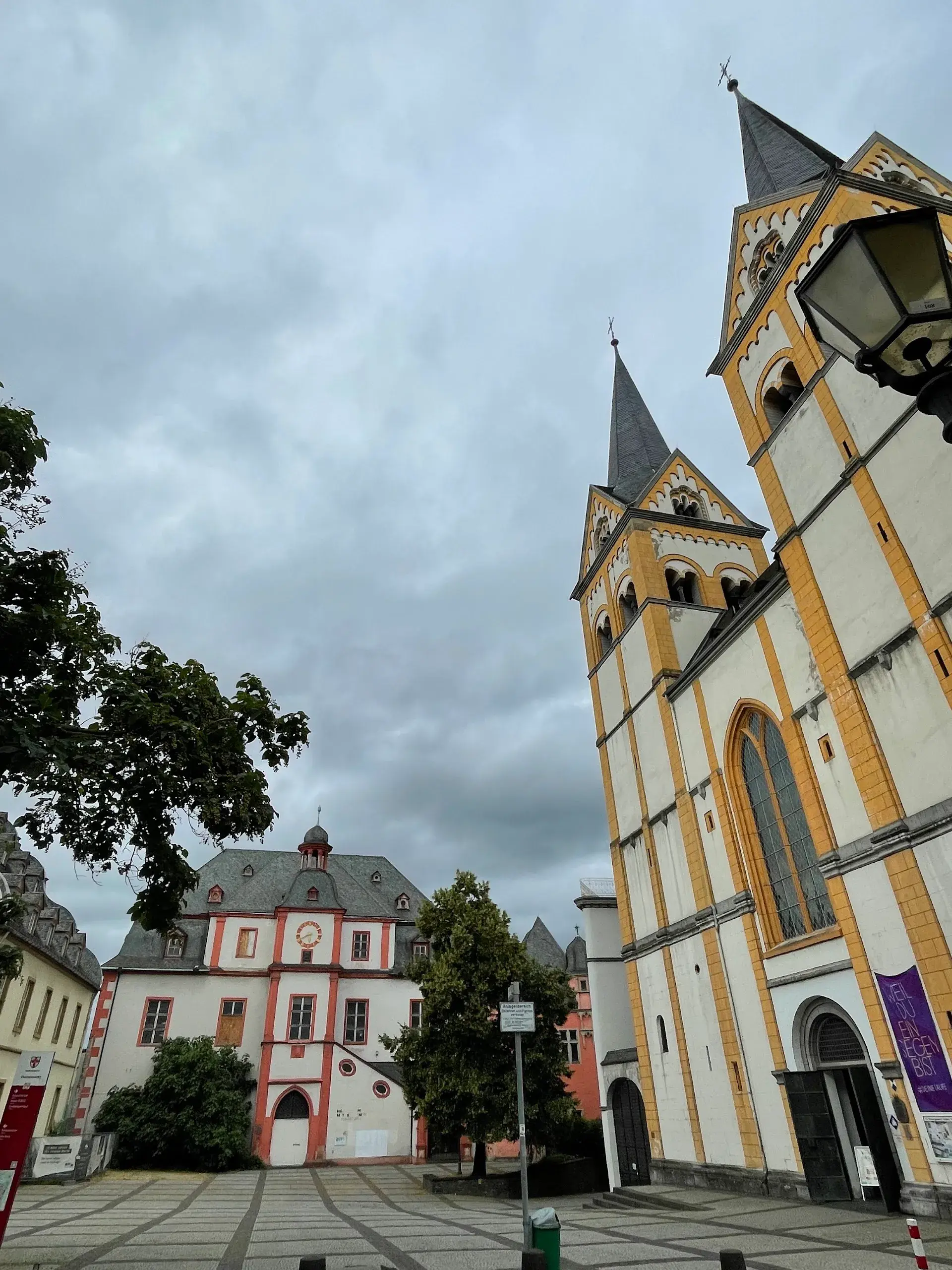
Standing at the highest point of Koblenz's Old Town, the Liebfrauenkirche (Church of Our Lady) is a protected cultural monument and part of the Upper Middle Rhine Valley UNESCO World Heritage Site. Dedicated to Mary, the mother of Jesus, the building blends multiple architectural periods into a single cohesive structure. Visitors can observe a Romanesque basilica, a late Gothic choir, and striking Baroque twin towers. Together with the Basilica of St. Kastor and the Florinskirche, the Liebfrauenkirche forms a triad of Romanesque churches that define the historic core of the city.
Over 1,500 Years of History
The religious history of the site dates back to the 5th century. The Franks established a Christian place of worship using the foundations and walls of a late-antique Roman hall from the era of Emperor Valentinian I, who ruled from 364 to 375. Around 1180, a late Romanesque pillar basilica was constructed on the site. This structure was later expanded with a late Gothic choir between 1404 and 1430.
The Liebfrauenkirche served as the main parish church of Koblenz from the late Middle Ages until the French Revolution. In 1694, architect Johann Christoph Sebastiani added the church's defining feature: the Baroque onion domes that crown its twin towers and dominate the city's silhouette.
Survival and Reconstruction
The building faced significant threats throughout its history. During the French occupation, the church deteriorated visibly and narrowly escaped demolition when a new roof was installed in 1808.
In 1944, severe air raids caused the roofs and spires to burn, though the heavy stone structure survived. Before full restoration efforts began in 1950, a temporary false ceiling was installed in the intact nave to create a weather-proof emergency space. Parishioners affectionately referred to this temporary church as "klein St. Marien" (little St. Mary's). The iconic onion domes eventually returned to the Koblenz skyline in 1955.
St. Michael's Chapel
The church grounds feature surviving historical outbuildings, notably St. Michael's Chapel. This 14th-century structure rests directly on the remnants of an ancient Roman city wall tower. The chapel's ground floor originally functioned as an ossuary, or bone house. Above the entrance, a statue dating to 1752 depicts the Archangel Michael defeating the devil.
Modern Day Role
Today, the Liebfrauenkirche functions as an active Catholic parish church within the Koblenz-Inner City Trinity Parish Community. The historic building remains open daily for religious services, concerts, and public visitation.
FAQ
What architectural styles are present in the Liebfrauenkirche?
The Liebfrauenkirche features a blend of architectural styles, including a late Romanesque pillar basilica, a late Gothic choir, and Baroque twin towers with distinctive onion domes.
Did the Liebfrauenkirche survive World War II?
The church's stone structure survived the 1944 air raids, though its roofs and spires burned. A temporary false ceiling was used to create an emergency worship space called "klein St. Marien" before full reconstruction began in 1950.
What is the history of St. Michael's Chapel at the Liebfrauenkirche?
St. Michael's Chapel is a 14th-century outbuilding built directly on the foundations of an ancient Roman city wall tower. Its ground floor once served as an ossuary, and a 1752 statue of the Archangel Michael sits above its entrance.