Electoral Palace Koblenz: Trier's Last Residence
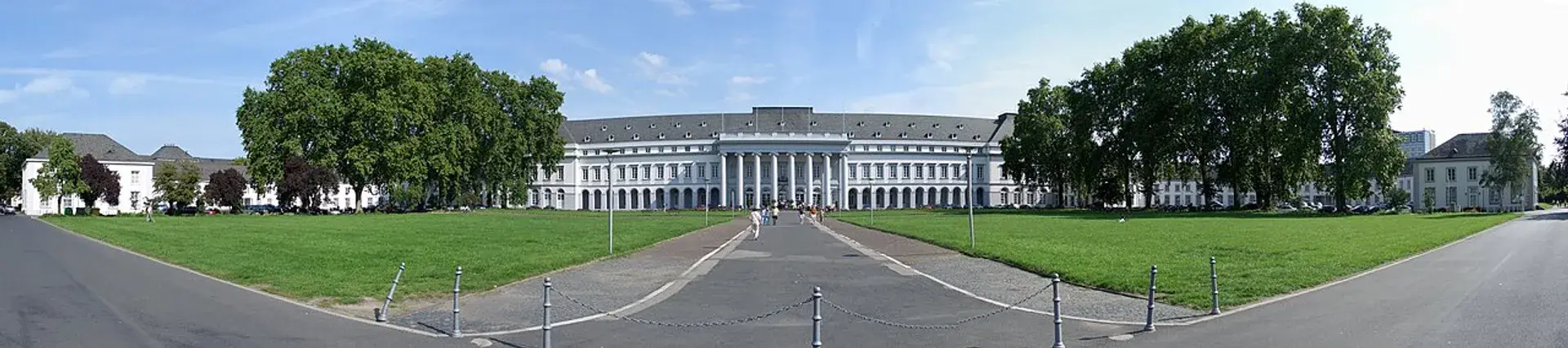
The Electoral Palace (Kurfürstliches Schloss) stands as a striking 18th-century French Neoclassical landmark in Koblenz. Designated as part of the "Upper Middle Rhine Valley" UNESCO World Heritage Site, the structure is historically significant as one of the very last major absolutist residential palaces erected in German lands immediately prior to the outbreak of the French Revolution in 1789.
The Final Archbishops' Residence
Commissioned in 1777 by Prince Clemens Wenceslaus of Saxony, the last Archbishop and Prince-Elector of Trier, the palace was intended to replace the outdated and cramped Schloss Philippsburg across the river. Construction prompted the relocation of the court to the newly planned Neustadt district.
The Prince-Elector's time in the completed palace was brief. In 1794, advancing French Revolutionary troops forced him to flee, bringing an abrupt end to the centuries-long territorial rule of the Electors of Trier.
Prussian Era and Modern Reconstruction
Following the integration of the Rhineland into Prussia, the palace was repurposed as an administrative hub and a royal residence. From 1850 to 1858, Prussian Crown Prince Wilhelm (who later became German Emperor Wilhelm I) and his wife Augusta resided in the building while Wilhelm served as military governor of the Rhine Province and Westphalia.
During World War II, the palace suffered severe damage. In 1944, heavy Allied bombings burned the structure down to its exterior walls. Between 1950 and 1951, the exterior and the main wing were meticulously reconstructed.
Neoclassical Architecture and Allegorical Gardens
The palace features a long rectangular central corps parallel to the Rhine River, flanked on the city-facing side by two large semicircular wings that enclose a wide crescent-shaped courtyard. Initial designs by French architect Pierre Michel d’Ixnard were later followed by construction phases involving Antoine-François Peyre. The grand facade is highlighted by an eight-column portico.
On the river-facing side, landscaped geometric lawns and mirror pools provide sweeping views across the Rhine toward the fortress slopes of Ehrenbreitstein. Empress Augusta commissioned extensive riverbank landscaping during her residency, laying the foundation for the modern Kaiserin-Augusta-Anlagen promenades. The grounds also feature allegorical depictions of "Father Rhine" and "Mother Moselle" on a 19th-century sculpture and the central river-facing pediment, symbolizing the confluence of the two waterways.
Present-Day Role and Context
Today, the Electoral Palace houses various regional and federal government authorities. Its restored central representative halls frequently host conferences, banquets, and civil functions. While the terraced riverside gardens remain open to the public, parts of the interior undergo scheduled preservation work in preparation for the BUGA 2029 horticultural show.
The palace complex serves as a major geographical anchor for the city. It acts as a transitional waypoint bridging the modern city center's shopping avenues with the riverside walking routes that stretch north toward the Deutsches Eck.
FAQ
Who built the Electoral Palace in Koblenz?
The palace was commissioned in 1777 by Prince Clemens Wenceslaus of Saxony, who was the last Archbishop and Prince-Elector of Trier.
What is the Electoral Palace used for today?
Today, the complex houses regional and federal government authorities, while its restored central halls are used as a venue for conferences, banquets, and civil functions.
Are the gardens of the Electoral Palace accessible?
Yes, the terraced gardens facing the Rhine River are publicly accessible. They feature landscaped geometric lawns, mirror pools, and historic 19th-century sculptures.
Did the palace survive World War II?
The original palace was heavily damaged during Allied bombings in 1944, burning down to its exterior walls. The exterior and main wings were reconstructed between 1950 and 1951.