Schängelbrunnen: Koblenz's Spitting Bronze Fountain
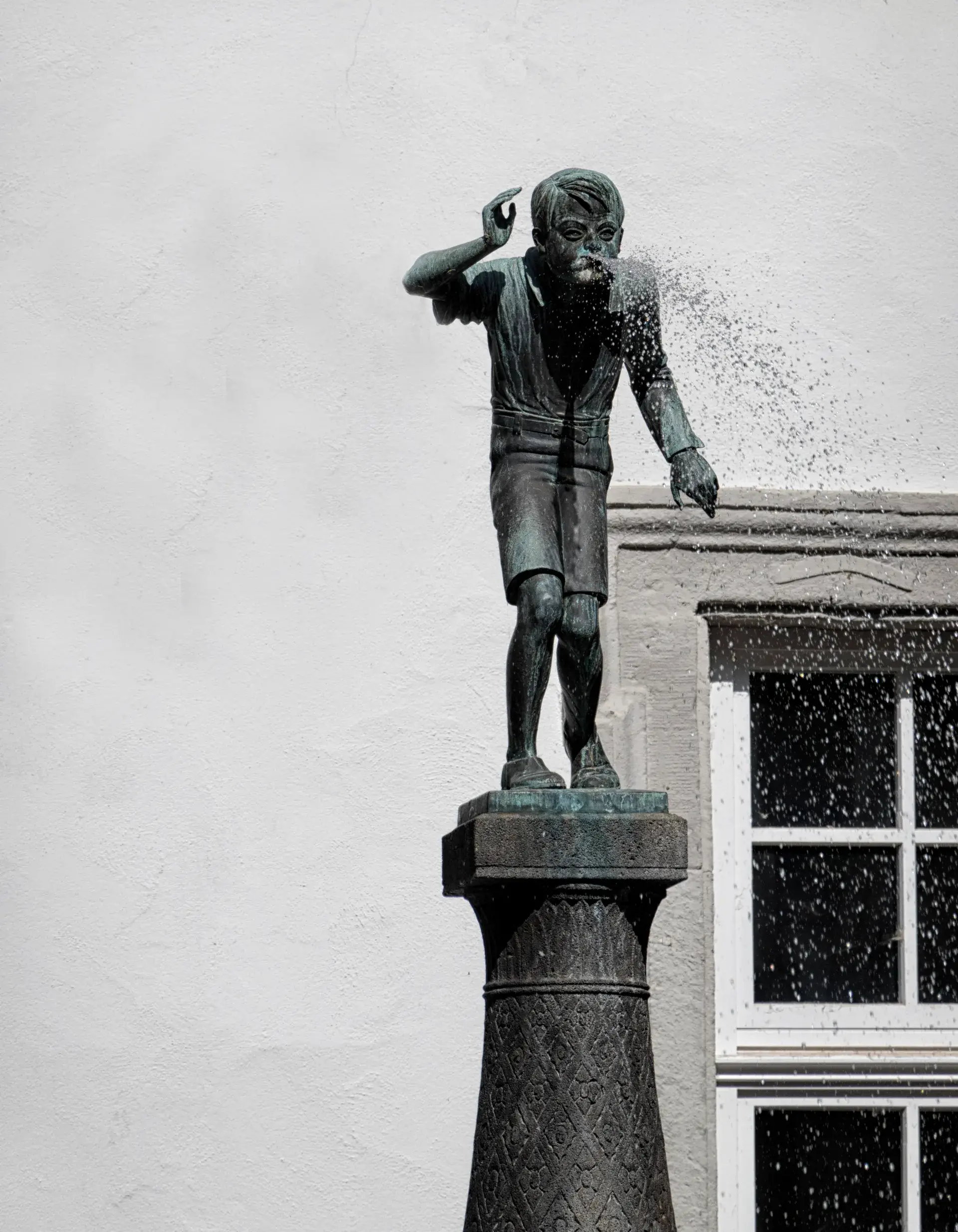
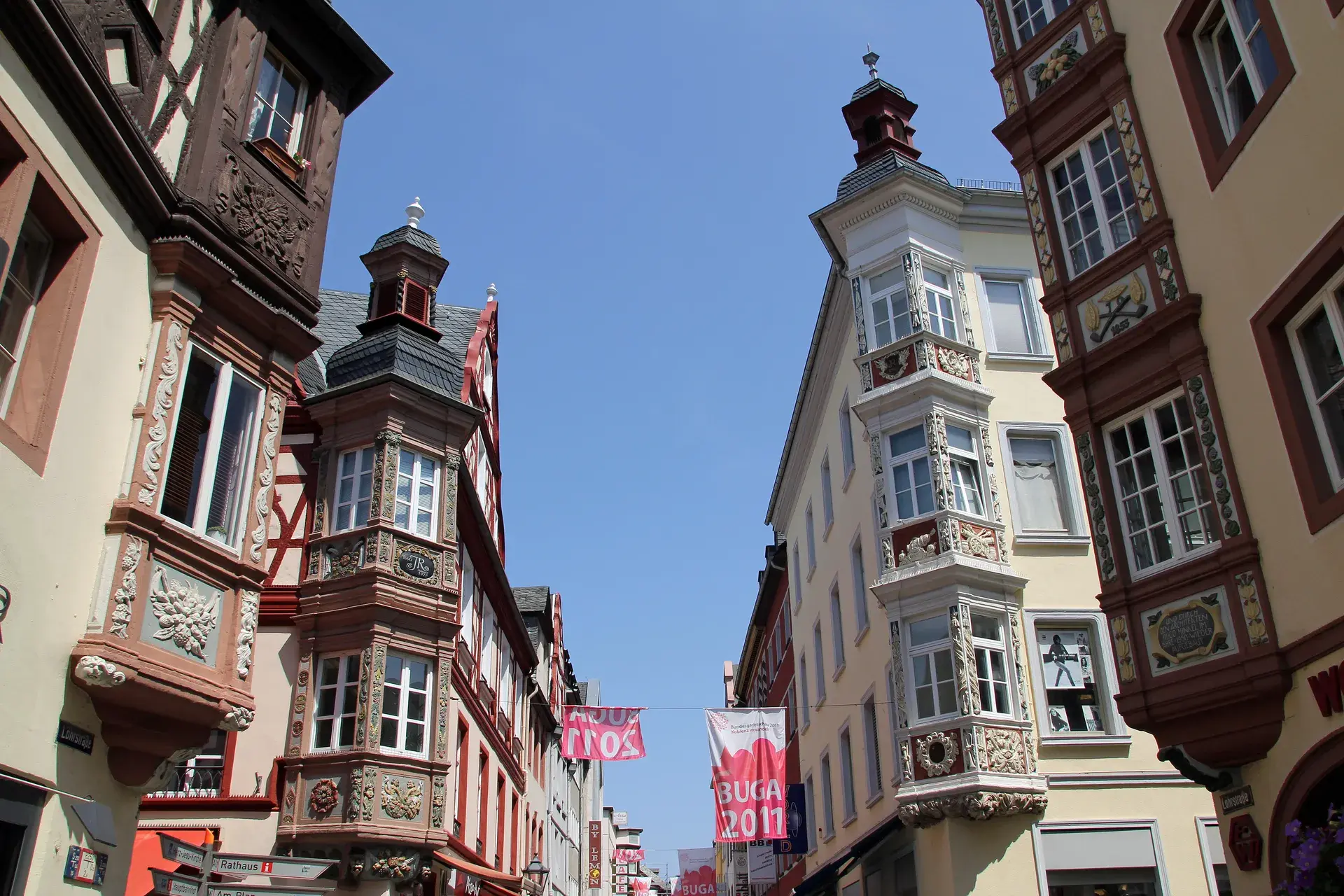
The bronze boy standing in the center of the Koblenz Town Hall courtyard is famous for periodically spitting water at unsuspecting passersby. Framed by the Renaissance and Baroque facades of the former Jesuit College ensemble on Willi-Hörter-Platz, the Schängelbrunnen is a central public gathering space and the ultimate symbol of civic identity in Koblenz.
The Origins of the "Schängel"
The concept of the "Schängel" traces its roots to the 20-year period of French rule and occupation in Koblenz, which lasted from 1794 until 1814. During this era, children born to French soldiers and local German women were frequently given the common French name "Jean."
In the local Moselle-Franconian dialect, the pronunciation of "Jean" phonetically morphed into "Schang." Over time, this evolved into the diminutive terms "Schängel" or "Schängelchen." Initially used as a mildly pejorative tease for children of fraternization, the label was eventually reclaimed. By the 19th and 20th centuries, it had become a proud badge of local identity, embodying cheekiness and Rhenish wit. Today, "Schängel" serves as the official demonym for anyone born in Koblenz.
Designing the Cheeky Monument
Designed in 1940 by sculptor Carl Burger and officially unveiled on June 15, 1941, the Schängelbrunnen features a bronze figure of a young boy perched atop a central pillar made of Eifel basalt lava. An 11-year-old boy from Mayen named Rudolf Dany served as the physical model for the statue and was reportedly paid 50 Pfennigs per modeling session.
The monument is officially dedicated to the Koblenz dialect poet Josef Cornelius (1849–1943). In 1914, Cornelius wrote the lyrics for the local carnival song "Das Schängellied," which was composed by Karl Wilhelm Kraehmer. This tune popularized the Schängel figure and ultimately became the city's unofficial anthem.
Intricate Carvings and Hidden Details
The central basalt pillar is surrounded by an octagonal basalt fountain basin. The eight sides of this basin and pillar are decorated with detailed relief carvings. These carvings depict classic boyhood pranks set against historic Koblenz street scenes, showcasing children mocking passersby, scuffling, and shooting peashooters. The reliefs also feature portraits of lyricist Josef Cornelius and composer Karl Kraehmer.
The mischievous spirit of the monument is brought to life every two to three minutes when the bronze statue shoots an unexpected jet of water through pursed lips. The spray reaches several meters over the basin into the courtyard, serving as a physical manifestation of the Schängel's rebellious nature.
A Prominent Civic Emblem
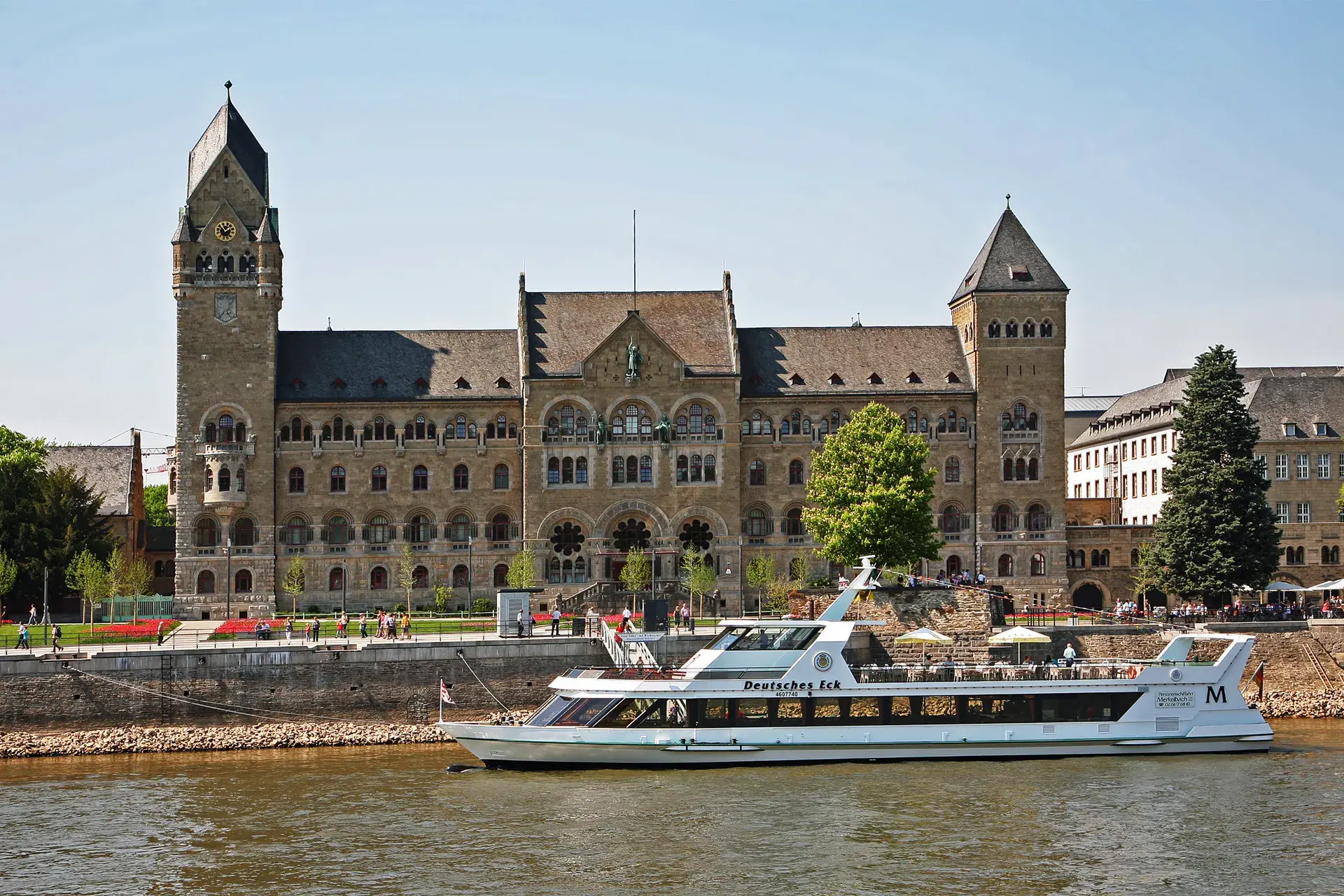
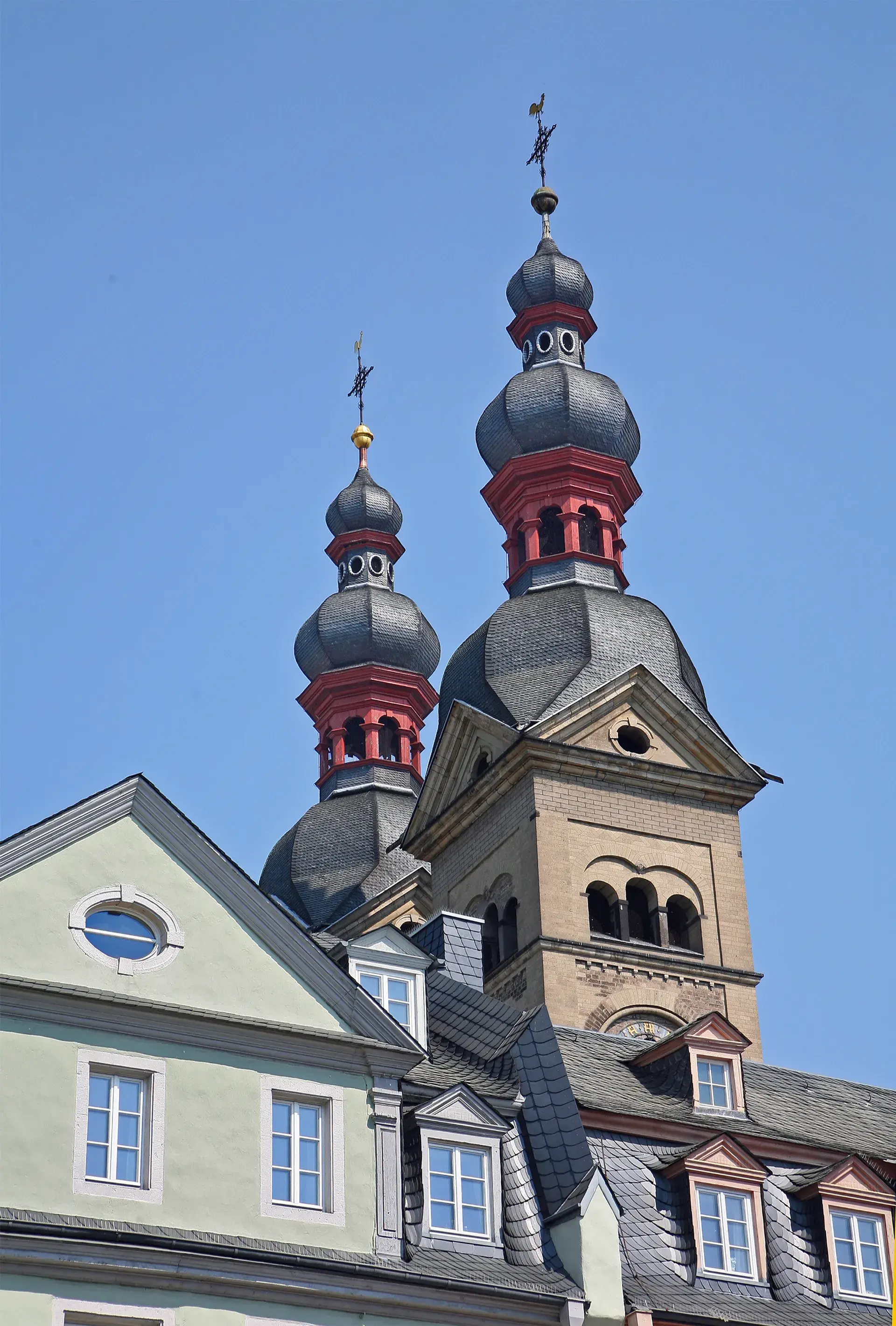
Positioned adjacent to Jesuitenplatz and a short walk from Görresplatz, the Liebfrauenkirche, and the Rhine-Moselle riverbanks, the fountain sits squarely in the historic Old Town. The Schängel remains a highly visible motif throughout the city. The spitting boy is used heavily in municipal branding, festival symbols, and local souvenirs, and depictions of the character are even cast directly onto sewer and utility manhole covers installed throughout the historic streets of Koblenz.
FAQ
Why does the Schängelbrunnen spit water?
Every two to three minutes, the bronze boy statue shoots a jet of water several meters into the courtyard. This unexpected spray reflects the cheeky, mischievous Rhenish wit associated with the local "Schängel" identity.
What does "Schängel" mean in Koblenz?
The term originates from the French occupation of Koblenz (1794–1814) when children of French soldiers and German women were named "Jean." In the local dialect, this morphed into "Schang" and then the diminutive "Schängel." It is now a proud demonym for anyone born in the city.
Who designed the Schängelbrunnen?
The fountain was designed in 1940 by sculptor Carl Burger and unveiled in 1941. The physical model for the bronze statue was an 11-year-old boy named Rudolf Dany, who was paid 50 Pfennigs per modeling session.
Who is the Schängelbrunnen dedicated to?
The fountain is dedicated to Josef Cornelius, the lyricist who penned the city's unofficial anthem, "Das Schängellied," for the local carnival in 1914. His portrait, along with the song's composer Karl Wilhelm Kraehmer, is carved into the fountain's basalt basin.