Nafplio Clocktower: Historic Landmark on Acronafplia
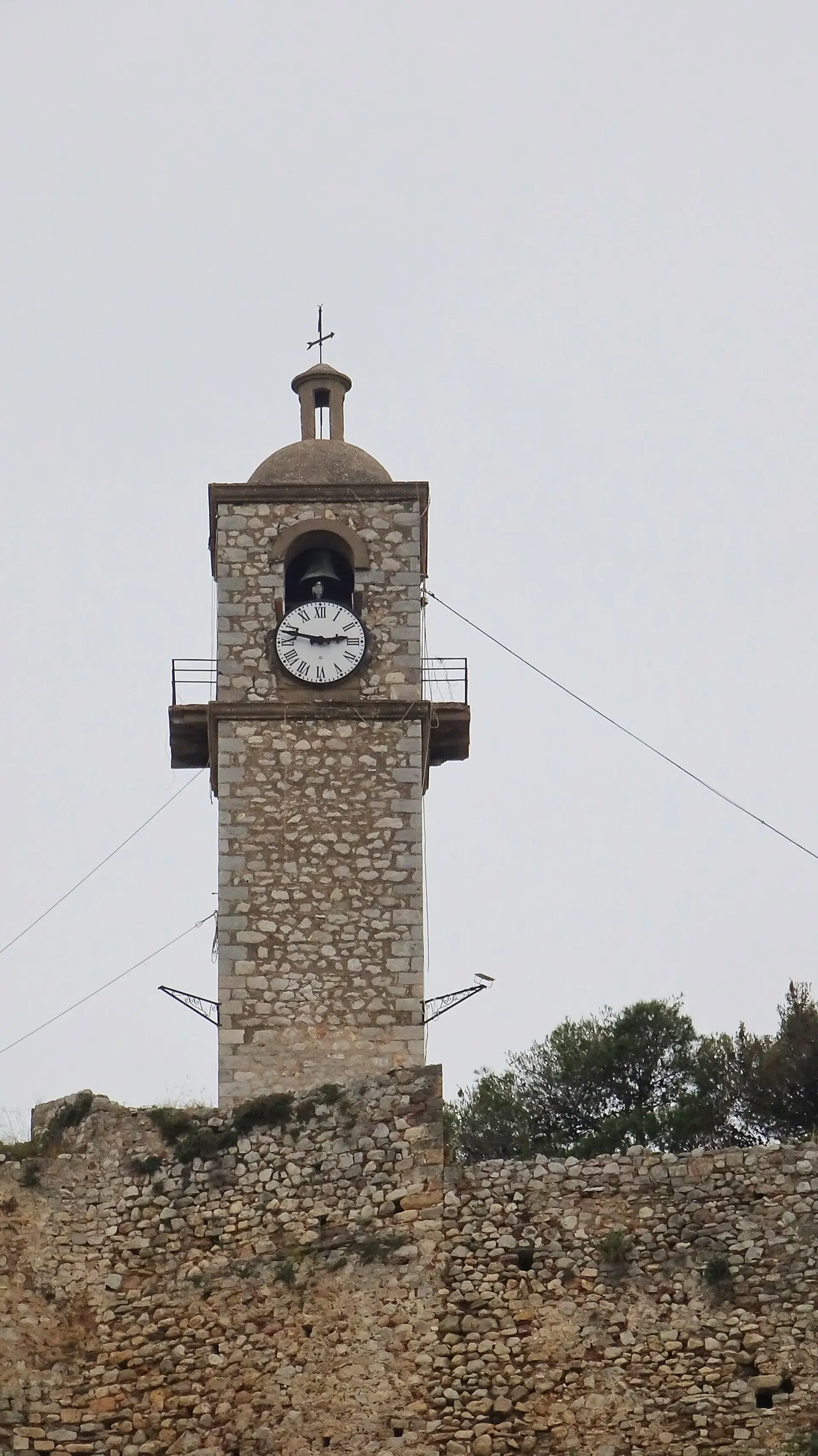
A gift from a Bavarian king, the Nafplio Clocktower survived a World War II demolition only because locals launched a covert operation to save its mechanical heart. Locally known as the Roloi, this standalone neoclassical masonry tower sits high on the north-facing ramparts of the Acronafplia fortress, standing as a key marker of early Greek statehood.
A Royal Bavarian Gift
During Nafplion's era as the capital of a newly liberated Greece between 1829 and 1834, the city saw a wave of civic improvements. The original clock mechanism was a gift from King Ludwig I of Bavaria, the father of Greece’s first monarch, King Otto. King Ludwig sponsored this public timepiece to help regulate daily life in the thriving capital. Today, the Clocktower joins other Bavarian-influenced landmarks in the city, such as the Lion of Bavaria, the Vouleftiko, and King Otto's residences, highlighting the region's 19th-century European philhellenic heritage.
Destruction and a Secret Rescue
The tower's high vantage point made it a target during World War II. In 1944, occupying German forces determined that the structure obstructed their machine-gun firing lines and vantage points over the harbor. Consequently, they demolished the tall tower.
Despite the destruction of the physical building, the original 19th-century Bavarian mechanism survived. Local Greek administrators anticipated the demolition and executed a covert operation to secretly disassemble the delicate gear train. They hid the mechanism in secure storage, ensuring the mechanical heart of the clock was preserved throughout the remainder of the war.
Post-War Reconstruction
Following the liberation of Greece, the National Tourist Organization and municipal authorities prioritized the restoration of this prominent skyline landmark. Between 1947 and 1949, the masonry tower was rebuilt. Workers safely reinstalled the hidden Bavarian mechanism, and the clock officially resumed operation on September 14, 1949. Its striking bell chime once again echoed over the quiet alleyways of the town below.
Layers of History and Panoramic Views
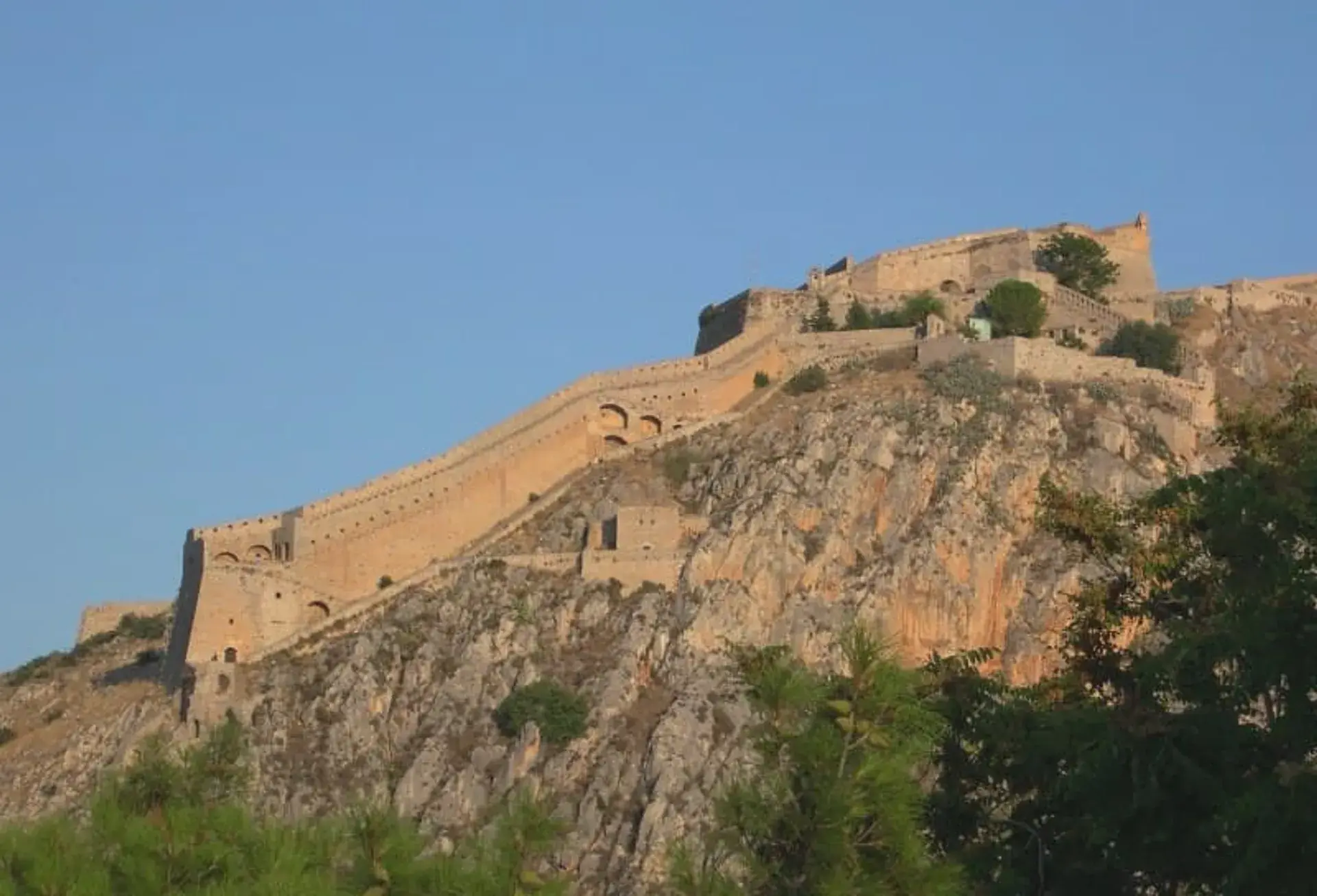
The modern 20th-century structure rests on layered foundations that span more than two millennia. The site encompasses Mycenaean and Hellenistic fortress foundations, as well as Byzantine, Frankish, and Venetian bastions. Situated on the Acronafplia Hill—the oldest fortified part of Nafplion—the Clocktower bridges the ancient acropolis with the city's 19th-century neoclassical history.
Today, the structure functions as an active civic timepiece and a freely accessible viewpoint on the Acronafplia fortress trail. The stark stone tower rises directly above rugged limestone crags, offering sweeping vistas of the Argolic Gulf. The elevated position provides unobstructed panoramic views looking down on the terracotta tile rooftops of the Old Town and the historic Bourtzi fortress resting in the bay.
FAQ
Why was the Nafplio Clocktower destroyed in World War II?
Occupying German forces blew up the original tower in 1944 because it obstructed their machine-gun vantage points and firing lines over the town's harbor.
How did the original clock mechanism survive the 1944 demolition?
Local Greek officials anticipated the demolition and secretly disassembled the 19th-century Bavarian gear train, hiding it in secure storage until the war ended and the tower was rebuilt.
Where is the Nafplio Clocktower located?
The Clocktower is situated on the north-facing ramparts of the Acronafplia fortress, perched directly above the Old Town of Nafplion.