Basilica di Santa Maria Maggiore in Bergamo
The Civic Sanctuary of Città Alta
The Basilica di Santa Maria Maggiore stands in Piazza del Duomo at the historic center of Bergamo's Upper Town (Città Alta), connected to Piazza Vecchia through the open arches of the Palazzo della Ragione. Construction of the church began in 1137 over the remains of an eighth-century religious building and an ancient Roman temple site. Its foundation fulfilled a civic vow made by the citizens of Bergamo in 1133, who sought protection from the Virgin Mary during a severe drought and epidemic.
Unlike the adjacent Cathedral of Sant'Alessandro, which was the domain of the bishop, Santa Maria Maggiore was commissioned, funded, and overseen directly by the local population. Since 1449, the civic institution Consorzio della Misericordia Maggiore (now Fondazione MIA), originally founded in 1265 by Pinamonte da Brembate, has administered the church. This citizen-led stewardship established the basilica as both an emotional and civic focal point of Bergamo.
Bergamo walking tour with audio and quizzes: the walled Città Alta
2 hours11 stopsAudio guideStart any day, at your own paceTicket on your phone · 30-day refundArchitectural Design and the Lion Portals
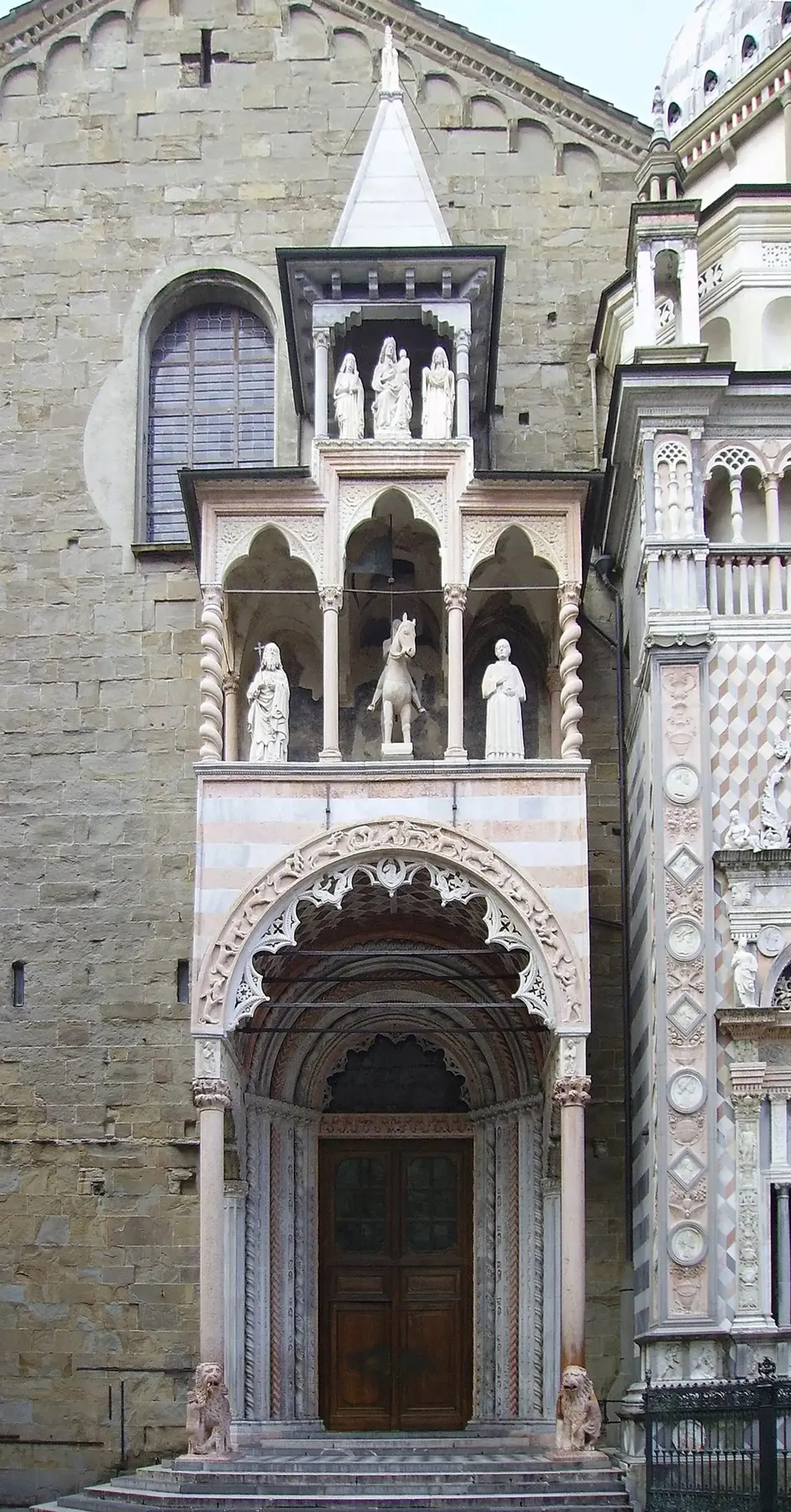
The exterior presents Lombard Romanesque masonry crafted from muted sandstone. The basilica lacks a monumental west entrance because the facade historically adjoined the Bishop's Palace. As a result, entry is situated exclusively on the flanks of the building through side porches sculpted in the 1350s and 1360s by master sculptor Giovanni da Campione.
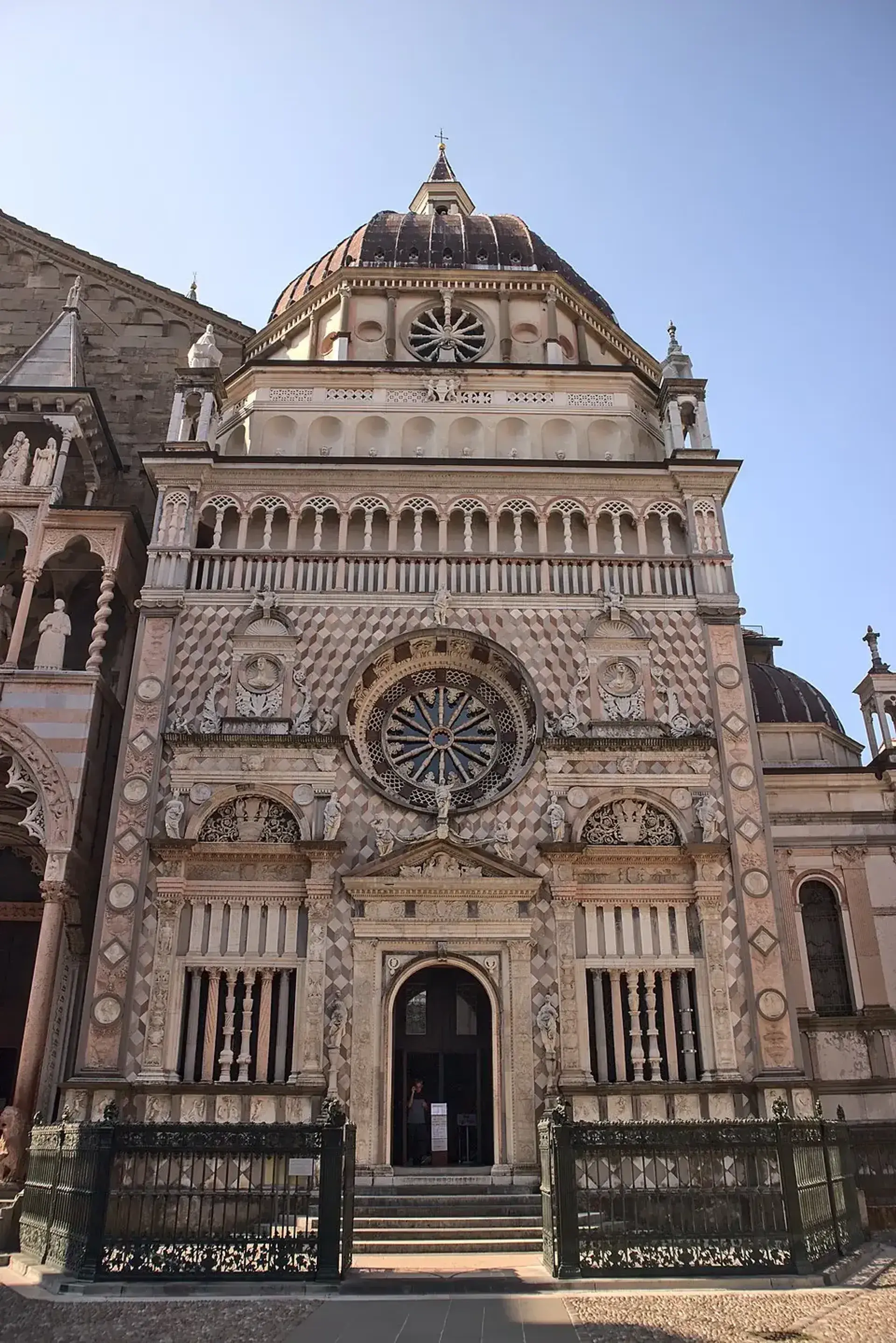
The north entrance, known as the Porta dei Leoni Rossi, is supported by sculpted lions made of red Veronese marble. On the south flank, the Porta dei Leoni Bianchi rests on white marble lions from Candoglia in Piedmont. In 1472, the exterior arrangement changed when the condottiero Bartolomeo Colleoni forced the demolition of the basilica's original sacristy to build his personal funerary chapel directly against the northern exterior wall.
Baroque Transformation and Artistic Works
Crossing into the church reveals a dramatic contrast between the restrained Romanesque exterior and an opulent Baroque interior. A comprehensive renovation during the late 16th and 17th centuries covered the space in gilded stucco, paintings by Luca Giordano, and monumental Flemish and Florentine tapestries along the walls.
The presbytery preserves a series of 16th-century wooden choir stalls featuring intarsia designed by Renaissance painter Lorenzo Lotto and carved by woodworker Giovan Francesco Capoferri. These wood inlays use varying shades and natural grain to illustrate Old Testament narratives rendered in complex perspective.
Historical Relics and Composer Monuments
Embedded in the north exterior wall near the Porta dei Leoni Rossi are 13th-century iron measuring bars: the Capitium Comunis Pergami (measuring approximately 2.63 meters) and the Brachium (measuring roughly 52.5 centimeters). Merchants used these official civic standards to resolve commercial disputes over fabric and building supplies at the adjacent market square.
The basilica also houses the tombs of notable composers. Inside rests the funerary monument of Bergamo native Gaetano Donizetti, situated alongside the tomb of his mentor and music teacher, Johann Simon Mayr.
Current Use and Visitor Access
Santa Maria Maggiore remains an active Catholic church holding religious services while functioning as a cultural institution managed by Fondazione MIA. Non-local visitors are required to pay an admission fee. The site offers guided visits to the presbytery, the wooden choir stalls, and the treasury museum, and serves as a venue for classical and sacred music concerts.
FAQ
Why does the basilica lack a main facade entrance?
The basilica has no traditional front entrance because its western side historically adjoined the Bishop's Palace. Visitors enter exclusively through lateral side portals supported by sculpted marble lions.
What are the iron bars embedded in the exterior wall?
Near the northern entrance are two 13th-century iron measuring standards, the Capitium and the Brachium, which were used to settle commercial trading disputes at the medieval market.
Who manages the Basilica di Santa Maria Maggiore?
The basilica is administered by the civic charity Consorzio della Misericordia Maggiore (now Fondazione MIA), which has managed the church on behalf of Bergamo's citizens since 1449.