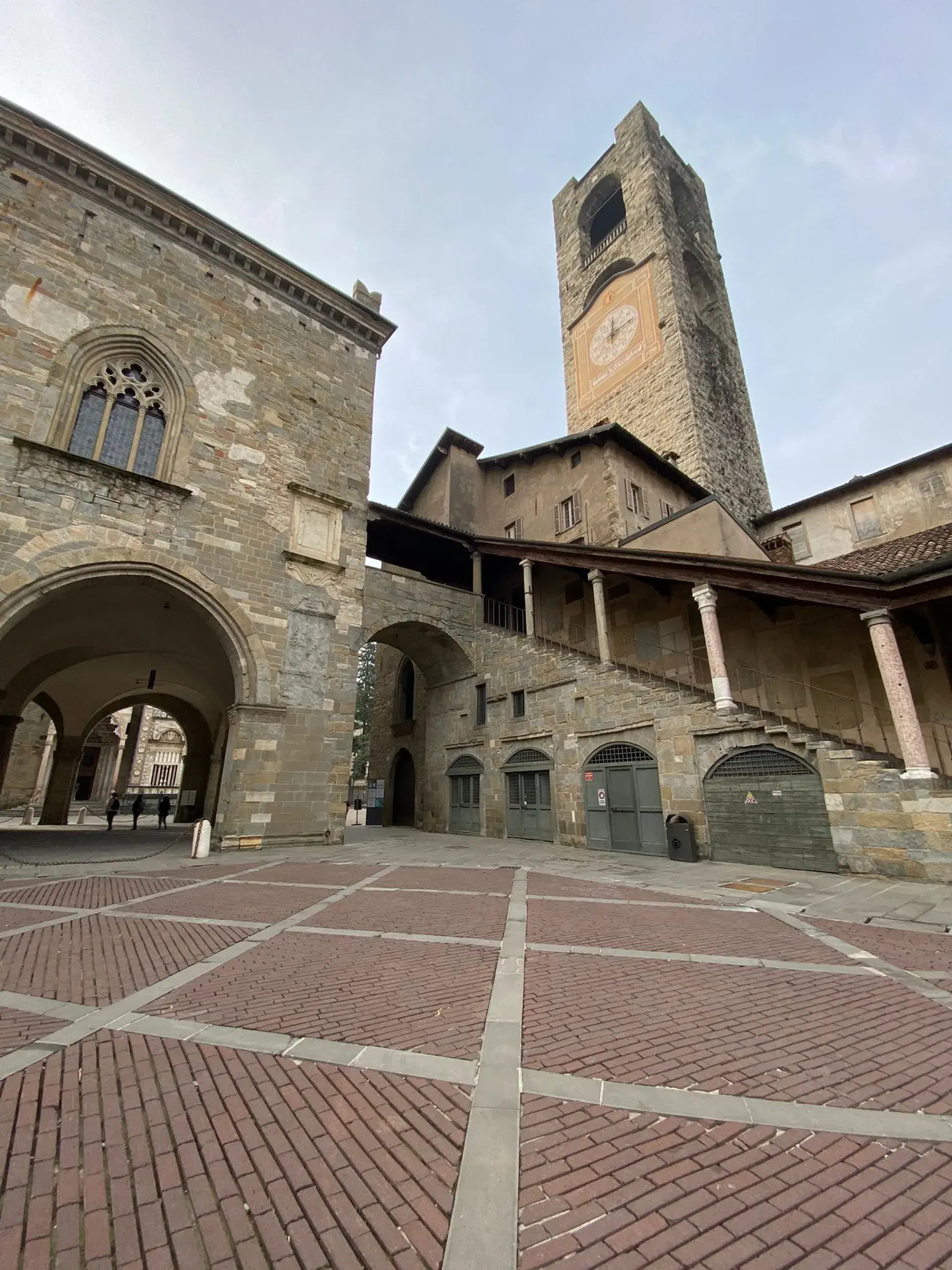
Piazza Mercato delle Scarpe: Bergamo's Funicular Hub
The Historic Crossroads of Città Alta
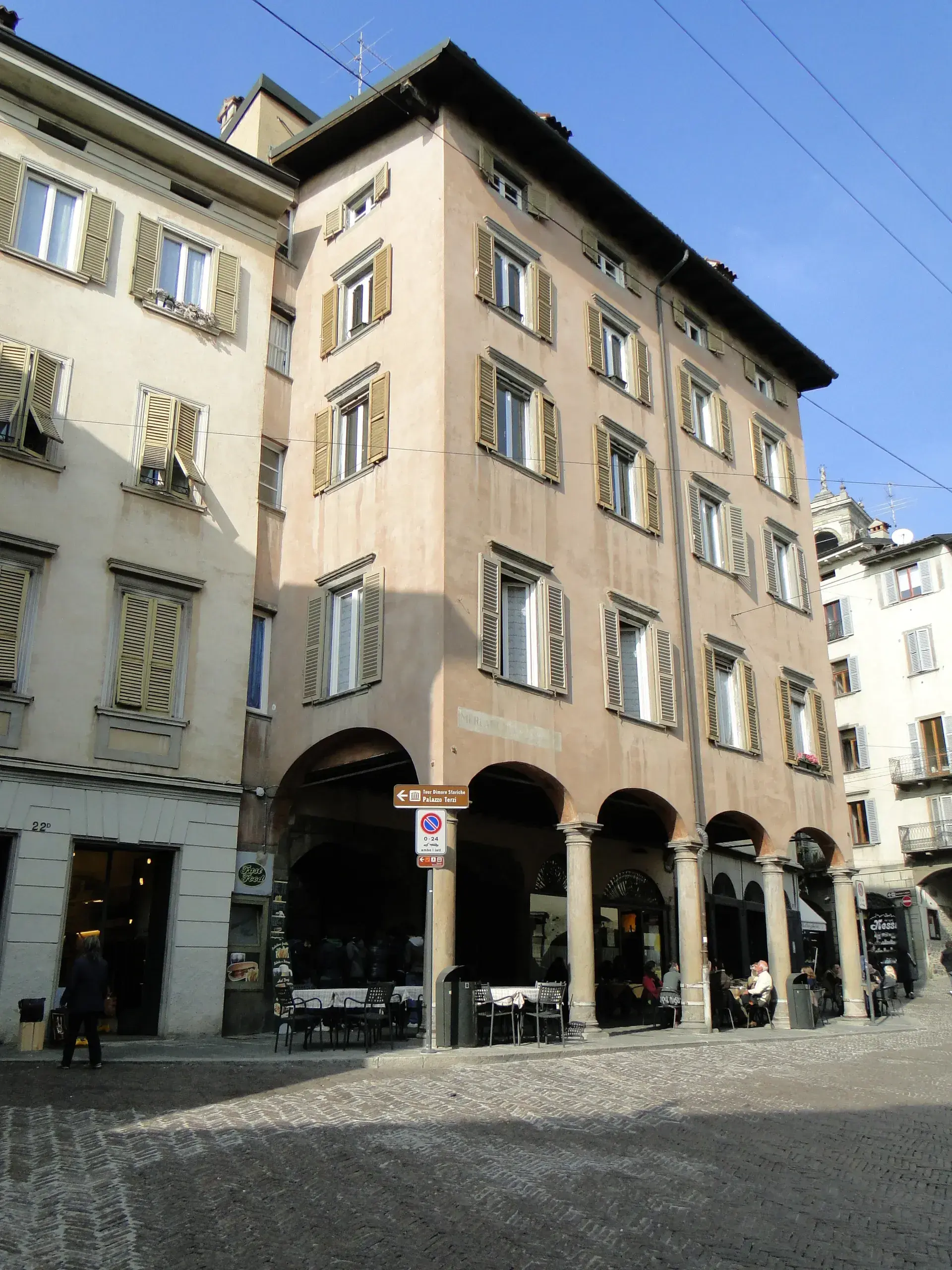
Piazza Mercato delle Scarpe is an irregularly shaped public square situated at the southeastern threshold of Bergamo's Upper Town (Città Alta). For centuries, it has operated as an essential junction where several key transportation routes converge: Via Porta Dipinta, Via San Giacomo, Via alla Rocca, and Via Gombito. The latter aligns with the route of the ancient Roman decumanus maximus, establishing the square's role as a major arrival portal since antiquity.
Today, the square serves as the primary entry point for passengers arriving via the Bergamo Alta Funicular. The transit station opens directly onto stone paving, where the mechanical operation of the transit system meets an open-air gathering space framed by bakeries, cafés, and retail shops.
Bergamo walking tour with audio and quizzes: the walled Città Alta
2 hours11 stopsAudio guideStart any day, at your own paceTicket on your phone · 30-day refundGuild Trade and Commercial Evolution
Documented in early records such as Moses del Brolo's 12th-century Liber Pergaminus, the square was originally known by various functional names, including Mercato Vecchio (Old Market) and Piazza delle Biade (Fodder Market). In the 13th and 14th centuries, it housed key trade associations, including the butchers' guild and the Domus Calegariorum (the shoemakers' guild hall). Shoe retail was formally centralized in this location around 1430, cementing the square's lasting designation as the Shoe Market.
Local tradition also associates the site with literary history. During a visit to his friend Enrico Capra, a Bergamo goldsmith, the poet Francesco Petrarca reportedly frequented the silversmiths and money changers who conducted business under the porticoes surrounding the square.
Palazzo Rota-Suardi and the 1887 Funicular
Between 1340 and 1353, Guido Suardi acquired the shoemakers' guild house to construct a fortified residence, a property that subsequently passed to the Rota family. Known as Palazzo Rota-Suardi, the building retains prominent medieval features, including a corbeled stone balcony once utilized by Suardi to proclaim civic and legal edicts in his capacity as Count Palatine. Above the main entrance, a 14th-century fresco depicts the Suardi family crest alongside the Latin legal maxim Vim vi repellere licet ("It is lawful to repel force with force").
In 1887, municipal authorities adapted Palazzo Rota-Suardi into a passenger terminal for the funicular railway engineered by Alessandro Ferretti. Now operated by ATB, the line links the Lower City with Città Alta, terminating directly within the historic palazzo.
The Underground Cistern of 1485
Hidden beneath the cobblestones lies a massive public infrastructure project engineered by architect Alessio Agliardi in 1485. The vaulted underground cistern held up to 25,000 brente bergamasche—between 1,350 and 1,800 cubic meters of water—supplied by the city's Acquedotto Magistrale.
Originally, the cistern was accessed via a central wellhead located in the middle of the square. However, this structure created significant traffic congestion as horse-drawn carriages and carts passed through the entrance corridor. In 1795, authorities dismantled the central wellhead and repositioned the water source as a recessed wall pump along Via Porta Dipinta, clearing the square for easier transit.
Architectural Surroundings
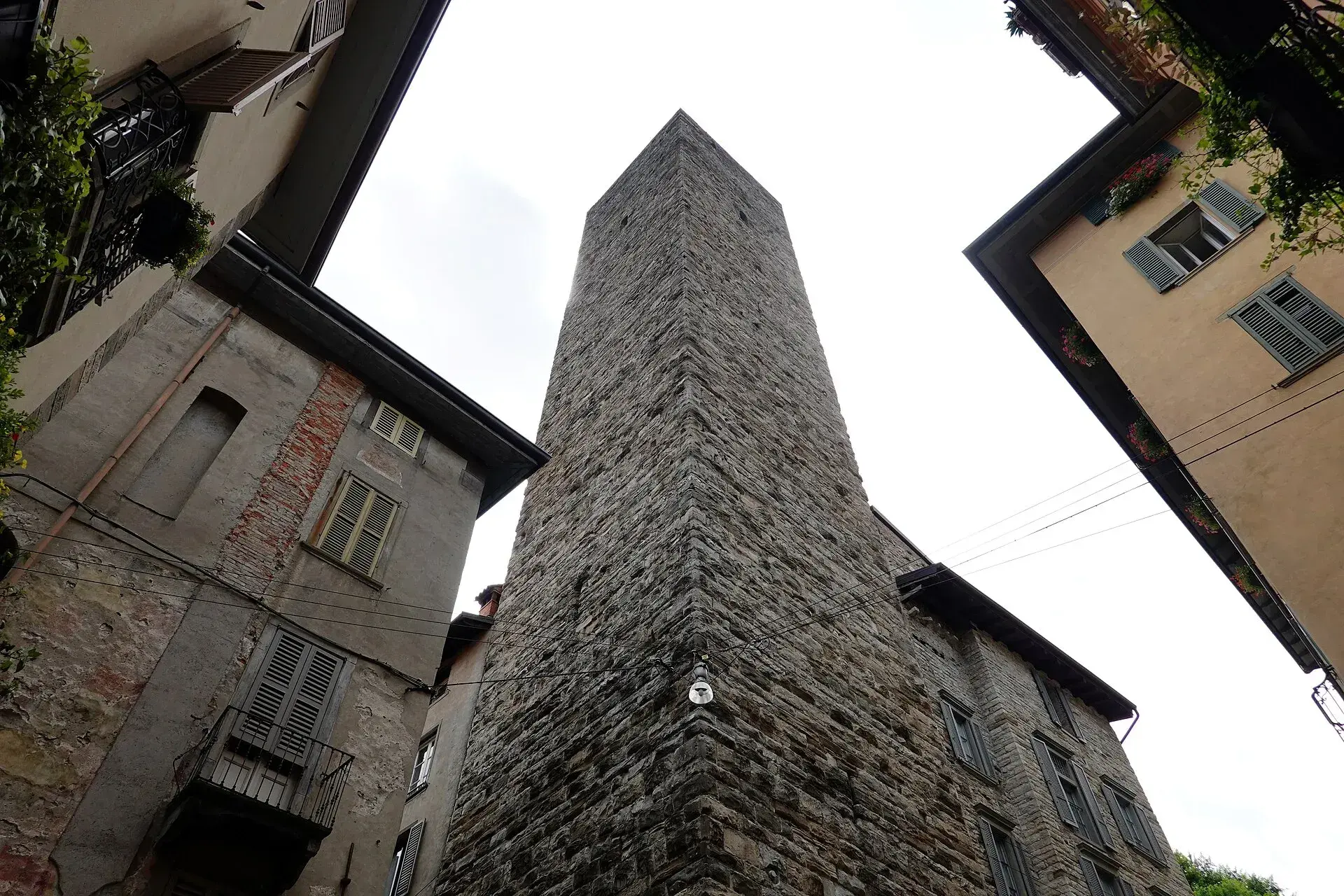
Piazza Mercato delle Scarpe is bordered by varied historic architecture that reflects its continuous civic use. Facing the open space are medieval tower houses positioned along Via alla Rocca, the 18th-century Palazzo Gavazzeni, and the 16th-century Church of San Rocco, which was erected over the former site of the 15th-century Merchants' Court. From this square, pedestrian traffic moves through Via Gombito onward toward Piazza Vecchia, the civic center of Città Alta.
FAQ
Why is the square called Piazza Mercato delle Scarpe?
In the 13th and 14th centuries, the site housed the Domus Calegariorum (shoemakers' guild hall). Around 1430, the sale of footwear was legally concentrated in this square, giving it the name 'Market of Shoes.'
What is located beneath the square?
Beneath the paving lies a large vaulted cistern built in 1485 by architect Alessio Agliardi, capable of storing between 1,350 and 1,800 cubic meters of water.
Where does the Bergamo Alta funicular arrive?
The upper funicular terminus arrives directly inside Palazzo Rota-Suardi, a 14th-century residence adapted for transit use by engineer Alessandro Ferretti in 1887.
Why was the square's central wellhead removed in 1795?
Municipal authorities removed the wellhead from the center of the square because it blocked horse-drawn carts and carriages entering through the city gate. The water pump was relocated to a wall on Via Porta Dipinta.