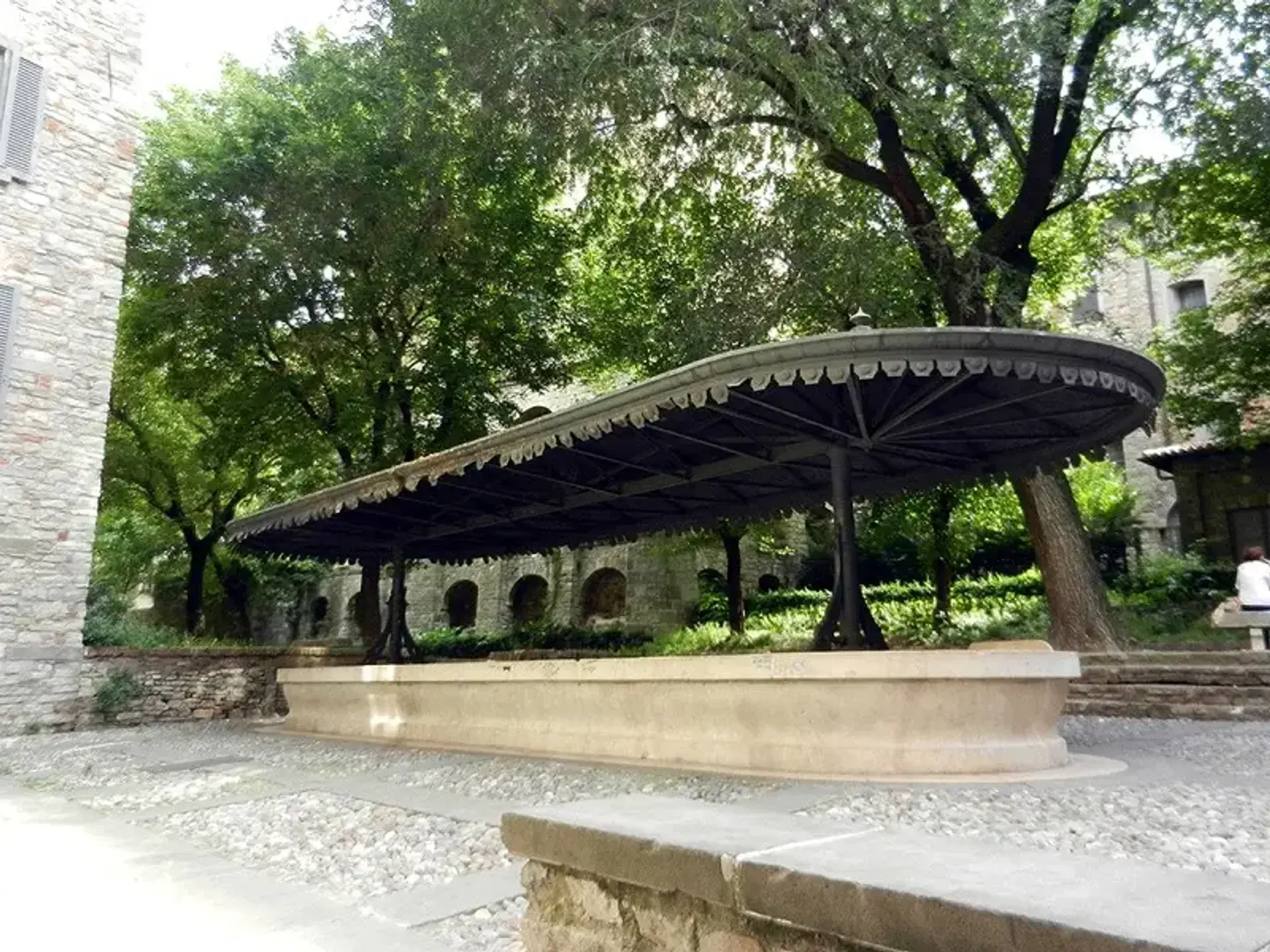
Piazza della Cittadella: Bergamo’s Visconti Fortress
The Visconti Citadel: Strategic Bastion and Courtyard
Piazza della Cittadella is an enclosed rectangular courtyard positioned at the western end of Bergamo Alta (Upper Town). Historically serving as the inner parade ground (piazza d'armi) of the 14th-century Visconti Citadel (Cittadella Viscontea), the square was engineered for both defense and municipal oversight. After the Milanese Visconti family established rule over Bergamo in the 1330s, they fortified Colle San Giovanni to guard against outside enemies and keep the local populace under surveillance.
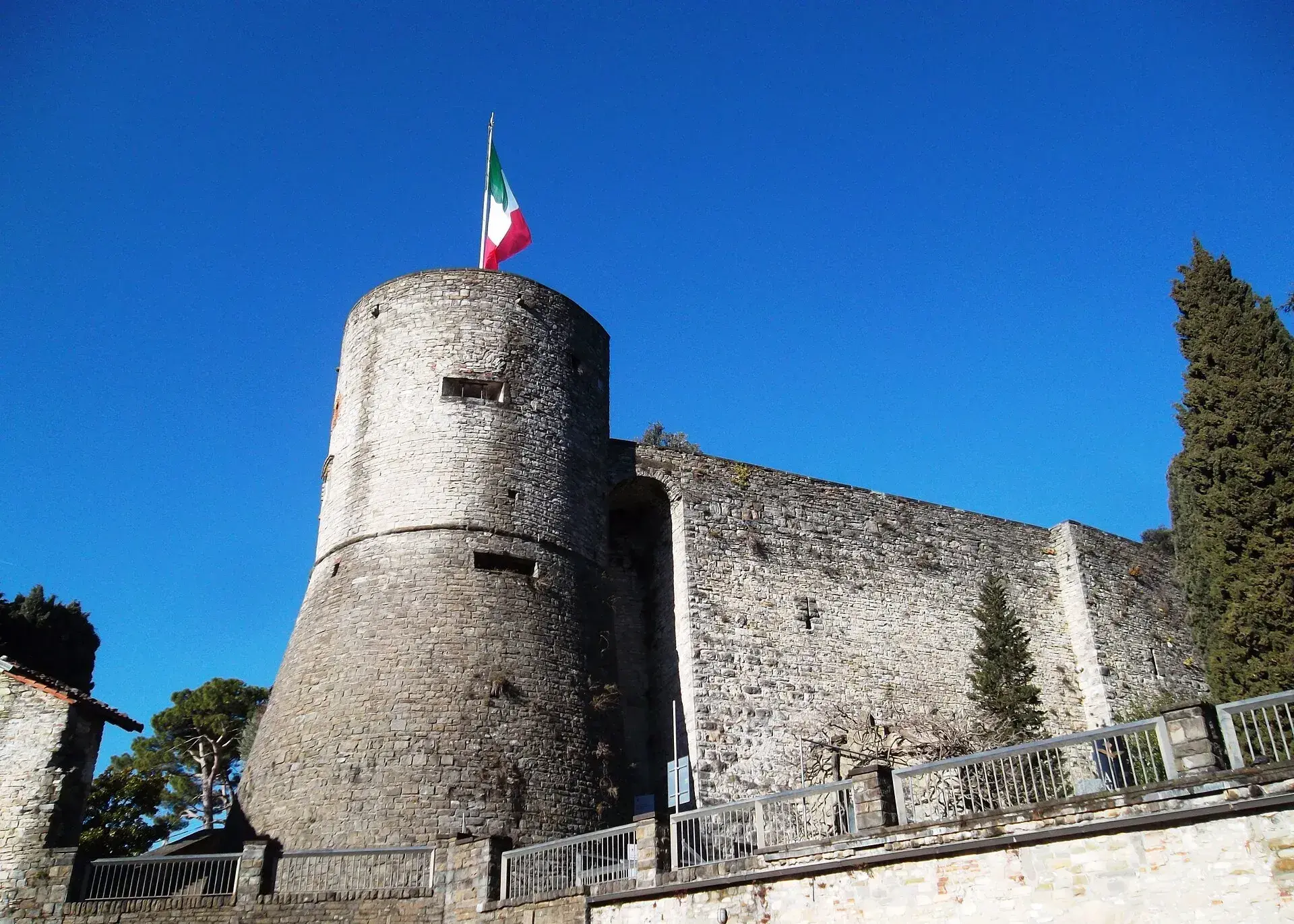
Positioned on the western crest of the Upper Town, the citadel formed a deliberate strategic counterweight to the Rocca on Sant'Eufemia hill at the eastern crest, effectively sandwiching the urban spine between two strongholds. The Visconti fortification comprised two distinct zones: the upper stronghold (Firma Fides) and the lower administrative and garrison complex known as the Hospitium Magnum, commissioned around 1379 by Rodolfo Visconti.
Bergamo walking tour with audio and quizzes: the walled Città Alta
2 hours11 stopsAudio guideStart any day, at your own paceTicket on your phone · 30-day refundArchitectural Heritage and Hidden Defenses
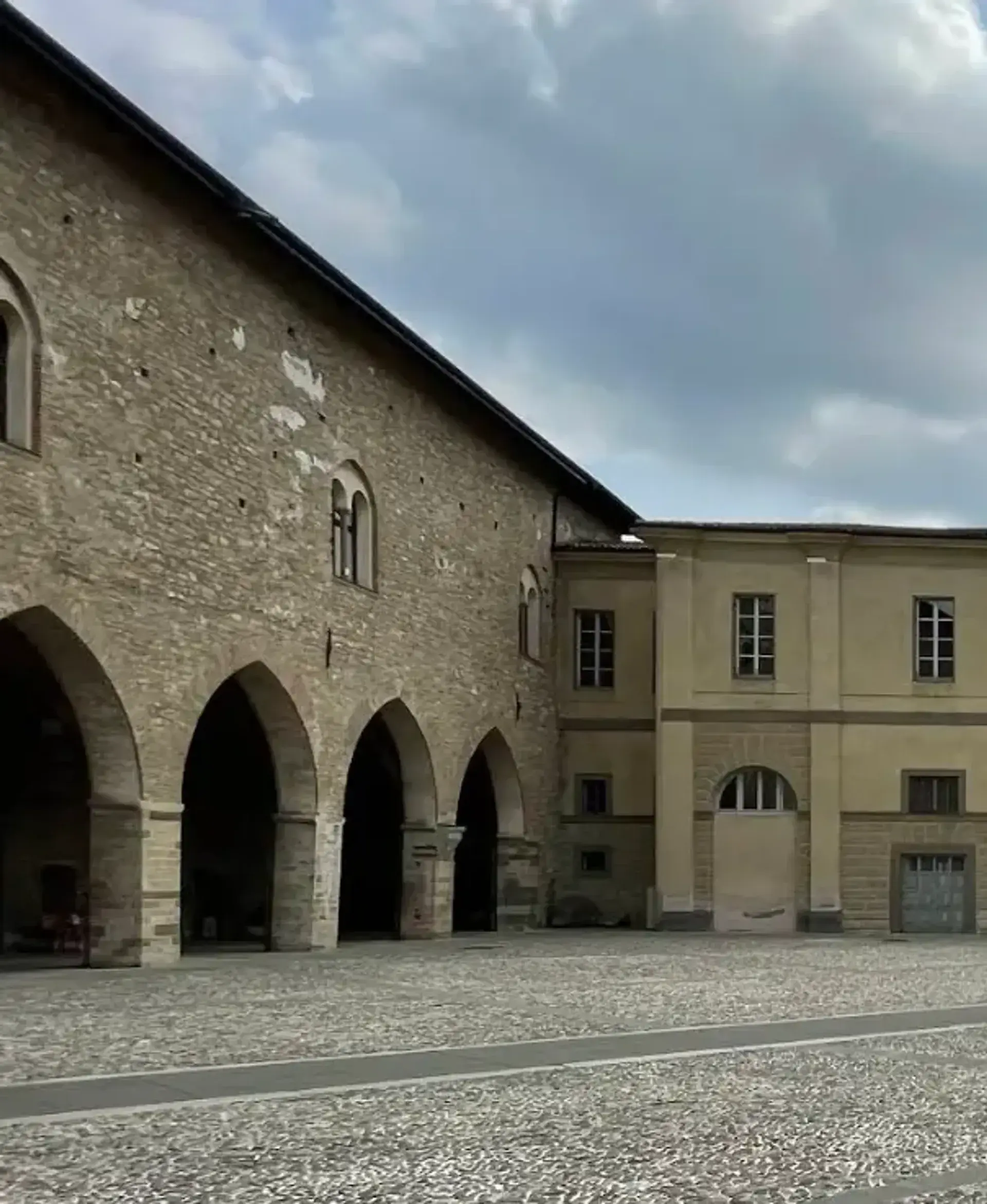
Entry from adjacent Piazza Lorenzo Mascheroni passes beneath the fortified gateway tower of the Torre della Campanella, where the vaulted masonry shifts ambient street murmurs into quiet, echoing shadows before opening into the courtyard. The ground surface features an interplay of rounded cobblestones (ciottolato) and historic flat stone slabs, bounded by the Portico Visconteo with its pointed terracotta arches.
The complex preserves ingenious military architecture tailored to internal unrest. The Hospitium Magnum was equipped with retractable wooden interior staircases that commanders could hoist up during riots. This allowed garrisoned troops to traverse interconnected rooftops (tetti amici) and deploy directly into Piazza Vecchia without navigating barricaded streets below.
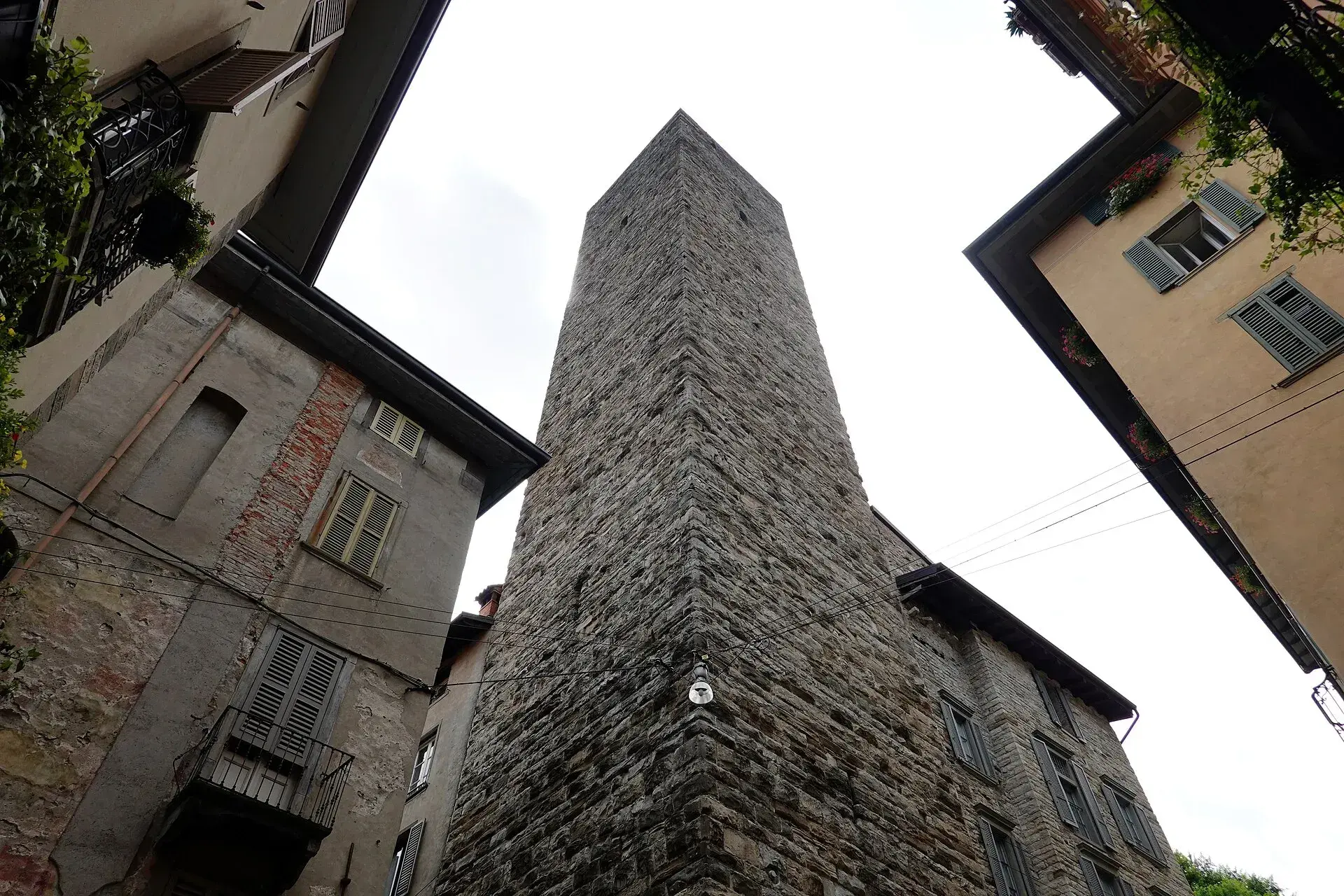
On the northern perimeter stands the medieval Torre di Adalberto, dating from the 10th to the 13th century. Built without a ground-level doorway, its sole original entryway sat midway up the exterior wall, accessible exclusively by ladder. According to local lore, it was dubbed the Torre della Fame (Tower of Hunger), functioning as a debtor's prison where inmates were allegedly detained without food until their debts were resolved.
Roman Foundations and Ancient Layers
Beneath the medieval and Renaissance layers lies Bergamo's classical past. A preserved section of original Roman paving remains integrated directly into the square's ground surface along the path toward the small western pedestrian postern gate (postierla). Additionally, one of the curved outer walls of the Citadel complex rests directly upon the perimeter footprint of the ancient Roman amphitheatre.
Transition to a Modern Cultural Campus
Following the Venetian takeover of Bergamo in 1428, the Citadel was demilitarized and adapted for civil governance. It housed provincial administrative offices and the local prefecture until the mid-19th century. A municipal restoration program between 1958 and 1960 restored the pointed arcades of the Portico Visconteo, culminating in the site's public reopening in 1960 as a cultural hub.
Today, Piazza della Cittadella serves as an open pedestrian square hosting two prominent municipal institutions: the Civico Museo Archeologico di Bergamo and the Museo di Scienze Naturali Enrico Caffi. It also serves as a peaceful gateway linking the primary axis of Città Alta (via Bartolomeo Colleoni) to Colle Aperto, the San Vigilio funicular station, and the adjacent stone-paved greenery of the Giardino della Crotta public park.
FAQ
What was the original role of Piazza della Cittadella?
It served as the inner courtyard and parade ground (piazza d'armi) of the 14th-century Visconti Citadel, built to defend against external adversaries and monitor the local population.
Which museums are located in Piazza della Cittadella?
The square houses two primary cultural institutions: the Civico Museo Archeologico di Bergamo and the Museo di Scienze Naturali Enrico Caffi.
What is the historical significance of the Torre di Adalberto?
Dating between the 10th and 13th centuries, this medieval tower was built with no ground-level entrance, requiring a ladder to reach a raised doorway. In local tradition, it was known as the Torre della Fame (Tower of Hunger) and used to hold debtors.
Are there Roman remains visible in Piazza della Cittadella?
Yes, a stretch of original Roman paving is visible in the courtyard ground leading toward the western postern gate, and a curved outer wall of the Citadel complex rests on the foundation of an ancient Roman amphitheatre.