Piazza Vecchia: Bergamo's Historic Upper Town Square
Piazza Vecchia serves as the historic civic and political center of Città Alta, the Upper Town of Bergamo. Situated over what was once part of the ancient Roman forum of Bergomum, the square developed into the secular heart of the medieval commune in the late 12th century. Its spatial balance famously impressed the modernist architect Le Corbusier, who declared that altering a single stone of the square would be a crime.
Today, Piazza Vecchia acts as an orienting pivot along the primary walking corridor of the Upper Town. The pedestrianized square is ringed with outdoor dining establishments and cafés, and it periodically transforms for public events, such as the annual landscape design festival I Maestri del Paesaggio.
The Civic Authority of Palazzo della Ragione
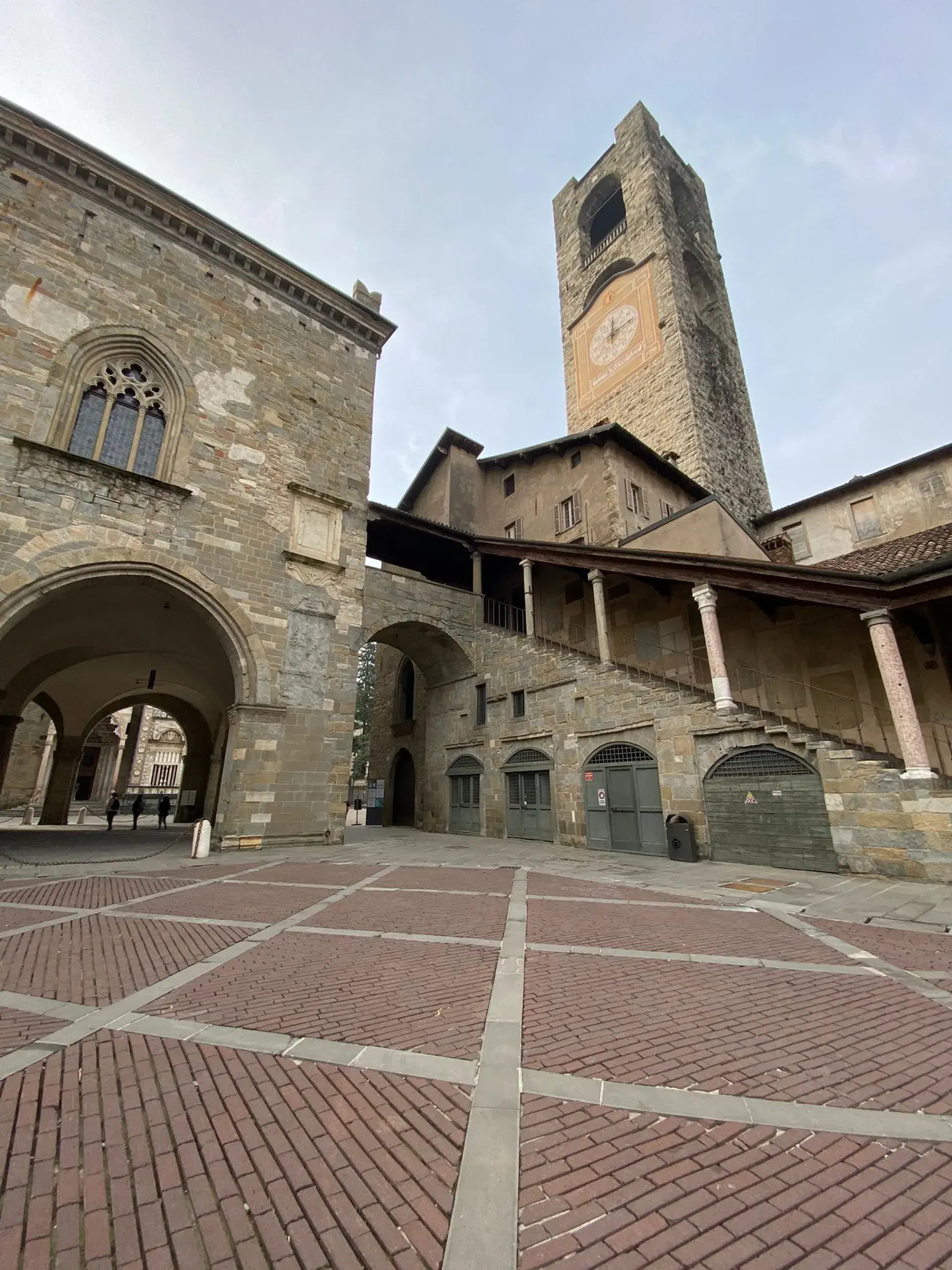
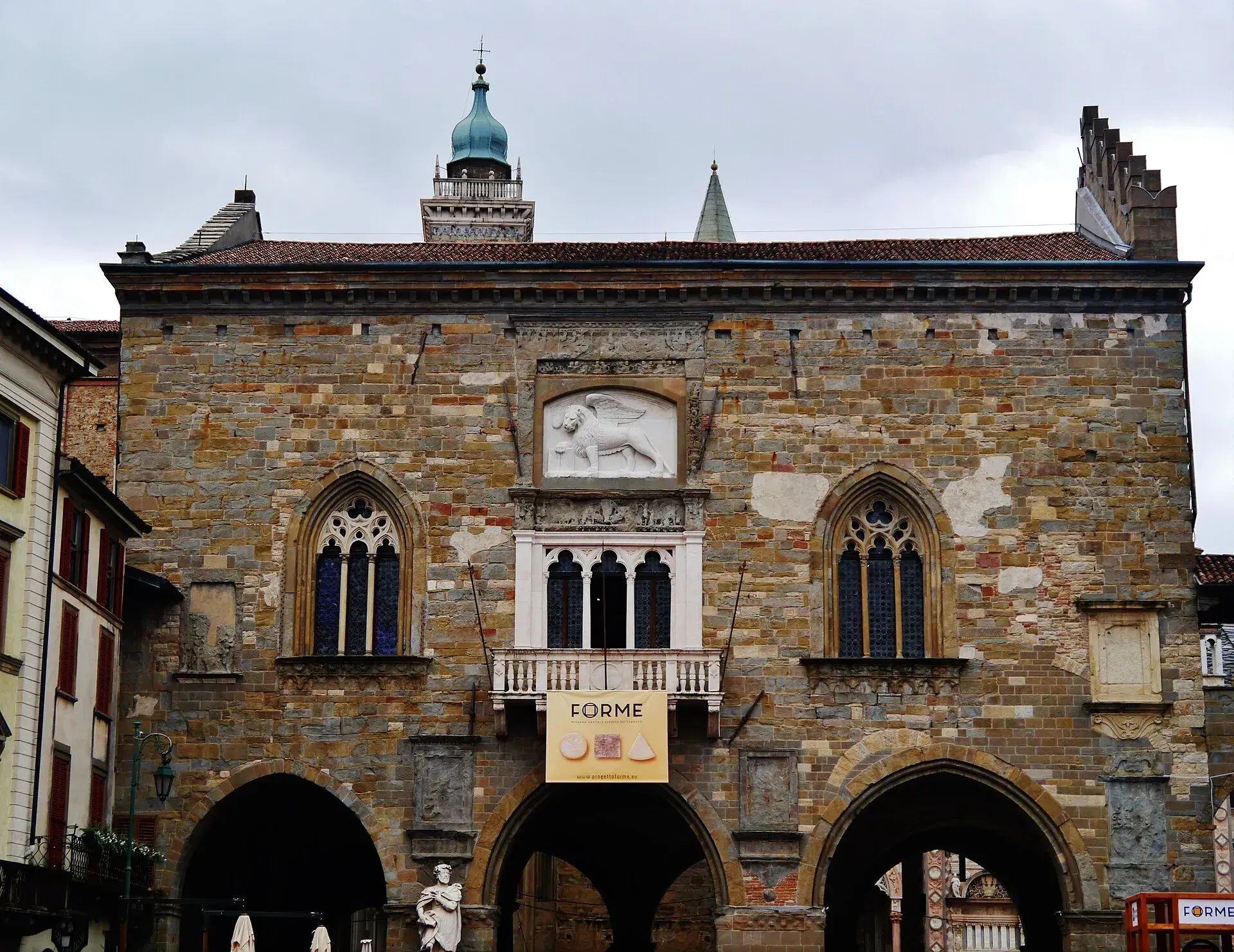
The southern boundary of Piazza Vecchia is defined by the Palazzo della Ragione. Documented around 1198 as the Palatium Comunis Pergami, it is recognized as the oldest surviving communal town hall in Lombardy. Built with an open vaulted ground-floor portico, the palace physically separated the secular governance of Piazza Vecchia from the religious complex of Piazza Duomo situated immediately behind it, exemplifying classic Northern Italian communal urban planning.
From 1428 to 1797, during centuries of Venetian rule, the square functioned as the judicial administrative hub of the city, commemorated by a relief of the Venetian Lion of Saint Mark on the palace facade. The building now hosts temporary exhibitions and historic frescoes.
Set into the pavement beneath the portico of Palazzo della Ragione is a notable astronomical feature: a marble meridian line crafted in 1798 by Abbot Giovanni Albricci. Designed as a pinhole camera obscura, sunlight streams through a high aperture in the vault at local solar noon, projecting onto the floor line to indicate the calendar date and the corresponding zodiac sign.
Bergamo walking tour with audio and quizzes: the walled Città Alta
2 hours11 stopsAudio guideStart any day, at your own paceTicket on your phone · 30-day refundTorre Civica and the Nightly Curfew Chimes
At the southwest corner of the square stands the Torre Civica, commonly known as Il Campanone. Rising 52.76 meters high, the medieval stone structure originated in the 11th to 12th centuries as a fortified private tower belonging to the Suardi family. It was later acquired by the municipality to serve as a civic watch and bell tower. Today, the tower operates as a ticketed viewpoint managed by the Museo delle Storie di Bergamo.
The tower maintains a living link to the city's military past. Every evening at 22:00, the largest bell atop the Campanone rings 100 continuous chimes. This nightly ritual preserves a Venetian-era practice that historically announced the start of curfew and signaled the locking of the four fortified gates in the city walls.
Palazzo Nuovo and the Contarini Fountain
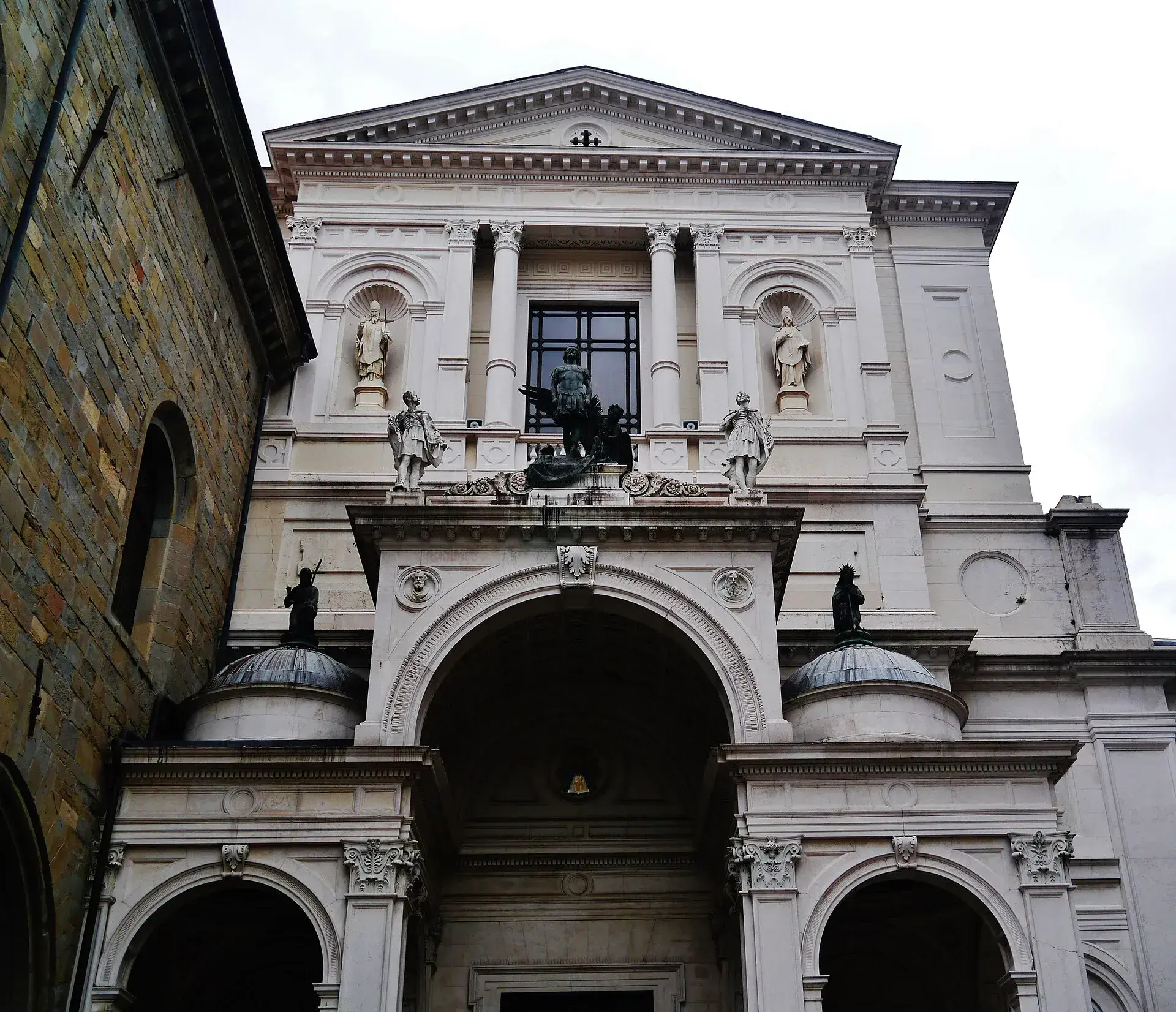
Facing Palazzo della Ragione from the northern edge of the square is the Palazzo Nuovo. Notable for its white marble facade, the building served as Bergamo's municipal seat until 1873. It now houses the historic collections of the Angelo Mai Civic Library.
At the center of Piazza Vecchia sits the Fontana Contarini, an ornamental marble fountain donated to the city in 1780 by the Venetian podestà Alvise Contarini. In the late 19th century, the fountain was temporarily dismantled and replaced by a statue of Giuseppe Garibaldi. It was restored to its rightful, original place in the center of the square in 1922.
FAQ
Why does the Campanone bell ring 100 times every evening?
Every night at 22:00, the Campanone tolls 100 times to commemorate a Venetian-era tradition that once signaled the nightly curfew and the closing of the city's four fortified gates.
What is the meridian line under the Palazzo della Ragione?
Inlaid into the portico floor is a marble meridian line designed in 1798 by Abbot Giovanni Albricci. At local solar noon, a ray of sunlight shines through an aperture in the ceiling to illuminate the calendar date and zodiac sign on the pavement.
What institutions occupy the historic buildings on Piazza Vecchia today?
Palazzo della Ragione hosts historic frescoes and temporary exhibitions, the Campanone civic tower is an accessible viewpoint operated by the Museo delle Storie di Bergamo, and Palazzo Nuovo houses the Angelo Mai Civic Library.
Was the Contarini Fountain always located in the center of the square?
Although donated in 1780, the fountain was removed in the late 19th century to make way for a monument to Giuseppe Garibaldi. It was reassembled in its original central location in 1922.