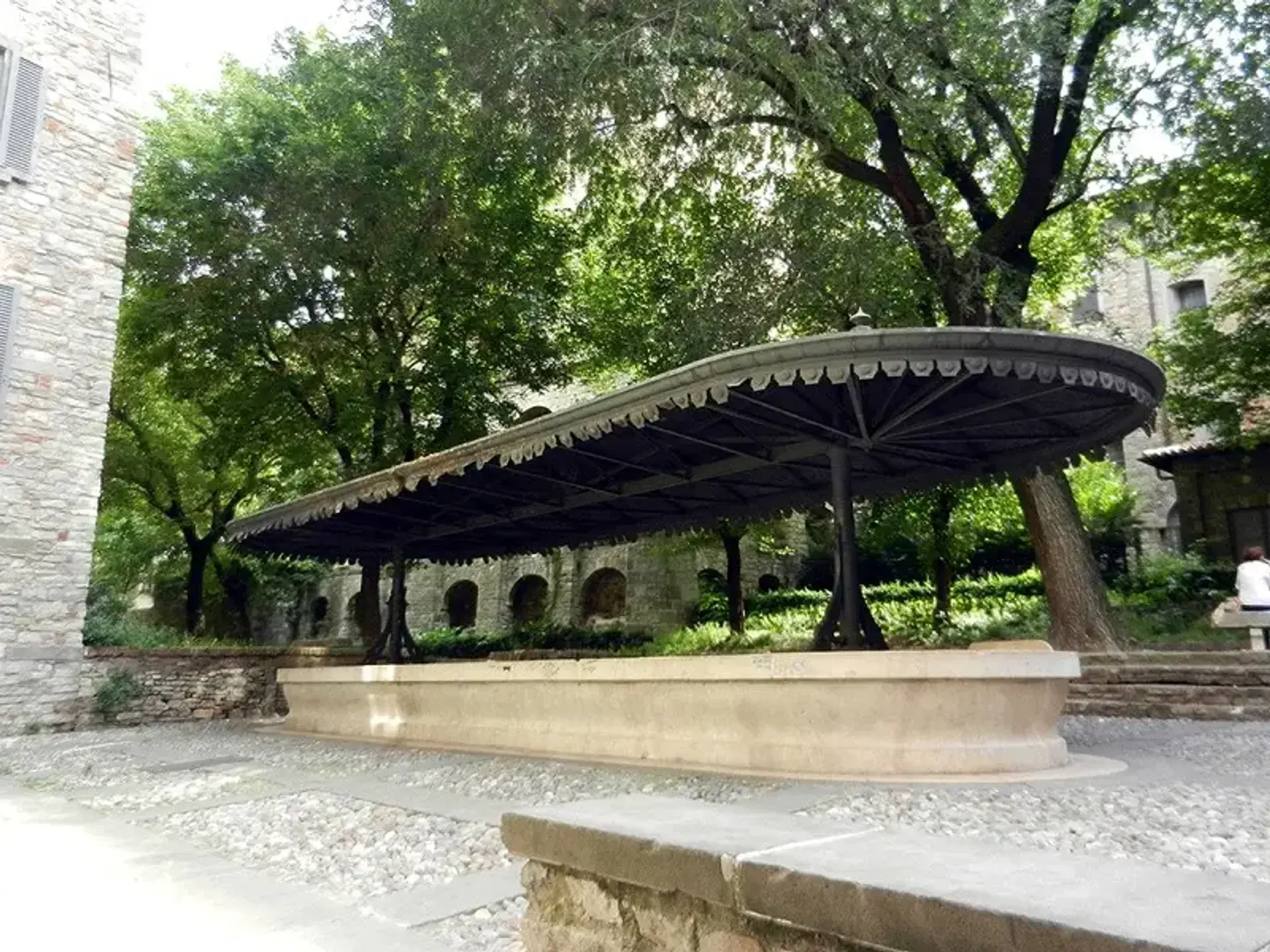
Via Bartolomeo Colleoni: Bergamo's Historic Corsarola
Roman Decumanus to Medieval Thoroughfare
Via Bartolomeo Colleoni serves as the central pedestrian spine of Bergamo’s upper town, Città Alta. Tracing the western axis of ancient Bergomum's Roman decumanus maximus, the street originally linked the civic center to the western approaches of the hill. At the nearby Torre del Gombito, this primary east-west thoroughfare once intersected with the city's cardo maximus.
Throughout the medieval commune, Visconti, and Venetian eras, the route evolved into a densely built corridor flanked by multistory residential buildings, noble houses, and commercial workshops. To safeguard its historic architectural fabric, the corridor was eventually pedestrianized and closed entirely to private vehicular traffic.
Bergamo walking tour with audio and quizzes: the walled Città Alta
2 hours11 stopsAudio guideStart any day, at your own paceTicket on your phone · 30-day refundThe Namesake and the Corsarola Moniker
The street honors the Bergamasque condottiero Bartolomeo Colleoni (c. 1400–1475), a renowned mercenary commander who served as Captain-General of the Republic of Venice. Colleoni’s heraldic crest famously depicts three testicles as a canting play on his family name, a motif visible on his nearby funerary chapel.
Colloquially, locals refer to the street as the Corsarola. The moniker derives from the Italian word corso, referring to a main avenue and reflecting the continuous passage of pedestrians throughout the day. Bergamasques frequently expand the name to describe the Upper Town’s entire walking spine, linking both Via Bartolomeo Colleoni and Via Gombito. Within the city’s layout, the street acts as an essential connector between Piazza Vecchia and the fortifications of Piazza Mascheroni, the Cittadella, Colle Aperto, and the San Vigilio funicular.
The Neoclassical Teatro Sociale
One of the most notable architectural landmarks along the corridor is the Teatro Sociale, situated at Via Colleoni 4. Commissioned between 1803 and 1808 by a consortium of local nobles, the theater was designed by neoclassical architect Leopoldo Pollack and inaugurated in December 1808 as the Teatro della Società.
From the street, the theater presents a restrained exterior facade that integrates quietly into the line of residential buildings. Inside, it opens into an expansive Italian-style auditorium featuring an oval parterre, three tiers of gilded boxes, and an upper gallery. After remaining largely unused from the 1930s onward, the theater underwent an extensive restoration and reopened in 2009. Today, it hosts guided architectural visits and live productions, including performances for the annual Donizetti Opera Festival.
Street Atmosphere and Gastronomy
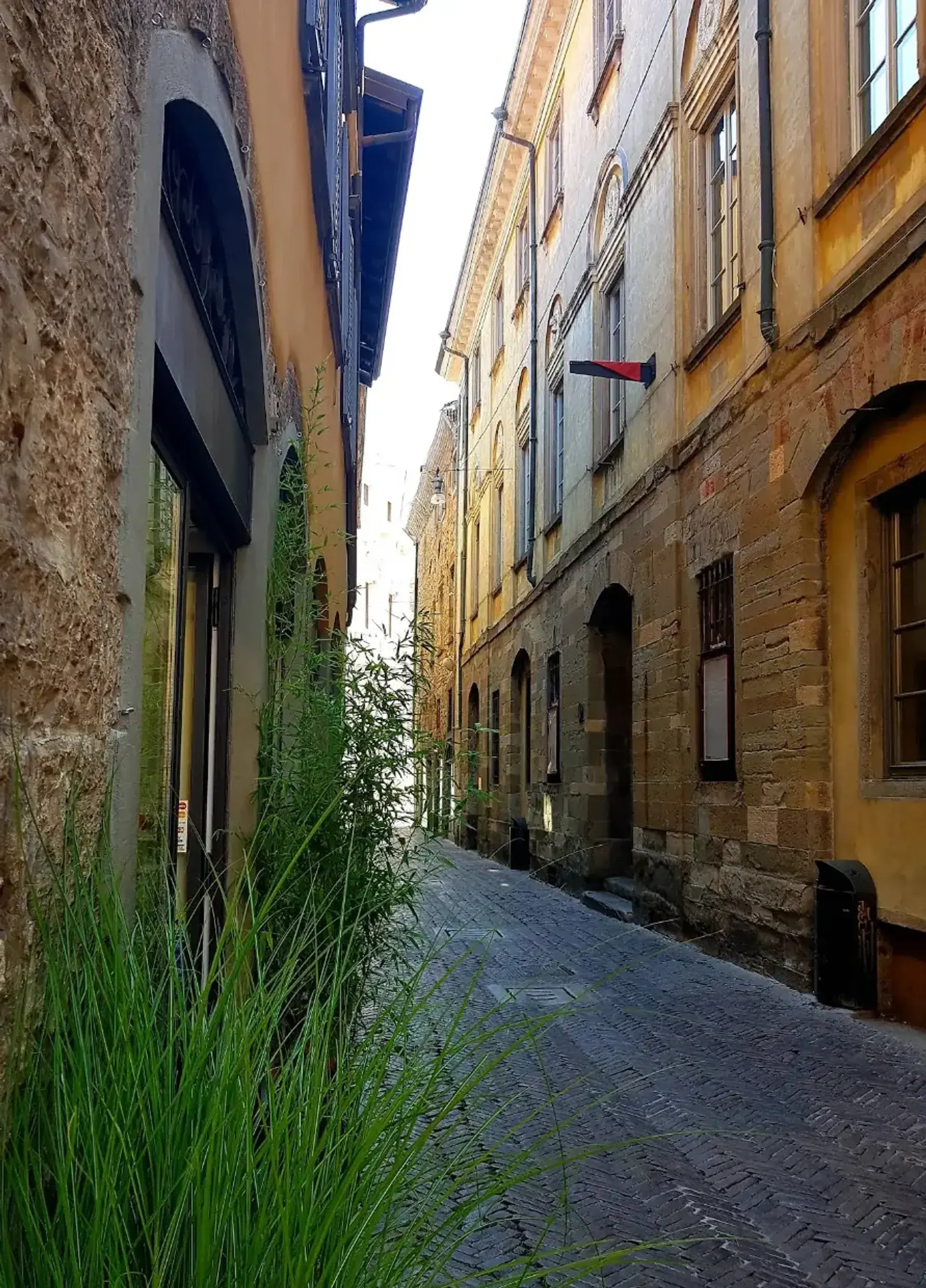
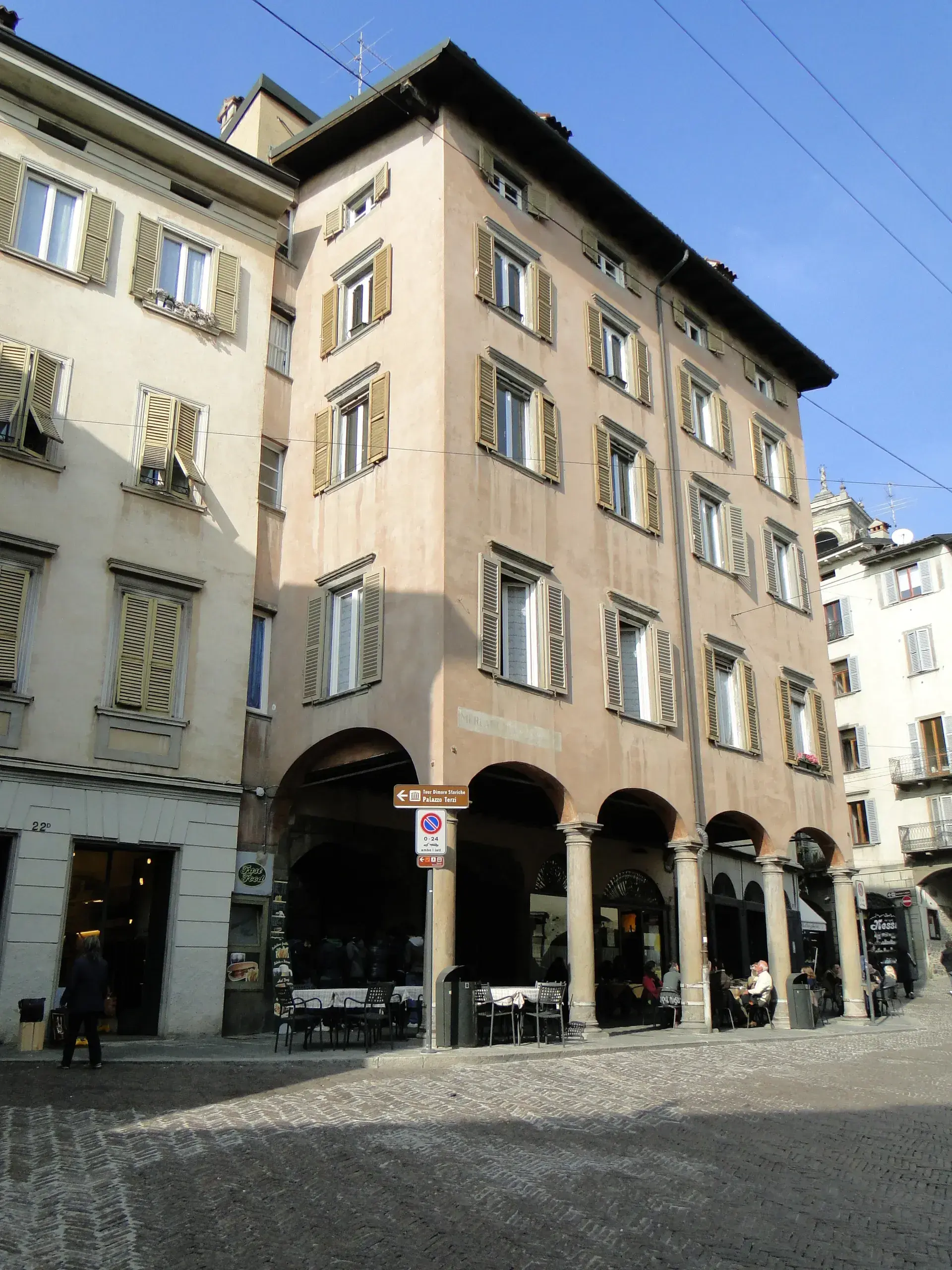
Via Colleoni remains an active commercial and culinary corridor for residents, university students, and travelers. Tall stone and stucco facades border the narrow stone-paved route, concentrating ambient footsteps, conversations, and the clatter of outdoor seating.
The street is lined with artisan boutiques, wine bars (enoteche), delis (gastronomie), and traditional trattorias. Culinary offerings include regional dishes such as casoncelli alla bergamasca and polenta taragna. From bakery doorways, aromas of butter, sage, and polenta e osei—a traditional sweet made of marzipan—drift into the car-free thoroughfare.
FAQ
Why is Via Bartolomeo Colleoni called the Corsarola?
The name Corsarola derives from 'corso', the Italian term for a main pedestrian avenue. It refers to the steady, historical flow of pedestrians along the street. Locals often use the moniker to describe both Via Colleoni and neighboring Via Gombito together.
What ancient route does Via Bartolomeo Colleoni follow?
The street follows the western axis of the Roman decumanus maximus of ancient Bergomum, which once connected the city center to the western approaches of the hill.
What is the Teatro Sociale on Via Colleoni?
The Teatro Sociale is a neoclassical opera house designed by Leopoldo Pollack and opened in 1808. While its facade blends into the street wall, the interior contains an oval parterre and three tiers of gilded boxes. Restored and reopened in 2009, it hosts events such as the Donizetti Opera Festival.