
Fountain of the Elephant: Catania's Historic Monument
An Enduring Symbol of Catania
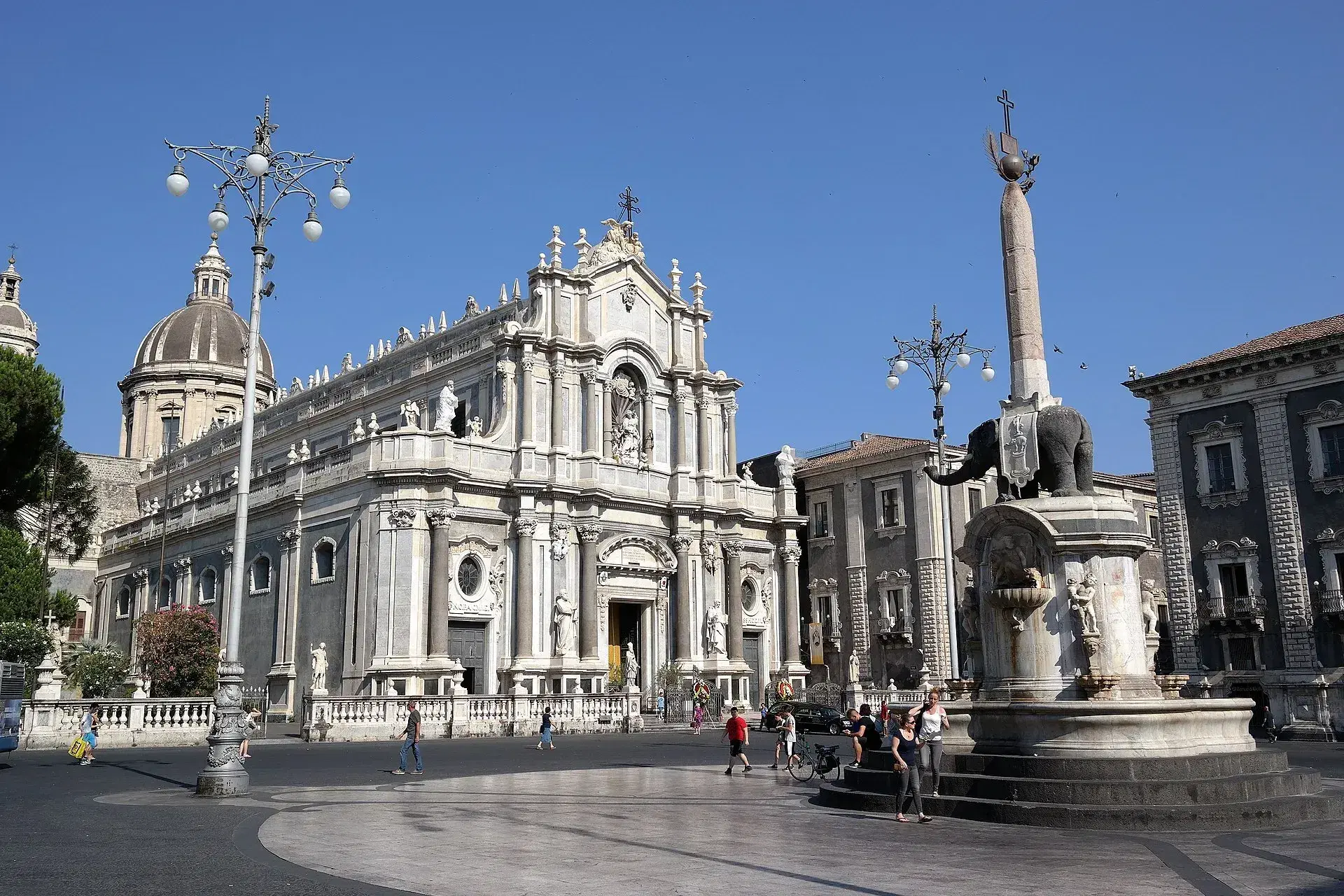
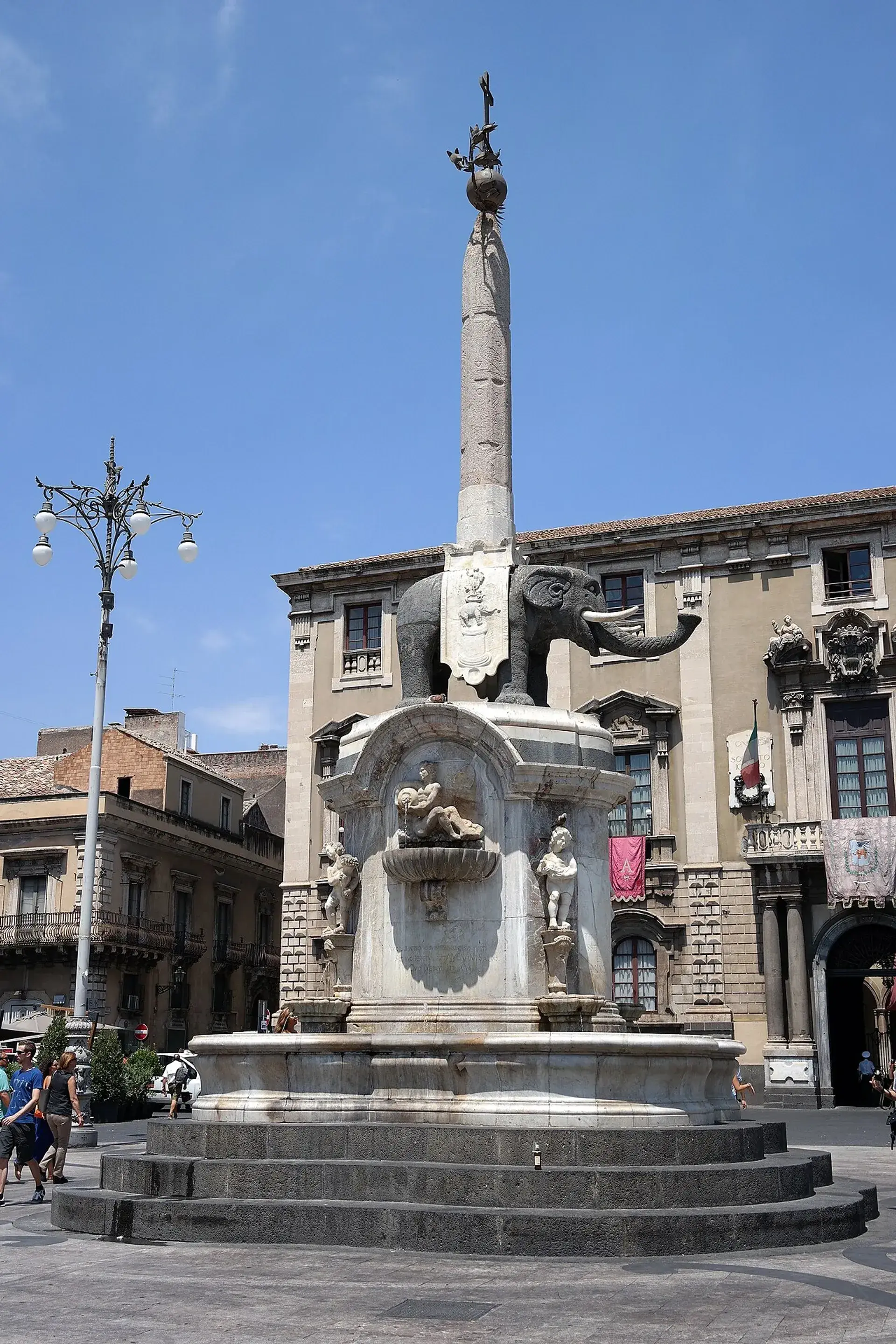
At the center of Piazza del Duomo in Catania stands the Fountain of the Elephant, locally known as u Liotru. The monument juxtaposes a dark volcanic basalt elephant with pale limestone and white marble, reflecting the dual color scheme characteristic of Catania's Late Baroque center. Positioned in the open pedestrian square, the fountain produces the constant sound of splashing water falling from its plinth into a large marble basin.
Designed and assembled between 1735 and 1737 by Palermitan architect Giovanni Battista Vaccarini, the fountain was a key piece of the city's reconstruction following the devastating earthquake of January 11, 1693. Today, it serves as Catania's defining visual landmark and a primary gathering place, surrounded by benches and the grand facades of the Cathedral of Sant'Agata and the Palazzo degli Elefanti.
Catania walking tour with audio and quizzes: Elephant and Roman ruins
2 hours8 stopsAudio guideStart any day, at your own paceTicket on your phone · 30-day refundDesign and Architecture
The structure rests on a white marble pedestal set within a central marble basin. The base features sculptural personifications of Catania's two principal rivers, the Simeto and the Amenano. Above this pedestal stands the ancient black lava-stone elephant, positioned with its trunk facing the Cathedral of Sant'Agata.
Resting on the elephant's back is a 3.66-meter-high Egyptian-style granite obelisk. The obelisk is carved with figures that resemble Egyptian hieroglyphs but do not form coherent writing. Historical hypotheses suggest this pillar may have once served as a turning marker in an ancient Roman circus. Atop the obelisk sits a globe surrounded by a palm leaf symbolizing martyrdom, a lily branch representing purity, a cross, and a metal tablet. The tablet bears the acronym "MSSHDEPL," dedicating the monument to Saint Agatha for the honor of God and the liberation of the homeland.
Earthquakes and Restoration
The exact origins of the black basalt elephant remain uncertain, with theories attributing it to Roman, Carthaginian, or Byzantine eras. The 12th-century Arab geographer Al-Idrisi documented the statue inside the city walls, noting its ancient presence.
The catastrophic 1693 earthquake shattered the elephant's hind legs and broke its trunk. During the 18th-century reconstruction, Vaccarini repaired the limbs and added white limestone eyes and tusks before integrating the statue into the new fountain. Over the centuries, the fountain saw several modifications, including a four-lobed basin added in 1757, an iron fence installed in 1826, and a second basin in 1905. The railings were ultimately dismantled in 1998, opening the stepped marble perimeter entirely to the public. The monument's central location is fiercely protected by locals; in May 1862, a municipal proposal to move the fountain to Piazza Palestro was entirely abandoned following public protests and a popular uprising.
Myths and Civic Identity
The elephant has been Catania's official municipal emblem since 1239, when Holy Roman Emperor Frederick II adopted it to replace Saint George. Even under earlier Muslim rule, the city was known as Balad-el-fil or Medinat-el-fil, translating to "City of the Elephant."
Local tradition links the nickname u Liotru to a mispronunciation of Eliodoro, an 8th-century nobleman and alleged sorcerer. According to legend, Eliodoro carved the elephant from Mount Etna's lava, brought it to life, and rode it through the skies before being condemned by a local bishop. Historically, the statue was also regarded as a magical talisman capable of protecting the city from volcanic eruptions. This deep civic connection persists today, with older residents proudly referring to themselves as marca liotru to signify their authentic Catanian heritage.
FAQ
Why is the Fountain of the Elephant famous?
It is Catania's defining visual landmark and municipal emblem, featuring an ancient lava-stone elephant topped by an Egyptian-style obelisk. It was designed by Giovanni Battista Vaccarini during the city's reconstruction after the 1693 earthquake.
How old is the elephant statue in Catania?
The exact age of the black basalt elephant is uncertain. Theories suggest it dates to Roman, Carthaginian, or Byzantine times, and it was documented as being inside the city walls as early as the 12th century.
What does the name 'u Liotru' mean?
Local tradition connects the nickname u Liotru to a mispronunciation of Eliodoro (Heliodorus), an 8th-century nobleman. According to local legend, he was a sorcerer who carved the elephant from volcanic lava and brought it to life.