Liotru: Catania's Historic Elephant Fountain
Catania’s Civic Symbol in Piazza del Duomo
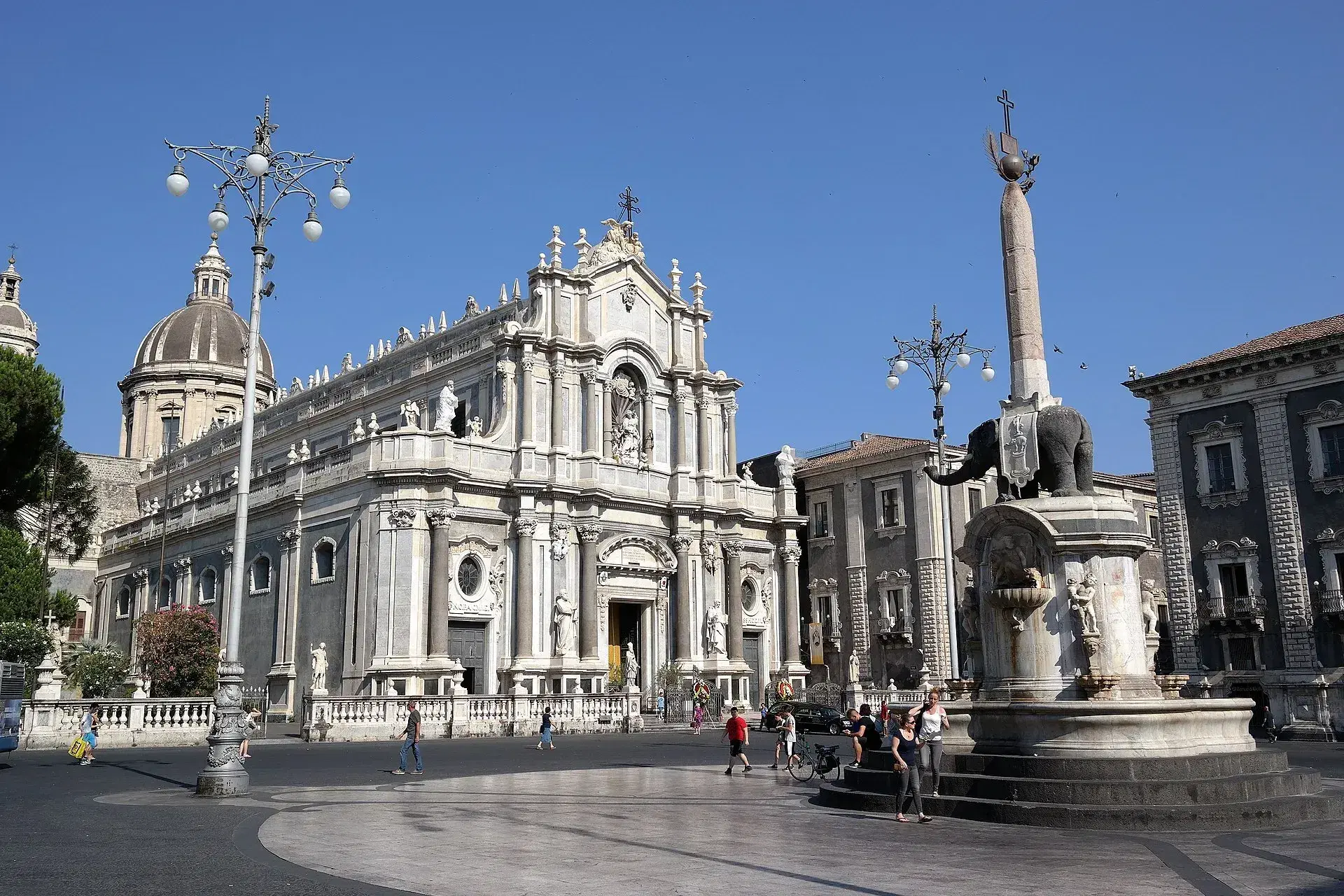
The Fountain of the Elephant, known locally as Liotru (or u Liotru), is the defining visual landmark of Catania's central Piazza del Duomo. Framing the pedestrian square alongside Giovanni Battista Vaccarini's Cathedral of Saint Agatha and the Palazzo degli Elefanti (the Town Hall), the monument embodies the planned artistic and civic rebirth of the city following the catastrophic earthquake of 1693.
The design reflects the characteristic dual color scheme of Catania's UNESCO-listed Late Baroque historic center, juxtaposing dark volcanic basalt with pale limestone and white marble. Positioned at the center of the piazza, the fountain also provides a distinctive acoustic presence, as the sound of splashing water falling from the plinth into the marble basin carries across the open square. Today, the surrounding stepped base remains open to the public as a primary resting and meeting place.
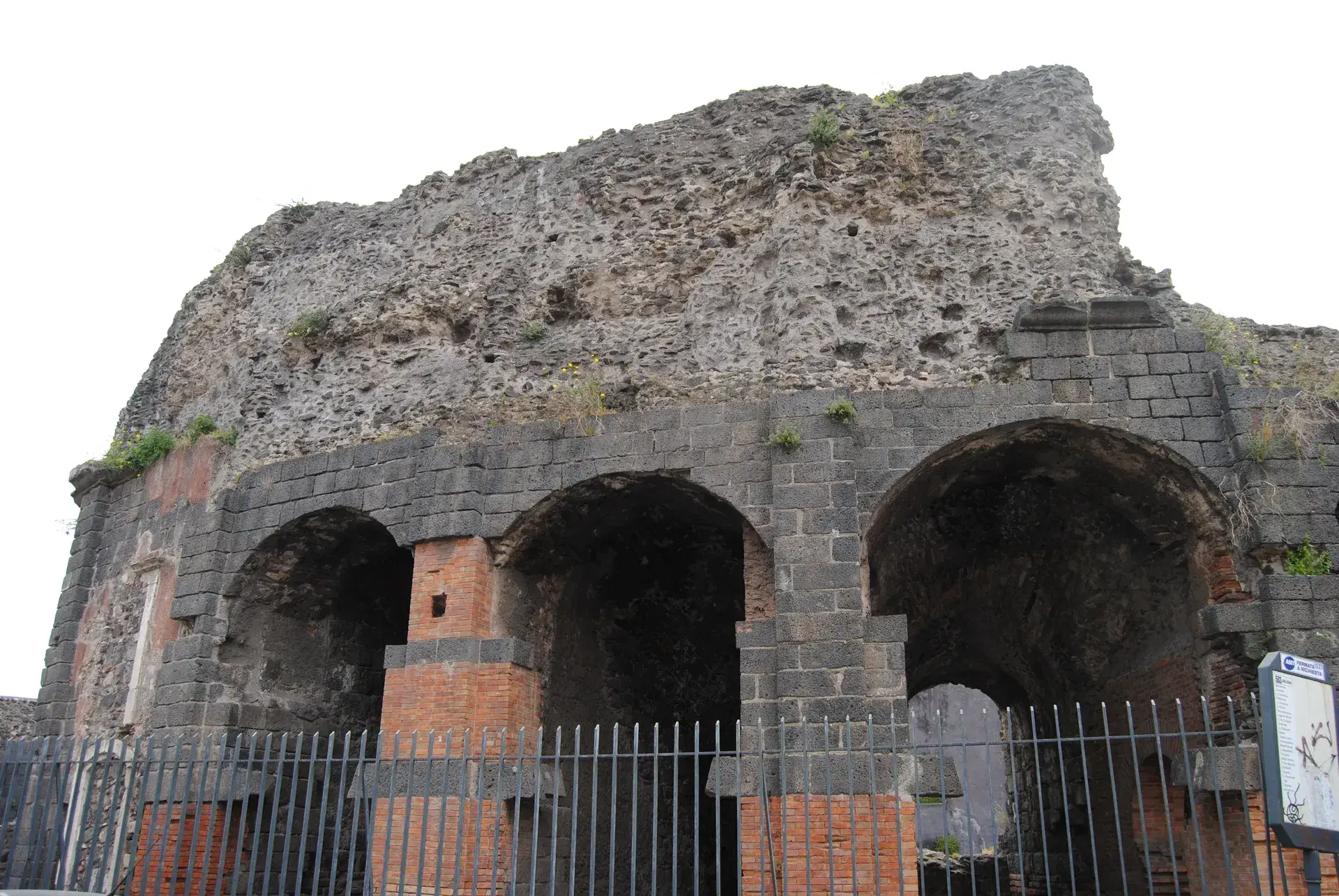
Catania walking tour with audio and quizzes: Elephant and Roman ruins
2 hours8 stopsAudio guideStart any day, at your own paceTicket on your phone · 30-day refundDesign and Architectural Composition
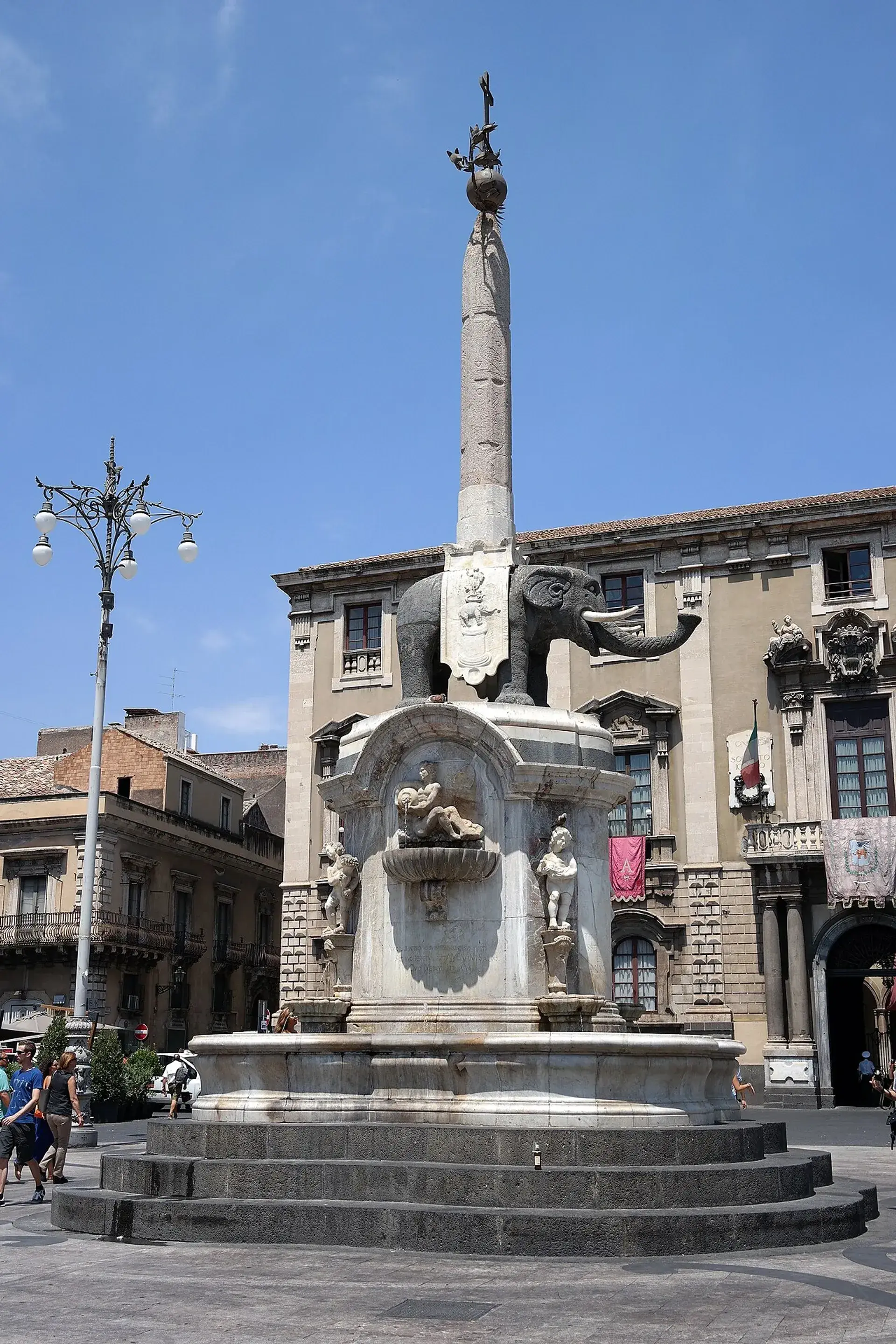
Commissioned during the post-1693 urban reconstruction, the monument was designed and assembled between 1735 and 1737 by the Sicilian architect Giovanni Battista Vaccarini. Vaccarini drew direct inspiration from Gian Lorenzo Bernini’s 1667 Elephant and Obelisk (Pulcino della Minerva) in Rome.
The sculptural assembly features an ancient pachyderm carved from dark, porous volcanic basalt, facing east toward the Cathedral of Saint Agatha. Across the elephant's back rests a carved white limestone or marble saddlecloth bearing the insignia of Saint Agatha. Mounted atop the saddlecloth is a 3.66-meter granite obelisk engraved with Egyptian-style motifs. At the very peak of the obelisk sit a bronze-embellished globe, a palm branch representing martyrdom, a lily representing purity, and a cross with an inscription plaque reading MSSHDEPL (Mentem sanctam, spontaneam, honorem Deo et patriae liberationem).
The entire composition rests above a white marble plinth set within a basin. The base features sculptural personifications of Catania’s two principal rivers, the Simeto and the Amenano. In 1757, a four-lobed basin was added to complete the water feature.
Origins, Destruction, and Reconstruction
The precise origin of the basalt elephant remains unresolved, with historians debating whether it dates to the Roman or Byzantine periods. Despite this ambiguity, its role as a civic talisman is centuries old; medieval Arab chronicles referred to Catania as Madinat al-fil ("City of the Elephant"). In 1239, Catania officially adopted the elephant as its municipal emblem under Holy Roman Emperor Frederick II, replacing Saint George.
When the earthquake of January 11, 1693 struck eastern Sicily, the ancient statue was severely damaged, suffering shattered legs and a broken trunk. As part of his 1730s fountain design, Vaccarini repaired the limbs and added white limestone eyes and tusks before integrating the figure into the new monument.
The fountain's setting underwent further changes over subsequent centuries. In 1862, an official municipal proposal to relocate the fountain to Piazza Palestro was abandoned following public protests. Protective railings and garden plots added during the nineteenth and twentieth centuries were dismantled in 1998, returning the stepped marble perimeter to an accessible public gathering point.
Legends and Curiosities of Liotru
Local folklore attributes the dialect name Liotru to Heliodorus (Eliodoro), an eighth-century Byzantine-era nobleman turned sorcerer. Popular legends claim he sculpted the basalt beast, magically animated it, and rode it across Catania while executing magical pranks. A competing etymological theory suggests the moniker arose as a linguistic corruption of eliotrico, referring to an ancient solar gnomon or sundial.
For generations, popular tradition revered the statue as a magical talisman capable of guarding Catania against eruptions from nearby Mount Etna. The figure is so deeply entwined with the city's self-image that long-standing residents historically used the phrase marca Liotru ("branded with the elephant") to signify authentic local ancestry.
The monument also retains an architectural mystery: while typical Egyptian obelisks are four-sided, the granite obelisk mounted on Liotru features an octagonal cross-section with beveled corners. This unusual geometry continues to fuel scholarly debate regarding whether the stone was quarried and carved in Egypt or produced locally in Roman Sicily.
FAQ
What does the inscription MSSHDEPL on the monument stand for?
The letters represent the Agatine inscription 'Mentem sanctam, spontaneam, honorem Deo et patriae liberationem' ('A holy mind, spontaneous devotion, honor to God, and the liberation of the motherland'), dedicated to Catania's patron saint, Saint Agatha.
Why is the fountain's elephant called Liotru?
According to local folklore, the name is a dialect corruption of Heliodorus (Eliodoro), an eighth-century nobleman and legendary sorcerer said to have fashioned the beast and ridden it. Another theory links the name to 'eliotrico', referring to a sundial or solar gnomon.
What is unique about the obelisk atop the elephant?
Unlike traditional Egyptian obelisks, which have four flat sides, this 3.66-meter granite obelisk has an octagonal cross-section with beveled corners, leading to scholarly debate over whether it was imported from Egypt or made in Roman Sicily.