
Piazza Duomo: Catania's Historic Baroque Center
The Center of Catania's Baroque Rebirth
Piazza Duomo is the historic central square of Catania, inscribed on the UNESCO World Heritage list in 2002 as part of the Late Baroque Towns of the Val di Noto. The open urban space visible today is the direct result of reconstruction efforts following the catastrophic earthquake of January 11, 1693, which leveled the city.
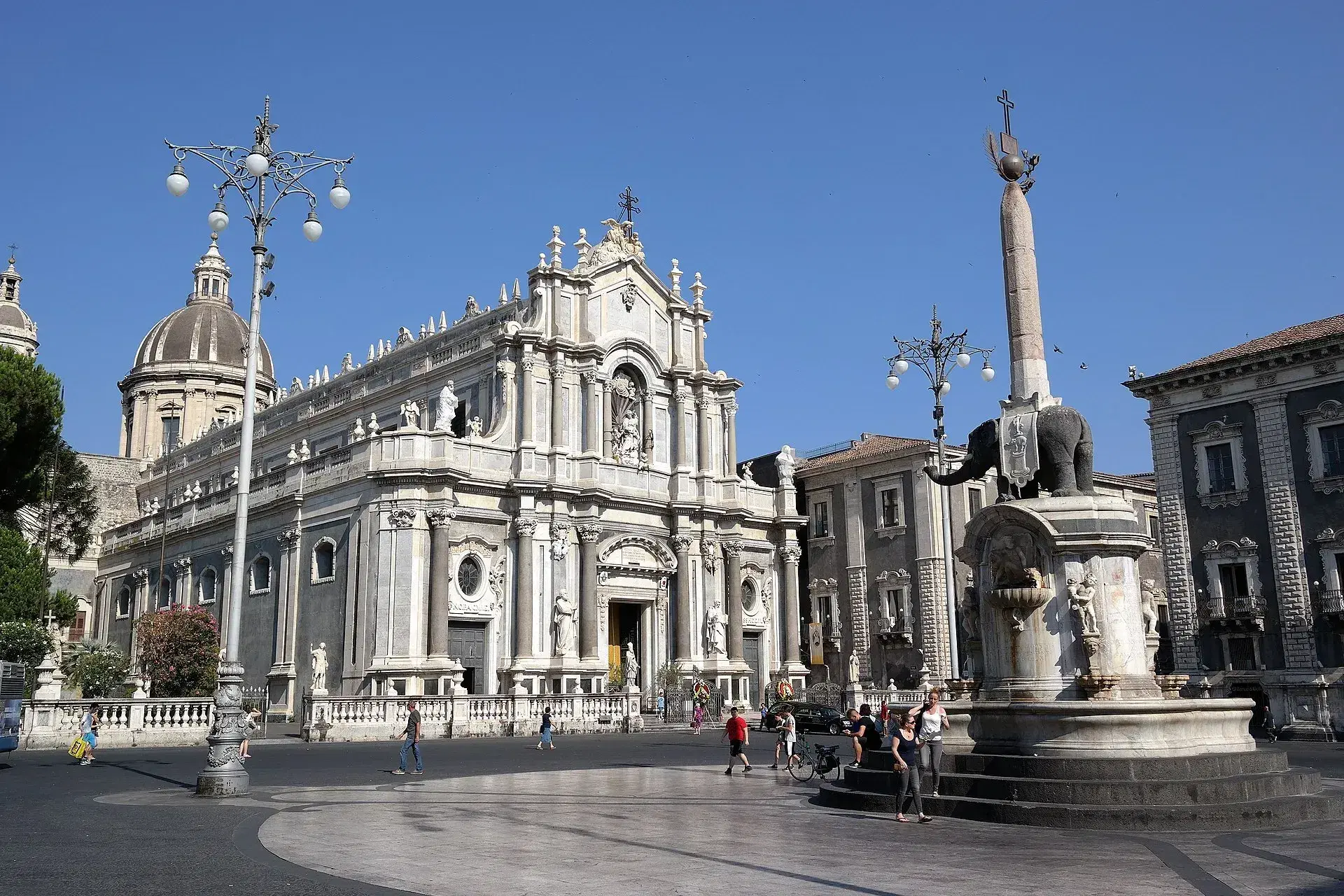
Supervised by the Duke of Camastra and largely executed in the early-to-mid 18th century by Palermo-born architect Giovanni Battista Vaccarini, the square was envisioned as a grand civic living room. It was purposefully arranged to unite municipal administration and ecclesiastical authority into a single harmonious enclosure. The architecture exemplifies the Catania Baroque style, defined by a dramatic chiaroscuro contrast between dark Etna basalt lava stone and pale local limestone.
Catania walking tour with audio and quizzes: Elephant and Roman ruins
2 hours8 stopsAudio guideStart any day, at your own paceTicket on your phone · 30-day refundMonuments Framing the Square
The eastern flank of Piazza Duomo is anchored by the Cattedrale di Sant'Agata. Originally founded between 1078 and 1093 by Roger I, the cathedral stands directly over ancient Roman infrastructure, specifically the subterranean remains of the Achillean Baths (Terme Achilliane), which extend beneath the floor of the square.
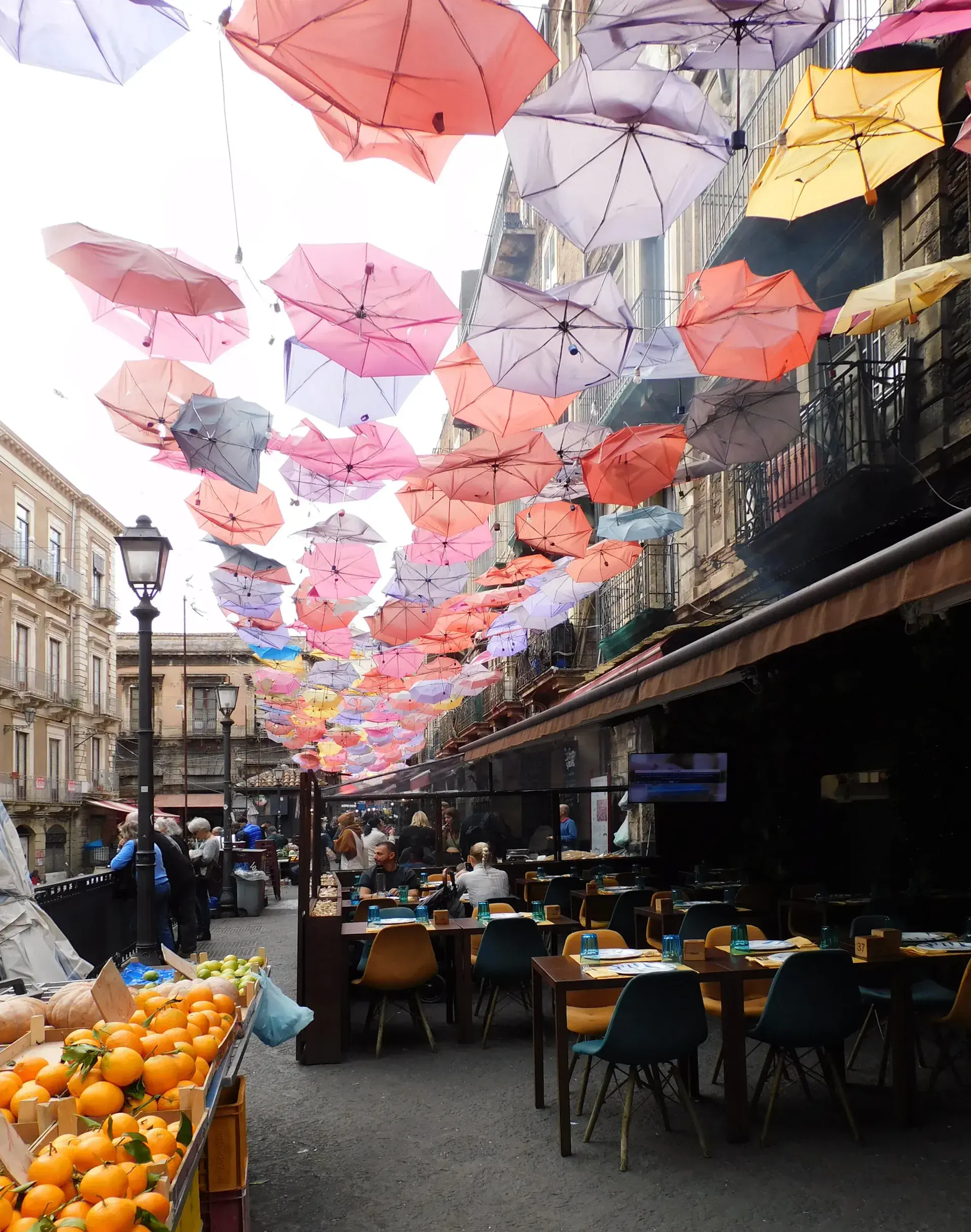
To the north sits the Palazzo degli Elefanti, serving as Catania's Town Hall. The southern perimeter is framed by the Palazzo dei Chierici and the historic city gate, Porta Uzeda, which were connected to the cathedral in 1695 via a bridge gate. In the southwest corner stands the Fontana dell'Amenano, installed in 1867. Powered by the underground Amenano River, the fountain's cascading waters overlook the stone steps leading down into Catania's historic open-air fish market, La Pescheria.
Fontana dell'Elefante and the Legend of 'u Liotru'
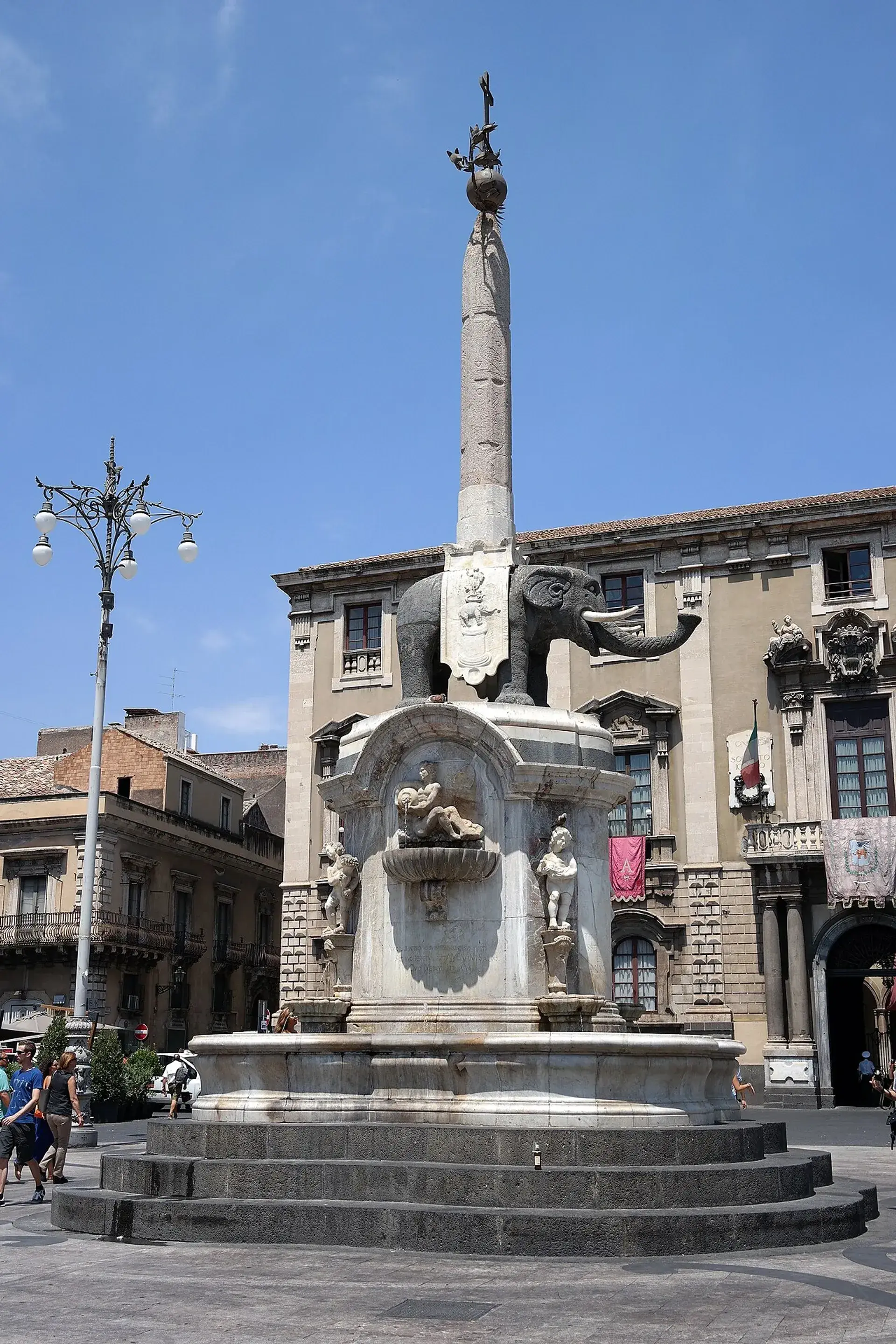
At the center of the piazza stands the Fontana dell'Elefante, erected by Giovanni Battista Vaccarini between 1735 and 1737. The fountain's focal point is an ancient elephant carved from dark volcanic lava stone, known locally as 'u Liotru. The sculpture was not carved by Vaccarini; it was an existing, damaged relic unearthed from the rubble of the 1693 earthquake. Vaccarini restored the figure, repairing its broken limbs and inserting contrasting white limestone tusks and eyes.
Surmounting the elephant is a 3.66-meter octagonal granite obelisk with Egyptian-style relief carvings, believed to have originated from the spina of Catania's ancient Roman circus. Despite the Egyptian imagery, the relief carvings do not represent legible hieroglyphic text.
The elephant has deep roots in local lore. In the 12th century, the Arab-Sicilian geographer al-Idrisi recorded that the city's inhabitants revered the stone beast as a protective talisman capable of warding off the volcanic eruptions of Mount Etna. Local tradition also links its nickname to Heliodorus (Eliodoro), an 8th-century magician reputed to have conjured the creature from cooled lava and ridden it across the sea. The citizens' attachment to the monument proved enduring: in May 1862, public protests successfully prevented civic authorities from relocating the fountain to Piazza Palestro.
Civic Function and Urban Axis
Piazza Duomo forms the southern anchor of Via Etnea, establishing a straight, northern sightline oriented toward the peak of Mount Etna. Designated as a restricted pedestrian traffic zone (ZTL), the square serves as the primary orientation point for travelers in Catania.
Beyond everyday gatherings, the square acts as the ceremonial stage for the annual Feast of Saint Agatha each February. During this major festival, religious and civic processions assemble beneath the balconies of the Town Hall and the cathedral, preserving the civic and spiritual role planned for the piazza during its 18th-century reconstruction.
FAQ
Did Giovanni Battista Vaccarini sculpt the lava-stone elephant in Piazza Duomo?
No. The elephant is an ancient artifact discovered damaged in the rubble of the 1693 earthquake. Vaccarini incorporated it into his 1735–1737 fountain design by repairing its broken limbs and adding white limestone eyes and tusks.
What archaeological remains lie beneath Piazza Duomo?
The square and the adjacent Cattedrale di Sant'Agata sit directly over the subterranean ruins of the Roman Achillean Baths (Terme Achilliane).
Why is the elephant monument called 'u Liotru'?
Local folklore attributes the nickname to Heliodorus (Eliodoro), an 8th-century magician who, according to legend, created the elephant out of Etna's lava and rode it across the Mediterranean.
Which historic market is accessed from Piazza Duomo?
The southwest corner of the square, right beside the 1867 Fontana dell'Amenano, features stone steps providing direct access to La Pescheria, Catania's daily open-air fish market.