Piazza Stesicoro: Catania's Layered Historic Square
Piazza Stesicoro is one of the primary civic squares in Catania, situated along the central north-to-south axis of Via Etnea. Serving as an architectural hinge, the rectangular space connects the southern UNESCO-listed Baroque quarter of Piazza Duomo and Piazza dell'Università with the nineteenth-century boulevard and the gardens of Villa Bellini. The piazza is named after the ancient Greek lyric poet Stesichorus, who, according to local tradition and historical accounts, was buried in the vicinity, though no archaeological remains of his tomb have been verified.
The square visually unites three major eras of Catania's urban evolution: classical antiquity, post-1693 reconstruction, and twentieth-century modernism. Bisected directly by Via Etnea, the space is divided into a western archaeological zone and an eastern monument plaza.
The Sunken Roman Amphitheatre
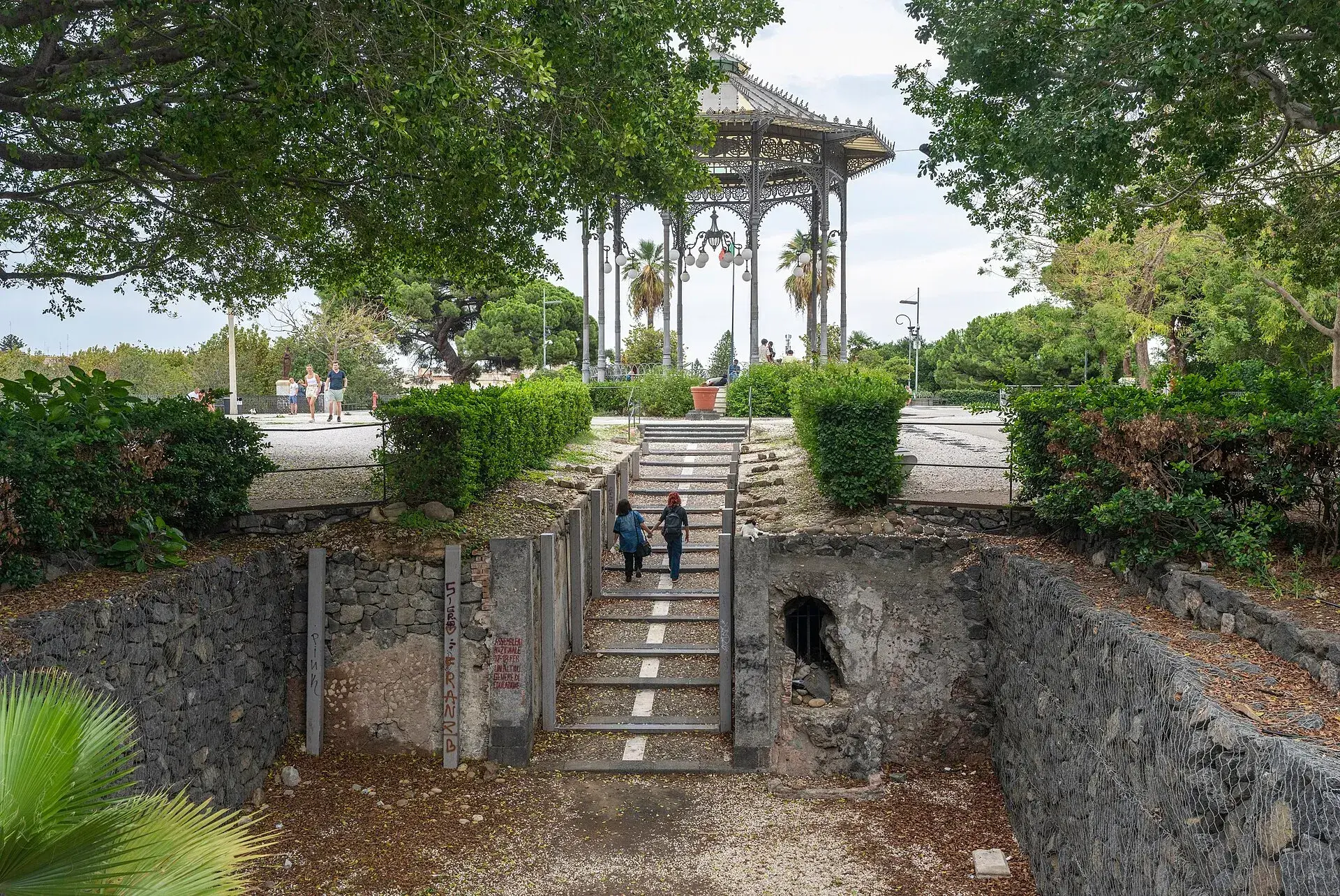
The western half of Piazza Stesicoro is dominated by an open archaeological trench. Street-level viewers looking downward see an excavation descending roughly ten metres into dark volcanic basalt arches and weathered red Roman brick. Constructed around the second century CE using lava rock from Mount Etna, mortared brick, and marble facings, the Roman Amphitheatre was expanded in the third century to accommodate over 15,000 spectators.
Over the centuries, the amphitheatre underwent severe alterations. In the fifth century, King Theodoric permitted residents to quarry its masonry for building materials. In the late eleventh century, Count Roger II dismantled its granite and basalt columns to construct the Cathedral of Sant'Agata. During the thirteenth-century War of the Sicilian Vespers, Angevin forces navigated the subterranean corridors to penetrate the city, prompting Aragonese authorities to seal its vaults into defensive walls. The structure was buried following the devastating 1693 Sicily earthquake, remaining hidden until systematic excavations began in the early twentieth century. The visible ruins account for only about one-tenth of the amphitheatre; the remaining nine-tenths, boasting an outer perimeter exceeding 300 metres, remains buried beneath surrounding residential streets and buildings.
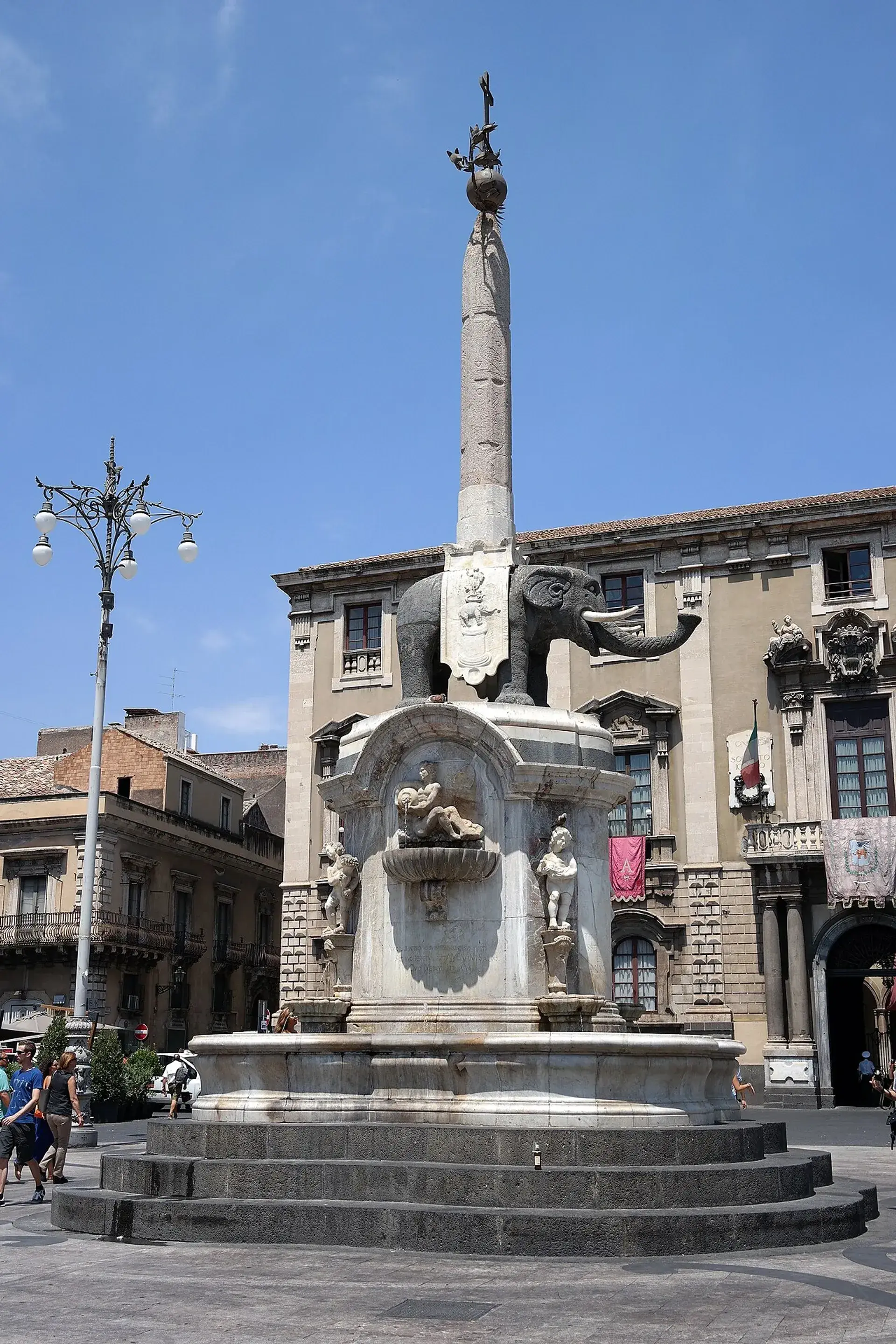
Catania walking tour with audio and quizzes: Elephant and Roman ruins
2 hours8 stopsAudio guideStart any day, at your own paceTicket on your phone · 30-day refundWestern Flank: Sacred Sites and Civic Monuments
Surrounding the sunken amphitheatre on the western side of the square are several significant civic and religious structures. To the west stands the Neoclassical Church of San Biagio, also known as Sant'Agata alla Fornace. Local religious tradition holds that the church occupies the exact site of the furnace where Saint Agatha underwent martyrdom by fire in the third century, and relics associated with the furnace are preserved within its altar reliquary.
North of the excavation stands the eighteenth-century Palazzo Tezzano. Completing the western architectural frame is the Palazzo della Borsa, a Rationalist building completed in 1933 to house Catania's Chamber of Commerce.
Eastern Flank: The Bellini Monument and Corso Sicilia
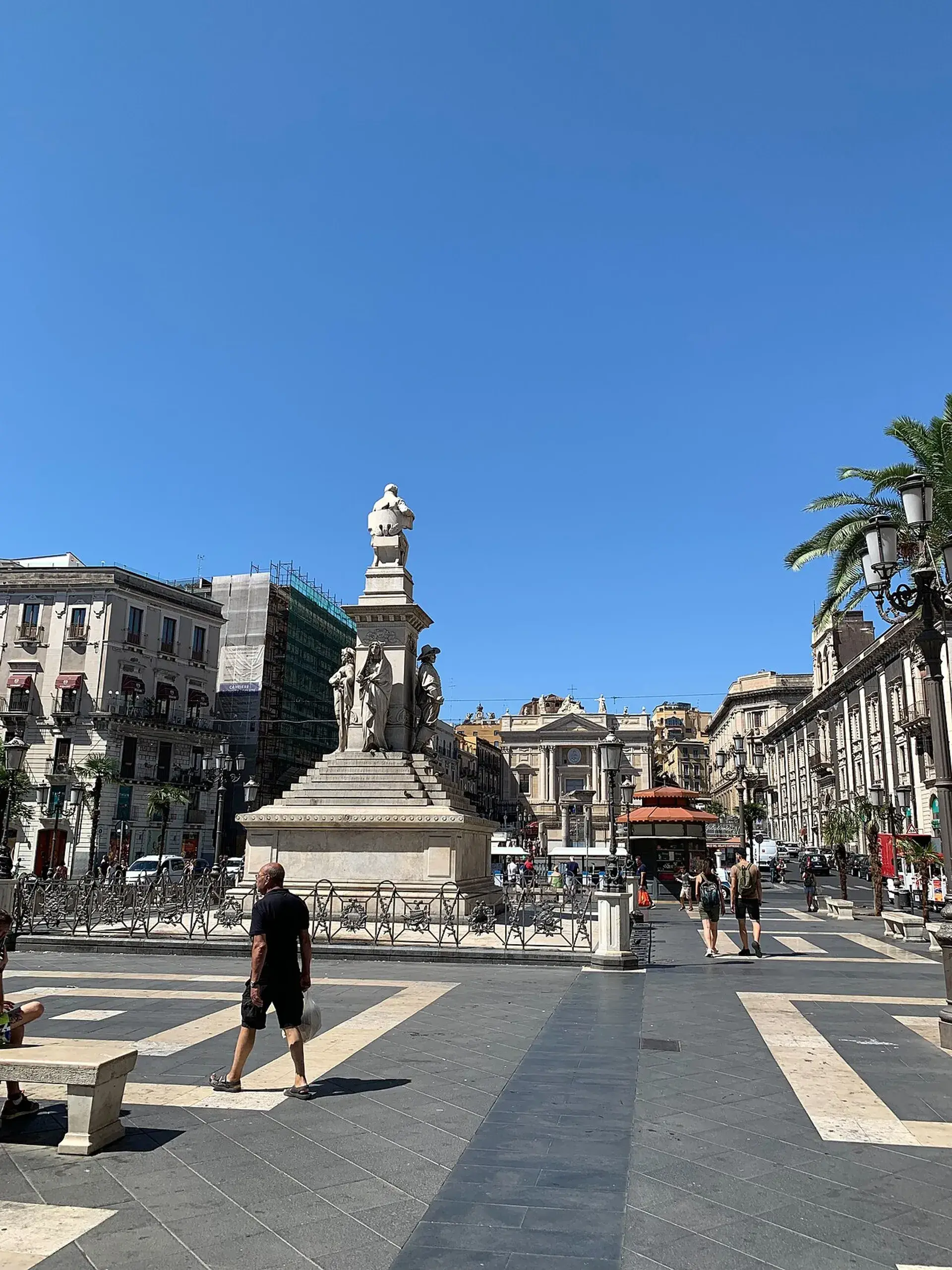
The eastern section of Piazza Stesicoro is anchored by a monument dedicated to the Catania-born composer Vincenzo Bellini. Designed by sculptor Giulio Monteverde and unveiled in 1882, the marble monument replaced an earlier statue of the Bourbon monarch Ferdinand II that had been removed after Italian unification. The white marble pedestal features seven stepped tiers symbolizing the seven musical notes. Flanking the corners are allegorical statues depicting four of Bellini's acclaimed operas: Norma, I puritani, La sonnambula, and Il pirata. The monument reopened in April 2024 following extensive conservation work.
This half of the square is enclosed by the Neo-Renaissance Palazzo Paternò del Toscano and Palazzo Beneventano della Corte. The eastern side also marks the opening of Corso Sicilia, a broad commercial avenue constructed in the late 1950s following the demolition of part of the historic San Berillo district.
Modern Transit and Civic Traditions
Piazza Stesicoro functions as an active urban center and transit nexus, providing access to Catania's underground network through the Stesicoro metro station on Line 1. The square serves as the western gateway to 'a fera 'o luni, a long-running outdoor street market held Monday through Saturday in neighbouring Piazza Carlo Alberto.
The square also plays a prominent role in civic and religious celebrations. Every year on February 3rd, the official festivities for the Festival of Saint Agatha commence at the Church of Sant'Agata alla Fornace with the processione della luminaria, an offering of wax that proceeds down Via Etnea toward the Cathedral.
FAQ
How much of the Roman Amphitheatre is visible in Piazza Stesicoro?
The excavated ruins visible in Piazza Stesicoro represent approximately one-tenth of the amphitheatre. The remaining nine-tenths of the elliptical structure, with an outer perimeter of more than 300 metres, lies buried under neighbouring streets and buildings.
What do the design elements of the Vincenzo Bellini monument represent?
The monument's white marble base has seven tiered steps representing the seven notes of the musical scale. Surrounding the pillar are allegorical figures depicting four of Bellini's famous operas: Norma, I puritani, La sonnambula, and Il pirata.
What religious significance does the Church of San Biagio hold?
Also known as Sant'Agata alla Fornace, the church traditionally marks the location of the furnace where Saint Agatha was martyred by fire in the third century, and its altar reliquary preserves remnants associated with the furnace.