Statue of Julius Caesar in Cividale del Friuli
The Monument and Its Architectural Setting
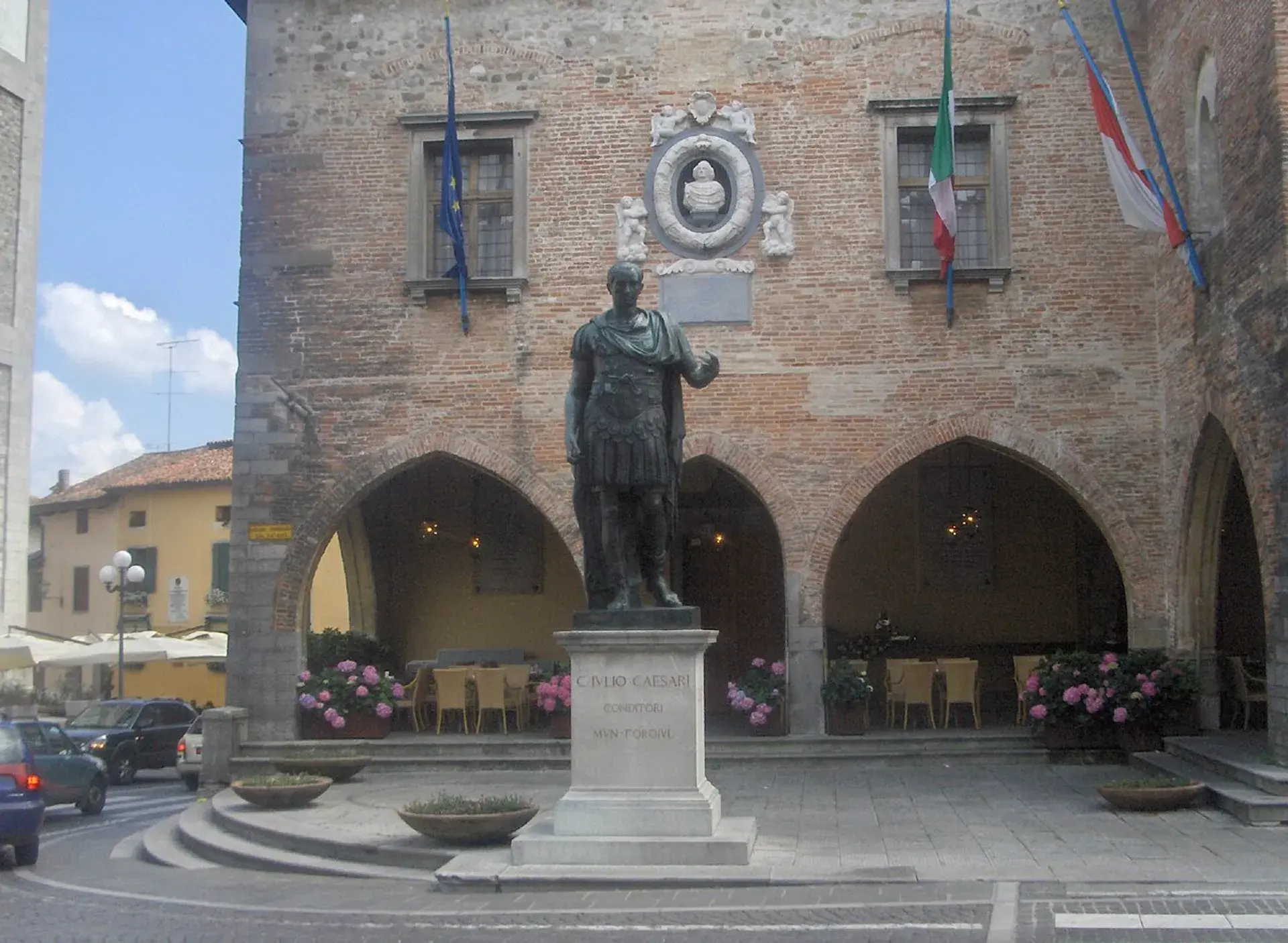
The Statue of Julius Caesar in Cividale del Friuli is an outdoor, life-size bronze monument depicting the Roman statesman and general as a military commander. Positioned on a plain stone pedestal, the figure is dressed in an armored cuirass, a short tunic, and a draped mantle (paludamentum). The pose is resolute: Caesar stands with his right leg straight, his left leg drawn slightly backward, his head turned sharply to the right, and his left arm extended forward.
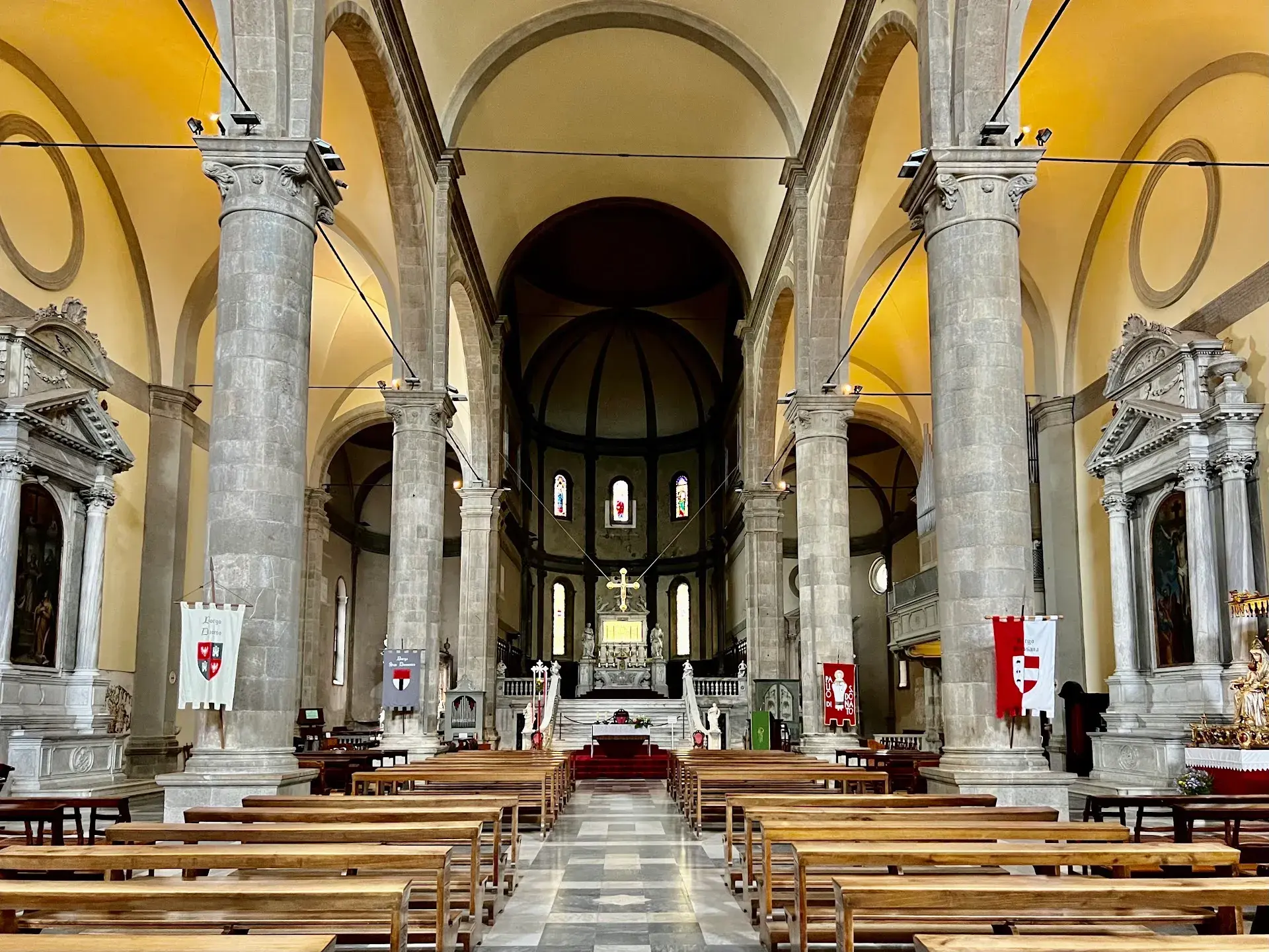
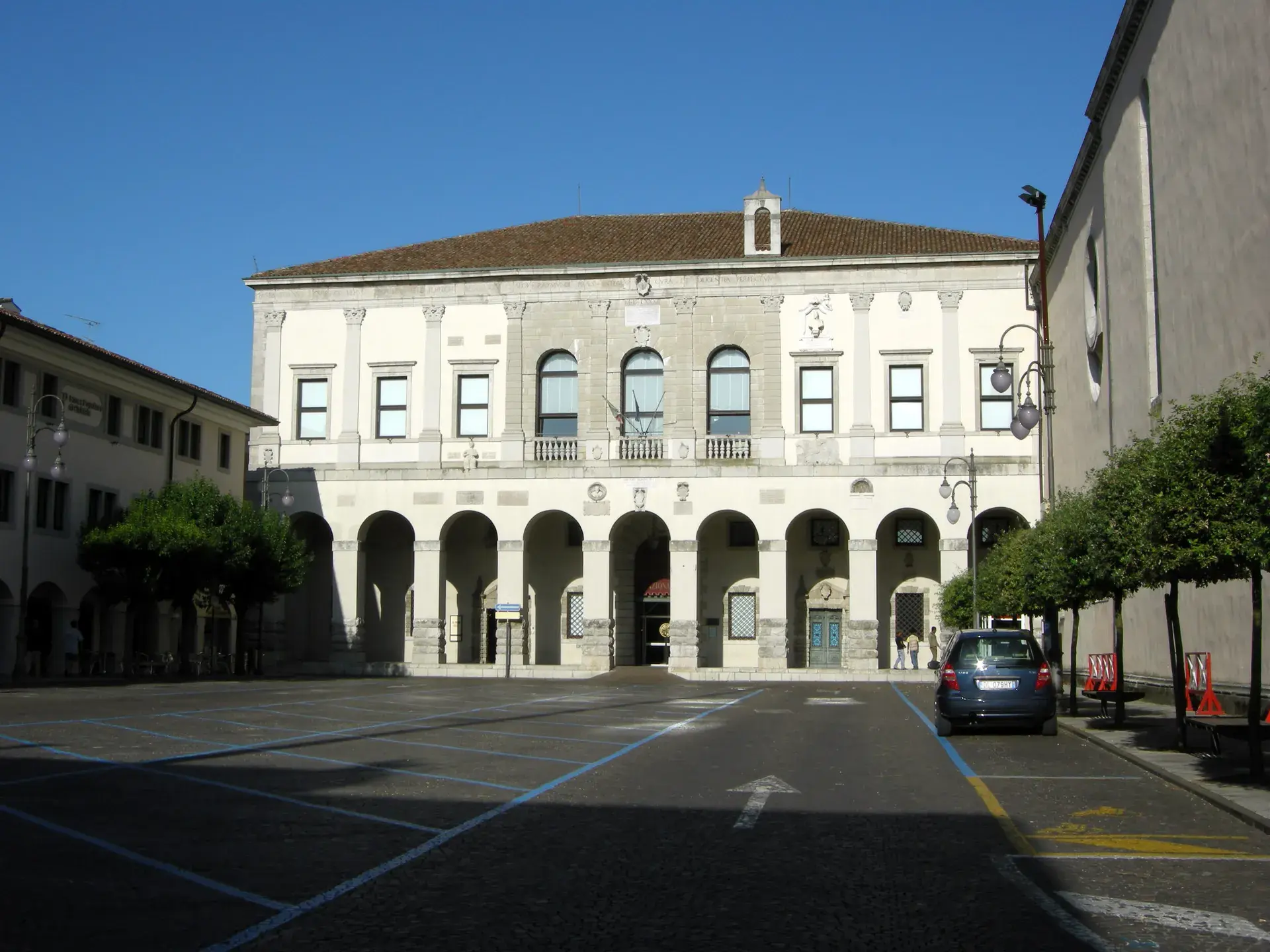
The monument is located directly in front of the Gothic pointed brick arches of the Palazzo Comunale (Town Hall). Positioned at the spatial junction connecting Piazza del Duomo with Largo Boiani, the statue overlooks historic stone paving where footsteps echo between public squares. It stands directly opposite the Cathedral of Santa Maria Assunta and the Palazzo dei Provveditori Veneti, marking an intersection of classical antiquity, medieval civic administration, and religious architecture.
20th-Century Provenance and Roman Heritage
Although the monument represents ancient history, the bronze casting dates to 1935. It is a reproduction of a classical marble original from the Trajanic period, which is preserved in Rome within the Capitoline Museums.
The statue was gifted to Cividale del Friuli during the Fascist regime of Benito Mussolini. As part of a broader ideological campaign asserting Roman identity (romanità) along Italy's northeastern frontier, the monument was erected outside the municipal seat to underscore the ancient Roman origins of the town and celebrate its foundational ties to Rome.
The Roman Foundation of Forum Iulii
The monument commemorates Caesar's reorganization of the area between 56 and 50 BCE during his proconsulship in Cisalpine Gaul. Recognizing the strategic value of the landscape at the entrance of the Natisone Valley, Caesar established a fortified trading and administrative post named Forum Iulii ("Market of Julius"). The settlement eventually achieved the legal rank of a Roman municipium within the Scaptia tribe.
Following the destruction of neighboring Aquileia by the Huns in 452 CE, Forum Iulii gained newfound regional importance. By 568 CE, the Lombard King Alboin chose the walled Roman settlement as the capital of the first Lombard Duchy in Italy, installing his nephew Gisulf as its duke.
Over the centuries, the original Roman designation underwent a notable split. In early medieval records, the site was recorded as Civitas Fori Iulii. The urban core came to be identified simply by the descriptor Civitas, which gradually evolved into the Friulian Cividât and the Italian Cividale. Concurrently, Caesar's personal title for the settlement—Forum Iulii—shifted to designate the wider territory, providing the linguistic origin for the modern regional name Friuli.
Surrounding Discoveries and Civic Traditions
While the bronze monument is a modern replica, genuine Roman remains sit directly behind its pedestal. In 1938, archaeological excavations carried out inside the courtyard and loggia of the Palazzo Comunale uncovered the black-and-white tessellated mosaic floor of a dining room (triclinium) belonging to a 1st- to 2nd-century CE Roman domus.
Curiously, Cividale also possesses a dedicated civic square titled Piazza Foro Giulio Cesare, but the bronze monument does not stand there. Instead, that public square features a monument honoring the 19th-century Cividale-born tragic actress Adelaide Ristori.
Today, the statue remains a focal point for local remembrance. Every year on March 15, known historically as the Ides of March, local cultural and civic groups, including the Fogolâr Civic and the Academie dal Friûl, gather at the base of the statue to lay flowers in honor of Caesar as the historical namesake of the Friulian territory.
FAQ
Where is the Statue of Julius Caesar located?
The statue stands outside the Palazzo Comunale in Cividale del Friuli, overlooking the stone-paved area linking Largo Boiani and Piazza del Duomo.
Is the statue an original Roman bronze?
No, the statue is a bronze replica cast in 1935, modeled after an original Trajanic-era marble statue housed in the Capitoline Museums in Rome.
How does the statue connect to the name of the Friuli region?
Between 56 and 50 BCE, Julius Caesar founded the settlement as Forum Iulii. Over the centuries, the Latin name Forum Iulii linguistically evolved to name the entire surrounding region of Friuli, while the city itself became known as Cividale.
What archaeological finds lie near the monument?
Directly behind the statue, excavations in 1938 beneath the loggia and courtyard of the Palazzo Comunale revealed a black-and-white mosaic floor from a 1st- to 2nd-century CE Roman home dining room (triclinium).