Duomo di Como: History, Facade & Roman Statues
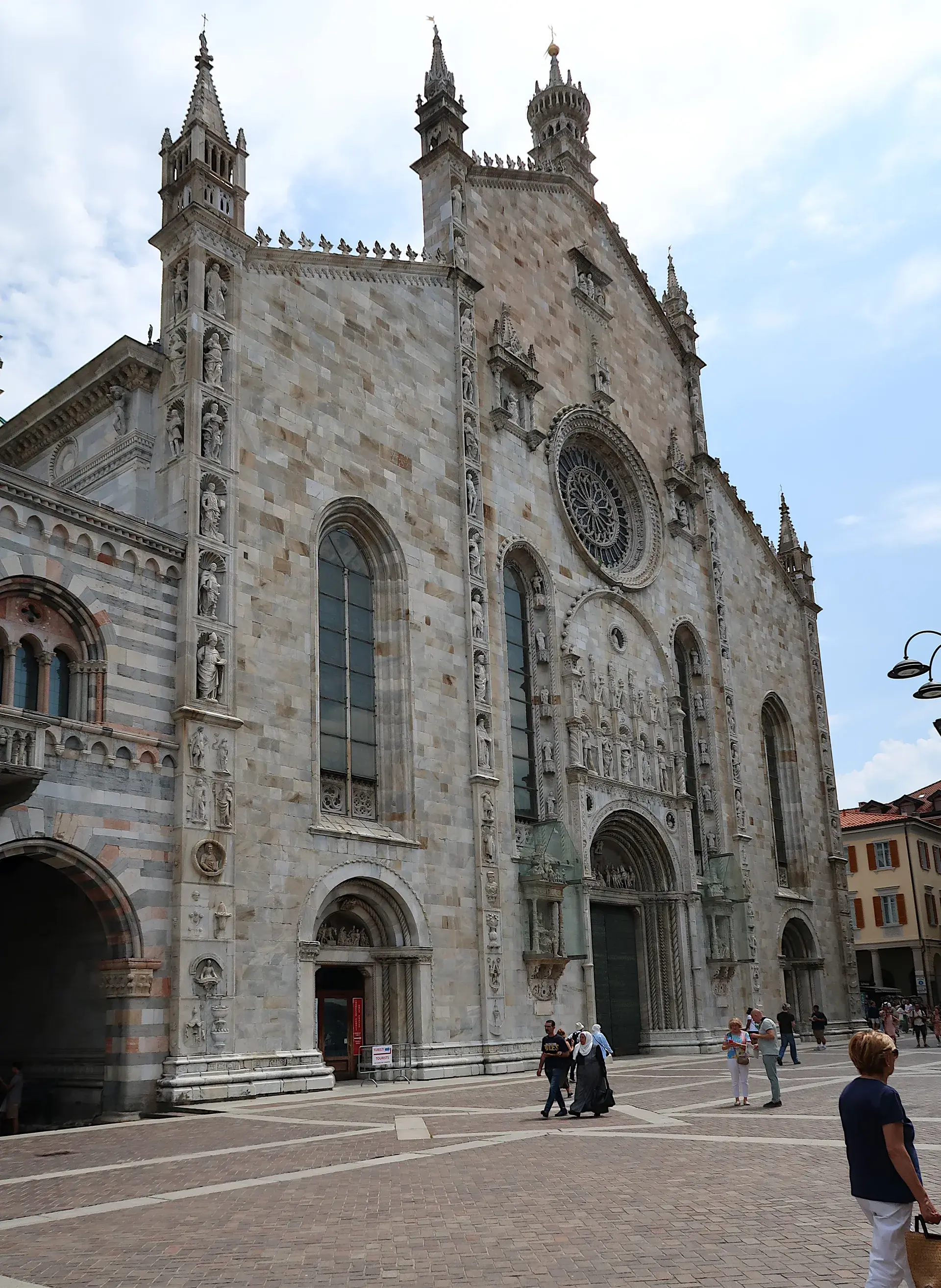
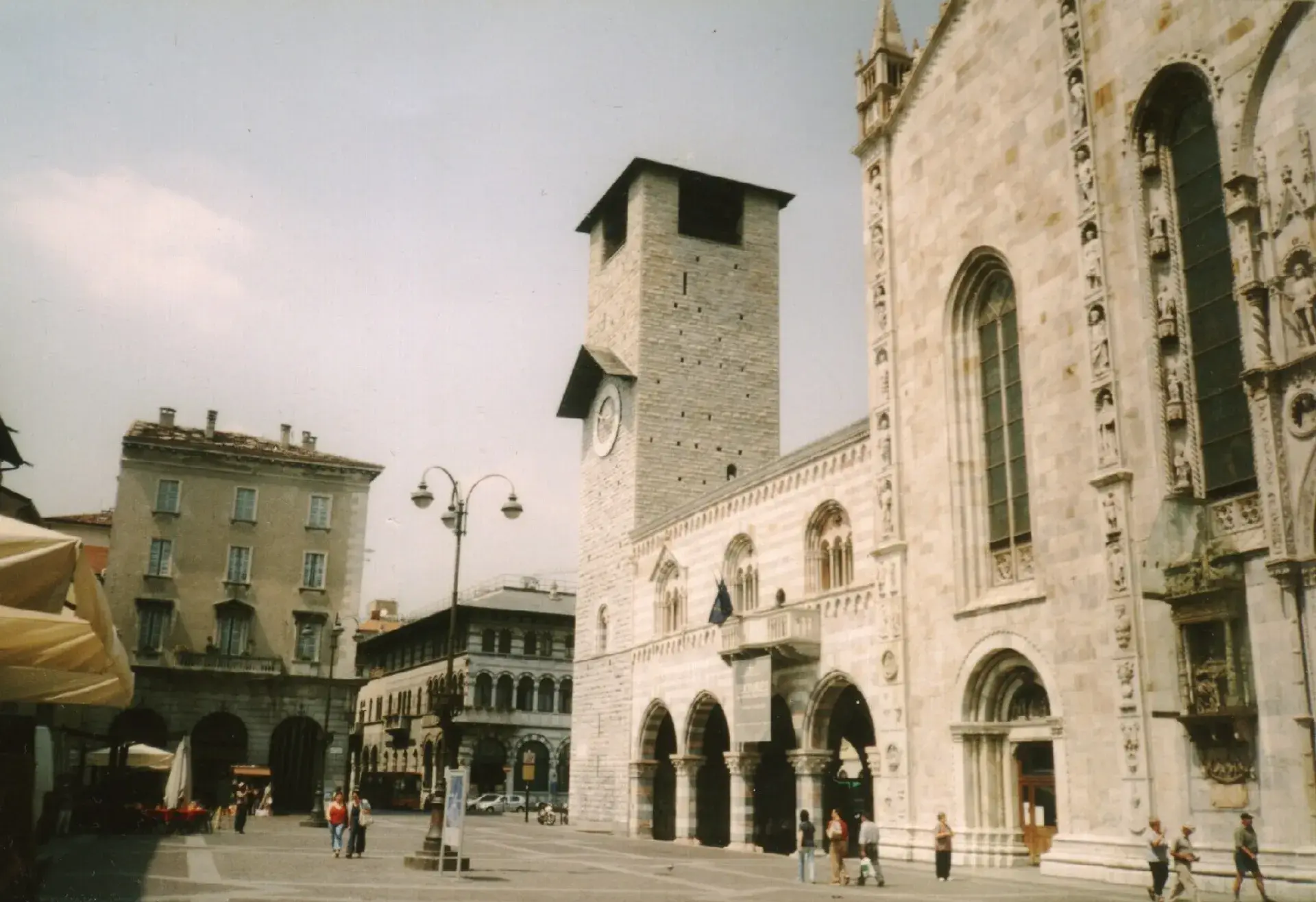
The Cathedral of Santa Maria Assunta, commonly known as the Duomo di Como, stands in Piazza del Duomo at the intersection of Como's gridded Roman core and the lakefront. Built flush against the medieval Broletto town hall, the structure architecturally unites municipal governance and religious life. Construction began in 1396 on the former site of the Romanesque basilica of Santa Maria Maggiore and spanned more than three centuries, concluding with the addition of architect Filippo Juvarra's cupola in the 1740s.
The Facade and the Statues of the Plinys
The late Gothic and Renaissance west facade is crafted from grey and white Musso marble. Flanking the main central portal are two prominent seated marble statues carved between 1480 and 1498 by the Renaissance sculptor Tommaso Rodari and his brother Giacomo. On the left sits Gaius Plinius Secundus (Pliny the Elder), and on the right is his nephew, Gaius Plinius Caecilius Secundus (Pliny the Younger). Both Roman scholars are sheltered within classical aediculae framed by candelabra columns embedded directly into the facade.
Both Plinys were born in Roman Como (Novum Comum). During the humanist revival of the late 15th century, the city council and cathedral administrators chose to honor their native literary legacy by placing these classical figures at the entrance of the city's primary Christian church. Today, the marble figures are enclosed in transparent protective cases to prevent damage from environmental exposure and pollution.
The Counter-Reformation Standoff
The placement of pagan authors on a cathedral facade provoked ecclesiastical opposition during the Counter-Reformation. Between 1578 and 1580, apostolic visitor Bishop Giovanni Francesco Bonomi ordered the statues removed and relegated to isolated columns in the square. However, Como's local bishop, Gian Antonio Volpi, together with the citizens of Como, refused to carry out the order, defending the figures as indispensable civic heritage. When this civic defense occurred, Pliny the Younger's historical correspondence with Emperor Trajan regarding the execution of early Christians had not yet entered the local debate.
Architectural Details and Exterior Curiosities
The Pliny statues are not the only classical secular elements integrated into the cathedral. The southern exterior wall features a statue carved by the Rodari workshop depicting Caecilius, a 1st-century BC Roman poet from Como, shown reading from a book. Embedded into this same southern wall are three ancient Roman epigraphs, including a public cursus honorum honoring Pliny the Younger, installed during the Renaissance by local historian Benedetto Giovio.
On the northern side of the building, the Renaissance portal known as the Porta della Rana (Door of the Frog) features intricate carvings of foliage and a small frog. Local lore maintains that this amphibian carving marks the high-water mark reached during a historic flooding of the nearby lake.
Scientific Heritage and Modern Visitation
The cathedral anchors an intellectual legacy connecting classical authors, Renaissance scholars, and Enlightenment science. Inside the church, near the organ facing the high altar, a 1999 commemorative floor plaque marks the flagstone where physicist and Como native Alessandro Volta regularly knelt for daily Mass in his later years.
The Duomo di Como remains the active seat of the Bishop of Como and holds daily Catholic services. General visitor access is available during designated visiting hours, while access to the transept and upper walkways is managed through the Como Art Pass.
FAQ
Why are classical Roman writers depicted on the Duomo di Como's facade?
Pliny the Elder and Pliny the Younger were born in Roman Como. During the humanist revival of the late 15th century, the city council and cathedral administrators installed the statues to celebrate the city's classical civic heritage.
Did church authorities attempt to remove the statues of the Plinys?
Yes. Between 1578 and 1580, apostolic visitor Bishop Giovanni Francesco Bonomi ordered them removed to free-standing columns due to their pagan status, but Bishop Gian Antonio Volpi and the local citizens successfully refused.
What is the Porta della Rana?
The Porta della Rana is a Renaissance side portal on the north side of the cathedral featuring a carved frog among foliage, which local tradition claims marks the level of a historic lake flood.
How does Alessandro Volta connect to the cathedral?
A commemorative 1999 floor plaque located near the organ marks the flagstone where the famous physicist knelt for daily Catholic Mass during his later years.