Palazzo del Broletto: Como’s Striped Medieval Hall
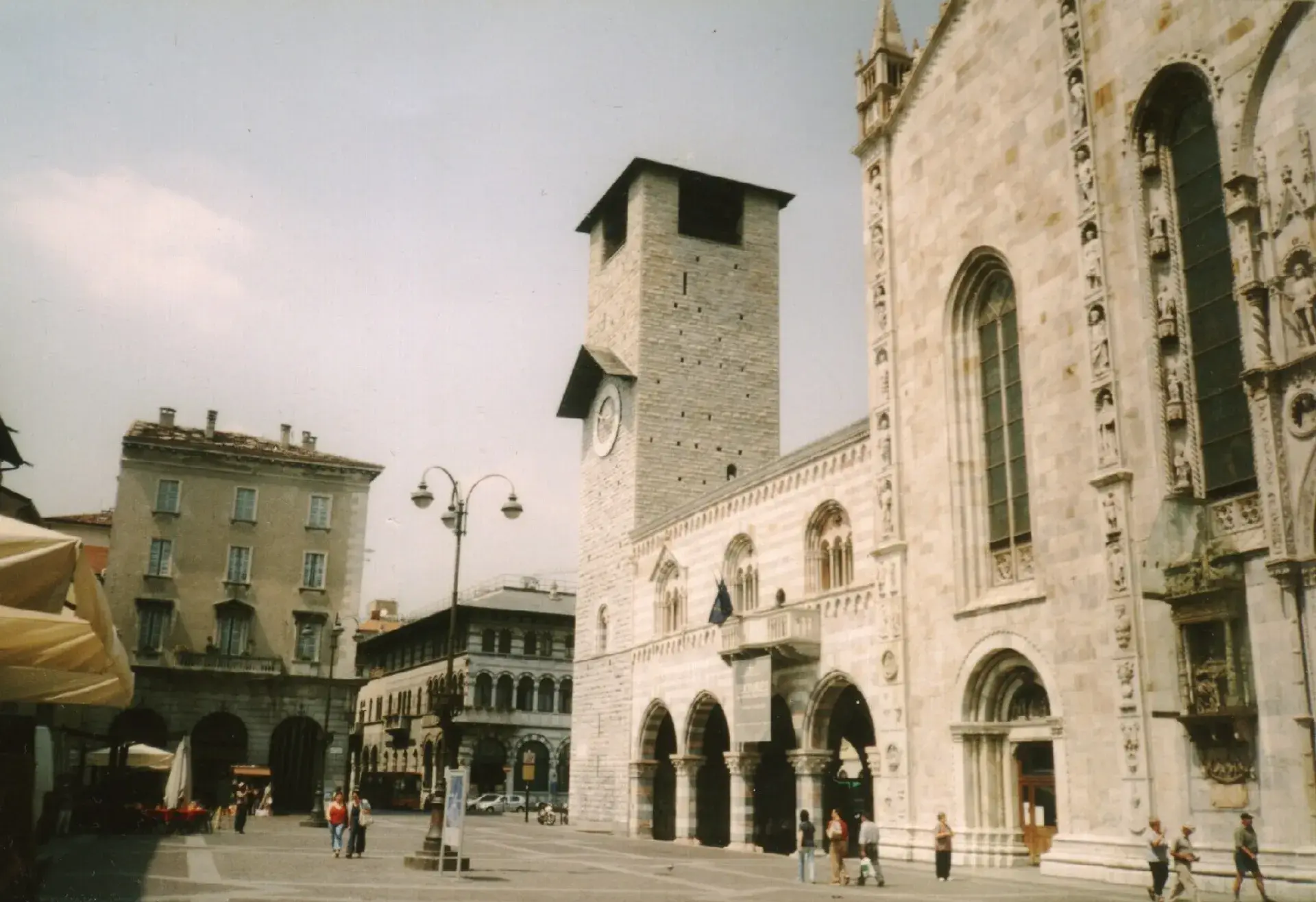
Standing shoulder-to-shoulder with the Duomo in Piazza del Duomo, the Palazzo del Broletto is Como’s historic medieval town hall. Commissioned in 1215 by the city’s podestà, Bonardo da Codazzo, the civic complex represents a transitional Romanesque-Gothic architectural landmark. Clad in striking horizontal bands of local stone, the palazzo has anchored the civic identity of Como for over eight centuries.
Secular Ambition and Sacred Boundaries
The name broletto originates from the medieval Latin term brolo, referring to an open field or orchard where citizens convened outdoors before dedicated communal administrative buildings were established. Built directly adjacent to the bishop's episcopal seat, the palazzo stood as a deliberate manifestation of autonomous secular governance during the rise of the northern Italian communes.
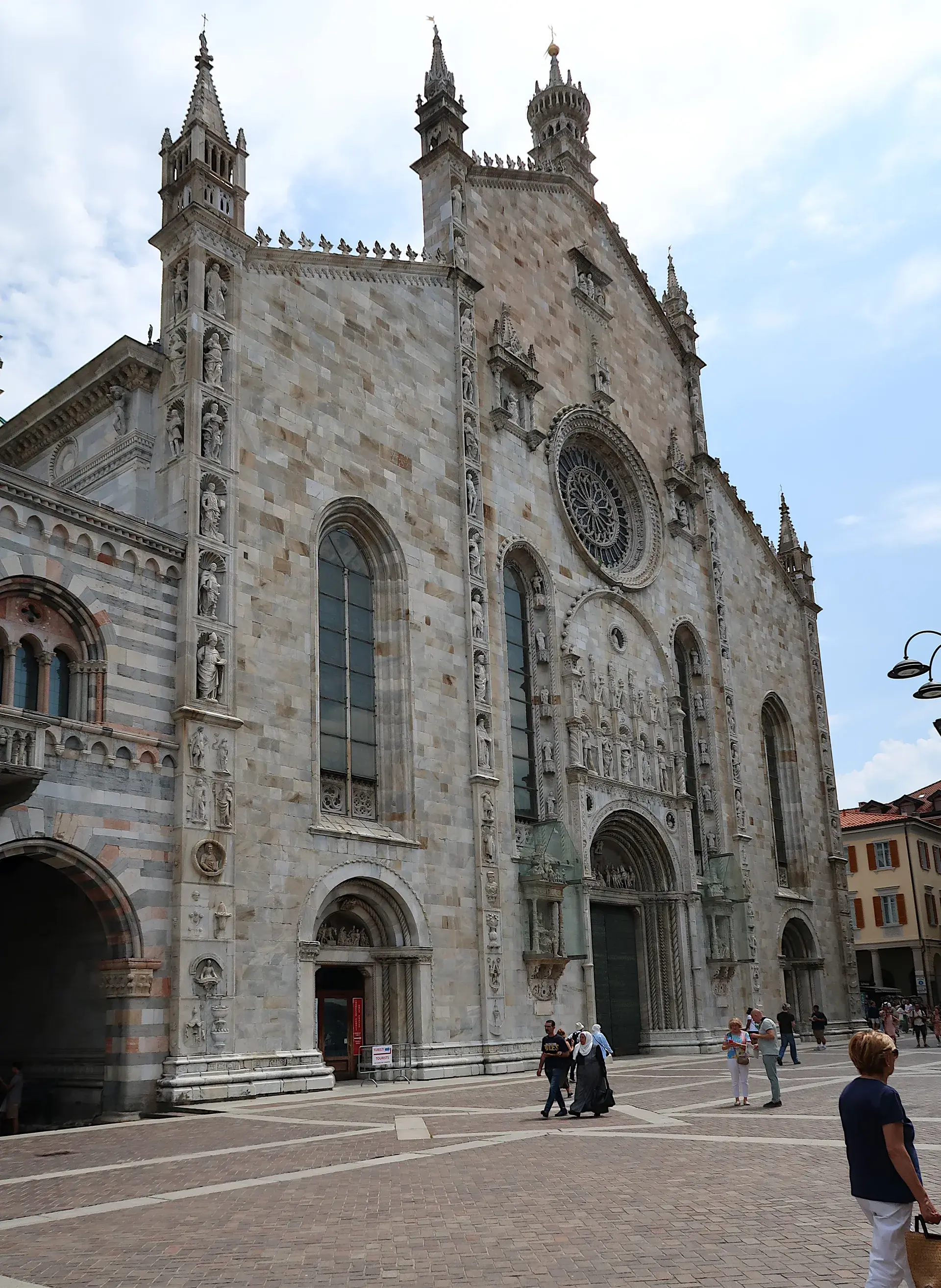
The municipal palace was originally significantly larger than the structure seen today. In 1408, during fierce factional strife between the rival Rusca and Vittani families, a partisan named Lorenzo de Polaris set fire to the building, necessitating major fifteenth-century repairs. During this same era, Como Cathedral underwent extensive reconstruction and expansion. To accommodate the growing ecclesiastical structure, the municipality demolished the Broletto’s southern bays and later eliminated its rear civic wing, the Pretorio, yielding communal territory to religious authority.
Polychrome Architecture and Civic Design
The exterior of the Broletto is celebrated for its distinctive masonry pattern. In direct sunlight, alternating horizontal layers reveal sharp textural contrasts between smooth, chalky white Musso marble, matte dark grey Moltrasio limestone, and pale pinkish-red limestone. Adjoining the main facade is the Torre Civica, a soaring civic bell tower constructed from rusticated stone ashlar.
The ground floor consists of an open vaulted loggia supported by alternating pointed and rounded arches. Among the sculpted stone capitals supporting these vaults is an ancient spolium—a recycled decorative element dating back to late Roman antiquity. Above the arcade, the primary assembly hall is illuminated by expansive Gothic three-mullioned windows (trifore). Protruding between these windows is the parliera, a carved marble balcony with delicate balusters that served as the official rostrum from which magistrates and town criers read municipal statutes, public proclamations, and capital sentences to citizens summoned by the civic bell.
Buried Bases and Later Adaptations
Visitors examining the lower arcade often notice that the columns appear unusually heavy and squat. This visual quirk is the result of centuries of urban engineering. To counteract periodic flooding from nearby Lake Como, the surrounding square's paving was repeatedly elevated, partially burying the original medieval column bases beneath the modern street level.
As municipal governance moved to other administrative quarters, the Broletto was adapted for various public functions. In 1764, the interior was converted into a theater, and by the nineteenth century, it housed the city and notary archives. Comprehensive restoration efforts during the twentieth century, particularly in the 1970s, dismantled later interior partition walls to reopen the medieval loggia. Today, the palazzo operates as an active cultural hub, utilizing its upper assembly room and lower arches for contemporary art exhibitions, conferences, and public forums.
The Heart of Roman and Medieval Como
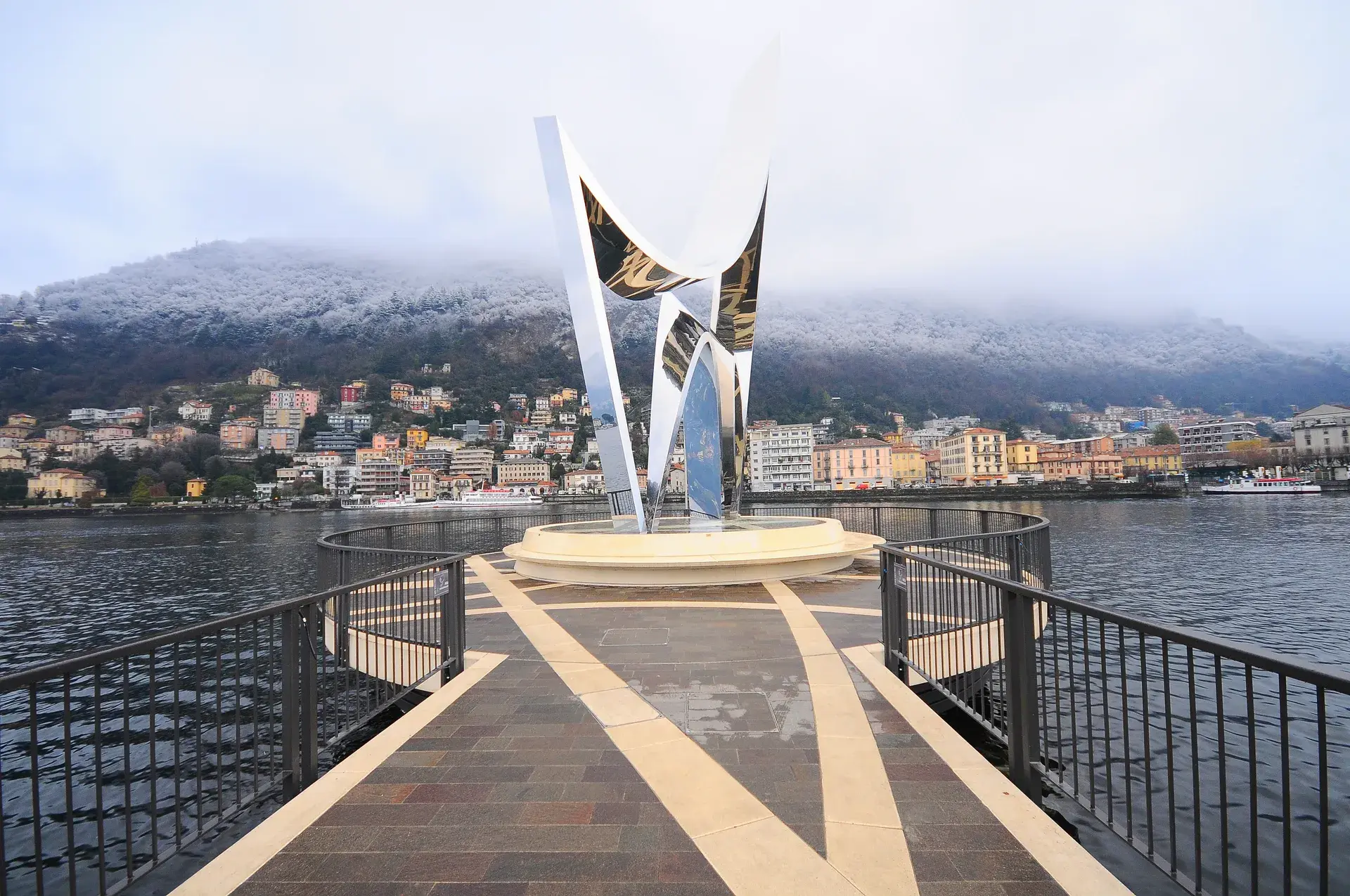
The Broletto occupies a prominent position within the Città Murata, the walled core of Como that still reflects the perpendicular street grid laid down under Julius Caesar's colonial foundation of Novum Comum. Positioned right beside the cathedral—celebrated for its statues commemorating native Roman writers Pliny the Elder and Pliny the Younger—the palazzo remains the historical center of secular life, situated just a short distance from the lakefront and monuments honoring Como physicist Alessandro Volta.
FAQ
Why was the Broletto built directly next to Como Cathedral?
Commissioned in 1215 beside the bishop's seat, the Broletto was positioned to serve as a physical statement of autonomous secular authority, placing the city's self-governing commune directly alongside church power.
Why do the ground-floor columns appear so short?
Over the centuries, the pavement of Piazza del Duomo was elevated repeatedly to protect the city center from Lake Como's floodwaters, partially submerging the medieval column bases beneath the modern ground surface.
What was the purpose of the facade balcony?
The small central balcony, known as the parliera, was used by magistrates and town criers to read civic decrees, new laws, and death sentences to the assembled public after summoning them with the civic tower's bell.