Piazza Cavour in Como: History, Fountains & Views
From Medieval Harbor to Grand Esplanade
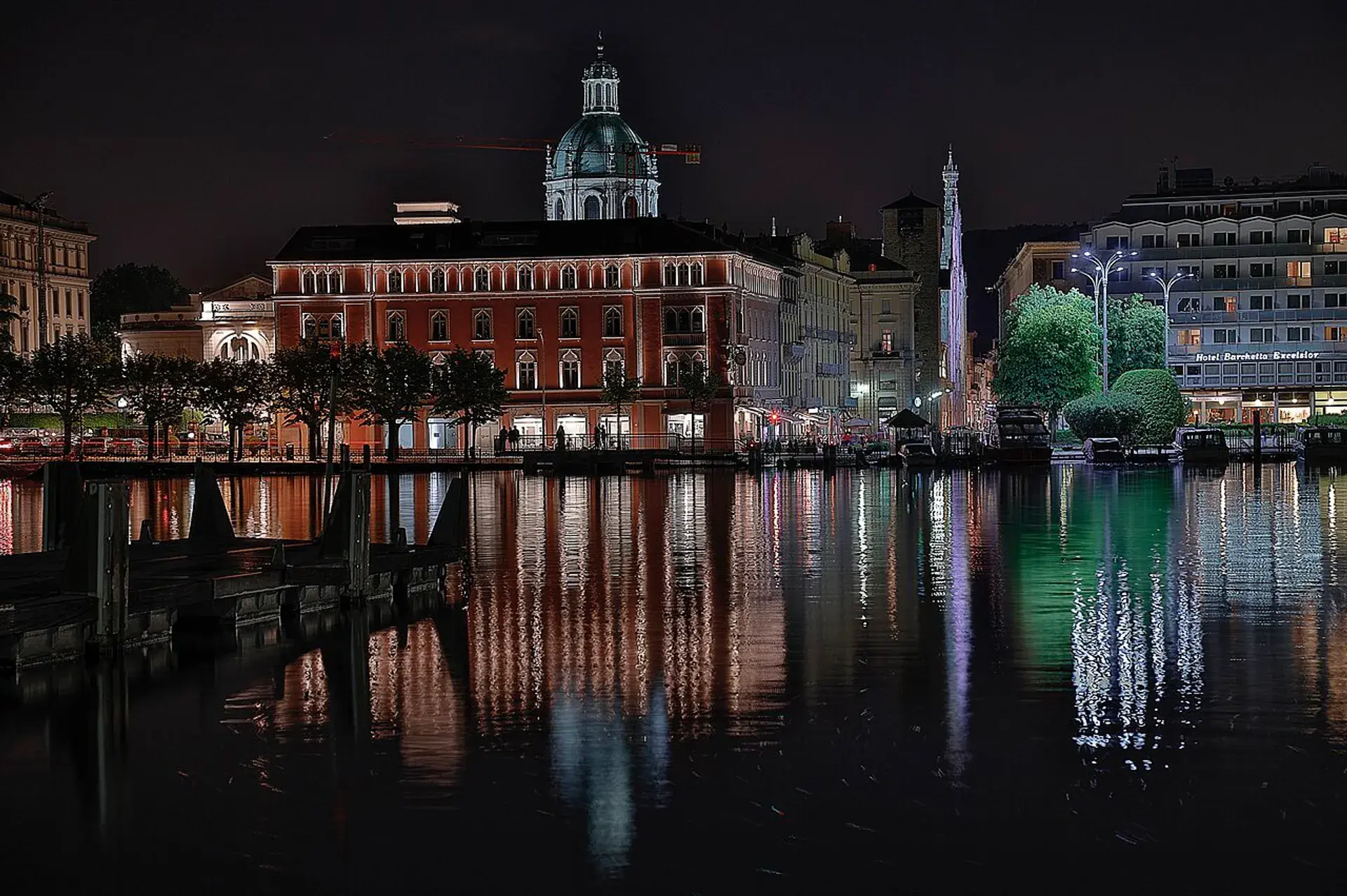
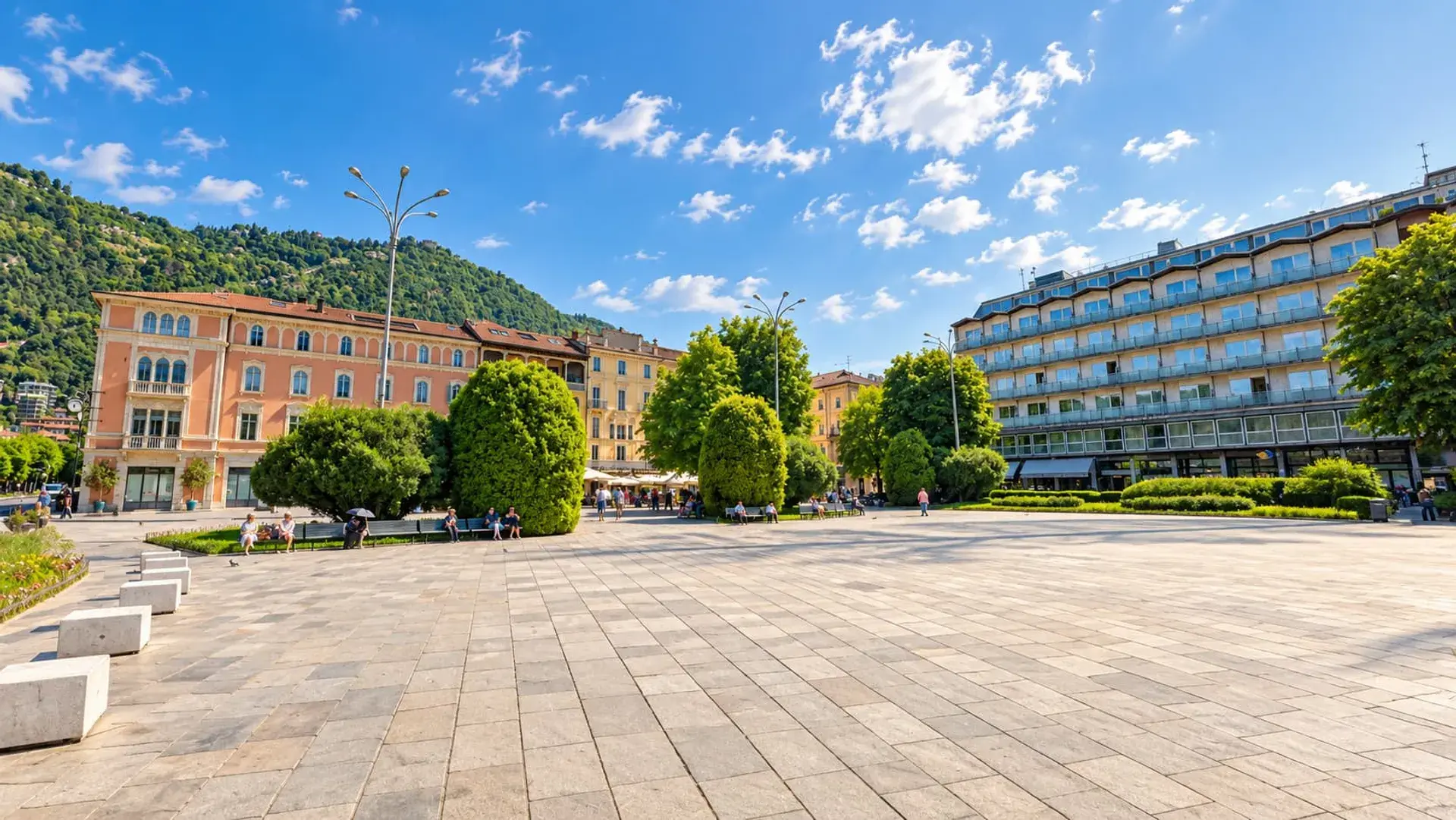
Piazza Cavour serves as the primary lakeside square in Como, situated on the southwestern basin (primo bacino) of Lake Como where the historic street grid meets the water. The wide open space did not exist in antiquity or the Middle Ages. In 1335, under the rule of Azzone Visconti, a semicircular commercial harbor (darsena) was excavated here to handle merchant shipping and freight, keeping commercial vessels separate from the military galleys docked at the fortified Cittadella port.
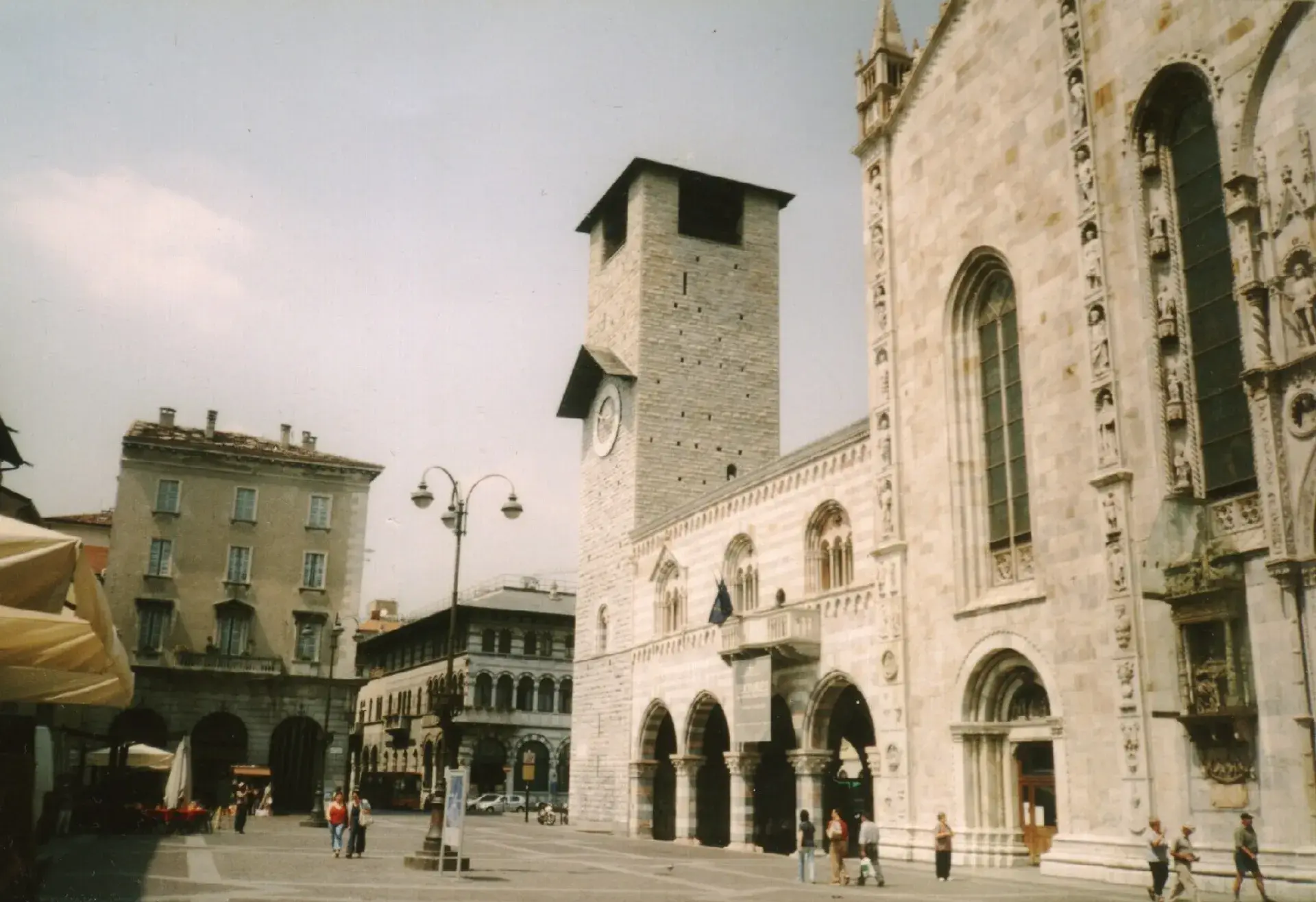
For more than five centuries, merchant boats unloaded goods directly along the perimeter of the artisan district of Cortesella, a scene famously recorded in J.M.W. Turner's watercolors in the 1840s. Following the arrival of steam navigation in the 1820s and the expansion of tourism, civic authorities viewed the enclosed basin as obsolete and unhygienic. Between 1869 and the early 1870s, the harbor was infilled and reclaimed to create a public lakeside esplanade. Named in honor of the Italian Risorgimento statesman Camillo Benso, Count of Cavour, the square became the lakefront terminus of the city's civic axis, situated just one block northwest of Como Cathedral and the Broletto.
Architectural Heritage and Waterfront Defense
The perimeter of Piazza Cavour features 19th- and 20th-century eclectic, neoclassical, and modernist architecture, including early banking palazzi and the Hotel Metropole Suisse, which was established in 1846 and received interior design interventions in 1927 by Italian rationalist architect Giuseppe Terragni.
Because the square was constructed entirely over a reclaimed lakebed, it has historically been the first point in Como to experience flooding (acqua alta) when lake levels rise. To combat this vulnerability, a 16-year hydraulic barrier project (paratie) was undertaken. In 2024, the newly widened pedestrian promenade along the water was officially reopened, outfitted with reproductions of historic curved benches originally designed by architect Ico Parisi.
Fountains and Curiosities of Piazza Cavour
Piazza Cavour features a traditional Milanese-style cast-iron drinking fountain known as a drago verde (green dragon), identified by its brass dragon-head water spout.
Decades earlier, the plaza was home to a much larger water monument. In 1872, a monumental white marble fountain sculpted by Biagio (or Luigi) Catella, adorned with sea creatures and a swan, was placed in the center of the newly reclaimed square. Unpopular with local residents, it was dismantled during the 1890s and sold to American financier William Rockefeller. In 1903, Rockefeller donated the work to New York City, where it still stands at the Bronx Zoo as the historic Rockefeller Fountain.
A Lively Gateway to Lake Como
Piazza Cavour operates as a pedestrianized public salon animated by flowerbeds, outdoor cafe seating, and panoramic vistas. Emerging onto the plaza from the dense, narrow alleys of Como's historic center reveals an immediate change in scale, where tight street corridors give way to open skies, reflective waters, and the surrounding Alpine foothills.
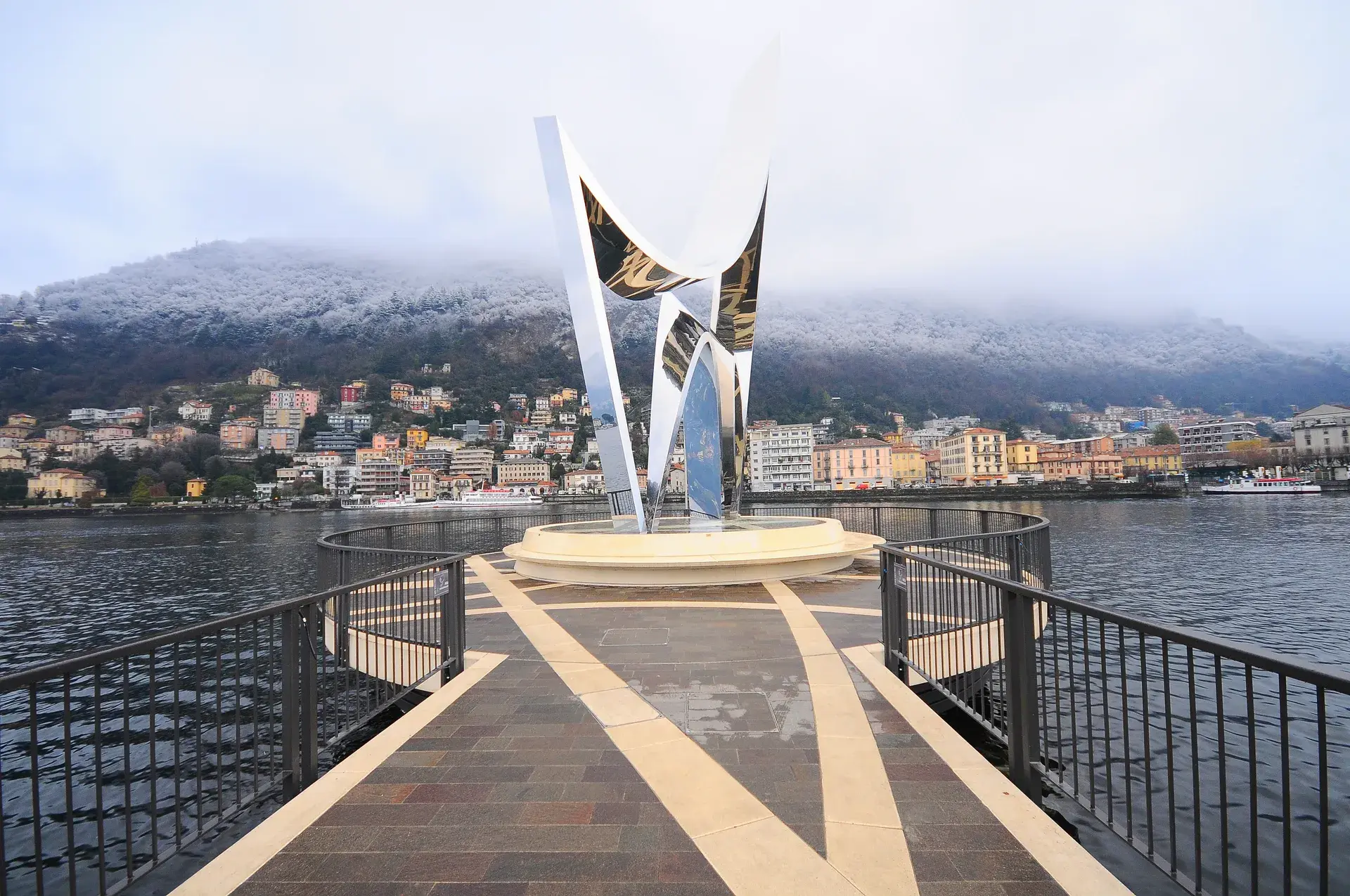
The square functions as an active transit center, bordering the main passenger ferry piers of Navigazione Laghi. The chatter of outdoor cafe terraces mixes with the sounds of boat horns, lapping waves, and the low hum of ferry engines along the quay. Gazing out across the lake from the water's edge, visitors can view two prominent tributes to scientist Alessandro Volta: the neoclassical Tempio Voltiano along the western gardens and the hilltop Faro Voltiano lighthouse above in Brunate.
FAQ
Why is Piazza Cavour prone to flooding?
The square was built between 1869 and the early 1870s over an infilled medieval harbor basin. Because it sits on low-lying reclaimed lakebed, it has historically been the first place in Como to flood during high-water events.
What is the drago verde in Piazza Cavour?
The drago verde, or green dragon, is a classic Milanese-style public fountain made of cast iron, recognized by its brass spout shaped like a dragon's head.
What happened to the historic marble fountain originally installed in Piazza Cavour?
Installed in 1872, the marble fountain carved with sea creatures and a swan was disliked by locals and dismantled in the 1890s. American financier William Rockefeller purchased it and donated it in 1903 to the Bronx Zoo in New York City, where it remains today as the Rockefeller Fountain.
Gallery