Tempio Voltiano: Como's Neoclassical Science Museum
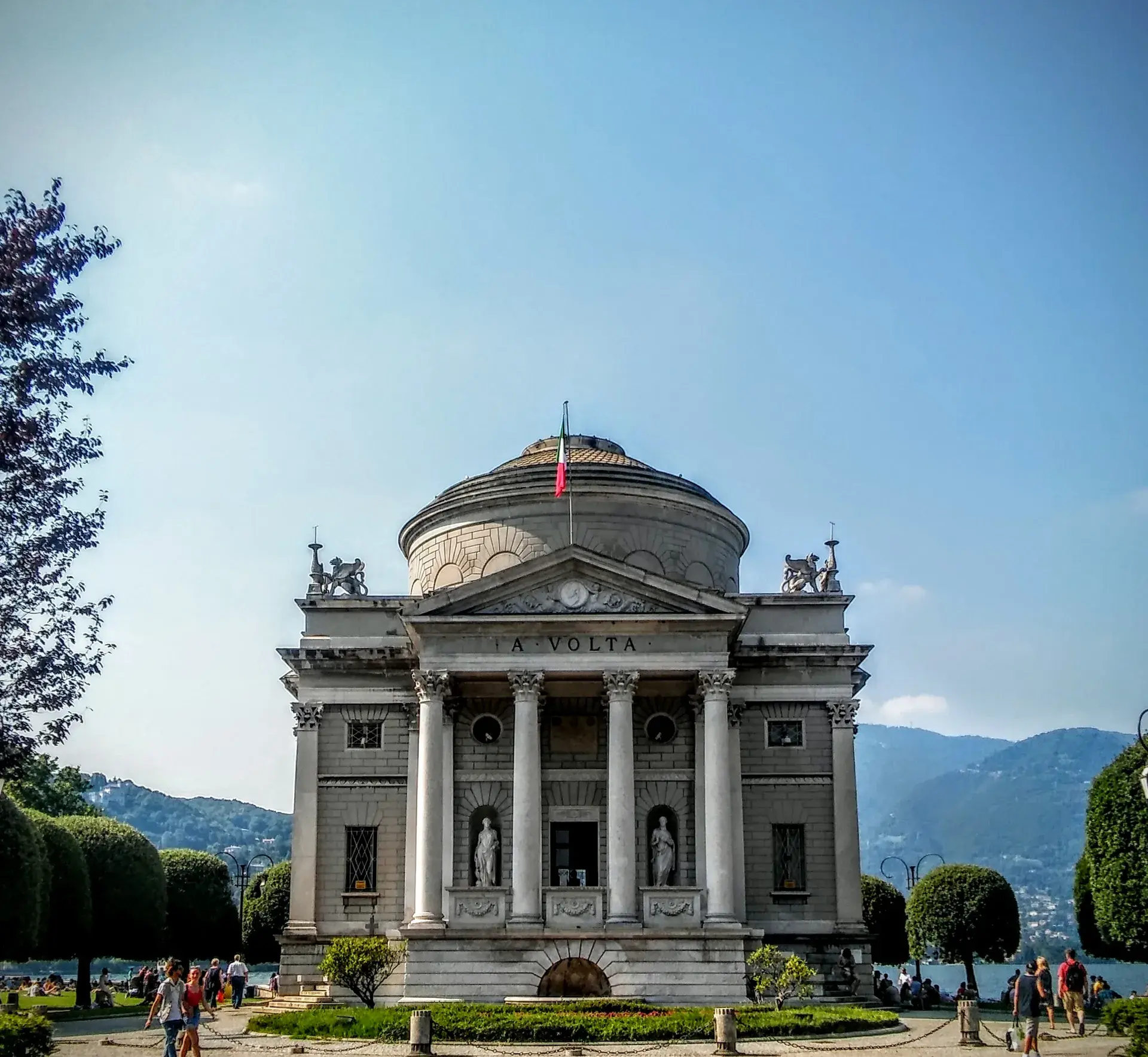
Standing on the shoreline of Lake Como within the lakeside gardens (Giardini a Lago), the Tempio Voltiano is a purpose-built neoclassical museum honoring the physicist Alessandro Volta (1745–1827). Widely recognized for his invention of the electric battery (voltaic pile), the Como native is commemorated through this monument, which combines antique temple aesthetics with specialized scientific preservation.
The 1899 Exhibition Fire and Rebuilding
The impetus for creating the Tempio Voltiano emerged from a civic disaster. In 1899, Como held the Great Voltian Exhibition to mark the centenary of the electric battery. During the event, an accidental fire swept through the halls, destroying significant portions of Volta's original scientific instruments, notebooks, and correspondence.
To ensure that surviving relics and subsequent reconstructions would remain protected, cotton industrialist and senator Francesco Somaini funded the creation of a specialized, fireproof sanctuary. Somaini commissioned local architect Federico Frigerio to design the building, which was later donated to the municipality of Como. In the autumn of 1927, attendees of the International Congress of Physicists—including eleven Nobel laureates—toured the site before its formal civic inauguration on July 15, 1928, marking the centenary of Volta's death. The museum still holds a 1927 autograph registry signed by prominent figures in modern quantum physics, including Niels Bohr and Werner Heisenberg.
Neoclassical Form with Modern Engineering
Frigerio modeled the building on the Roman Pantheon. The central circular rotunda features an approximately 12-meter dome and is fronted by an elevated Corinthian portico. At the entrance, two allegorical statues by Carlo and Luigi Rigola depict Faith and Science.
Beneath its historicist exterior, the structure was built using modern engineering methods. Frigerio utilized a reinforced concrete frame to guarantee structural stability and fire resistance, cladding the exterior in bright white limestone. Inside, the central rotunda features polychrome marble floors illuminated from above by a skylight oculus in the dome, bordered by plaster friezes depicting significant milestones from Volta's life.
Scientific Collections on Display
Operated by the Musei Civici di Como, the museum displays Volta's technological and research legacy in chronological order. Its vitrines hold essential components of his pioneering work in electrostatics and pneumatics, including early voltaic piles, electrophori, Leyden jars, and Volta's eudiometer, which was developed to analyze combustion and gas purity.
The display cases strictly differentiate between original apparatus salvaged from the 1899 exhibition fire and exact working replicas constructed immediately after using Volta's technical notes. The collection is complemented by Volta's personal belongings, commemorative medals, and original manuscripts.
Cultural Prominence and Lakefront Setting
Between 1984 and 2001, the Tempio Voltiano held a prominent place in Italian daily life as the image printed on the reverse of the 10,000 lire banknote, opposite the portrait of Alessandro Volta.
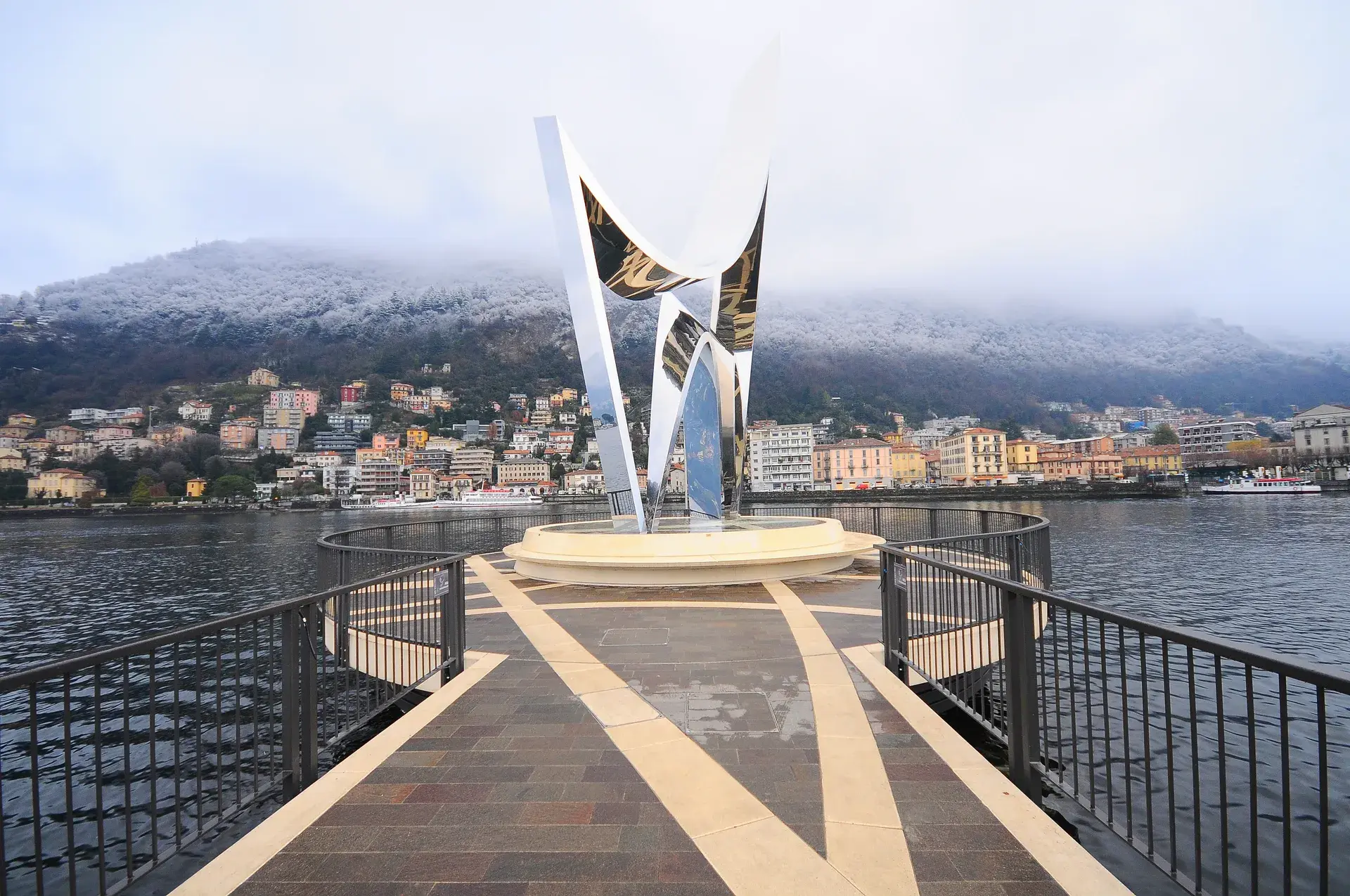
Today, the temple anchors the promenade on Viale Guglielmo Marconi between modernist works, including Giuseppe Terragni's Novocomum and War Memorial (Monumento ai Caduti), and the route leading to Villa Olmo. It serves as a central element within Como's broader collection of sites honoring Volta, alongside his birthplace on Via Volta, his tomb in Camnago Volta, the hilltop Faro Voltiano in Brunate, and Daniel Libeskind's Life Electric monument in the lake basin. The museum welcomes the public Tuesday through Sunday from 10:00 to 18:00.
FAQ
Why was the Tempio Voltiano constructed?
It was commissioned following an 1899 fire at the Great Voltian Exhibition that destroyed many of Alessandro Volta's instruments. Senator Francesco Somaini financed a dedicated, fireproof neoclassical building to safeguard the surviving relics and reconstructed apparatus.
What artifacts are displayed inside the museum?
The collection includes early voltaic piles, electrophori, Leyden jars, Volta's eudiometer, original manuscripts, personal effects, and medals. Vitrines clearly differentiate salvaged original instruments from replicas rebuilt using Volta's notes.
How was the Tempio Voltiano featured on Italian currency?
Between 1984 and 2001, prior to the adoption of the euro, the Tempio Voltiano appeared on the reverse side of Italy's 10,000 lire banknote opposite a portrait of Alessandro Volta.
What are the opening days and hours for the Tempio Voltiano?
Managed by the Musei Civici di Como, the museum is open year-round from Tuesday through Sunday, between 10:00 and 18:00, and is closed on Mondays.