Castello Estense: Ferrara's Moated Fortress
A Fortress Built Against Citizens
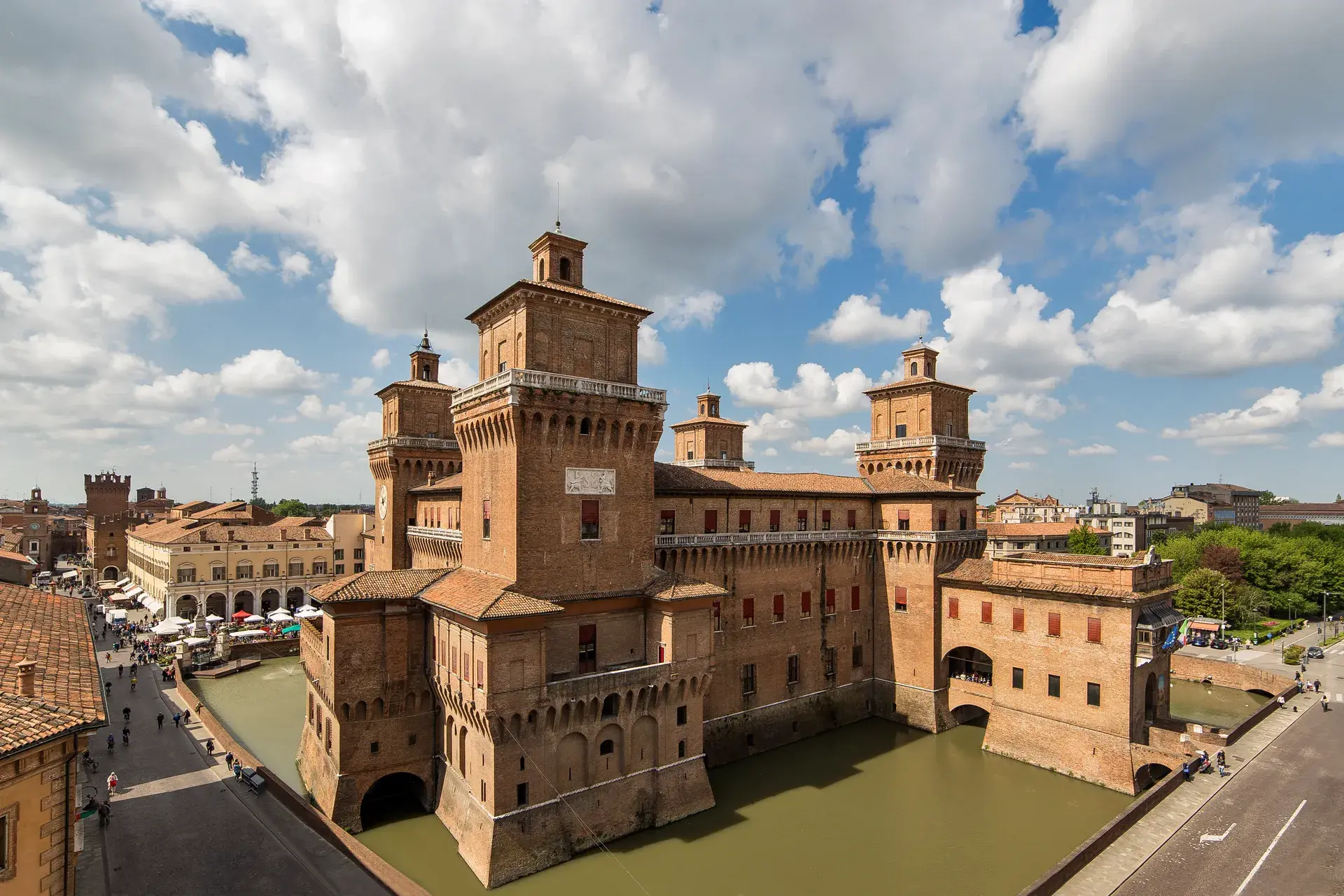
Castello Estense stands as a monumental testament to the turbulent history of Ferrara. With its imposing brick walls and wide, water-filled moat, the 14th-century fortress dominates the city center.
Construction began on September 29, 1385, under the orders of Marquis Niccolò II d'Este. Following a violent popular uprising over soaring taxes earlier that year, the Marquis commissioned military architect Bartolino da Novara to design a stronghold. Unlike typical medieval fortifications built along frontiers to repel foreign armies, Castello Estense was specifically positioned to protect the ruling family from the fury of their own citizens.
Architectural Evolution
The square quadrangle design incorporated an older 12th-century watchtower, the Torre dei Leoni, alongside three new corner towers. A covered brick passageway known as the Via Coperta connected the new military structure directly to the adjacent Este residential palace, allowing secure movement for the court. The hollow echo of footsteps crossing the wooden drawbridges into the central stone courtyard still recalls the site's defensive origins.
Under the later rule of Dukes Ercole I, Alfonso I, and Ercole II, the military stronghold was gradually transformed into a refined Renaissance palace. After a fire in 1554, architect Girolamo da Carpi added elegant marble balustrades and roof loggias. The dukes even engineered the Giardino degli Aranci, an open-air hanging terrace where the court could enjoy fresh orange blossoms and citrus fruit safely behind fortified masonry.
The Urban Centerpiece
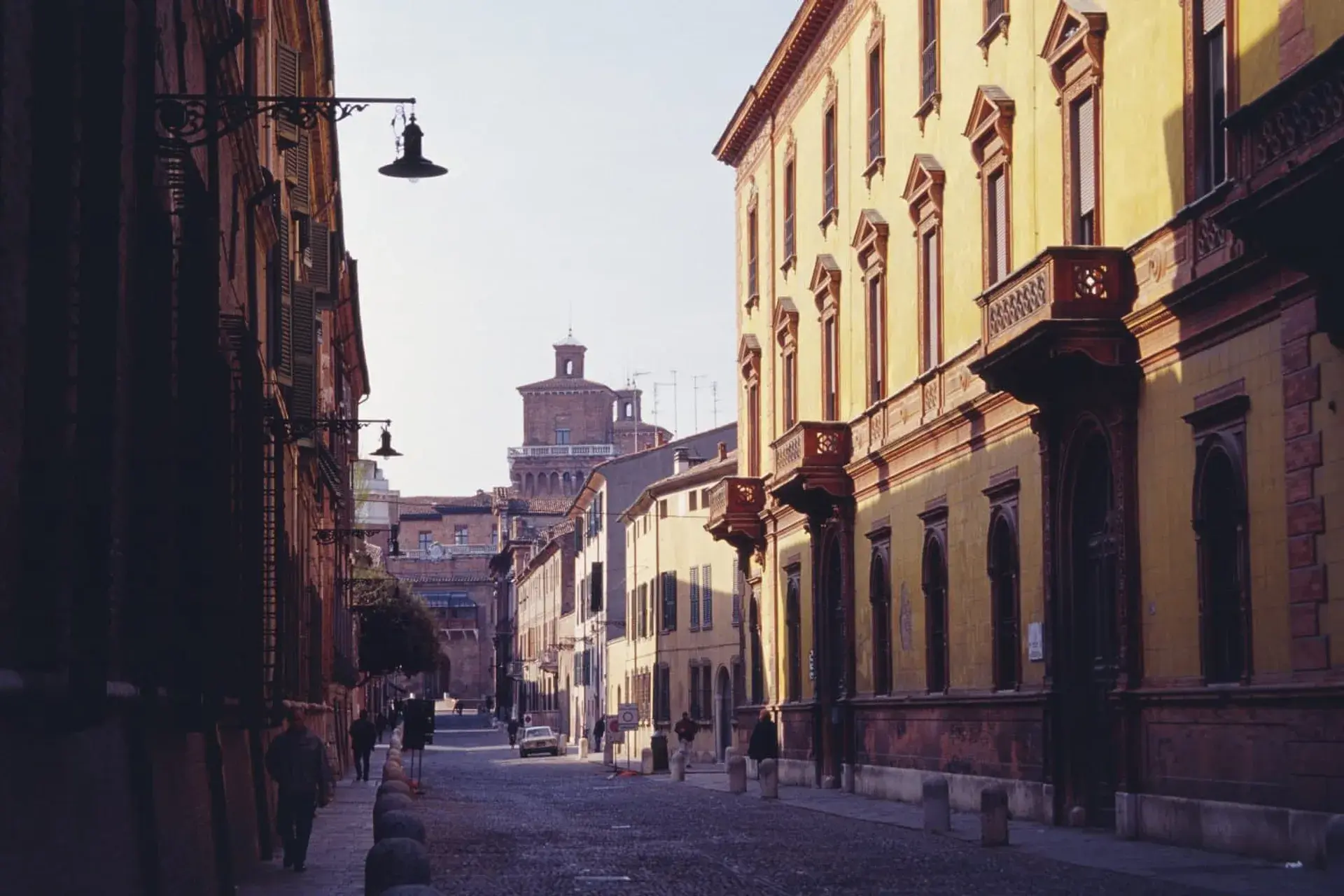
This architectural shift coincided with a broader urban transformation. When Duke Ercole I commissioned the master-planned Addizione Erculea in 1492, the fortress shifted from an outer northern border bastion to the geographic fulcrum of Ferrara. It seamlessly bridged the dense, winding medieval streets with the straight, wide avenues of the Renaissance expansion.
Dungeons and Dark Histories
Beneath the lavish court apartments, the damp, low-ceilinged dungeons hide a darker history. In 1425, Marquis Niccolò III ordered the execution of his wife, Laura "Parisina" Malatesta, and his son, Ugo d'Este, in the basement cells after discovering their illicit romance. Decades later, in 1506, Duke Alfonso I imprisoned his brothers Giulio and Ferrante in the same dungeons for plotting a dynastic overthrow. Giulio remained incarcerated in the subterranean gloom for over fifty years.
From Papal Rule to Modern Museum
The Este dynasty's reign in Ferrara ended in 1598 when Duke Alfonso II died without a legitimate heir. Pope Clement VIII reclaimed the city, forcing the ruling family to relocate to Modena. Castello Estense then served as the administrative headquarters and residence of Papal Cardinal Legates until the Unification of Italy in the 19th century.
Today, the fortress operates as a civic museum owned by the Province of Ferrara. The site features historical itineraries through the ducal apartments, the historic dungeons, and a 120-step climb up the Torre dei Leoni. The moat hosts seasonal boat tours, and every New Year's Eve, the castle serves as the centerpiece for a major pyrotechnic show that uses red lights and fireworks to simulate the fortress catching on fire.
FAQ
Why was Castello Estense built?
Marquis Niccolò II d'Este ordered the castle's construction in 1385 to protect the ruling family from their own citizens following a violent popular uprising over high taxes and bread levies.
What is inside Castello Estense today?
The fortress currently operates as a civic museum. It contains historical itineraries through the Renaissance ducal apartments, a hanging citrus garden, and the original subterranean dungeons. It also features a 120-step climb up the Torre dei Leoni watchtower.
Who was imprisoned in the dungeons of Castello Estense?
Notable historical prisoners include Laura 'Parisina' Malatesta and Ugo d'Este, who were executed there in 1425 for an illicit romance. In 1506, Duke Alfonso I imprisoned his brothers Giulio and Ferrante in the cells for plotting a dynastic overthrow, with Giulio remaining incarcerated for over 50 years.