Corso Ercole I d'Este: Europe's First Modern Street
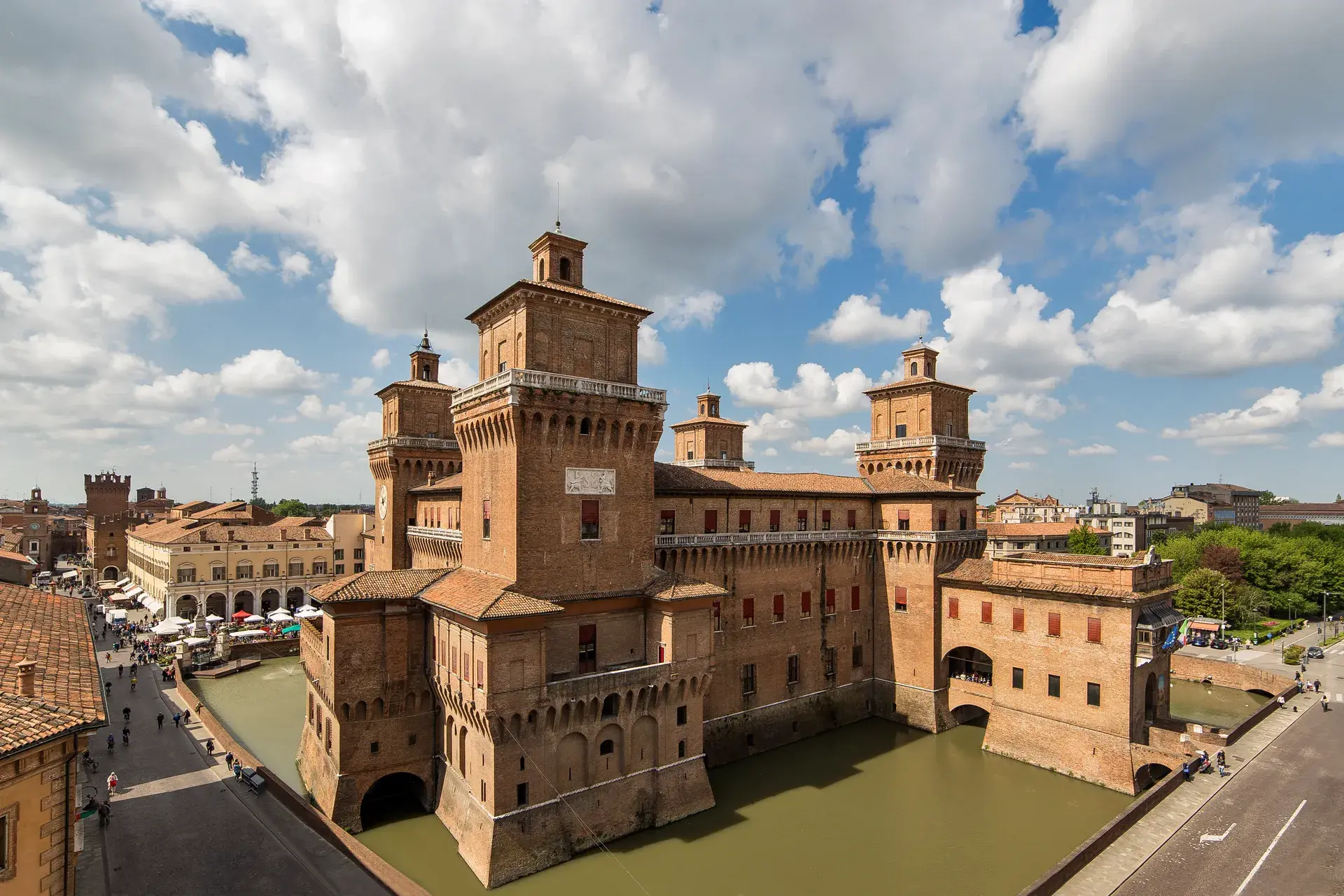
Corso Ercole I d'Este serves as a primary physical bridge connecting Ferrara's medieval fortress to its northern Renaissance district. Commissioned in 1492 by Duke Ercole I d’Este and designed by architect Biagio Rossetti, the avenue forms the central north-south axis of the Addizione Erculea (Erculean Addition). Its integration of orthogonal geometry and regulated street widths prompted Swiss historian Jacob Burckhardt in 1860 to declare Ferrara "the first modern city in Europe."
A Masterpiece of Urban Planning
In 1492, Duke Ercole I d’Este resolved to double the size of Ferrara north of its medieval core. Architect Biagio Rossetti rejected the organic, winding patterns typical of medieval European streets. Instead, he designed an orthogonal layout on a precise, courtly scale.
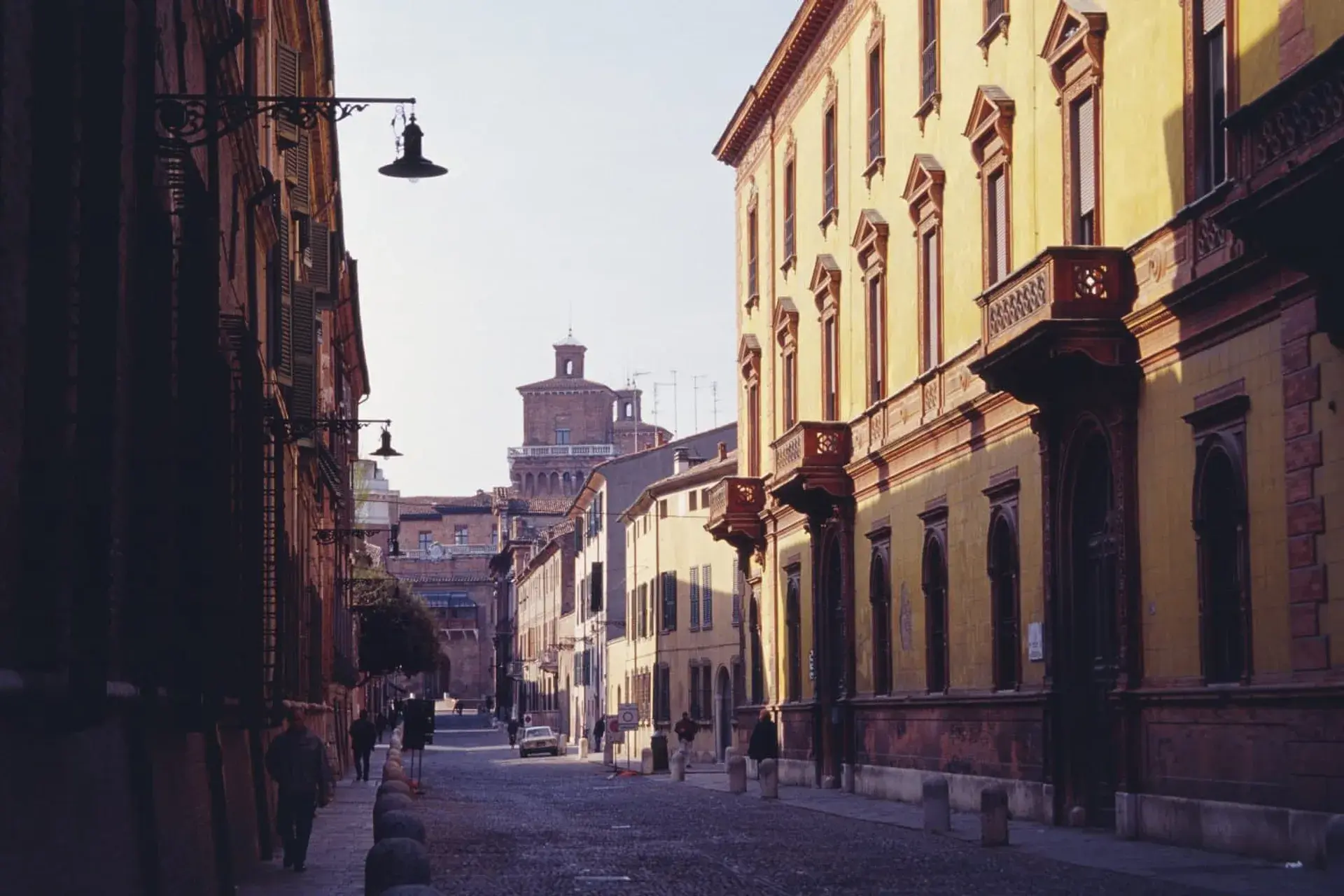
Rather than terminating the avenue's vista with a single dominating monument, Rossetti framed the long perspective using carefully calibrated building façades. He varied the visual weight and decorative accents of corner buildings to maintain a continuous flow. The street stretches in a straight line from the brick battlements of the Castello Estense to the distant green ramparts of the Porta degli Angeli.
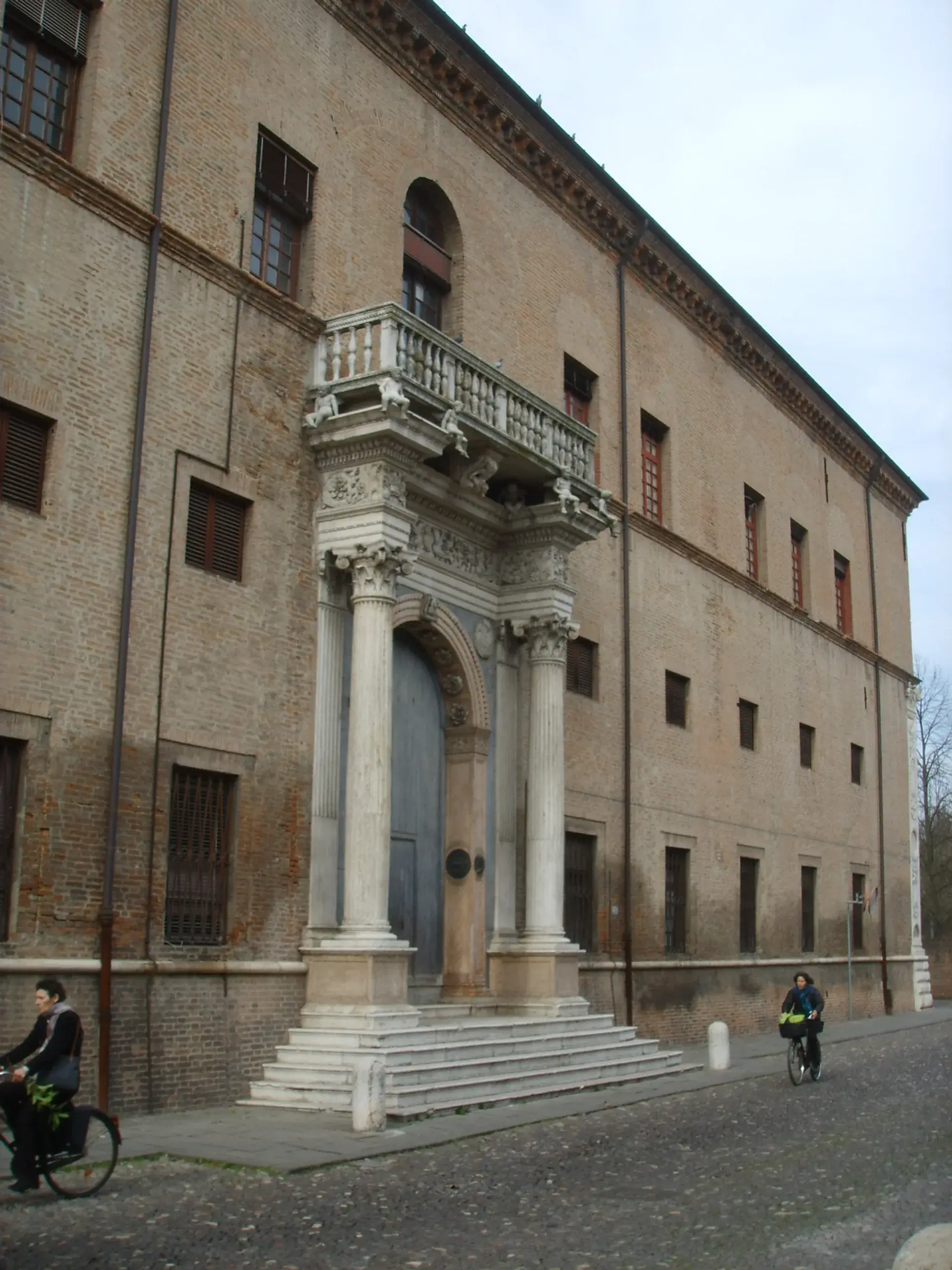
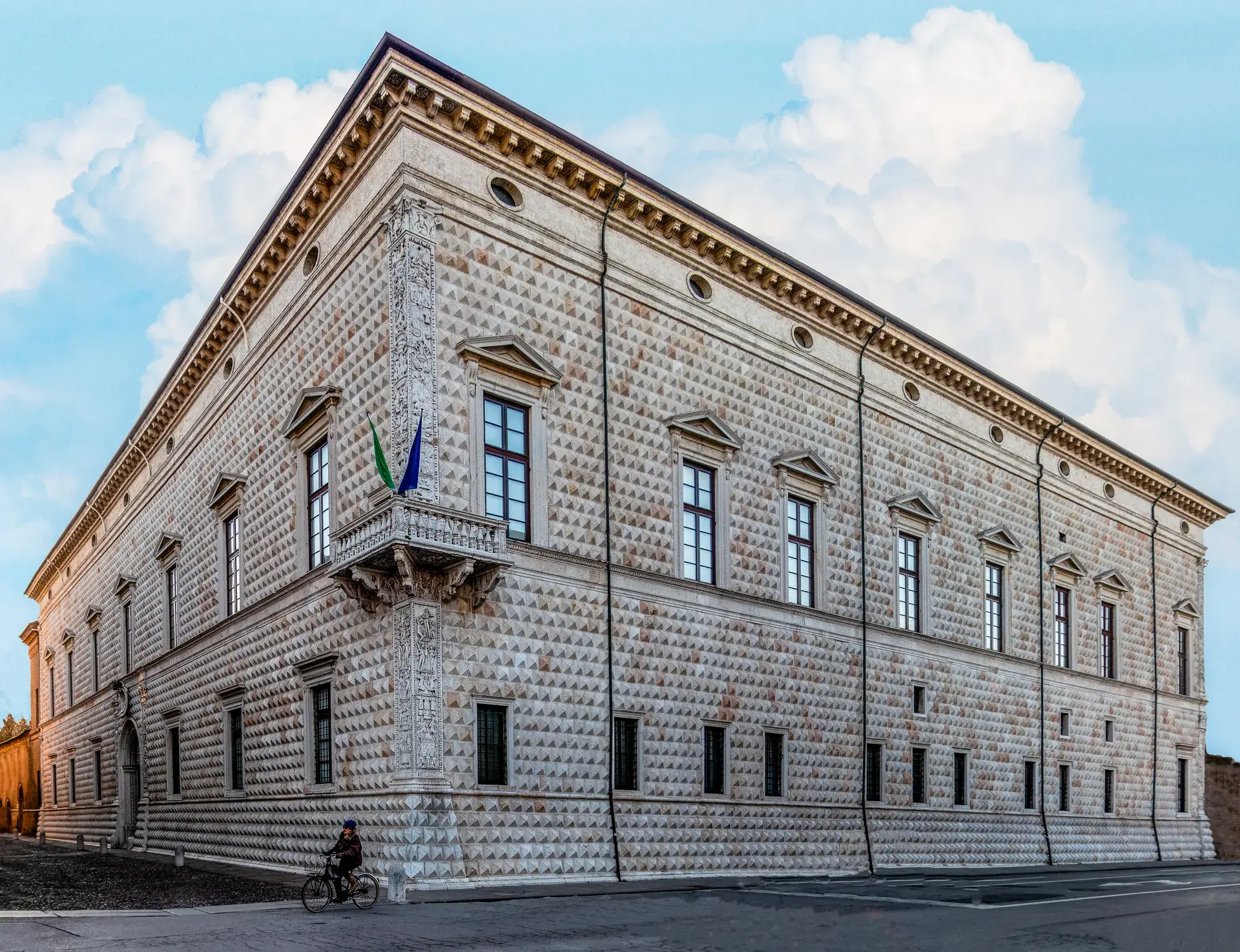
At its core lies the Quadrivio degli Angeli (Crossroads of the Angels), a major intersection framed by significant architectural works like the Palazzo dei Diamanti, Palazzo Prosperi-Sacrati, Palazzo Turchi di Bagno, and Palazzo Pallavicini. This layout is a central reason for Ferrara's 1995 UNESCO World Heritage inscription.
Preserving the Renaissance Atmosphere
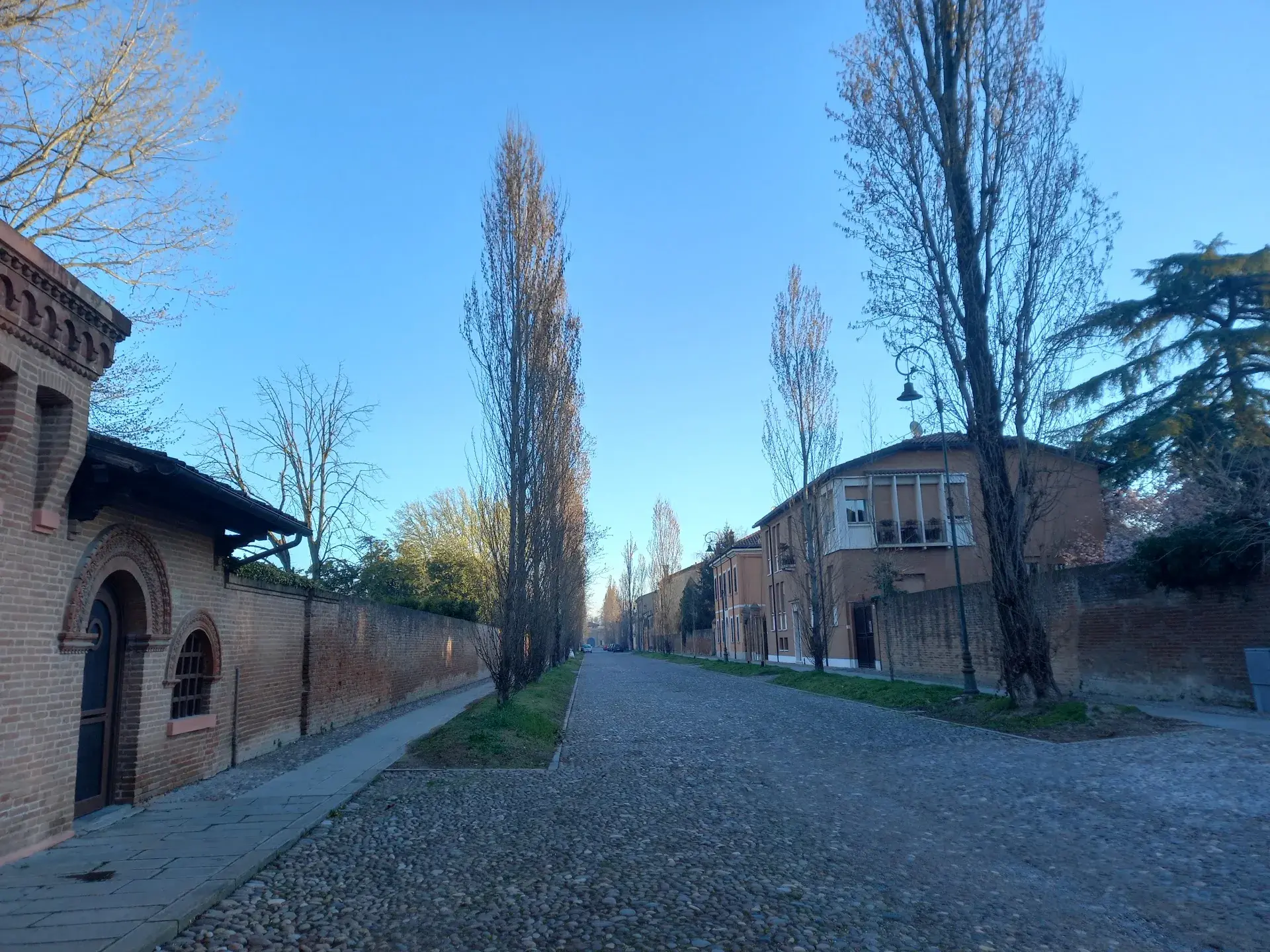
Today, Corso Ercole I d'Este functions as a tranquil, largely pedestrianized, and bicycle-oriented promenade. The street is paved with traditional river cobblestones, known as ciottoli, flanked by stone slab (trachite) walkways. This traditional paving produces the steady clicking sound of bicycle wheels and foot traffic, remaining largely free of automotive noise.
Despite its grandeur and central role in the city's layout, the avenue deliberately lacks retail shops, storefront display windows, and commercial clutter. This absence preserves the intended Renaissance domestic quietude. Major buildings along the route instead serve as public museums and institutions. The famous Palazzo dei Diamanti hosts the Pinacoteca Nazionale and Ferrara Arte exhibitions, while former aristocratic residences house municipal and educational offices.
Literary and Cinematic Connections
Before taking the name of the Duke, the avenue was known by several titles, including Via degli Angeli, Via Piopponi, Corso Vittorio Emanuele, and Via dello Scorsuro. Its enduring aesthetic has made it a prominent location for storytellers.
Author Giorgio Bassani set prominent passages of his novel The Garden of the Finzi-Continis along the street, which frequently leads readers to search for the fictional gate to the estate. The avenue and Palazzo Prosperi-Sacrati's marble portal were also featured in Michelangelo Antonioni’s films Cronaca di un amore (1950) and Al di là delle nuvole (1995).
FAQ
Who designed Corso Ercole I d'Este?
The street was designed by ducal architect Biagio Rossetti in 1492 as the central axis of the Addizione Erculea, an urban expansion commissioned by Duke Ercole I d'Este.
Are there shops along Corso Ercole I d'Este?
No, the avenue deliberately lacks retail shops and commercial storefronts to preserve its tranquil, Renaissance-era residential atmosphere.
What is the Quadrivio degli Angeli?
It is a major crossroads on Corso Ercole I d'Este framed by four historic palaces, including the Palazzo dei Diamanti and Palazzo Prosperi-Sacrati, showcasing the area's Renaissance urban planning.
Gallery